Yeho Studios, a rising talent in the 3D art community, has released a highly anticipated tutorial on October 5, 2026, offering a detailed, step-by-step guide to creating photorealistic lake landscapes within the popular 3D creation suite, Blender. This tutorial, accessible to both novice users and experienced professionals, addresses a common challenge in digital art: the accurate and compelling representation of natural environments. The release is poised to significantly benefit artists seeking to enhance their proficiency in environmental design and natural scene generation within Blender.
A Deep Dive into Natural Scene Creation
The tutorial, titled "Create This Realistic Lake Landscape in Blender," meticulously breaks down the complex process of building an immersive natural setting from the ground up. Yeho Studios, an artist with over five years of dedicated Blender experience and a growing reputation for educational content on YouTube, emphasizes a foundational approach, ensuring that viewers understand each stage of the creation pipeline. This approach is particularly valuable for beginners who may find the intricacies of 3D landscape generation daunting.
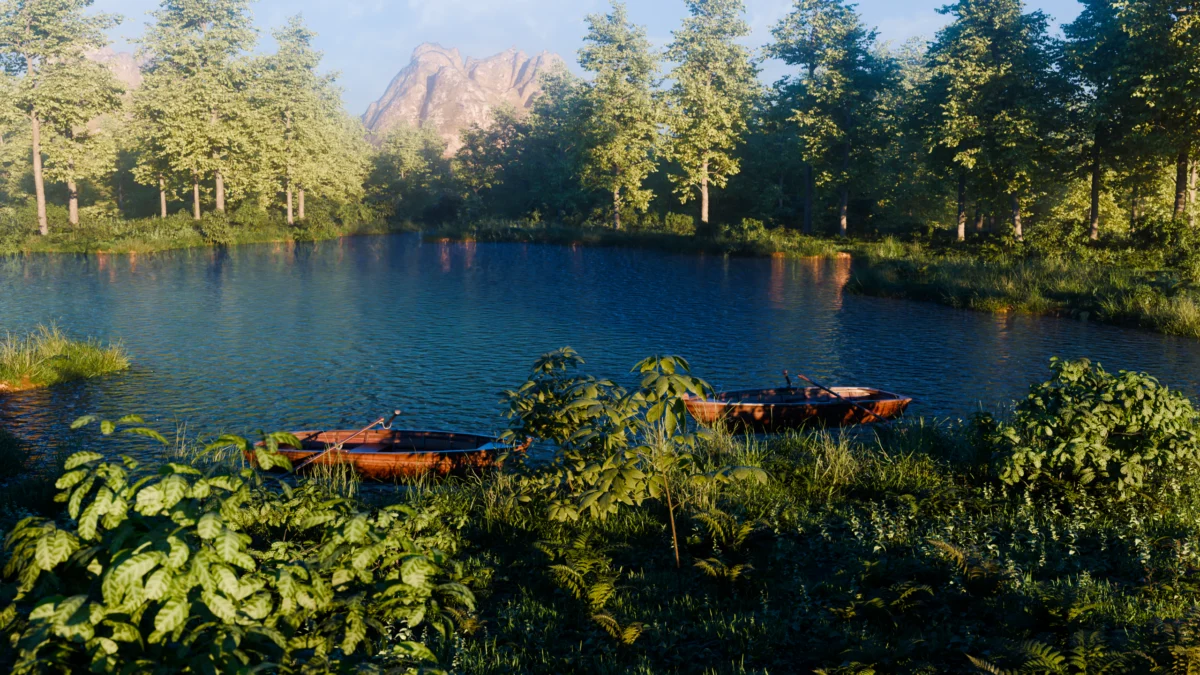
The core of the tutorial focuses on several key areas essential for realistic nature scenes: terrain generation, water simulation, vegetation placement, and atmospheric effects. By demonstrating these techniques, Yeho Studios empowers artists to move beyond basic scene construction and delve into the nuanced details that contribute to visual authenticity. The visual assets shared in conjunction with the tutorial, such as the prominently featured rendered image of a serene lake landscape, serve as compelling evidence of the achievable quality. This image, showcasing a high level of detail in water ripples, reflections, and surrounding flora, sets a clear benchmark for viewers.
The Evolution of Nature in Digital Art and Blender’s Role
The creation of realistic natural environments in 3D has been a long-standing goal in the field. Early attempts often resulted in simplified or stylized representations due to computational limitations and the complexity of simulating natural phenomena. However, advancements in rendering technology, procedural generation techniques, and sophisticated simulation tools have dramatically increased the fidelity achievable.
Blender, as an open-source and continually evolving 3D creation suite, has been at the forefront of democratizing these advanced capabilities. Its robust suite of tools, including powerful sculpting, geometry nodes, physics simulations for water and particles, and advanced shader nodes for material creation, provides artists with an unparalleled toolkit. The tutorial by Yeho Studios leverages these capabilities, demonstrating how artists can harness Blender’s potential to create scenes that rival those produced with more expensive, proprietary software.
The release of this tutorial in late 2026 aligns with a broader trend of increased demand for high-quality digital environments across various industries. From video games and architectural visualization to film and virtual reality, the need for immersive and believable natural settings continues to grow. This tutorial, therefore, arrives at a time when the skills it imparts are highly relevant and sought after.
Tutorial Structure and Key Techniques
While the full scope of the tutorial is best experienced by viewing, the creator’s emphasis on starting "from absolute scratch" suggests a comprehensive breakdown of the workflow. This typically involves:

- Terrain Generation: Utilizing Blender’s built-in sculpting tools or procedural methods like displacement maps and noise textures to create varied and believable ground formations. This could involve techniques for generating hills, valleys, and the contours of a lakebed.
- Water Simulation and Shading: Employing Blender’s fluid simulation system to create realistic water surfaces, including ripples, waves, and foam. The tutorial likely delves into shader node setups for realistic water transparency, reflections, and refractions, crucial for capturing the interaction of light with water.
- Vegetation and Asset Placement: Demonstrating methods for populating the scene with trees, grass, rocks, and other natural elements. This might include using Blender’s particle systems for scattering vegetation or employing add-ons for efficient asset management and placement. The quality of the shaders used for these assets, particularly leaf materials and bark textures, would be a critical component.
- Lighting and Atmosphere: Setting up realistic lighting conditions to simulate natural daylight, including sun direction, sky illumination, and ambient occlusion. The tutorial likely covers techniques for adding atmospheric effects like fog, mist, and volumetric lighting to enhance depth and mood.
- Post-Processing and Compositing: Final touches in Blender’s compositor or external software to refine color grading, add subtle effects like depth of field, and enhance the overall photorealism.
The inclusion of a playable embedded YouTube video within the original article provides immediate access to the demonstration, allowing potential viewers to assess the teaching style and the visual quality of the rendered output. The duration of the video, while not explicitly stated, is usually a key indicator of the depth of information provided in such tutorials.
Yeho Studios: A Profile in Digital Art Education
Yeho Studios, identified as a young 3D artist with a five-year tenure in Blender, represents a new generation of digital creators who are not only skilled practitioners but also dedicated educators. The artist’s commitment to sharing knowledge through YouTube tutorials highlights a collaborative and open approach to learning within the 3D art community. This ethos is crucial for fostering growth and innovation, as experienced artists pass on their expertise to aspiring creators.
The Gravatar image associated with Yeho Studios suggests a consistent online presence across platforms, indicating a structured approach to building an artist brand and community. The fact that the artist has "over 5 years of experience in Blender" by 2026 implies they began their journey at a relatively young age, showcasing early dedication and passion. This background provides a credible foundation for the tutorial’s content, assuring viewers that the advice is practical and born from extensive hands-on experience.
Broader Implications for the 3D Art Community
The release of such a comprehensive tutorial has several implications for the wider 3D art community:
- Democratization of Skills: By offering this knowledge freely, Yeho Studios contributes to making advanced environmental design techniques accessible to a broader audience. This can lower the barrier to entry for aspiring artists and allow independent creators to produce work of a professional caliber without requiring expensive software licenses or specialized training.
- Raising the Bar for Quality: As more artists learn these techniques, the overall quality of digital nature scenes is likely to improve. This can lead to more immersive experiences in games, more believable visualizations in architecture, and more compelling visual effects in film.
- Inspiration and Innovation: Tutorials often serve as springboards for further experimentation and innovation. Artists may build upon the techniques shown, developing new workflows or discovering novel applications for Blender’s tools.
- Community Growth: Educational content like this fosters a sense of community by providing shared learning experiences and a common reference point for discussions and collaborations.
The tutorial’s availability on a platform like YouTube, combined with its presence on news aggregators like Blendernation, ensures wide dissemination. This reach is critical for its impact. The date of publication, October 5, 2026, places it within a contemporary context, suggesting that the techniques are current and relevant to modern 3D production pipelines.
The Future of Nature in 3D and Blender’s Continued Dominance
The ongoing development of Blender, with its regular updates introducing new features and improvements, ensures that it remains a competitive and powerful tool for all aspects of 3D production. Features like Geometry Nodes, which have seen significant expansion and refinement in recent years, offer unprecedented procedural control over scene generation, making complex tasks more manageable and repeatable. It is highly probable that Yeho Studios’ tutorial incorporates or alludes to the power of such systems.
As computational power continues to increase, the fidelity of digital natural environments will only become more sophisticated. Techniques such as real-time ray tracing, advanced physically based rendering (PBR) materials, and AI-driven asset generation are becoming increasingly integrated into 3D workflows. Tutorials that focus on foundational principles, like the one offered by Yeho Studios, are invaluable because they provide the underlying understanding necessary to effectively utilize these emerging technologies.
In conclusion, Yeho Studios’ latest tutorial represents a significant contribution to the Blender educational ecosystem. By demystifying the creation of realistic lake landscapes, the artist not only equips individuals with valuable skills but also plays a role in elevating the standard of digital nature representation across various creative industries. The comprehensive nature of the instruction, coupled with the artist’s evident expertise, positions this tutorial as an essential resource for anyone looking to master the art of environmental design in Blender.
About the Author