The burgeoning field of 3D content creation has witnessed a significant advancement with the introduction of UnrealizeX, a powerful new tool that enables sophisticated 3D reconstruction without relying on generative artificial intelligence. This innovative solution, now available as a direct Blender extension, promises to streamline workflows for artists, designers, and developers by offering a more controlled and transparent approach to transforming 2D imagery into detailed 3D models. Oscar Baechler, a key figure behind UnrealizeX, has detailed the integration process and highlighted the technology’s unique capabilities, positioning it as a compelling alternative in a landscape increasingly dominated by AI-driven processes.
The Genesis of UnrealizeX: Addressing a Gap in 3D Reconstruction
The development of UnrealizeX emerges from a perceived need for more direct and interpretable methods of 3D reconstruction. While generative AI has made strides in rapidly producing visual assets, its "black box" nature can sometimes lead to unpredictable results or a lack of granular control for users. UnrealizeX aims to bridge this gap by offering a system that reconstructs 3D objects based on established photogrammetric principles, enhanced by proprietary algorithms, but without the inherent unpredictability of generative models. This distinction is crucial for professionals who require precise control over their assets and a clear understanding of the reconstruction process.
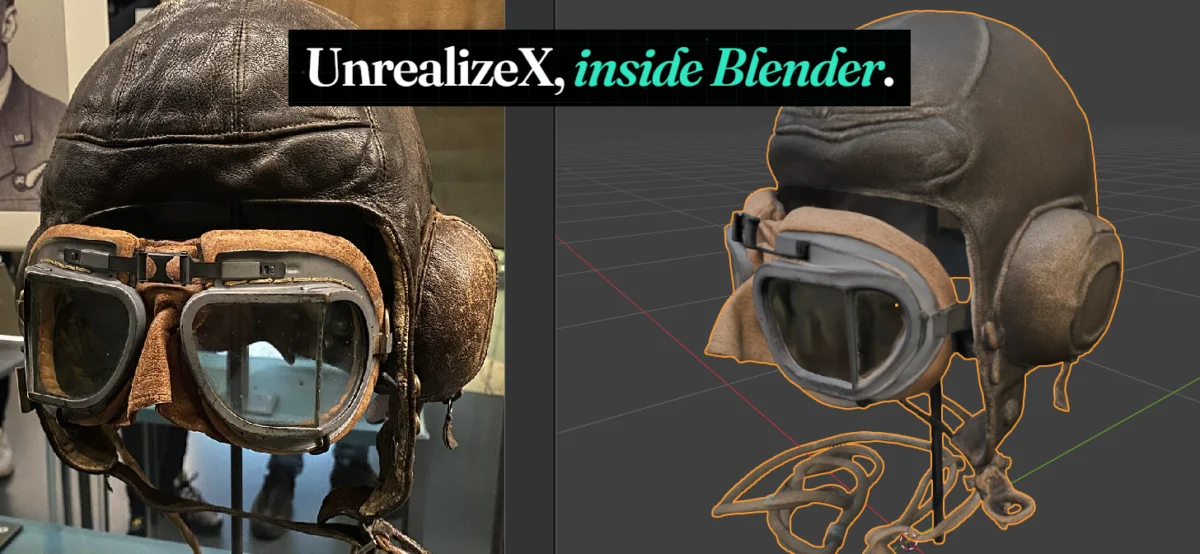
The core of UnrealizeX’s offering is its ability to perform "one-shot" 3D reconstruction. This implies that a single, well-composed photograph can be the starting point for creating a 3D model. This is a significant departure from traditional photogrammetry, which often requires multiple images captured from various angles to accurately triangulate points and build a mesh. The technology’s demonstration on a CC-0 licensed photograph of a pilot helmet showcases this capability, yielding a recognizable and detailed 3D representation from a single input.
Seamless Integration: UnrealizeX Within the Blender Ecosystem
A key aspect of UnrealizeX’s accessibility is its direct integration into Blender, the industry-standard open-source 3D creation suite. This integration means that users can now access UnrealizeX’s reconstruction capabilities directly within their familiar Blender interface, eliminating the need for cumbersome external software or complex import/export procedures. This seamless workflow is designed to accelerate the 3D asset creation pipeline, allowing artists to move from initial concept or reference image to a usable 3D model with greater efficiency.
The process, as outlined by Baechler, involves a straightforward installation of the UnrealizeX Blender extension. Once installed, the tool becomes an integral part of Blender’s toolkit, ready to be utilized for reconstruction tasks. This accessibility democratizes advanced 3D reconstruction, making it available to a wider range of users, from hobbyists to professional studios, without requiring specialized hardware or extensive software training beyond proficiency in Blender itself.
A Deeper Look at UnrealizeX’s Capabilities and Limitations
While the one-shot reconstruction is a headline feature, UnrealizeX’s pipeline encompasses other modes, some of which are currently accessible only through its web interface. These include:
- Clone Mode: This mode leverages three or more images to perform more robust triangulation. By analyzing multiple viewpoints, Clone Mode can achieve higher fidelity and accuracy, particularly for complex geometries or objects with intricate details that might be ambiguous in a single shot. This echoes traditional photogrammetry techniques but within the UnrealizeX framework.
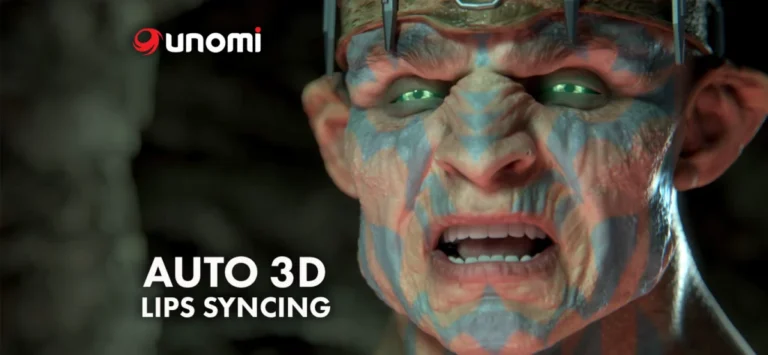
- Face Mode: This specialized mode focuses on automatic head reconstruction. It is capable of generating heads with accurate topology and shape keys from just a single photograph. This is a significant boon for character artists and game developers who frequently need to create realistic or stylized human faces. The inclusion of shape keys is particularly noteworthy, as it enables facial animation and expression manipulation directly from the reconstructed model.
It is important to note that the full suite of UnrealizeX’s features, particularly Clone Mode and Face Mode, are still in development for direct Blender integration. Their current availability via the web interface indicates an ongoing commitment to expanding the tool’s accessibility and functionality across different platforms. This phased rollout is common in software development, allowing for rigorous testing and refinement before wider release.
The CC-0 Pilot Helmet: A Practical Demonstration
The demonstration video accompanying the announcement prominently features a CC-0 licensed photograph of a pilot helmet. The availability of this model, along with the process used to reconstruct it, provides tangible evidence of UnrealizeX’s capabilities. CC-0 (Creative Commons Zero) licensing signifies that the creator has waived all rights, allowing for unrestricted use, modification, and distribution, making it an ideal resource for demonstrating and testing new technologies. The link provided for the CC-0 model allows interested parties to examine the output and potentially replicate the process themselves, fostering transparency and community engagement.
The pilot helmet, a relatively complex object with curved surfaces, distinct components, and surface details, serves as a good test case. Its successful reconstruction from a single image suggests that UnrealizeX can handle a variety of shapes and textures, a critical factor for its practical application in diverse 3D modeling scenarios.
Broader Implications for the 3D Industry
The introduction of UnrealizeX carries several implications for the broader 3D industry:
- Democratization of 3D Asset Creation: By offering a powerful yet accessible tool, UnrealizeX can empower individuals and smaller studios who may not have the resources for expensive software or extensive training in traditional 3D scanning and reconstruction.
- Enhanced Creative Control: The AI-free approach appeals to artists who prioritize direct manipulation and a deep understanding of their workflow. This can lead to more unique and artistically driven results, moving away from the often uniform aesthetics associated with some generative AI outputs.
- Efficiency Gains: The one-shot reconstruction capability, especially when fully integrated into Blender, promises significant time savings in asset creation. This is particularly relevant in industries with tight production schedules, such as gaming, film, and virtual reality.
- Alternative to Generative AI: UnrealizeX presents a viable alternative for projects where the use of generative AI might be restricted due to ethical concerns, intellectual property issues, or the need for verifiable and traceable data.
- Focus on Core Photogrammetric Principles: By emphasizing a reconstruction method that doesn’t rely on generative AI, UnrealizeX highlights the continued relevance and power of fundamental computer vision and photogrammetric techniques, potentially spurring further innovation in these areas.
Future Outlook and Development
The ongoing development of UnrealizeX, particularly the integration of Clone Mode and Face Mode into the Blender add-on, suggests a roadmap focused on expanding its utility and performance. The phased release strategy allows for iterative improvements based on user feedback and real-world application.
The availability of a CC-0 model for direct examination is a strong indicator of the UnrealizeX team’s commitment to transparency and community building. This allows users to not only see what the tool can do but also to understand the underlying principles and potentially contribute to its evolution.
As the 3D content creation landscape continues to evolve, tools like UnrealizeX, which offer innovative solutions while respecting established principles and user control, are poised to play a significant role. Its integration into Blender, a cornerstone of the open-source 3D community, further solidifies its potential impact. The focus on AI-free reconstruction offers a distinct value proposition, catering to a segment of the market that prioritizes precision, control, and a deeper understanding of the creative process. The coming months and years will likely see UnrealizeX mature, potentially becoming an indispensable tool for a wide array of 3D professionals.
About the Author