
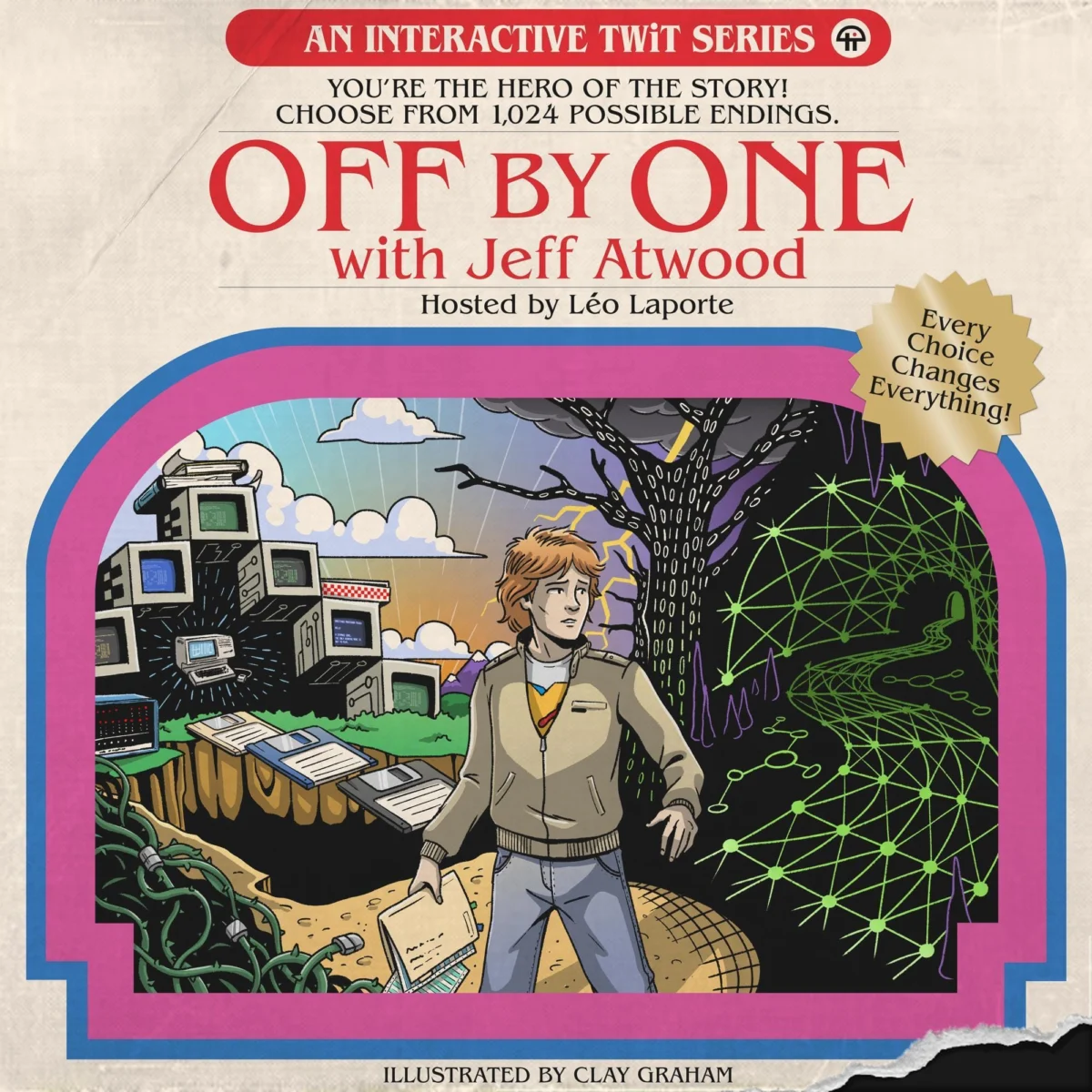
A significant new addition to the tech media landscape has arrived with the launch of "Off By One with Jeff Atwood," a monthly series on the renowned TWiT network. Co-hosted by tech luminary Jeff Atwood, co-founder of Stack Overflow and Discourse, and veteran broadcaster Leo Laporte, the show aims to offer a distinctive blend of in-depth tech discussion, personal reflection, and social commentary. The second episode, titled "From Stack Overflow to Stay Gold, America," has recently been released, providing a comprehensive look into the show’s unique style and thematic focus.
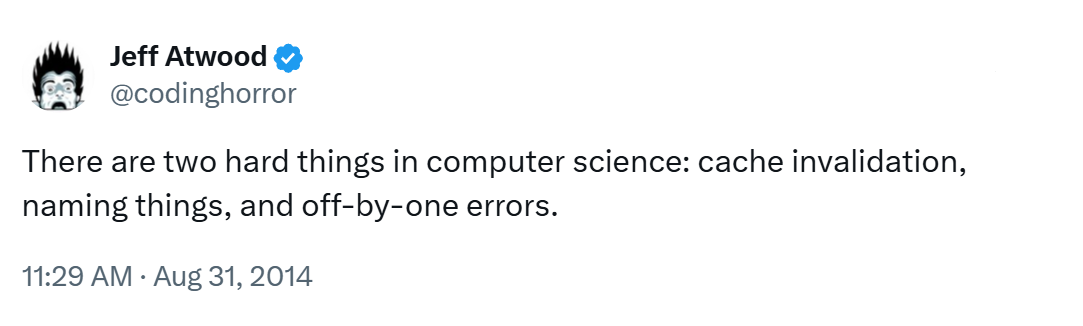
The series title, "Off By One," is a deliberate nod to a classic programmer’s joke, playing on the "two hard things in computer science" adage often attributed to Phil Karlton (or sometimes Martin Fowler, as referenced in the article’s accompanying image). The joke, which typically lists "cache invalidation and naming things," is humorously extended to include "off-by-one errors," a common pitfall in programming where loops or arrays are miscalculated by a single unit. This self-aware, jocular approach immediately signals the show’s intention to engage with the tech world in a manner that is both knowledgeable and disarmingly informal. Atwood himself noted the difficulty of naming things, recalling how even Stack Overflow’s name was a community decision, underscoring the collaborative spirit he often champions.
The Genesis of a New Tech Dialogue
The collaboration between Atwood and Laporte began approximately three weeks prior to the recording of the first episode, stemming from an initial guest appearance by Atwood on TWiT’s "Intelligent Machines" program. This pivotal moment, facilitated by Wesley Faulkner, who introduced Atwood to Laporte, proved to be a catalyst for the new series. Atwood’s guest slot on "Intelligent Machines #859" on February 25th, alongside Paris Martineau and Jeff Jarvis, showcased a "chaotic good" energy that evidently resonated with Laporte and the TWiT team, prompting the development of a dedicated monthly show. This organic progression from guest spot to co-host highlights TWiT’s strategy of fostering authentic conversations and recognizing compelling on-air chemistry. The "Intelligent Machines" appearance, particularly the first 45 minutes, is cited by Atwood as a precursor to the "Off By One" dynamic, albeit with a more unrestrained delivery.
TWiT.tv, founded by Leo Laporte, has been a cornerstone of tech podcasting and broadcasting since 2005. Known for its extensive network of shows covering a wide array of technology topics, from consumer gadgets to enterprise software, TWiT has cultivated a loyal audience base. The addition of "Off By One" with Jeff Atwood, a figure revered for his foundational contributions to online developer communities and his incisive commentary on software development practices through his "Coding Horror" blog, significantly bolsters TWiT’s programming lineup. Atwood’s history with Stack Overflow, launched in 2008, fundamentally reshaped how developers seek and share knowledge, establishing him as a credible and influential voice in the industry. His later work with Discourse, an open-source platform for community discussions, further cemented his commitment to fostering productive online interactions.
Show Format and Philosophical Underpinnings
"Off By One" distinguishes itself with an unapologetically positive and free-flowing format. Atwood describes the 1-hour and 47-minute second episode as "pure joy end to end. No negativity, just low-level insanity and of course, mandatory fun." This ethos represents a conscious departure from the often critical or problem-focused discussions prevalent in some tech media. Instead, the show aims to create an environment where enthusiasm for technology and its broader implications can be shared authentically. The show’s permanent homepage, twit.tv/obo, features artwork by claygrahamart.com, depicting an interactive series where viewers are "the hero of the story," choosing from 1,024 possible endings, further emphasizing the playful and engaging nature of the content. The description on the TWiT site highlights the show’s conversational style: "Jeff Atwood… joins Leo Laporte monthly for a conversation that follows its own logic. Prop comedy, computing history, the open web, wealth inequality, yo-yos. Off by one topic at all times, in the best possible way." This promises a rich, unpredictable tapestry of subjects, reflective of the hosts’ diverse interests.
Atwood’s stated motivation for the show resonates deeply with a philosophy he has previously articulated on his "Coding Horror" blog: "My happiness only becomes real when I share it with all of you." This sentiment underscores the communicative and community-driven core of his professional life. The show, through its video and audio format, offers a new dimension to this sharing, allowing viewers to "see and hear how we feel," thereby making the connection more visceral and immediate than written text alone. This emphasis on emotional transparency and shared experience is a key differentiator in a media landscape often dominated by dispassionate analysis.
Key Thematic Discussions and Social Commentary
The second episode of "Off By One" delved into several significant topics, showcasing the show’s capacity to pivot from lighthearted banter to profound societal discussions. Three key quotes from Atwood provide a window into the depth and breadth of these conversations:
-
"Survivable Code" and the Zen of "No Code at All": Atwood, despite his immense influence, humbly states, "I am not an elite coder by any stretch of the imagination… I am very persistent." This self-assessment is immediately challenged by Laporte, who identifies Atwood as "one of the chief voices, in coding." Atwood clarifies his role: "Well, I advocate for code that doesn’t kill you in so many different ways. You know, survivable code. Ideally, no code at all. That’s the best code, is none." This seemingly paradoxical statement reflects a mature engineering philosophy that prioritizes simplicity, robustness, and the avoidance of unnecessary complexity. It speaks to the broader movement within software development towards maintainable systems, reduced technical debt, and thoughtful design over sheer lines of code. The "zen statement" implies that the ultimate goal of good engineering is often to solve problems without writing new, potentially buggy, software, by leveraging existing solutions or re-evaluating the problem itself. This advocacy for "good engineering, good process" and a collaborative, human-centric approach underscores Atwood’s long-standing commitment to pragmatic and ethical software development.

-
"Winning Capitalism and Making it Better for Everyone": In a poignant reflection on his father’s passing, Atwood recounts calling it "the last season of the John Atwood show," a period marked by both personal challenge and profound realization. He states, "Because we won capitalism, and then we went back and made it better for everyone. I don’t think it gets better than that for me." This powerful statement alludes to the success of his entrepreneurial ventures, particularly Stack Overflow, which achieved significant financial and cultural impact. However, it transcends mere personal financial gain, suggesting a deeper commitment to using that success to create broader positive change. This perspective aligns with a growing discourse among tech leaders about the social responsibilities that accompany significant wealth and influence, moving beyond individual achievement to collective betterment. It implies a recognition that economic success, particularly in the tech sector, carries an obligation to address systemic issues.
-
Addressing Wealth Inequality and Poverty: Perhaps the most impactful segment of the discussion revolved around wealth inequality. Atwood presented a compelling, data-driven argument: "I’ve done some research and if we simply collected a fair tax from Billionaires, we could literally eliminate all poverty in this country at the 100% FPL level, which is $15,000 per year. All poverty. We would have zero poverty. We have the means to do it." Laporte’s response, "That’s really important," emphasizes the gravity of the claim, to which Atwood adds, "We lack the will." This direct challenge to prevailing economic paradigms injects a critical social justice dimension into the tech conversation. Atwood’s assertion is supported by numerous economic studies and reports from organizations like Oxfam, the Federal Reserve, and the Congressional Budget Office, which frequently highlight the widening gap between the ultra-wealthy and the rest of the population, and the potential for progressive taxation to fund social programs. For instance, recent analyses often estimate that a modest wealth tax or increased income tax on the highest earners could generate hundreds of billions of dollars annually, far exceeding the costs associated with lifting all individuals above the poverty line in many developed nations. By bringing this topic to the forefront, "Off By One" positions itself not just as a tech show, but as a platform for discussing the ethical and societal responsibilities of the tech industry and its leaders.
Insights from the "Intelligent Machines" Precursor
The "Intelligent Machines #859" episode, which served as the informal pilot for Atwood’s monthly appearances, also contained moments of significant commentary. Two quotes from this earlier discussion further illuminate the themes "Off By One" is set to explore:
-
The Responsibility of Abundance: Laporte posed a critical question, stating, "If you have everything you need, then help others have everything they need." Atwood’s immediate, almost exasperated response, "What is money even FOR? I don’t even have ‘that much’, what do you.. how do you spend it all? I don’t have.. I just want a simple life, man!" highlights a tension often observed among successful tech entrepreneurs. While many accumulate vast wealth, some express discomfort with extreme affluence and advocate for redistribution or philanthropic efforts. This sentiment underscores a growing awareness within the tech community about the moral obligations tied to disproportionate success, especially in an era of increasing social and economic disparities. It touches upon the broader philosophical question of purpose beyond personal accumulation.
-
LLMs as "JPEG for Words": Atwood offered a concise and insightful analogy for Large Language Models (LLMs): "I call it JPEG for words, which it kind of is." He elaborates on their strengths, particularly in summarization, drawing from Discourse’s implementation of AI features. He notes that LLMs are "very accurate with summaries" and can "capture the key points… without much loss," functioning as a "JPEG for that conversation." However, he also points out their fundamental limitation: "It has no actual understanding. It’s playing a game of global brain statistics and copy paste." This analogy is particularly apt, as JPEG compression, while efficient, involves a loss of data and can sometimes distort details, especially in certain types of images (e.g., "Garfield is a bad choice, for, yknow, JPEG"). Similarly, LLMs excel at synthesizing existing information but lack true comprehension or the ability to generate genuinely novel insights beyond statistical correlations. This perspective is crucial in the ongoing public and academic debate about the nature of artificial intelligence, its capabilities, and its potential misuses, offering a grounded assessment from a seasoned tech practitioner.
-
The Second Gilded Age: Atwood directly addressed the current economic climate, drawing parallels to a historical period: "Ok, the first guilded age, we’re deep in the second one now. I mean, just look up the numbers. More money in the hands of fewer people than in any other period of time. In the first guilded age, that was basically the railroad barons. Guess who it is in the second guilded age? I’m in this picture and I don’t like it. So like, what are we gonna do about it?" This stark observation highlights the escalating concentration of wealth in the hands of a few, particularly within the tech sector. Atwood’s self-deprecating humor ("I’m in this picture and I don’t like it") acknowledges his own position within this system while simultaneously challenging it. This statement is a powerful call to action, urging reflection on the responsibilities of those who have benefited most from the current economic structure. It frames the show not just as entertainment, but as a platform for critical engagement with pressing societal issues, encouraging listeners to consider their role in addressing these imbalances.
Community Engagement and Future Outlook
Beyond the engaging content, "Off By One" is actively fostering community interaction. The show records its next episode in four days, offering a live stream exclusively for Club TWiT Members. Club TWiT is TWiT’s subscription service, providing members with ad-free content, exclusive shows, and access to live recordings and a Discord community. To encourage new memberships and gauge audience reception, Atwood is offering to cover a full year of Club TWiT membership for the first 10 people who watch the entire second episode, like what they see, and fill out a specific form. This direct incentive demonstrates a commitment to building a dedicated viewership and gathering immediate feedback.
Further emphasizing community involvement, Atwood encourages discussion not only in the comments section of his blog but more actively on the TWiT community Discourse platform. He subtly promotes the "power of the paragraph" and coherent narrative in online communication, linking it to improved writing and even life skills, a theme consistent with his long-standing advocacy for quality online discourse. The playful rumor of "Junk" (an alias for Atwood) potentially sending "super cool little token[s] of appreciation" to regular posters on the TWiT Discourse adds a layer of gamification and personal touch to community building.
"Off By One with Jeff Atwood" represents a deliberate effort to blend the technical acumen and community-building experience of Jeff Atwood with the seasoned broadcasting prowess of Leo Laporte and the extensive reach of the TWiT network. By embracing a format that allows for both lighthearted exploration and serious social commentary, the show aims to cultivate a unique space in tech media. It seeks to make happiness "real" through shared experience, fostering a positive and engaging environment for discussing not just the intricacies of code, but also the broader ethical, social, and economic implications of technology in the 21st century. The early episodes suggest that the series is poised to become a significant platform for nuanced and impactful conversations, moving "off by one topic at all times" in a way that ultimately enriches the overall discourse.
About the Author







