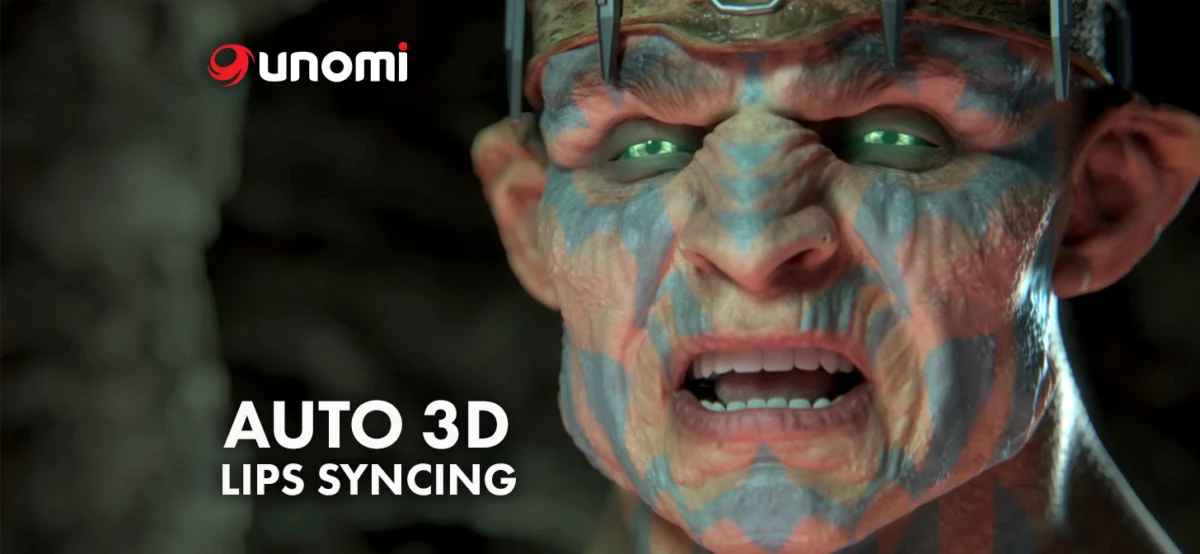
The integration of UNOMi’s advanced artificial intelligence-powered lip-sync technology into Blender marks a significant milestone for 3D animation workflows, promising to dramatically accelerate the creation of expressive character performances. This groundbreaking development, officially announced today, liberates animators, game developers, and entire studios from the often tedious and time-consuming process of manually crafting accurate lip movements for dialogue. UNOMi’s innovative system automatically analyzes spoken words and translates them into precise, character-specific lip-sync animations, a capability that has long been a bottleneck in the animation production pipeline.
The Genesis of UNOMi and its Blender Integration
UNOMi, a company at the forefront of AI-driven animation solutions, has been steadily expanding its reach across professional 3D animation pipelines. The decision to bring their core technology to Blender, a widely adopted, open-source 3D creation suite, signifies a strategic move to democratize access to high-quality facial animation tools. Blender, with its robust feature set and a thriving global community of artists and developers, presents an ideal platform for UNOMi to showcase its capabilities and gather invaluable user feedback.
The journey to this integration likely involved extensive research and development, focusing on refining the AI algorithms to understand the nuances of human speech and translate them into a diverse range of facial expressions. For years, achieving realistic lip-sync has been a highly skilled and labor-intensive task. Animators would meticulously study waveform data of dialogue, painstakingly keyframing each phoneme or viseme (visual representation of a sound) for every spoken word. This process, while yielding high-quality results, could consume days or even weeks for a single character, particularly for lengthy dialogue sequences. UNOMi’s AI aims to condense this process into a matter of minutes, a paradigm shift in animation production efficiency.
The current iteration of UNOMi’s Blender integration boasts support for a substantial array of languages, including English, Spanish, Mandarin, Portuguese, French, German, Korean, and Russian. This broad linguistic coverage is crucial for a global industry that increasingly relies on localized content. The company has explicitly stated that additional languages are already in development, underscoring their commitment to making UNOMi a truly universal tool. This multilingual capability is particularly impactful for international game development studios and animation houses producing content for diverse markets, where the cost and time associated with re-animating dialogue for different languages can be prohibitive.
Redefining Efficiency in Animation Workflows
The core value proposition of UNOMi lies in its ability to drastically reduce the manual effort required for facial animation. By automating the analysis of dialogue and the generation of corresponding lip-sync, the technology allows animators to reclaim significant amounts of time. This reclaimed time can then be reallocated to more creative and nuanced aspects of character performance, such as subtle emotional expressions, secondary animations, and overall character acting. For independent animators and small studios, this efficiency gain can be transformative, enabling them to compete with larger, more resource-intensive organizations.
According to industry reports, the average cost of producing a minute of high-quality animated content can range from thousands to tens of thousands of dollars, with facial animation being a significant contributor to these costs. Tools like UNOMi, by streamlining a critical part of this process, can lead to substantial cost savings. Furthermore, the speed at which animators can now iterate on dialogue performances means that creative directors and clients can provide feedback and see revisions implemented much more rapidly, leading to a more agile and responsive production cycle.
The company’s stated goal is to make "professional character animation faster and more accessible while still allowing animators to maintain creative control over their characters." This emphasis on maintaining creative control is vital. AI-driven tools in the creative space often face apprehension from artists who fear their roles will be diminished or their artistic vision compromised. UNOMi appears to be addressing this concern by positioning its technology as an augmentation of the animator’s skill, rather than a replacement. The AI generates a foundational lip-sync, which animators can then refine, tweak, and enhance to imbue their characters with unique personalities and emotional depth. This collaborative approach between AI and human creativity is likely to be the future of many artistic disciplines.
The Significance of Blender Adoption
Blender’s open-source nature and its widespread adoption across various sectors of the creative industry make it a strategic choice for UNOMi. Blender is used by independent artists, hobbyists, educational institutions, and increasingly, by professional studios for everything from pre-visualization to final rendering. Its accessibility means that UNOMi’s powerful lip-sync technology is no longer confined to expensive proprietary software packages but is now available to a vast and diverse user base.
The integration into Blender’s ecosystem also opens up possibilities for community-driven development and feature requests. As UNOMi explicitly states, "We’d love to hear feedback from Blender artists and animators about the features they’d like to see us develop next." This open dialogue suggests a commitment to evolving the tool based on the practical needs and innovative ideas of its users. The Blender community is known for its ingenuity and its ability to push the boundaries of what’s possible with the software, and their input could lead to novel applications and further advancements of UNOMi’s technology.
The availability of a video demonstration showcasing UNOMi AI Lip Sync running directly within Blender further solidifies the reality of this integration. The embedded video, titled "UNOMi 3D Lip SYNC PERSPECTIVE TEST," serves as a tangible proof of concept, allowing potential users to witness the technology in action. Such visual demonstrations are crucial in the animation industry, where the impact of a tool is often best understood by seeing its output.
Broader Implications for the Animation Industry
The widespread adoption of AI-powered lip-sync solutions like UNOMi has several far-reaching implications for the animation industry:
- Increased Accessibility: Professional-grade facial animation, once a domain requiring specialized skills and expensive software, becomes more accessible to a wider range of creators. This can foster a new generation of animators and storytellers who might have previously been deterred by the technical hurdles.
- Accelerated Production Cycles: The significant time savings can lead to faster turnaround times for animated projects, allowing for more content to be produced and potentially reducing the overall cost of animation. This could lead to more independent animated films, web series, and game cinematics.
- Enhanced Character Expressiveness: By offloading the laborious task of lip-sync, animators can dedicate more effort to conveying subtle emotions and personality through facial animation, leading to more believable and engaging characters.
- Democratization of Advanced Tools: The integration into an open-source platform like Blender ensures that these advanced AI capabilities are not locked behind expensive licenses, fostering a more equitable landscape for creators worldwide.
- New Avenues for Innovation: The efficiency gains might spur new forms of animated content or necessitate the development of new storytelling techniques that leverage rapid iteration and dynamic character performances.
The current support for eight major languages is a strong foundation, but the promise of further language expansion is critical. As global content consumption continues to rise, the ability to produce localized animated assets quickly and efficiently will become an increasingly valuable asset. This can empower smaller studios to compete in international markets and enable larger studios to expand their reach with greater ease.
The excitement within the UNOMi team about bringing their technology to the Blender community is palpable. This enthusiasm is a positive indicator of the potential synergy between cutting-edge AI development and a vibrant, open-source creative platform. The future of character animation is undoubtedly being shaped by the intersection of artificial intelligence and artist-driven creativity, and UNOMi’s integration into Blender represents a significant step forward in this evolving landscape. The call for feedback from Blender artists suggests a collaborative approach to development, ensuring that UNOMi remains a relevant and powerful tool for the community it now serves.
About the Author