
The Core of the Wager: Defining Level 5 Autonomy
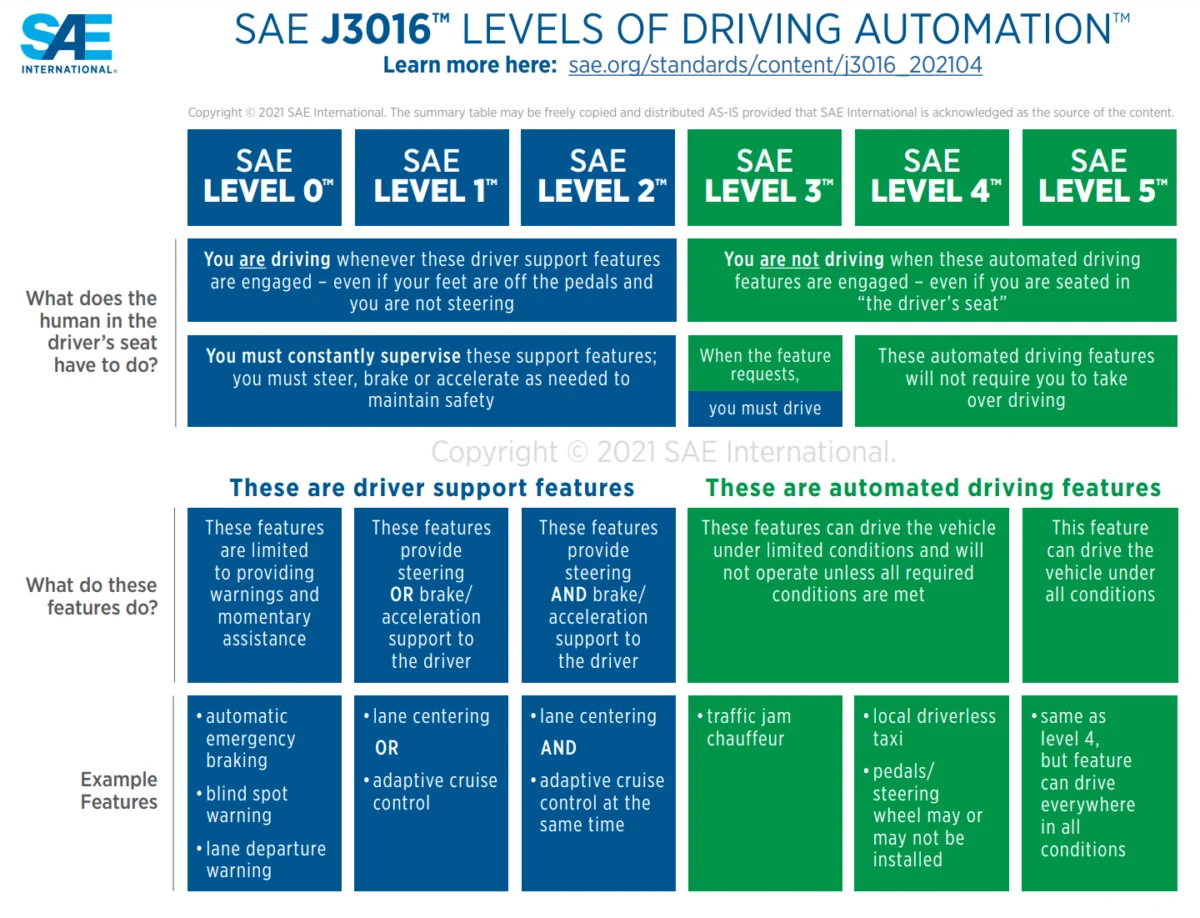
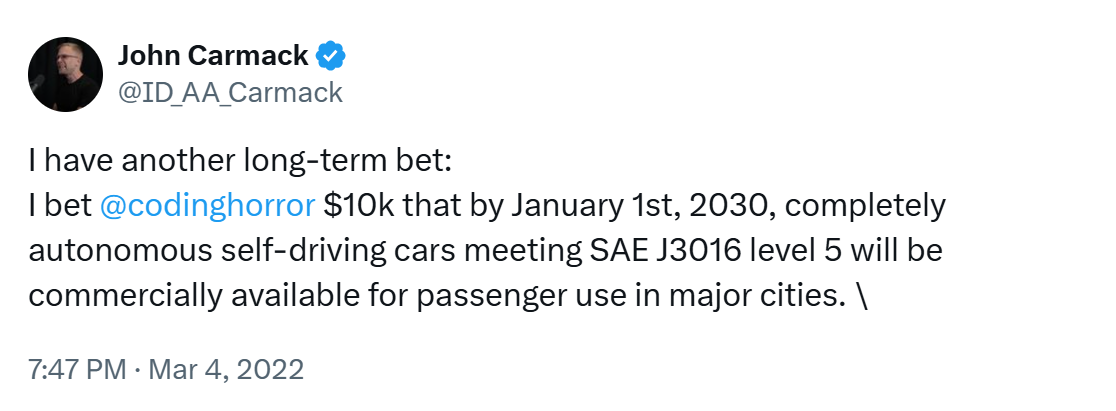
The crux of the bet hinges on a precise definition of "completely autonomous self-driving cars" as per the Society of Automotive Engineers (SAE) J3016 standard, specifically Level 5. This designation represents the pinnacle of autonomous driving capability, signifying a vehicle that can perform all driving tasks under all conditions, excluding only natural disasters or extreme emergencies. In practical terms, a Level 5 vehicle would require zero human attention or interaction during a journey. A passenger would simply enter the vehicle, select a destination, and the car would handle every aspect of navigation, driving dynamics, and environmental interaction without any need for human intervention. This contrasts sharply with lower levels of autonomy, where human drivers retain some degree of responsibility, whether for monitoring the system, intervening in specific scenarios, or being ready to take over.
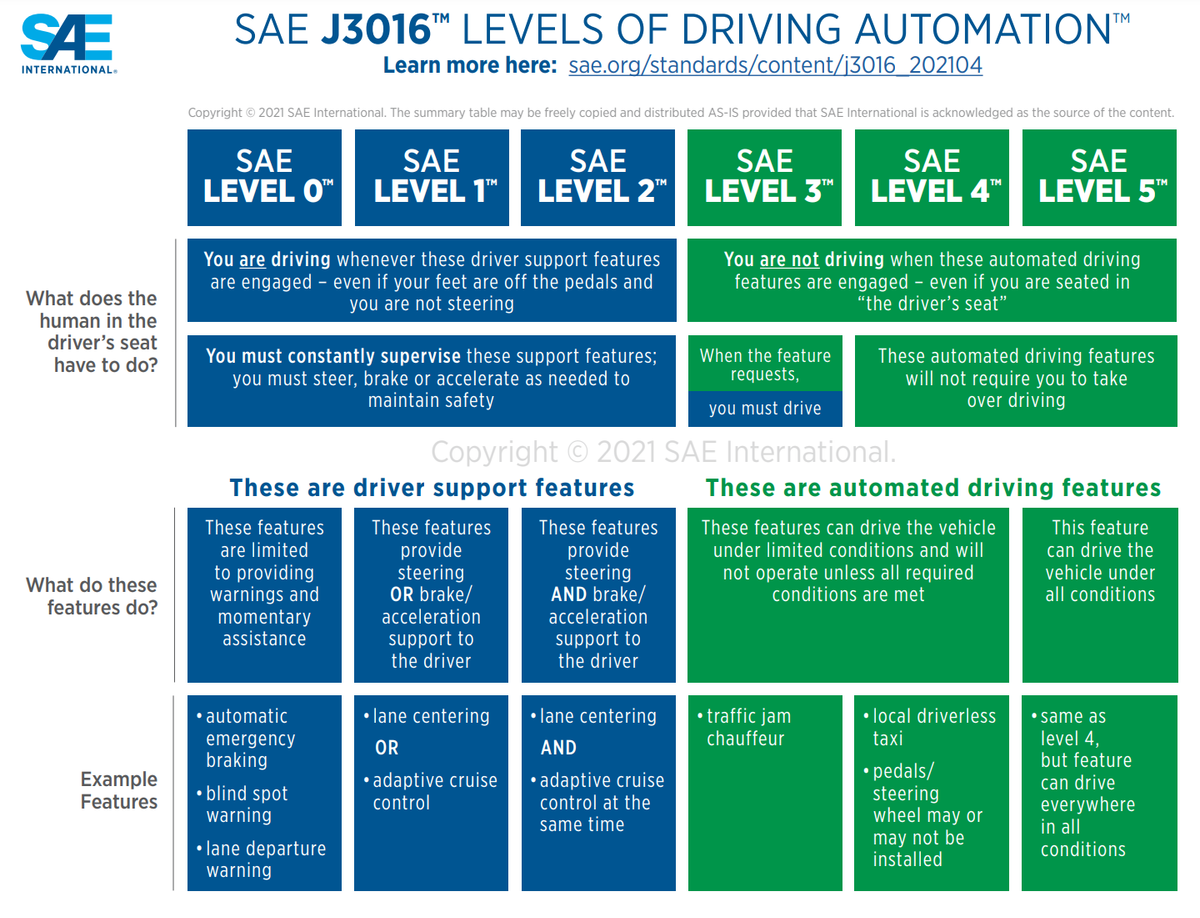
The SAE J3016 standard delineates six levels of driving automation, from Level 0 (no automation) to Level 5 (full automation).
- Level 0: No Automation – The human driver does all the driving.
- Level 1: Driver Assistance – The vehicle can sometimes assist with steering or braking/accelerating, but the human driver does most of the driving and monitors the environment. Examples include adaptive cruise control or lane-keeping assist.
- Level 2: Partial Automation – The vehicle can take over both steering and braking/accelerating in specific conditions, but the human driver must remain engaged with the driving task and constantly supervise the system. Features like Tesla’s Autopilot or GM’s Super Cruise fall into this category.
- Level 3: Conditional Automation – The vehicle can perform all driving tasks under specific environmental conditions, and the human driver is not required to monitor the environment continuously. However, the human driver must be ready to intervene if the system requests it. This is often referred to as "eyes off" but "mind on" driving.
- Level 4: High Automation – The vehicle can perform all driving tasks and monitor the driving environment under specific operational design conditions (ODD). The human driver is not expected to intervene, and if the system fails, it can bring itself to a safe stop. This level is currently seen in limited commercial robotaxi services in geofenced areas.
- Level 5: Full Automation – The vehicle can perform all driving tasks and monitor the driving environment under all road conditions and environmental circumstances that a human driver could handle. No human intervention is ever required, making the vehicle capable of operating anywhere, anytime, a human could drive.
The "major cities" clause further defines the scope, specifying any of the top 10 most populous cities in the United States. As of recent census data, these typically include New York City, Los Angeles, Chicago, Houston, Phoenix, Philadelphia, San Antonio, San Diego, Dallas, and San Jose. For Level 5 autonomy to be considered commercially available, it would need to be operational and accessible for passenger use in at least one of these densely populated and complex urban environments. This stipulation adds a layer of difficulty, as urban driving presents myriad unpredictable scenarios, from dense traffic and pedestrian interactions to complex intersections and diverse weather conditions, all of which a Level 5 system must flawlessly navigate.
The Contenders: Atwood’s Skepticism vs. Carmack’s Optimism
Jeff Atwood, a respected voice in software development and technology discourse through his popular blog, Coding Horror, and his pivotal role in creating Stack Overflow, has positioned himself as the skeptic in this wager. His stance stems from a belief that the industry, and perhaps the public at large, is "underestimating how difficult fully autonomous driving really is." While expressing no fundamental opposition to self-driving technology – indeed, he envisions a future where he can utilize travel time for reading or interacting with family instead of driving – Atwood views Level 5 autonomy as an "incredibly challenging computer science problem." His bet against the 2030 deadline is not a dismissal of the technology’s potential but rather a realistic appraisal of the immense technical hurdles that remain. He frames his position as a "challenge" to the engineering community, urging them to "prove me wrong! Make it happen by 2030, and I’ll be popping champagne along with you and everyone else!" This perspective aligns with a broader sentiment among some engineers and researchers who acknowledge the exponential difficulty in moving from highly constrained Level 4 systems to truly ubiquitous Level 5 capabilities.
On the other side of the wager is John Carmack, a legendary figure whose contributions to computer graphics and game development (co-founder of id Software, creator of Doom and Quake) have profoundly shaped the digital landscape. More recently, Carmack has been deeply involved in virtual reality (as CTO of Oculus VR) and artificial intelligence, particularly with his current venture, Keen Technologies, focused on AGI research. His decision to bet for Level 5 autonomy by 2030 reflects an optimistic outlook on the pace of technological advancement, especially in AI and machine learning. Carmack’s career has been characterized by pushing the boundaries of what’s possible, and his confidence in the future of autonomous vehicles likely stems from a deep understanding of the rapid progress in computational power, sensor technology, and AI algorithms. While not explicitly stated in the announcement, his "for" bet implicitly suggests a belief that the current trajectory of innovation, combined with sustained investment, will be sufficient to overcome the remaining challenges within the decade.
The wager itself was reportedly suggested by Carmack as a "fun way to generate STEM publicity," highlighting the intellectual curiosity and competitive spirit that drives both individuals. Atwood expressed his admiration for Carmack, calling him "one of my biggest heroes," underscoring the friendly nature of the challenge despite their differing perspectives on the timeline.
The Current State of Autonomous Driving: Progress and Potholes
As of early 2024, the autonomous driving industry has made significant strides, yet Level 5 remains an elusive goal. Most commercially available systems operate at Level 2, requiring constant driver supervision. Companies like Tesla offer "Full Self-Driving" (FSD) beta software, which, despite its name, is a Level 2 system that necessitates an attentive human driver. Regulatory bodies and safety advocates consistently remind users that these systems are driver-assistance features, not autonomous.
Level 4 autonomy, however, has begun to see limited deployment. Waymo (an Alphabet company) and Cruise (majority-owned by General Motors) have launched robotaxi services in select cities, such as Phoenix, San Francisco, and Austin. These services operate within defined operational design domains (ODDs), which include specific geographical areas, weather conditions, and times of day. For instance, Waymo operates 24/7 in Phoenix, even expanding to high-speed routes, demonstrating robust performance within its ODD. Cruise, on the other hand, faced significant setbacks in late 2023, suspending all driverless operations after an incident in San Francisco led to regulatory scrutiny and the revocation of its California deployment permit. These incidents underscore the immense complexity and the public safety implications of even Level 4 systems, let alone Level 5.
The development landscape is crowded with major automotive manufacturers (e.g., Mercedes-Benz, BMW, Audi, Ford, Volvo) and tech giants (e.g., Amazon’s Zoox, Apple’s rumored car project) pouring billions into R&D. Venture capital funding for autonomous vehicle startups has also been substantial, reflecting the perceived long-term value of the technology. However, the path has been marked by a shifting narrative, from early, highly optimistic predictions of widespread deployment by the mid-2020s to a more sober realization of the profound challenges involved.

Technological Hurdles to Universal Level 5 Autonomy
Achieving Level 5 autonomy by 2030 presents a formidable array of technological challenges that go far beyond current capabilities.
- Perception in All Conditions: Current sensor suites (cameras, lidar, radar, ultrasonic) perform well in ideal conditions but struggle with "edge cases" – heavy rain, snow, dense fog, direct sunlight glare, or situations where road markings are obscured. A Level 5 system must reliably perceive its environment, identify objects, and understand their intent under any condition a human could drive in.
- Artificial Intelligence and Decision Making: The AI driving stack needs to exhibit human-like reasoning, prediction, and adaptability. This includes anticipating unpredictable human behavior (pedestrians, cyclists, other drivers), understanding complex social cues on the road, and making nuanced decisions in ambiguous situations. The sheer number of permutations in real-world driving scenarios makes "training" an AI for every eventuality practically impossible. The challenge lies in developing AI that can generalize and learn from unforeseen situations without explicit programming for every edge case.
- Robustness Against Adversarial Attacks and Cyber Threats: As autonomous vehicles become more sophisticated, they also become potential targets for cyberattacks, which could compromise safety or functionality. Ensuring robust security measures is paramount.
- Mapping and Localization: While high-definition maps are crucial for current autonomous systems, a Level 5 vehicle needs to operate even in areas without pre-mapped data or when maps are outdated. This requires superior real-time mapping and localization capabilities.
- Hardware and Software Integration: Seamless integration of myriad sensors, powerful onboard computing (often requiring specialized AI chips), sophisticated software algorithms, and redundant safety systems is critical. These systems must be fail-operational, meaning they can continue to function safely even if a component fails.
- Regulatory and Validation Frameworks: Proving the safety and reliability of Level 5 systems to regulatory bodies presents its own challenge. How many miles of testing are sufficient? How do you account for all possible scenarios? The current regulatory frameworks are still evolving and largely designed for human-driven vehicles or lower levels of automation.
Regulatory and Societal Challenges
Beyond the technical complexities, the path to Level 5 autonomy is paved with significant regulatory and societal hurdles.
- Legal and Liability Frameworks: Determining fault in an accident involving a Level 5 autonomous vehicle introduces complex legal questions. Is it the manufacturer’s fault, the software developer’s, or a combination? Existing legal frameworks are ill-equipped for this paradigm shift.
- Standardization and Certification: There’s a need for internationally recognized standards for testing, validation, and certification of Level 5 systems to ensure interoperability and safety across different manufacturers and regions.
- Public Acceptance and Trust: Despite the potential for improved safety and efficiency, public trust in autonomous technology remains fragile. High-profile incidents, even minor ones, can significantly erode confidence. Widespread adoption of Level 5 vehicles will require extensive public education and a proven track record of impeccable safety.
- Infrastructure Adaptation: While Level 5 vehicles are designed to operate without special infrastructure, smart city initiatives, vehicle-to-everything (V2X) communication, and improved road markings could further enhance their capabilities and integration.
- Ethical Considerations: Autonomous vehicles will inevitably face "trolley problem" scenarios – situations where they must make choices with unavoidable negative outcomes. Programming these ethical dilemmas is a profound challenge with no easy answers.
Expert Perspectives and Industry Outlook
Many industry experts and analysts share Jeff Atwood’s cautious optimism regarding Level 5 autonomy by 2030. While acknowledging the rapid progress in AI and sensor technology, the consensus often leans towards Level 4 autonomy becoming more widespread and robust within specific operational design domains. Truly universal Level 5, capable of navigating any road, any weather, any time, is often seen as a goal requiring more than a decade to achieve, perhaps closer to 2040 or even later.
Analysts point to the "long tail" of unforeseen challenges – the 0.01% of edge cases that are exceedingly rare but demand a perfect response. Addressing these requires vast amounts of real-world data, sophisticated simulation environments, and breakthroughs in generalizable AI. Some predict a hybrid future, where autonomous systems handle routine driving, but human intervention remains an option for highly complex or truly unprecedented situations, effectively making Level 4 the practical peak for the foreseeable future.
However, proponents like John Carmack likely draw inspiration from the accelerating pace of AI development. Recent advancements in large language models and other forms of generative AI have demonstrated capabilities that were considered far-fetched just a few years ago. This exponential growth in AI’s problem-solving abilities might lead Carmack to believe that the "hardest parts" of Level 5 autonomy – complex decision-making and understanding nuanced environments – could be solved more quickly than traditional engineering timelines suggest.
Implications of the Wager
Beyond the immediate financial stake, the bet between Atwood and Carmack carries significant symbolic weight. It highlights a critical debate within the tech community about the realistic timelines for achieving truly transformative AI-driven technologies. Such high-profile discussions serve to:
- Generate Public Awareness: The wager brings complex technological concepts like SAE levels and AI challenges into mainstream discussion, fostering greater public understanding.
- Spur Innovation: By setting a clear, albeit ambitious, deadline, the bet indirectly encourages engineers and researchers to push boundaries and potentially accelerate development.
- Benchmark Progress: Regardless of the outcome, January 1st, 2030, will serve as a concrete point of reflection on how far autonomous driving technology has come, and how much further it still needs to go.
- Influence Investment: Public confidence and perceived timelines can impact investment decisions in the autonomous vehicle sector.
The charitable aspect of the wager also adds a noble dimension. The $10,000, which may be adjusted for inflation by mutual agreement in 2030 to ensure its intended impact, will benefit a 501(c)(3) charity. This ensures that regardless of who wins the technical debate, a worthy cause will ultimately benefit from this intellectual sparring.
Atwood also briefly touches upon his more pessimistic view on virtual reality (VR), suggesting it won’t achieve "changing the world" status in our lifetimes, favoring augmented reality (AR) and projection technologies instead. This indicates a broader pattern of Atwood’s thoughtful, often contrarian, takes on emerging technologies, positioning him as a critical analyst of tech hype cycles. He also used the platform to call for code contributions to a project aimed at updating a foundational BASIC programming book, with proceeds also going to charity, reinforcing his commitment to community and education.
In conclusion, the $10,000 bet between Jeff Atwood and John Carmack is more than just a personal wager; it’s a public discourse on the future of transportation, a challenge to the engineering world, and a reflection of the differing philosophies within the tech industry regarding the pace and feasibility of advanced AI. As 2030 approaches, the world will watch to see if the promise of ubiquitous Level 5 autonomy materializes, proving Atwood wrong and validating Carmack’s enduring optimism.
About the Author







