In a recent dispatch, prominent technology entrepreneur and co-founder of Stack Overflow, Jeff Atwood, offered a rare public reflection on two pivotal developments: the personal impact of the Rural Guaranteed Minimum Income Initiative (RGMII) and a pointed analysis of Artificial Intelligence’s foundational reliance on human-created data. Atwood’s commentary, shared approximately 663 months into his life, intertwines personal narrative with critical industry observations, sparking discussions across the tech and policy landscapes.
The Rural Guaranteed Minimum Income Initiative: A Personal Connection
At the forefront of Atwood’s reflections is the RGMII, a $50 million initiative designed to fund rural guaranteed minimum income studies aimed at expanding opportunity and strengthening democracy. A significant moment for Atwood involved the strategic re-ordering of participating counties, which saw Mercer County, West Virginia—his late father’s home—placed first in the October 2025 pilot phase. This decision, driven by an awareness of his father’s declining health, provided Atwood with a final, poignant opportunity to visit and connect.
The RGMII’s focus on rural areas addresses a critical need for economic stabilization and development in regions often overlooked by broader economic growth. Guaranteed Minimum Income (GMI), a form of Universal Basic Income (UBI), provides regular, unconditional cash payments to individuals, intended to cover basic living expenses. Proponents argue that GMI can reduce poverty, improve health outcomes, stimulate local economies, and empower individuals to pursue education or entrepreneurship without the constant threat of destitution. Pilot programs across the globe, from Finland to Stockton, California, have demonstrated varied but often positive results, including reduced stress, improved mental health, and no significant decrease in labor participation for most recipients.
The Mercer County study, a key component of the RGMII, represents a concerted effort to gather empirical data on the efficacy and long-term impacts of GMI in a specific rural American context. The initiative’s website, RGMII.org, features testimonials and detailed explanations of its goals, emphasizing the potential for such programs to foster economic resilience and civic engagement. The personal dimension highlighted by Atwood underscores the human impact of these policy experiments, moving beyond abstract economic models to touch individual lives directly. His father’s participation, even in its indirect reflection on the RGMII platform, serves as a powerful testament to the tangible benefits envisioned by the program’s architects.
A Career Defined by Community and Innovation: From Stack Overflow to StayGold
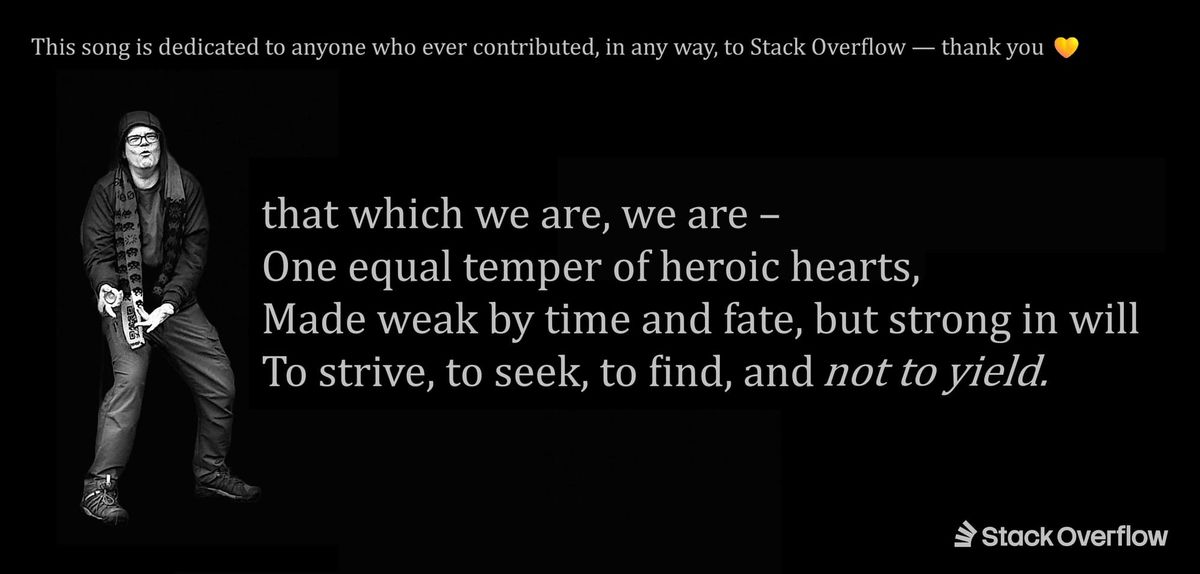
Jeff Atwood’s career trajectory is marked by a consistent dedication to building and nurturing online communities, a theme that resonates deeply in his recent commentary. His journey began notably with the co-founding of Stack Overflow in 2008 alongside Joel Spolsky. Stack Overflow quickly evolved into an indispensable resource for programmers worldwide, a question-and-answer platform where developers could seek solutions, share expertise, and collectively build a vast repository of programming knowledge. Its success was predicated on a model of community-driven content generation, peer review, and a reputation system that incentivized high-quality contributions.
Following his departure from Stack Overflow, Atwood co-founded Discourse in 2013, a modern open-source forum software designed to facilitate civil and productive online discussions. Discourse aimed to address the shortcomings of traditional forum platforms, offering a more intuitive, engaging, and moderation-friendly environment. This venture further cemented Atwood’s commitment to creating sustainable digital spaces where human interaction and collective intelligence could thrive.
His current endeavor, StayGold.us, marks his third startup. While details on StayGold remain less public than his previous ventures, Atwood’s consistent entrepreneurial spirit suggests a continued focus on innovative solutions within the digital realm. His reference to "winning capitalism" and then returning "to help improve it for everyone" alludes to a broader philosophical outlook that combines successful business ventures with a commitment to social good, perhaps through initiatives like the RGMII.
The Foundational Role of Stack Overflow in AI Development
The second, and arguably most significant, point of Atwood’s recent statement concerns the symbiotic yet often unacknowledged relationship between large language models (LLMs) and the human-generated data foundational to their capabilities. Atwood unequivocally asserts that LLMs "could not code at all without access to the extremely high quality creative commons programming Q&A dataset that all of us built together at Stack Overflow."

This claim is not an exaggeration. The rise of sophisticated AI models capable of generating human-like text, translating languages, writing different kinds of creative content, and, crucially, generating and debugging code, has been largely powered by training on massive datasets of human-created text and code. Stack Overflow, with its meticulously curated, peer-reviewed, and community-moderated content, represents one of the highest-quality, most comprehensive, and consistently updated repositories of programming knowledge globally. Its content is available under various Creative Commons licenses, making it legally accessible for broad use, including for training AI models.
Supporting Data and Analysis:
- Scale of Stack Overflow: As of 2023, Stack Overflow boasted over 100 million unique visitors monthly and hosted millions of questions and answers, covering virtually every programming language, framework, and concept. This represents an unparalleled volume of structured, problem-solution pairs directly relevant to software development.
- Quality of Data: Unlike general web scraping, Stack Overflow’s data benefits from an intrinsic quality control mechanism. Upvoting, downvoting, accepted answers, and community moderation ensure that the most accurate and helpful information rises to the top, making it an exceptionally clean and reliable dataset for machine learning.
- LLM Capabilities: Modern LLMs like OpenAI’s GPT series, Google’s Gemini, and Anthropic’s Claude exhibit remarkable coding prowess. They can generate code snippets, explain complex algorithms, suggest optimizations, and even identify bugs. Industry experts and even the LLMs themselves, when prompted with questions about their training data, often acknowledge the critical role of platforms like Stack Overflow in developing these capabilities. Without such a rich, organized, and domain-specific dataset, AI models would struggle to understand programming paradigms, syntax, and problem-solving patterns.
- The "Global Brain Statistics" Concept: Atwood’s reference to "global brain statistics" highlights the power of collective intelligence. The aggregation of millions of individual contributions, refined through community processes, creates a knowledge base far exceeding what any single entity could compile. This collective effort, effectively digitized and made machine-readable, became the bedrock upon which AI’s coding abilities were built.
A Stern Warning: Preserving the Goose That Lays the Golden Eggs
Atwood’s reflections culminate in a stark warning to LLM and Generative AI (GAI) companies: "do not, for any reason, under any circumstances, kill the goose that lays the golden eggs." This metaphor, famously employed by Atwood when he left Stack Overflow to found Discourse, refers to the vital human communities that generate the very data AI systems depend on.
The concern articulated by Atwood is a growing sentiment within the tech community. As LLMs become more capable, there’s a risk they might disincentivize human contribution to platforms like Stack Overflow. If developers increasingly turn to AI for answers, the traffic, engagement, and new content generation on these community platforms could diminish. This decline would eventually lead to a stagnation or degradation of the very datasets that future AI models would need for training, creating a feedback loop that ultimately harms both human communities and AI development.
Implications for the AI Industry and Digital Communities:

- Ethical AI Development: Atwood’s warning underscores the ethical imperative for AI companies to acknowledge, respect, and potentially compensate the communities whose data fuels their products. The current model often involves commercial entities profiting immensely from data generated by unpaid community labor, raising questions of fairness and intellectual property.
- Sustainability of Knowledge Bases: The long-term viability of community-driven knowledge platforms like Stack Overflow, Wikipedia, and open-source projects is at stake. AI companies need to consider how their products can coexist with and even enhance these communities, rather than inadvertently undermining them.
- New Business Models: This challenge may necessitate new business models or collaborative frameworks where AI companies invest in or directly support the health and growth of their data sources. This could involve direct financial contributions, partnership agreements, or mechanisms for sharing the value generated by AI with the original data creators.
- The Role of Regulation: Governments and regulatory bodies are beginning to grapple with these issues, particularly concerning data rights, intellectual property in the age of AI, and ensuring equitable benefit sharing from AI advancements.
Atwood’s call to "treat the community with the respect they deserve" is a plea for a more symbiotic relationship between AI and human intelligence. He champions the power of collective human endeavor, exemplified by Stack Overflow, as an irreplaceable engine of innovation. His closing remark, "Thank you for being a friend, because there’s no way I could have done any of this without you," serves as a direct acknowledgement of the indispensable role of community in all his achievements, from groundbreaking tech platforms to advocating for social good through initiatives like the RGMII.
A Broader Perspective: Community, Capitalism, and Conscious Innovation
Atwood’s dual reflections paint a picture of an entrepreneur deeply engaged with both technological advancement and its societal implications. His personal journey, marked by loss and reflection, provides a backdrop for his broader advocacy for community-driven progress and ethical innovation. The RGMII, with its potential to reshape rural economies, aligns with his vision of "improving capitalism for everyone." Meanwhile, his critique of AI’s unacknowledged reliance on human data serves as a crucial intervention in the ongoing discourse about the future of artificial intelligence – a future that, he argues, must consciously preserve the human element that makes it possible. His message is clear: true progress lies not just in technological breakthroughs, but in the equitable and sustainable development of the communities that power them.
About the Author