Andrew Eiche, CEO of Google-owned mixed reality studio Owlchemy Labs, offers a trenchant analysis of why the virtual reality (VR) market has yet to solidify its position as a truly established presence within the broader video game industry. Speaking at Gamescom 2026, Eiche articulated a vision where the current generation of VR hardware represents merely an evolutionary stepping stone, akin to the early mobile phones of the 1980s and 90s, rather than a definitive final form. His insights come at a critical juncture for the extended reality (XR) sector, which has recently grappled with significant economic headwinds, including widespread layoffs and studio closures.
The year preceding Gamescom 2026 has witnessed a challenging landscape for VR specialists. Notable studios such as Survios, Twisted Pixel Games, Sanzaru Games, Armature Studio, and Vertigo Games have either undergone substantial workforce reductions or ceased operations entirely. This contraction raises a pertinent question: Is the VR industry merely mirroring the broader economic downturn affecting the gaming sector, or are there intrinsic, unique challenges that continue to impede companies in this nascent space from achieving stable footing and widespread consumer adoption? Eiche’s perspective leans heavily towards the latter, emphasizing fundamental issues related to hardware design, user experience, and strategic market understanding.
The Unwieldy Form Factor: A Key Hurdle for Mass Adoption
Eiche’s primary argument centers on the "unwieldy" form factor of contemporary VR hardware. He posits that the industry is still in search of its optimal physical design, a crucial phase that defines mass market appeal for any new technology. "We haven’t found our form," Eiche stated, drawing a compelling parallel to the mobile phone industry. He elaborated, "Look at forms, right? It’s easy to look at the iPhone and say ‘it just happened,’ but you need to go back to the Motorola StarTAC in the ’80s [to understand how that journey happened]. There is a very realistic chance that the headsets we use today that we feel might be our final form are equivalent to Nokia flip phones or the Motorola Razr."
This historical analogy underscores a crucial point: successful technological adoption often hinges on a lengthy period of iterative design, moving from bulky, specialized devices to sleek, integrated, and intuitively usable products. The Motorola StarTAC, released in 1996, was a groundbreaking clamshell phone that miniaturized mobile communication, paving the way for further design refinements. Similarly, the Nokia 3210 (1999) and Motorola Razr (2004) represented significant leaps in combining functionality with desirable aesthetics and portability. For VR, Eiche suggests, the current generation of headsets, despite their technological prowess, has yet to achieve this level of ergonomic and social integration. Devices like the Valve Steam Frame, retailing for $1,059, while offering high-fidelity experiences, still represent a significant financial and physical commitment that limits mainstream appeal. The challenge lies not just in technical specifications but in achieving a design that feels natural, comfortable, and unobtrusive enough for everyday use.
VR’s Nascent Audience and "Societal Iteration"
Beyond hardware design, Eiche identifies the current VR audience as relatively young and niche, comparing the present state of VR to the early days of console gaming. "I look at [today’s hardware] as the Nintendo Entertainment System of VR. Our audience is young, right? But they will age up," he explained. This analogy highlights the potential for generational growth, where early adopters mature with the technology, and subsequent generations grow up with it as a normalized part of their entertainment landscape. Eiche recalled his own youth: "There were many years—and I was a video game kid—where I was ostracised because I was the kid who played video games. But now there’s almost nobody on planet Earth that doesn’t play video games. Like, my dad got so addicted to Balatro, he was playing it before a doctor’s appointment."
This transformation of video games from a fringe hobby to a global cultural phenomenon offers a hopeful precedent for VR. The key, according to Eiche, is a process of "societal iteration," where the technology gradually sheds its "novelty" status. This societal shift involves not just technological improvements but also a change in public perception, comfort, and integration into daily life. It implies a slow burn, requiring patience and sustained investment, rather than an explosive market takeover. The current global gaming market, valued at over $200 billion annually by 2024, with an estimated 3.4 billion players worldwide, demonstrates the profound impact of this long-term maturation process. VR, currently representing a much smaller fraction of this market, needs a similar trajectory of cultural embedding.
The "Cafe Test" and the Quest for Streamlined Design
A significant milestone in this "societal iteration" is what Eiche terms the "cafe test"—the point at which hardware becomes discreet enough for public wear. He pointed to the Xreal Aura spatial headset, which resembles an oversized pair of sunglasses, as an example of hardware beginning to pass this threshold. "That headset, the Aura, is finally starting to pass the cafe test. Like, would you wear it in a cafe? Would you wear it out in public? You start to think ‘okay, yeah, maybe. I don’t look like a bug.’ […] I love the big immersive headsets, but not everybody has to watch every movie in IMAX. If you watch The Odyssey on your phone, Chris Nolan might be very mad at you—but you still saw The Odyssey."
This observation highlights the tension between immersive experiences and practical usability. While high-fidelity, room-scale VR offers unparalleled immersion, its bulky nature restricts its use to dedicated spaces. Devices like the Xreal Aura, or even the more advanced Apple Vision Pro (though still substantial), represent a move towards more socially acceptable form factors, even if they sacrifice some degree of immersive fidelity. The "cafe test" is a critical psychological barrier. Until VR/XR devices can be worn comfortably and inconspicuously in public settings, their potential for widespread casual use—beyond dedicated gaming or professional applications—remains limited. Market research from firms like IDC suggests that while standalone VR headsets have seen steady growth, the ultimate aspiration for many users is a more lightweight, fashionable device that blends seamlessly with everyday life.
A Troubling Trend: Layoffs and Studio Closures Across the XR Sector
The backdrop to Eiche’s optimistic long-term outlook is the recent tumultuous period for the VR industry. The first half of 2024, leading up to Gamescom 2026, saw a significant wave of layoffs and closures. Survios, known for titles like Creed: Rise to Glory, reportedly laid off a majority of its development team. Meta, a leading investor in the XR space through its Reality Labs division, shuttered several VR studios including Twisted Pixel Games, Sanzaru Games, and Armature Studio, as part of broader company-wide layoffs that impacted thousands of employees. Vertigo Games, an Embracer Group-owned VR developer behind Arizona Sunshine, also closed its Amsterdam studio.
These events are not isolated incidents but reflect a broader trend of consolidation and recalibration within the tech sector, exacerbated by economic uncertainties, rising interest rates, and a post-pandemic shift in consumer spending. However, for VR, these challenges are compounded by the slower-than-anticipated growth of the market itself. While Meta has invested tens of billions into its metaverse vision, the return on investment has been protracted, leading to cost-cutting measures. This "brain drain," as Eiche implicitly refers to it, sees experienced VR developers and talent dispersed, potentially hindering future innovation and content creation crucial for market growth. The 2023-2024 tech layoffs, which affected hundreds of thousands of workers globally, illustrate the severe pressure companies faced to streamline operations and re-evaluate strategic priorities.
Strategic Missteps: Eiche’s Critique of Industry Giants
Eiche offers a pointed critique of why some major players, particularly Meta, have struggled, attributing their difficulties to a fundamental misjudgment of the market. "[Those companies] are cutting the talent because they made an enormous strategic error, which was they had all the data that showed what was popular, right? What was popular was social games with lots of embodiment. Gorilla Tag and Animal Company," Eiche contended. He suggests that despite clear data indicating consumer preference for social, embodied experiences in VR, many competitors failed to pivot their strategies accordingly.
Gorilla Tag, a free-to-play VR game where players embody gorillas and interact in a parkour-like environment, has amassed a massive player base due to its intuitive locomotion, social interaction, and accessible gameplay. Its success, along with other similar social VR platforms, demonstrates a clear demand for experiences that foster connection and presence, leveraging VR’s unique ability to create a sense of "being there." Eiche’s argument implies that while Meta poured vast resources into constructing an overarching "metaverse" and developing complex, high-fidelity titles, they might have overlooked the simpler, more immediate social appeal that was already proving successful on their own platforms. This misalignment between strategic investment and demonstrated user preference, in Eiche’s view, led to unsustainable spending and ultimately, the need for drastic cuts.
Owlchemy Labs’ Counter-Narrative: Doubling Down on What Works
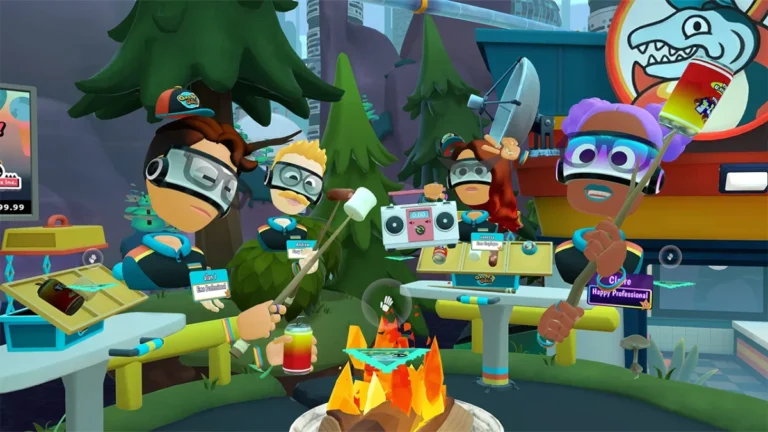
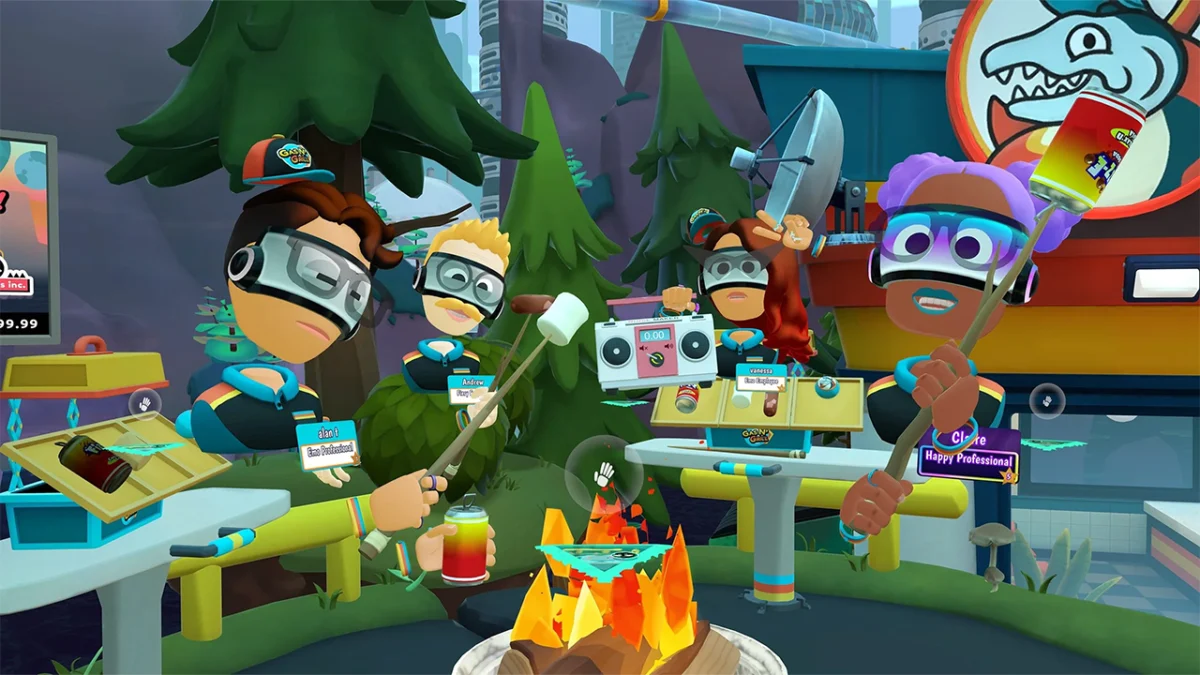
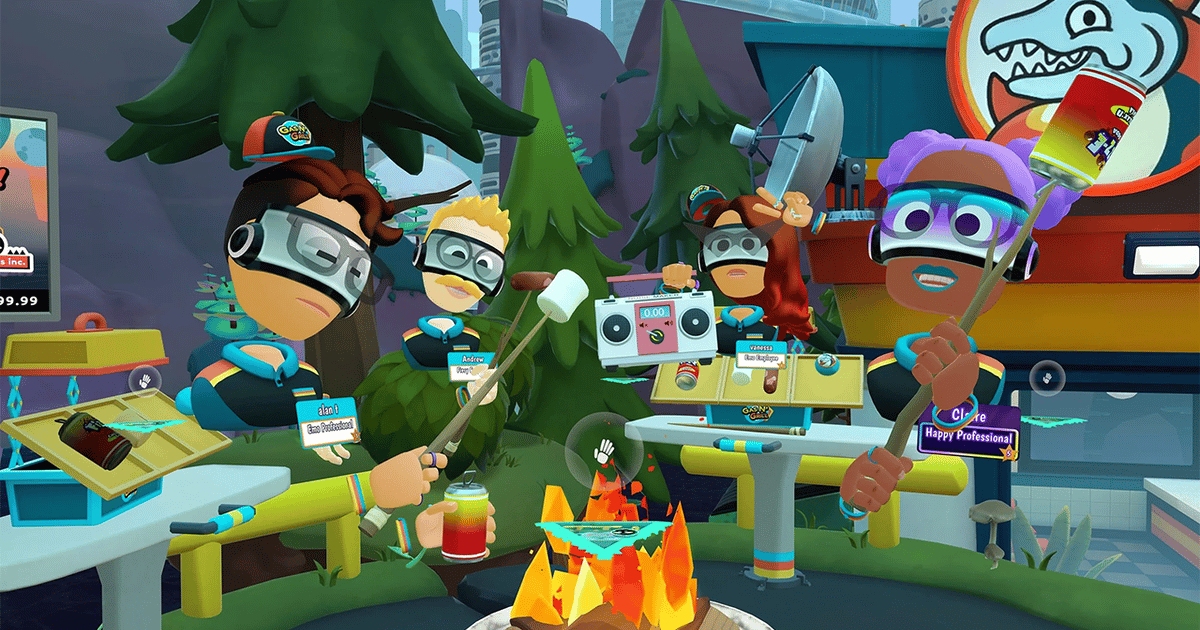
In stark contrast to the struggles of many VR studios, Owlchemy Labs, under Eiche’s leadership, claims to have achieved significant success by adhering to a different philosophy: meeting the audience with what it wants. "Here’s the way I’ll put it. In every metric: monthly actives, daily actives, and total sessions. Every metric. We were higher last month than we have ever been in this game’s history," Eiche proudly stated, referring to Dimensional Double Shift. The game, recently bolstered with a single-player mode, exemplifies Owlchemy’s strategy of focusing on engaging, often humorous, and accessible VR experiences that resonate with their target audience.
Owlchemy Labs, known for pioneering VR titles like Job Simulator and Rick and Morty: Virtual Rick-ality, has consistently prioritized intuitive interaction and playful design. Their success with Dimensional Double Shift underscores the importance of data-driven development and a willingness to adapt to player feedback. This approach stands as a testament to the idea that even within a challenging market, studios can thrive by understanding and catering to existing user behaviors and desires, rather than forcing a predefined vision onto an unready audience.
Broader Market Dynamics and Future Outlook
The VR market, while still relatively niche, has shown consistent, albeit slower, growth. Analyst firms like Statista projected the global VR market to reach over $50 billion by 2026, driven by hardware sales, software, and enterprise applications. However, consumer adoption for gaming remains a key challenge. High hardware costs, the need for dedicated play spaces, potential for motion sickness, and a limited library of "killer apps" continue to be barriers.
The emergence of powerful new hardware, such as the Apple Vision Pro in 2024, introduces a new dynamic, potentially broadening the appeal of spatial computing beyond traditional gaming. While expensive, it highlights a trend towards more integrated, lifestyle-oriented XR devices. However, Eiche’s "cafe test" remains a crucial benchmark. Until these devices become truly ubiquitous and socially invisible, they will likely remain specialized tools or high-end entertainment systems rather than everyday companions.
The Road Ahead: Maturation and Mainstream Adoption
Andrew Eiche’s perspective offers a nuanced yet hopeful outlook for the VR industry. He acknowledges the current difficulties and the strategic errors made by some, but firmly believes in the long-term potential of the technology. The path to mainstream adoption, he suggests, is not a sprint but a marathon, requiring continuous hardware refinement, a deeper understanding of user desires, and a period of "societal iteration" where VR transitions from a novel gadget to an accepted, everyday technology.
The success stories, like Owlchemy Labs’ sustained growth, provide a blueprint for navigating this complex landscape: focus on accessible, engaging content that meets proven demand, and patiently await the hardware and societal shifts that will ultimately unlock VR’s full potential. The journey from the Motorola StarTAC to the iPhone was decades long, marked by numerous failures and successes. VR, Eiche implies, is still in its early chapters, with its most transformative forms and widespread acceptance yet to be written. The ongoing evolution of hardware, coupled with a growing library of compelling experiences and a generational shift in user expectations, will determine when VR finally sheds its "novelty" status and becomes a truly established pillar of the entertainment and computing world.
About the Author