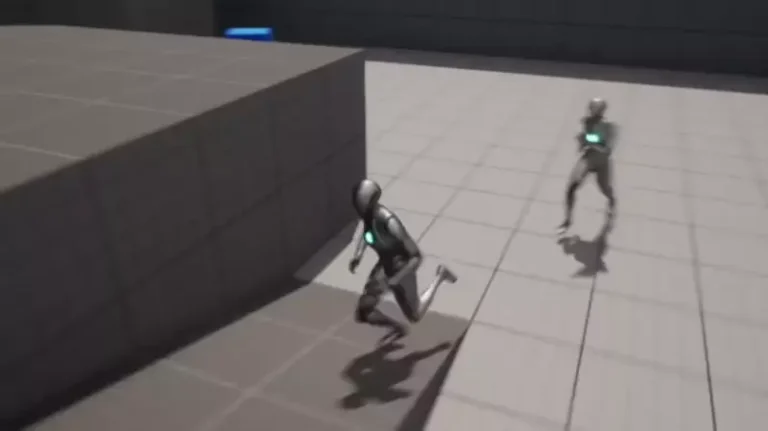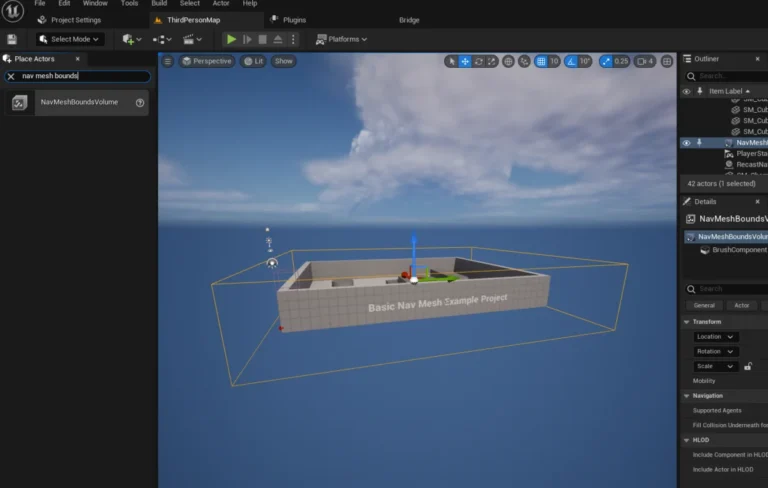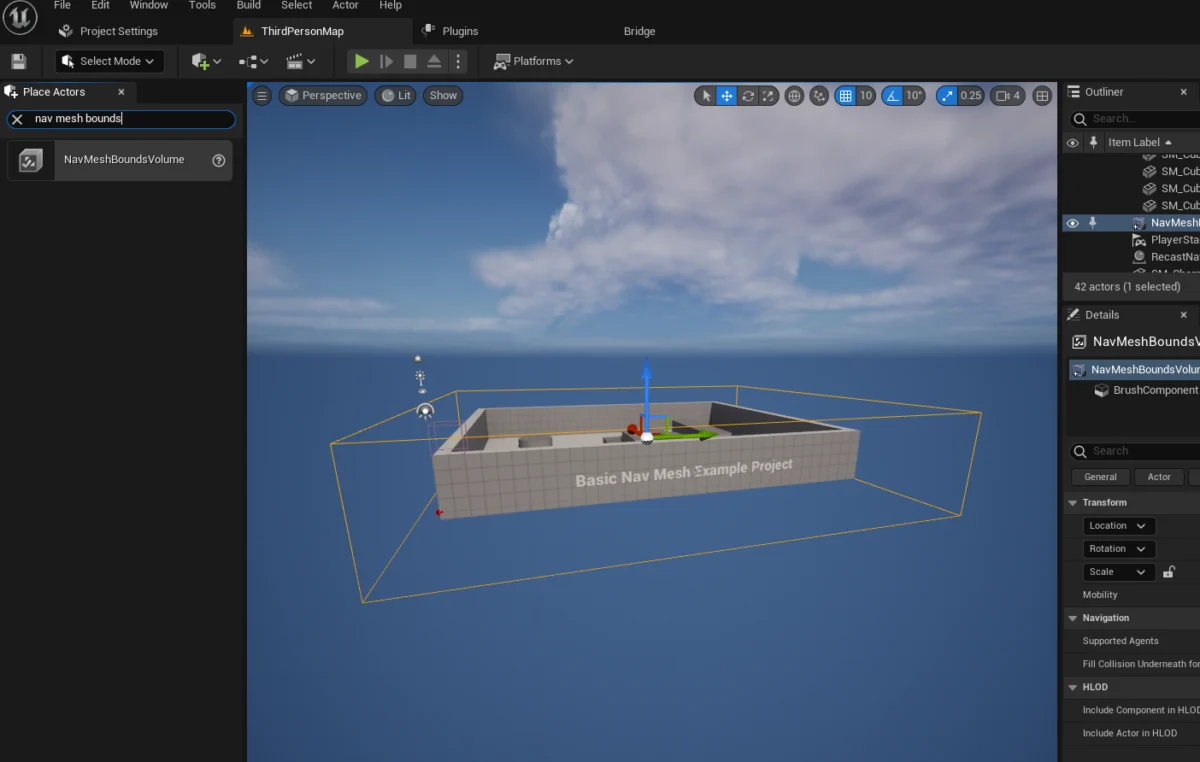
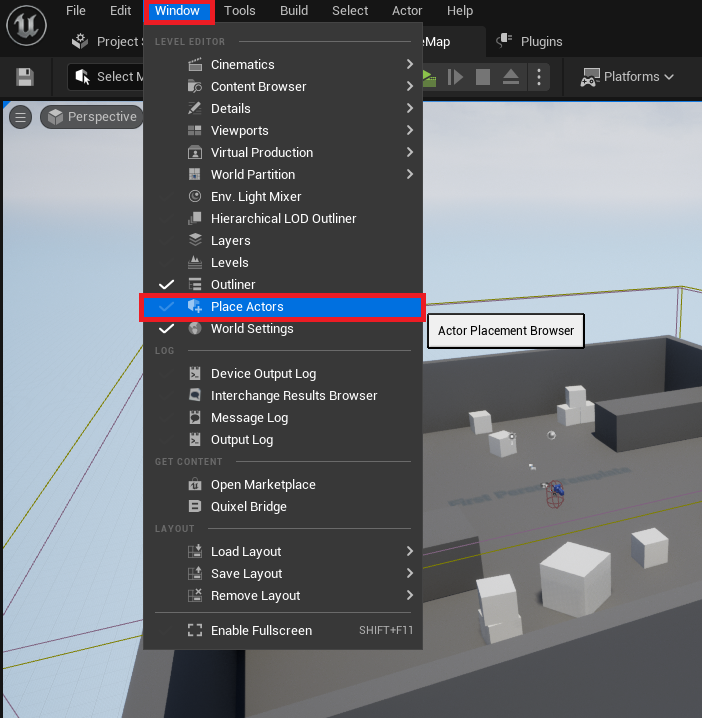
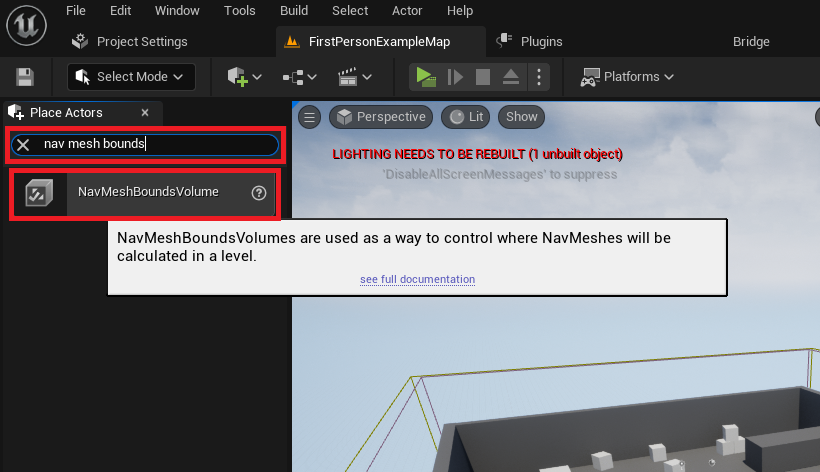
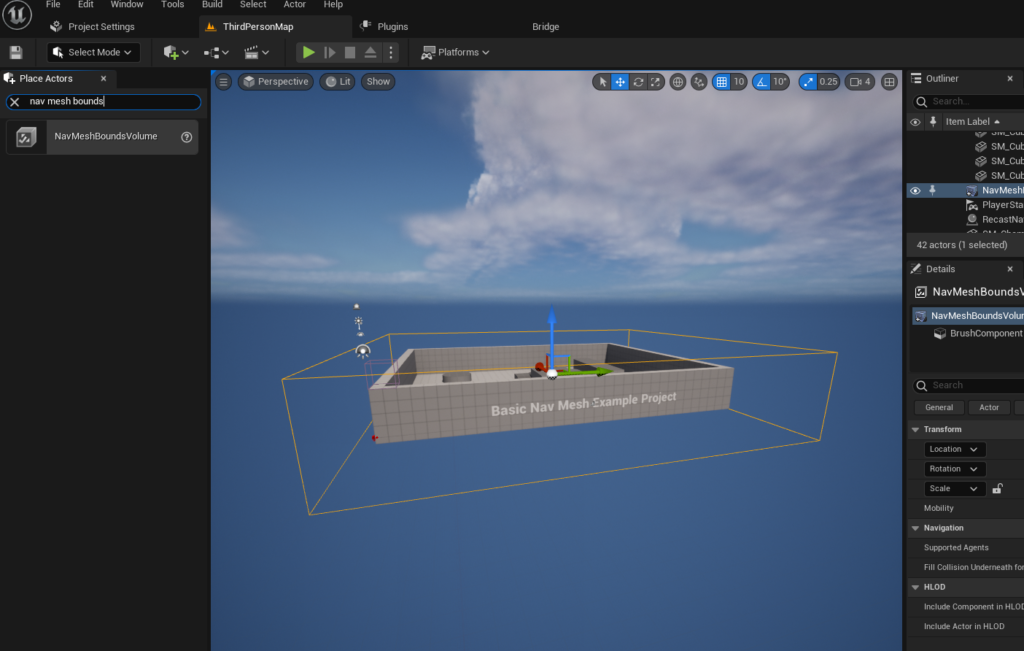
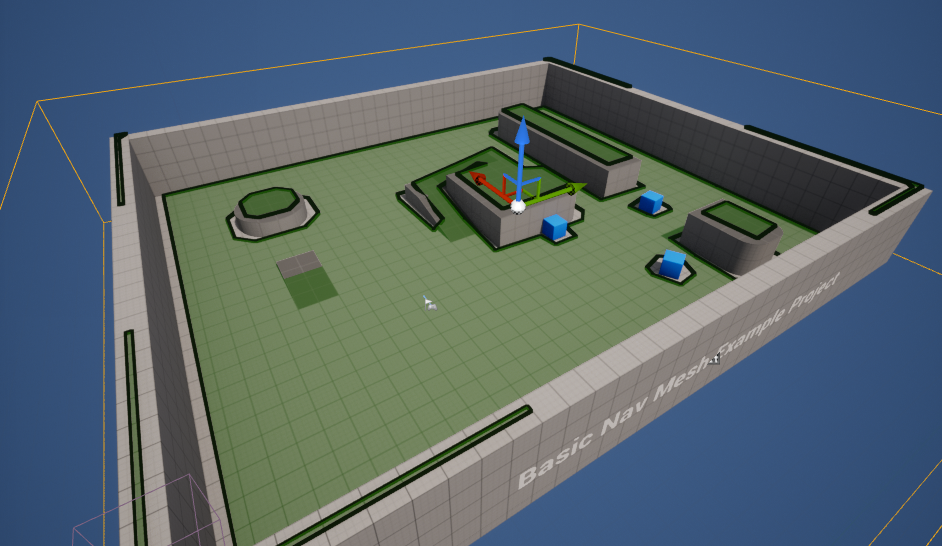
The core of effective AI navigation in a 3D environment lies in defining traversable areas that AI characters can understand and move through. Unreal Engine 5 addresses this through its sophisticated Navigation Mesh (NavMesh) system. Unlike older, more rudimentary pathfinding methods such as waypoint systems or grid-based movement, a NavMesh generates a dynamic, polygonal mesh over the walkable surfaces of a level. This mesh acts as a simplified, abstract representation of the environment, allowing AI agents to quickly and efficiently calculate optimal paths from one point to another while avoiding obstacles. The process typically begins with the placement of a NavMeshBoundsVolume within the level, a crucial step that dictates the spatial extent where the navigation mesh will be generated. This volume can be scaled and positioned to precisely encompass the desired AI roaming areas, offering developers granular control over where their AI characters can and cannot venture. The efficiency of NavMesh generation is directly linked to the size and complexity of this volume; larger or more intricate areas naturally require more processing power and time, although UE5 offers dynamic generation options to mitigate this in vast, open-world scenarios. Visual confirmation of a correctly generated NavMesh is achieved by pressing the ‘P’ key in the editor, which overlays a green polygonal mesh onto the traversable surfaces, providing immediate feedback to the developer.
The evolution of AI in video games has been a remarkable journey, mirroring the advancements in computing power and algorithmic sophistication. Early game AI, often limited by hardware constraints, relied on simple finite state machines and predefined paths. Characters might follow a fixed patrol route or react to player proximity with basic, predictable behaviors. The introduction of more complex environments necessitated better pathfinding solutions. Grid-based systems emerged as an improvement, dividing the game world into discrete cells, but they often struggled with diagonal movement, varying terrain heights, and efficient memory usage in large worlds. The late 1990s and early 2000s saw the rise of navigation graphs and waypoint networks, which offered more flexibility but still required significant manual setup and lacked the adaptability for dynamic changes in the environment. It wasn’t until the mid-2000s that NavMesh technology began to gain widespread adoption, offering a more elegant and performant solution. Engines like Unreal Engine were at the forefront of integrating these advanced pathfinding capabilities, continually refining them to meet the escalating demands of increasingly complex game worlds and more intelligent NPC behaviors. Unreal Engine 5’s current NavMesh implementation builds upon decades of these innovations, presenting a highly optimized and user-friendly system.
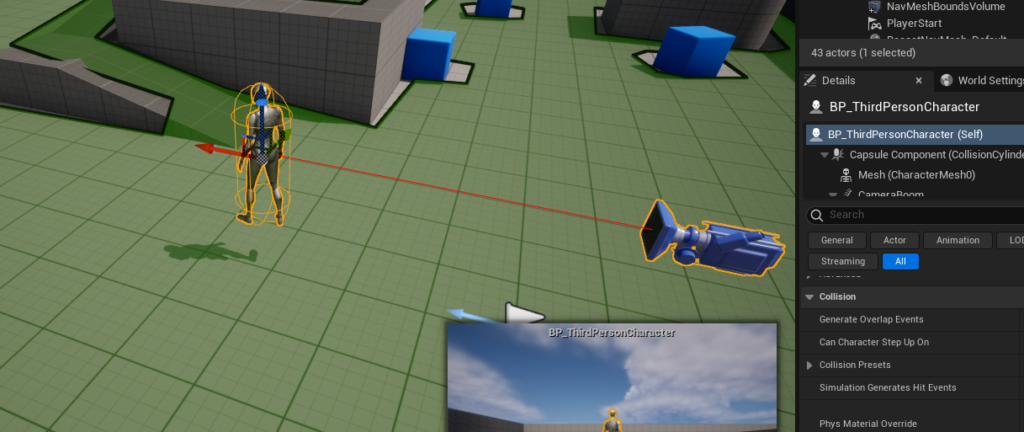
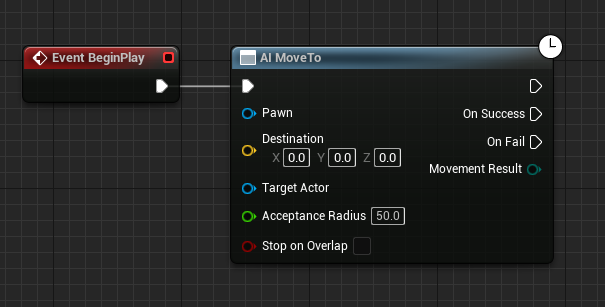
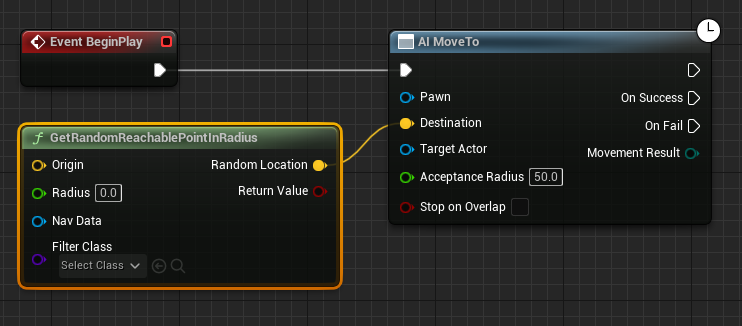
Beyond merely defining the traversable space, the actual movement of AI characters within this space is orchestrated through behavior logic, typically implemented via Blueprints in Unreal Engine. Utilizing the Third Person Template provided by UE5 as a foundational example, developers can quickly set up an animated character capable of intelligent navigation. The key to initiating AI movement is the AI MoveTo node, a fundamental component in Unreal Engine’s AI toolkit. This node takes a target destination and a reference to the AI character (Pawn) as inputs, then leverages the underlying NavMesh to calculate and execute a path. To create dynamic and less predictable character movement, the GetRandomReachablePointInRadius node is employed. This node, connected to the AI MoveTo node’s destination pin, calculates a random point within a specified radius from an origin point that is reachable by the AI character, ensuring the generated destination is on the NavMesh. The origin for this random point generation is typically the AI character’s current location, obtained using a Get Actor Location node. This setup allows AI characters to explore their environment naturally, rather than moving to fixed, predefined points. Developers can adjust the ‘Radius’ parameter to control the scope of the AI’s wandering, from subtle shifts to broad explorations, adding significant variability to NPC behavior.
To ensure the AI character continuously navigates the environment, a looping mechanism is incorporated into the Blueprint logic. After the AI MoveTo node successfully reaches its destination, an On Success event is triggered. This event is typically connected to a Delay node, introducing a brief pause before the entire movement sequence is re-initiated. This creates a continuous cycle of the AI character moving to a random reachable point, pausing, and then selecting a new destination, effectively simulating an autonomous roaming behavior. This simple yet powerful loop, combined with the robust NavMesh system, provides a foundation for creating diverse and engaging AI patterns, from ambient crowd characters to more complex enemy patrols or quest-giving NPCs.
The implications of such accessible and powerful AI tools are far-reaching for the gaming industry. For independent developers and smaller studios, Unreal Engine 5’s streamlined AI setup significantly lowers the barrier to entry for creating games with sophisticated character behaviors. This means more creative energy can be directed towards unique gameplay mechanics and narrative design, rather than grappling with the low-level complexities of pathfinding algorithms. Larger studios also benefit from accelerated prototyping and iteration cycles, allowing them to experiment with AI designs more rapidly and integrate them seamlessly into their expansive projects.
Epic Games, the creator of Unreal Engine, has consistently emphasized its commitment to providing cutting-edge yet approachable tools for game creators. Epic Games representatives have frequently highlighted their dedication to empowering developers of all scales, from solo indies to AAA studios, to realize their creative visions without unnecessary technical hurdles. The continuous refinement of features like the NavMesh and AI navigation nodes aligns perfectly with this philosophy, making advanced game development concepts more digestible. Industry analysts, observing the rapid evolution of game development, often point to the increasing sophistication and accessibility of in-engine AI tools as a critical factor in driving innovation. According to recent market reports, the demand for games with realistic and engaging AI characters is on an upward trajectory, with player expectations for immersive experiences continually rising. Tools that simplify AI implementation directly contribute to meeting these demands, fostering a richer and more dynamic interactive entertainment landscape.
Looking ahead, the foundation laid by current NavMesh and basic AI navigation systems in Unreal Engine 5 is crucial for integrating more advanced AI paradigms. The future of game AI is expected to incorporate elements of machine learning, allowing characters to adapt and learn from player actions, leading to truly emergent behaviors. Behavior trees and utility AI are already being used to create incredibly complex decision-making processes for NPCs, enabling them to respond dynamically to a multitude of in-game situations. Furthermore, AI-driven procedural content generation, where AI agents assist in creating vast and varied game worlds, is an exciting frontier. These advanced techniques, however, rely heavily on efficient and reliable pathfinding as a fundamental prerequisite. A well-constructed NavMesh ensures that even the most complex AI behaviors have a solid ground truth for movement, preventing characters from getting stuck or behaving illogically within the environment.
The continuous development of these tools within engines like Unreal Engine 5 not only enhances current game development workflows but also serves as a catalyst for future innovation. As virtual worlds grow in scale and detail, the need for intelligent, responsive inhabitants becomes paramount. Unreal Engine 5’s approach to AI navigation, making complex systems accessible through intuitive interfaces and robust back-end algorithms, ensures that developers can focus on crafting compelling experiences where AI characters are not just moving assets but integral parts of a living, breathing digital universe. The ease with which a developer can define traversable areas, instruct a character to move to random points, and create looping behaviors represents a significant step forward in democratizing sophisticated game AI, paving the way for even more immersive and dynamic interactive experiences in the years to come.
About the Author