Meta Connect 2026 arrives at a critical juncture for the social media and hardware giant as it attempts to solidify its dominance in the mixed reality (MR) market while pivoting toward more wearable, everyday technology. Following years of heavy investment in Reality Labs—Meta’s hardware and metaverse division—the upcoming event is expected to showcase a refined vision that balances high-end spatial computing with accessible consumer electronics. Industry analysts and leaked internal roadmaps suggest that the keynote will be defined by the unveiling of "Project Phoenix," a lightweight mixed-reality headset, alongside significant advancements in artificial intelligence (AI) integration and wearable peripherals.
The Centerpiece: Project Phoenix and the Shift to Lightweight MR
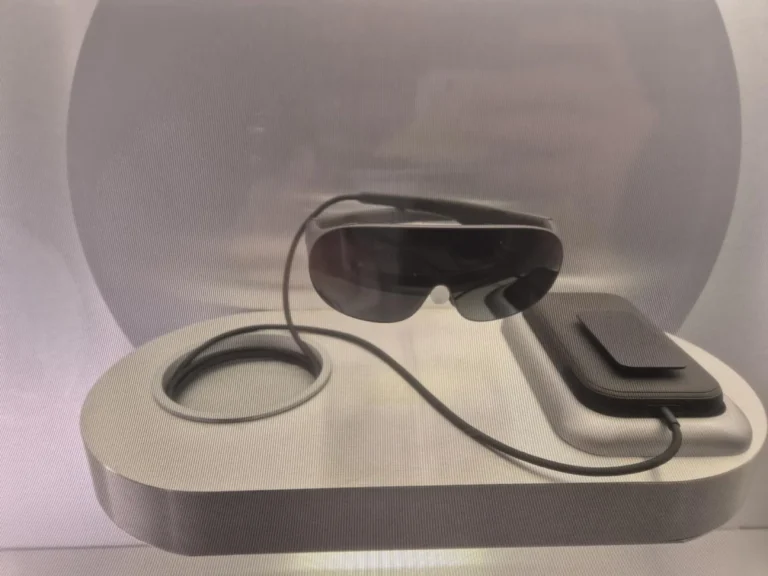
The most anticipated announcement of Meta Connect 2026 is the official debut of a headset codenamed Phoenix. Unlike the standalone Quest series, Phoenix is expected to represent a new category for Meta: "VR glasses." This device is reportedly designed as a lightweight, passthrough mixed-reality headset that mimics the form factor of bulky eyewear rather than a traditional goggle-style HMD.
Technical specifications leaked ahead of the event suggest a significant departure from previous architectures. To achieve its slim profile, Meta has reportedly moved the battery and computational components to an external "puck" or compute unit, connected via a thin cable or high-bandwidth wireless link. This design choice reduces the weight on the user’s face, potentially solving the comfort issues that have plagued the Quest Pro and Quest 3. The display is rumored to feature a resolution of 2.5K by 2.5K per eye with a 90-degree field of view (FOV).

Strategically, Phoenix is positioned as a direct competitor to the Apple Vision Pro but at a more accessible price point, expected to be approximately $1,000. While the Quest 3 remains the flagship for gaming, Phoenix is aimed at media consumption and productivity. It is expected to feature advanced eye and hand tracking as the primary input methods, making controllers an optional accessory for specific enterprise or gaming applications.
Evolution of the Wearable Ecosystem: Luna and Smartglasses
Meta’s partnership with EssilorLuxottica has proven to be one of its most successful hardware ventures, and Connect 2026 is expected to expand this lineup. Reports indicate the announcement of a new model of camera-less smartglasses, codenamed Luna. These glasses are intended to address privacy concerns and social friction associated with integrated cameras while maintaining the audio and AI features that have made the Ray-Ban Meta glasses a surprise hit.
Beyond the Luna model, there is speculation regarding a "Pro" version of the Ray-Ban Meta glasses. This iteration could introduce a basic heads-up display (HUD) or even stereoscopic micro-LED displays. Such a move would bridge the gap between simple audio-glasses and full AR spectacles. By diversifying the smartglasses portfolio, Meta aims to capture different segments of the market, from fashion-conscious users to tech enthusiasts seeking utility without the bulk of a headset.
HorizonOS Redesign: The Alan Dye Influence
A common criticism of Meta’s Quest ecosystem has been its fragmented and often unintuitive user interface. To rectify this, Meta reportedly recruited Alan Dye, a former high-profile designer from Apple known for his work on the "liquid glass" interface and the Apple Watch’s aesthetics. Connect 2026 is expected to showcase the first major overhaul of HorizonOS under this new design leadership.

The redesign is expected to focus on "spatial fluidness," moving away from static 2D windows toward a more integrated 3D environment. This software update is not merely cosmetic; it is a functional necessity for the Phoenix headset, which relies on eye-tracking and gesture-based navigation. Analysts expect a more streamlined app store, improved multitasking capabilities, and a "Home" environment that feels more like a persistent digital office or living room than a simple launcher.
The Convergence of AI and XR: Introducing Muse AI
Artificial intelligence will likely serve as the connective tissue for all hardware announcements. Meta is expected to officially integrate its new "Muse AI" assistant across its entire hardware stack. Unlike previous iterations of Meta AI, Muse is rumored to be a multimodal assistant capable of "seeing" through the lenses of the glasses or headset and providing proactive, context-aware suggestions.
For example, a user wearing Phoenix or the new smartglasses could receive real-time translations of physical signs, nutritional information for food on a plate, or step-by-step instructions for repairing a household appliance. This integration aligns Meta with competitors like Google and Apple, who are similarly embedding generative AI into their wearable ecosystems. The goal is to move the AI from a reactive chatbot to a proactive digital companion.
Codec Avatars and the Future of Social Presence
Meta has long teased "Codec Avatars"—hyper-realistic digital representations of users that utilize neural rendering to mimic real-life expressions and movements. While these were previously limited by the lack of eye-tracking in consumer-grade hardware, the launch of Phoenix provides the necessary sensor suite to bring this technology to the public.

A high-profile demonstration involving CEO Mark Zuckerberg and CTO Andrew Bosworth is expected to showcase a "full-body" Codec Avatar call. This technology represents the "North Star" of Meta’s social vision, aiming to eliminate the "uncanny valley" effect of current cartoonish avatars. If successful, this could transform remote work and social interaction within the Metaverse, making digital presence indistinguishable from physical reality.
Peripheral Strategy: The Malibu 2 Smartwatch
Rumors persist regarding the "Malibu 2," a Meta-branded smartwatch that could be unveiled at Connect. While the smartwatch market is saturated, Meta’s entry is expected to feature electromyography (EMG) technology. This would allow the watch to detect subtle neural signals sent from the brain to the wrist, enabling users to control their AR glasses or VR headsets with invisible micro-gestures. This "neural interface" would be a significant technological moat for Meta, offering a control scheme that competitors currently lack.
Content and Partnerships: The James Cameron Factor
To support the media-centric Phoenix headset, Meta is expected to announce high-profile content partnerships. Following a multi-year collaboration with director James Cameron, the company may unveil an immersive cinematic experience or a 3D documentary series designed specifically for the new hardware’s high-resolution displays. Additionally, partnerships with major sports leagues, such as the NBA, are anticipated to provide "courtside" immersive streaming options, further justifying the $1,000 price tag for non-gamers.
Strategic Analysis and Market Impact
The shift toward lightweight MR and AI-integrated wearables reflects a broader change in Meta’s strategy. The company is moving away from being a "VR gaming company" and toward becoming a "spatial computing and AI company." This transition is fraught with risk, particularly the "Osborne Effect"—where the announcement of future tech (like a potential Quest 4) could cannibalize sales of current products. Consequently, any mention of a Quest 4 at Connect 2026 is expected to be vague and forward-looking, ensuring the Quest 3 and 3S remain viable for the 2026 holiday season.

Furthermore, Meta must navigate the worsening reputation of smartglasses regarding privacy. The announcement of the camera-less Luna glasses is a calculated move to offer a "privacy-first" wearable that still keeps users tethered to the Meta AI ecosystem.
Conclusion
Meta Connect 2026 is poised to be more than just a product launch; it is an attempt to define the post-smartphone era. By combining lightweight hardware, sophisticated AI, and a redesigned operating system, Meta is betting that spatial computing will finally move from a niche hobby to a mainstream utility. Whether the $1,000 Project Phoenix can find a market between the budget-friendly Quest 3 and the ultra-premium Apple Vision Pro remains to be seen, but the technological foundations laid at this event will likely dictate the company’s trajectory for the remainder of the decade.
About the Author