Valve Corporation has officially moved to discontinue the Valve Index, its flagship PC-based virtual reality (VR) headset, signaling a definitive transition toward its next-generation hardware ecosystem, the Steam Frame. This development, confirmed through inventory liquidations and official store updates, marks the end of an era for a device that has served as the "gold standard" for high-end PC VR since its release in mid-2019. To facilitate the clearing of remaining stock, Valve has implemented a 20% discount on the headset, its proprietary controllers, and the external Base Station tracking units.
The retirement of the Valve Index is a calculated move following the recent announcement of the Steam Frame, Valve’s new flagship device designed to meet 2026 performance standards. While the discontinuation was anticipated by industry analysts, the news has caused significant concern within the enthusiast community regarding the future of "Lighthouse" tracking—the laser-based, outside-in tracking system that has defined high-fidelity VR since the original HTC Vive.
The Decline of Lighthouse Tracking and the Impact on PC VR
The discontinuation of the Index components is viewed by hardware experts as the beginning of the end for the SteamVR tracking ecosystem. The Lighthouse system is widely regarded as the most accurate consumer tracking solution available, offering sub-millimeter precision that camera-based, "inside-out" systems often struggle to replicate, particularly in scenarios involving occlusion or high-speed movement.
The market implications are substantial for third-party manufacturers. Companies such as Bigscreen, which recently released the "Beyond" headset, and specialized peripheral makers have relied on Valve to produce the essential tracking infrastructure—the Base Stations and "Knuckles" controllers. With Valve halting production, the burden of maintaining this ecosystem falls onto other partners. While HTC has officially confirmed that it will continue to manufacture and sell compatible base stations, and companies like Pimax and Shiftall offer their own SteamVR-tracked peripherals, the lack of a primary hardware anchor from Valve suggests a market shift. Industry data indicates a growing preference for camera-based tracking due to lower costs and reduced setup complexity, potentially relegating Lighthouse technology to a high-cost, enterprise-only niche or location-based entertainment (LBE) centers.
Evolution of the Steam Frame and Software Enhancements
As Valve sunsets its legacy hardware, it is aggressively iterating on the Steam Frame. The company recently deployed SteamOS version 0.4, a critical software update focused on hardware optimization. The primary highlight of this update is a 12% increase in battery efficiency, addressing one of the most significant criticisms of the standalone device. Furthermore, the update introduces enhanced color quality for streaming and various stability patches.

In a move consistent with its history of supporting open-source development, Valve has released the full Computer-Aided Design (CAD) files for the Steam Frame. By making these files available to the public, Valve is encouraging a third-party ecosystem of physical modifications and accessories, ranging from ergonomic head straps to specialized cooling solutions. This strategy mirrors the approach taken with the Steam Deck, which fostered a robust aftermarket community.
Technical Specifications of the Rumored "Plano" OLED Refresh
Internal code discoveries within recent Valve software updates have revealed a potential high-end hardware project codenamed "Plano." This project appears to be a premium version of the Steam Frame featuring Organic Light Emitting Diode (OLED) displays. Enthusiasts have long requested OLED technology for its superior contrast ratios and "true black" levels, which are critical for immersion in VR environments.
The leaked specifications suggest a significant resolution jump to 3,552 × 3,840 pixels per eye, with a refresh rate of 90Hz (and an experimental 120Hz mode). Because the current Snapdragon 8 Gen 3 chipset utilized in the Steam Frame cannot natively render at such high resolutions, the device reportedly utilizes "Foveated Scaling." This technology uses eye-tracking data to render only the area the user is looking at in high resolution, while the peripheral areas are rendered at a lower fidelity and then upscaled, optimizing performance without sacrificing perceived visual quality. Current estimates suggest that if "Plano" reaches the commercial market, it is unlikely to debut before late 2027.
PlayStation VR2 Delisting and Sony’s Strategic Shift
A significant disruption has also occurred in the console VR space. The PlayStation VR2 (PSVR 2) has been delisted from the official PlayStation Direct store in the United States, with the product page returning a 404 error. While the device remains available in European markets, the removal from the primary U.S. storefront has fueled speculation that Sony Interactive Entertainment (SIE) may be winding down its VR hardware operations.
This development follows Sony’s recent divestment of several XR-related patents, which were acquired by Meta. While SIE has not issued a formal statement regarding the discontinuation of the PSVR 2, market analysts point to the lack of a robust first-party software pipeline as a sign of waning institutional support. The PSVR 2, which launched in early 2023, has faced stiff competition from standalone headsets that offer more versatile usage patterns without the requirement of a PlayStation 5 console.
The Rise of Open-Source and Independent Hardware
Amidst the uncertainty of major manufacturers, independent firms are attempting to fill the void. Walker Dev Industries has launched a Kickstarter campaign for its "Vector Gear" and "Andromeda" headsets, which run on the proprietary XRUIOS operating system. These devices are marketed as open-source alternatives for the professional and enthusiast markets.

The high-end Andromeda model features a resolution of 2560 × 2560 per eye, while the Vector Gear offers 2160 × 2160. Both headsets emphasize modularity and user privacy, features often neglected by large-scale commercial manufacturers. However, with a projected shipping date of May 2027, the project faces the standard risks associated with hardware crowdfunding, including potential supply chain delays and the rapid pace of technological obsolescence.
AR and AI Integration: XREAL and Alibaba
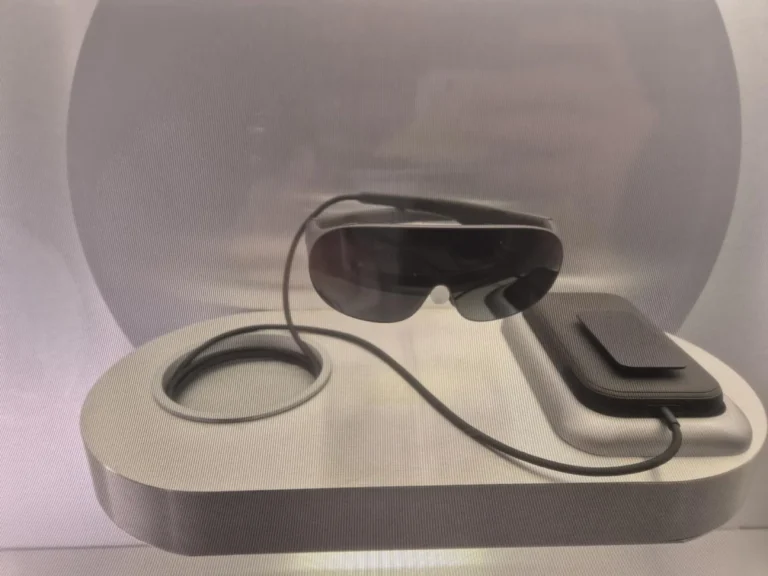
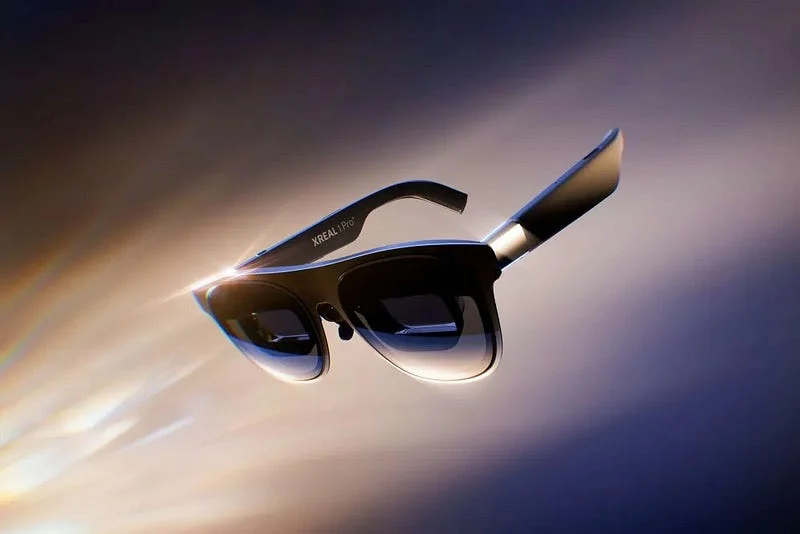
The augmented reality (AR) sector continues to merge with artificial intelligence (AI) trends. XREAL has announced the 1 Pro+ glasses, an iterative update to its existing AR line. The new model increases maximum brightness to 1200 nits and introduces AI-driven High Dynamic Range (HDR) processing to improve image vividness in outdoor environments.
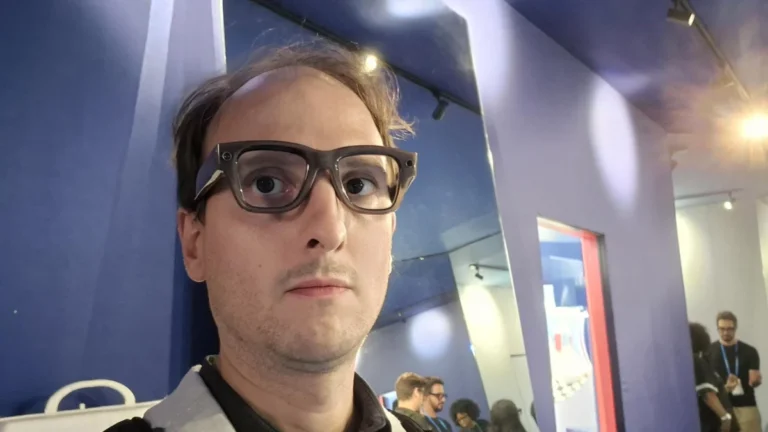
Simultaneously, Alibaba has entered the market in China with the N1 and N1 Pro AI glasses. Unlike AR headsets that focus on visual overlays, these glasses resemble traditional eyewear and lack a display. Instead, they incorporate advanced eye-tracking technology and AI assistants. The eye-tracking sensors are utilized for iris-based biometric security for digital payments and "gaze-aware" AI interactions, allowing the system to provide context-aware information based on what the wearer is looking at in the physical world.
Broader Industry Implications and Software Transitions
The broader XR landscape is currently undergoing a period of consolidation. Microsoft has officially discontinued "Immersive Events" in Teams, effectively ending the development of the Microsoft Mesh framework. This marks a significant retreat for Microsoft from the social metaverse space, as the company redirects its resources toward generative AI and productivity tools.
In the development sector, Unity has unveiled "Unity Spark," a web-based engine that utilizes natural language processing (or "vibecoding") to allow users to generate game assets and logic through text prompts. This represents a fundamental shift in game development, lowering the barrier to entry for creators but raising questions regarding the quality and originality of AI-generated content.
As the industry moves toward 2027, the focus appears to be shifting away from tethered PC VR toward standalone, AI-integrated wearables and specialized high-end optics. The discontinuation of the Valve Index is not merely a product retirement but a symbolic pivot toward a more mobile, integrated, and AI-assisted future for spatial computing.
About the Author