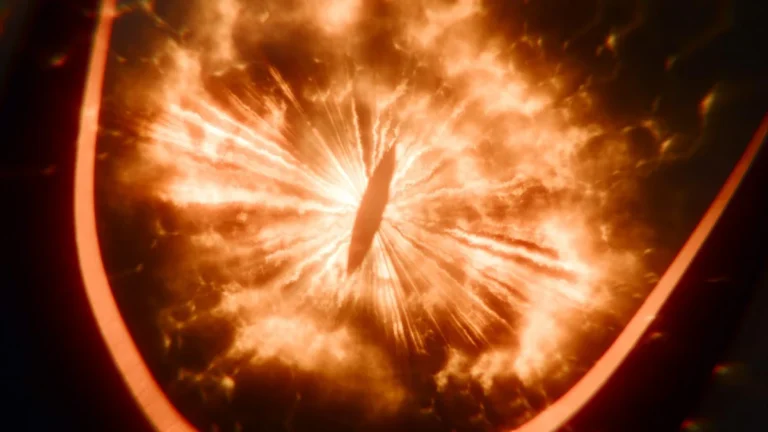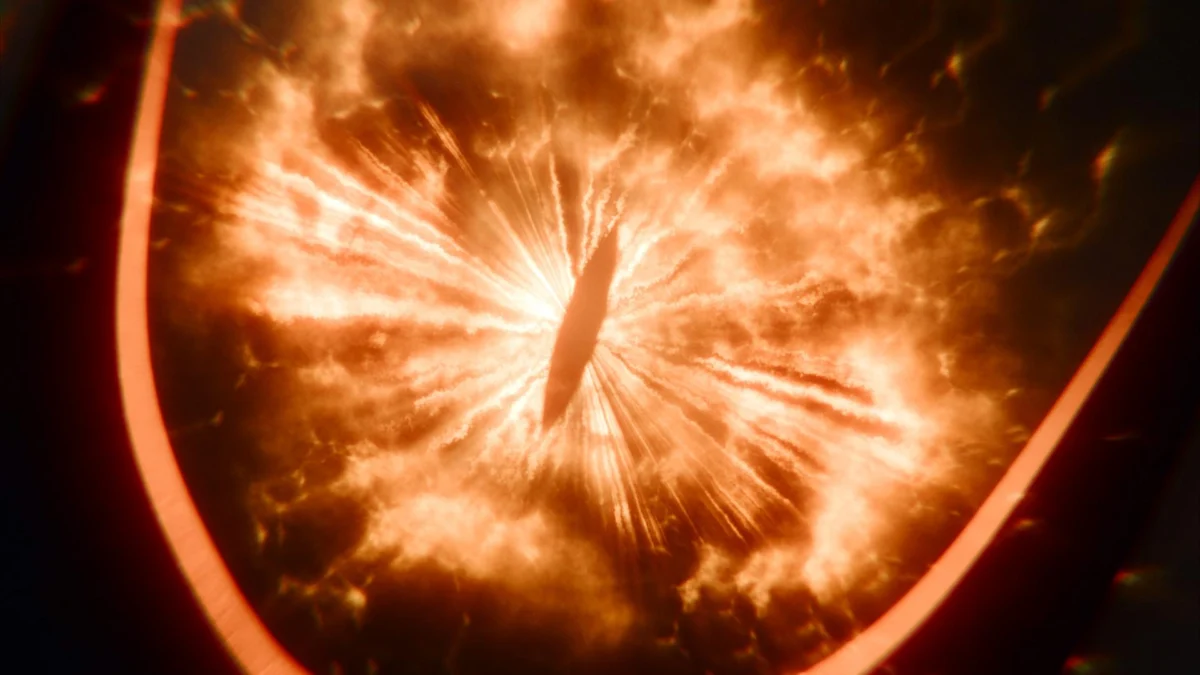
The digital realm of 3D art is continuously pushed forward by the ingenuity of its creators, and a recent showcase of an "Eye of Sauron" render, meticulously crafted using Blender’s Eevee real-time rendering engine, stands as a testament to this relentless innovation. This visually striking piece, shared by artist Bart on BlenderNation, not only captures the iconic malevolent gaze from J.R.R. Tolkien’s Middle-earth but also highlights the increasingly sophisticated capabilities of real-time rendering technologies in achieving photorealistic and emotionally resonant imagery.
The Genesis of a Digital Spectacle
The creation of the "Eye of Sauron" is more than just a technical exercise; it is an artistic interpretation of a deeply ingrained cultural icon. The Eye, a symbol of oppressive surveillance and all-consuming power, has captivated audiences for decades, first through Tolkien’s literary masterpiece, "The Lord of the Rings," and later through Peter Jackson’s monumental film adaptations. The challenge for any digital artist attempting to recreate this entity lies not only in replicating its physical appearance—the fiery iris, the swirling inferno, the menacing aura—but also in imbuing it with the palpable sense of dread and omnipotence it represents.
This particular rendition, rendered in Eevee, signifies a significant milestone. Eevee, Blender’s physically based real-time render engine, is designed to produce high-quality images with near-instantaneous feedback, allowing artists to iterate and refine their work at an unprecedented pace. Historically, achieving such detailed and atmospheric lighting, complex volumetric effects, and nuanced surface properties would have necessitated the use of offline renderers, which, while capable of ultimate fidelity, demand considerably more time and computational resources for each frame. The successful execution of the "Eye of Sauron" in Eevee suggests that the gap between real-time and offline rendering in terms of visual quality is rapidly narrowing, democratizing access to high-end visual production for a wider range of artists and projects.
A Deep Dive into the Creation Process and Technical Achievements
While the original post on BlenderNation is concise, focusing on the visual impact, a deeper examination of the technical prowess involved in such a creation can be inferred. The "Eye of Sauron" is characterized by several key visual elements that would have required careful attention in Blender’s Eevee engine:
- Volumetric Fire and Smoke: The swirling, fiery abyss surrounding the pupil is a complex interplay of volumetrics. Achieving realistic fire and smoke in real-time demands efficient simulation and rendering of these ephemeral elements. Eevee’s volumetric shader capabilities would have been crucial here, allowing for the dynamic simulation of heat distortion, glowing embers, and the turbulent movement of flames. This would involve careful tuning of emission shaders, density controls, and potentially particle systems to mimic the chaotic, yet controlled, nature of the Eye’s inferno.
- Intense Light and Shadow: The Eye is a source of immense, malevolent light. The way this light interacts with its surroundings, casting dramatic shadows and illuminating the landscape (even if unseen in this specific render), is paramount to its believability. Eevee’s advanced lighting features, including real-time global illumination approximations and accurate shadow casting, would have been instrumental in creating this oppressive luminosity. The artist would have had to meticulously balance the intensity and color temperature of the light to convey its infernal origin.
- Material Properties: The texture and material of the Eye itself—the dark, molten surface, the burning iris—require sophisticated shader work. Eevee’s physically based rendering (PBR) workflow allows for the creation of materials that react realistically to light. This would involve using texture maps for color, roughness, and metallic properties, as well as potentially employing custom node setups to achieve the unique, otherworldly appearance of Sauron’s gaze. The subtle variations in surface reflectivity and the intense glow of the iris would have been key areas of focus.
- Atmospheric Effects: The palpable sense of dread associated with the Eye is often conveyed through atmospheric effects like heat haze, particulate matter, and a general sense of oppressive air. Eevee’s ability to render these subtle atmospheric elements in real-time would have contributed significantly to the overall mood and impact of the piece.
The Significance of Eevee in Modern 3D Production
The choice of Eevee as the rendering engine is particularly noteworthy. Launched in Blender 2.8, Eevee was a game-changer, offering a real-time viewport that closely approximated the final render output. This dramatically accelerated the iteration process for artists, enabling them to see the immediate impact of their lighting, material, and composition adjustments.
- Development Timeline: Eevee’s development began in earnest in the years leading up to Blender 2.8, with a dedicated team working to integrate a modern, PBR-based rasterization engine into the existing Blender architecture. The official release in July 2019 marked a significant leap forward, transforming Blender from a primarily offline rendering package into a comprehensive real-time 3D creation suite.
- Impact on Workflow: For artists working on projects with tight deadlines or requiring rapid prototyping, Eevee has become an indispensable tool. It facilitates faster feedback loops, reduces the need for extensive test renders, and enables more interactive creative sessions. This is particularly beneficial for independent artists, small studios, and those working in game development, architectural visualization, and motion graphics, where speed and efficiency are paramount.
- Bridging the Gap: While Eevee is not a path tracer like Cycles (Blender’s other powerful render engine), its advancements in simulating global illumination and screen-space reflections have brought its visual fidelity remarkably close to offline renderers for many use cases. The "Eye of Sauron" render exemplifies this, demonstrating that complex lighting and atmospheric effects can be achieved with impressive results in a real-time environment.
Community Spotlight and the Role of BlenderNation
The platform on which this artwork was shared, BlenderNation, plays a crucial role in fostering the Blender community. Founded and maintained by Bart, a long-time advocate and contributor to the Blender ecosystem, BlenderNation serves as a vital hub for news, tutorials, and the showcasing of community-created art.
- Bart’s Legacy: Bart’s personal involvement with Blender dates back to its early days, including contributions to tutorials and involvement in the crowdfunding efforts that led to Blender’s open-sourcing. His dedication to BlenderNation since its inception in 2006 underscores his commitment to supporting and elevating the work of Blender artists worldwide.
- Weekly Showcases: The practice of highlighting exceptional community work on a weekly basis provides artists with valuable exposure and recognition. This not only serves as inspiration for other artists but also demonstrates the diverse applications and artistic potential of Blender. The "Eye of Sauron" render, by being featured, gains visibility among a global audience of Blender enthusiasts and professionals.
- The Blender Artists Forum: The article explicitly mentions the Blender Artists forum as the source of these community creations. This forum, also managed by Bart, is a cornerstone of the Blender community, providing a space for artists to share their work, receive feedback, and engage in technical discussions. The sheer volume of submissions—hundreds each week—attests to the thriving and active nature of the Blender artist community.
Broader Implications for the Future of 3D Art and Visual Effects
The continued evolution of real-time rendering engines like Eevee has profound implications for the future of 3D art and visual effects:
- Democratization of High-Quality Rendering: As real-time engines become more powerful and accessible, the barrier to entry for creating visually stunning content is lowered. This empowers independent artists and smaller studios to compete with larger, more resource-intensive productions.
- Interactive Experiences: The real-time nature of these engines is inherently suited for interactive applications such as video games, virtual reality (VR), and augmented reality (AR). The ability to render complex scenes in real-time opens up new possibilities for immersive storytelling and dynamic visual experiences.
- Accelerated Production Pipelines: In the film and television industry, real-time rendering is increasingly being adopted for pre-visualization, virtual production, and even final rendering in certain contexts. This can significantly speed up production timelines and allow for greater creative flexibility during shooting. The "Eye of Sauron" could be a precursor to such applications, demonstrating how iconic elements can be realized with efficiency.
- Artistic Exploration: The immediate feedback offered by real-time engines encourages more experimental and iterative artistic processes. Artists can explore different lighting scenarios, material properties, and compositional choices with greater freedom, potentially leading to more innovative and unexpected visual outcomes.
Conclusion: A Glimpse into the Real-Time Frontier
The "Eye of Sauron" rendered in Blender’s Eevee is more than just a visually impressive piece of digital art; it is a powerful demonstration of the current state and future trajectory of real-time 3D rendering. It underscores the dedication of the Blender community and the ongoing efforts to push the boundaries of what is possible with accessible, powerful creative tools. As these technologies continue to advance, we can anticipate an even greater influx of breathtaking and immersive visual experiences, crafted with unprecedented speed and artistic freedom. The watchful gaze of Sauron, brought to life with such fidelity in a real-time engine, serves as a compelling omen of the exciting visual landscapes that await us.
About the Author