In a landscape rapidly defined by the explosive growth of artificial intelligence and digital innovation, LimeWire has resurfaced, not as the controversial file-sharing service of the early 2000s, but as a formidable and forward-thinking AI content publishing platform. This transformation marks a significant pivot, positioning the resurrected brand at the forefront of generative AI tools, offering creators a novel ecosystem for not only producing AI-generated content but also for sharing, owning, and monetizing their digital creations.
The evolution of LimeWire from a peer-to-peer file-sharing behemoth to a sophisticated AI platform is a narrative of reinvention. Launched initially in 2000, LimeWire became synonymous with widespread digital music sharing, but its association with copyright infringement ultimately led to its demise in 2010 following a court order. Two decades later, the brand has been resurrected by a new team with a diametrically opposed mission: to foster a legitimate and creator-centric digital economy. This new iteration leverages cutting-edge AI technologies to empower artists, musicians, and content creators of all stripes.
At its core, the revamped LimeWire is built around its AI Studio, a comprehensive suite of tools designed to democratize content creation. Currently, the platform’s primary focus is on AI image generation, providing users with a free and accessible gateway into the world of AI art. However, the platform has ambitious plans for expansion, with AI music and video generation tools slated for future release, signaling a commitment to becoming a holistic hub for AI-driven creative output.
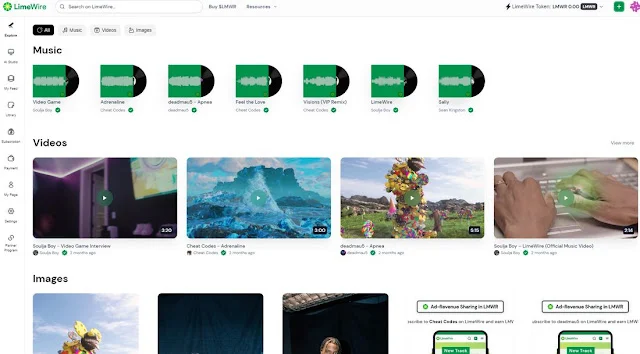
The platform’s appeal extends beyond independent creators, attracting established artists and musicians who are leveraging LimeWire to engage with their fanbases in new and innovative ways. Notable figures such as Deadmau5, Soulja Boy, and Sean Kingston have reportedly embraced LimeWire to publish their digital content, including NFT music, videos, and images, showcasing the platform’s growing credibility within the entertainment industry. This adoption by mainstream artists underscores the potential for LimeWire to bridge the gap between emerging AI technology and established creative industries.
The Genesis of a New LimeWire: From File Sharing to AI Frontier
The original LimeWire, a ubiquitous presence in the digital landscape of the early 21st century, facilitated the sharing of vast amounts of media. Its legacy is complex, marked by both its role in the popularization of digital music and its entanglement with legal battles over copyright infringement. The cessation of its operations in 2010 left a void, but the spirit of digital sharing and community, albeit transformed, has now found a new home in the AI-powered iteration of the brand.
The relaunch of LimeWire as an AI content publishing platform represents a strategic response to the burgeoning creator economy and the rapid advancements in generative AI. The platform’s architects recognized the potential for AI to not only automate creative processes but also to imbue digital assets with verifiable ownership and economic value through blockchain technology. This dual focus on AI generation and Web3 principles distinguishes LimeWire in a crowded digital marketplace.
The platform’s re-emergence has been met with a mix of curiosity and anticipation. For many who recall the original LimeWire, the transformation is striking. The new LimeWire positions itself as a champion of creators, providing them with the tools and infrastructure to monetize their work in an increasingly digital world. This narrative of redemption and innovation is central to its current identity.
LimeWire AI Studio: Empowering Visual Creation
The cornerstone of LimeWire’s current offerings is its AI Studio, a robust environment for AI image generation. The platform supports several advanced AI models, including Stable Diffusion 2.1, Stable Diffusion XL, and DALL-E 2, providing users with a sophisticated arsenal for translating textual prompts into visual art. This integration of leading AI models ensures that users have access to a wide range of artistic styles and capabilities.
Users can engage with the AI image generator through simple, intuitive prompts or by crafting more detailed instructions, allowing for a spectrum of creative control. The platform’s strength lies in its versatility and user-friendliness, catering to both novice users experimenting with AI art for the first time and experienced digital artists seeking new avenues for expression.
A key differentiator for LimeWire is its seamless integration of multiple AI models and design styles. Users can fluidly switch between different AI engines and explore a diverse palette of aesthetic approaches, such as cinematic, digital art, pixel art, anime, and analog film. This flexibility enables creators to experiment extensively, discovering unique visual identities for their AI-generated imagery and pushing the boundaries of their artistic vision.
Furthermore, LimeWire continuously refines its offerings. The platform is actively developing its proprietary AI model, a move that signals a commitment to ongoing innovation and the enhancement of its image generation capabilities. This in-house development is expected to further expand the creative horizons for LimeWire users, solidifying its position as a dynamic and evolving player in the AI art ecosystem.
Minting Digital Assets: NFTs and Blockchain Integration
A groundbreaking feature of LimeWire is its automatic minting of created content as Non-Fungible Tokens (NFTs) upon publication. This process leverages blockchain technology, utilizing either the Polygon or Algorand blockchain to imbue each piece of digital artwork with unique, verifiable authenticity and ownership. This integration of NFTs fundamentally transforms digital creations from ephemeral files into ownable and tradable assets.
Creators on LimeWire have granular control over the accessibility of their NFT creations. They can opt for a public release, making their work discoverable by a global audience and enabling a secondary market for trading these digital collectibles. This public option fosters community engagement and provides artists with potential for ongoing revenue through royalties on resales.
Alternatively, LimeWire recognizes the value of exclusivity. Creators can choose to share their posts exclusively with their premium subscribers, cultivating a more intimate and personalized connection with their dedicated fanbase. This tiered access model allows for diverse monetization strategies and community building.
The royalty structure is particularly noteworthy. Creators on LimeWire earn a 2.5% royalty on every subsequent trade of their content, providing a continuous stream of passive income as their creations gain value within the community. This model aligns creator incentives with the long-term appreciation of their digital assets, a significant departure from traditional content distribution models.
Monetization Strategies: Beyond Royalties
LimeWire offers creators multiple avenues to generate revenue from their digital endeavors. The platform’s integrated monetization framework is designed to empower artists and reward their creative output.
Ad Revenue Sharing: A significant portion of the revenue generated on LimeWire comes from advertising. When users publish content, they are eligible to receive 70% of the ad revenue generated from users who view their images, music, and videos on the platform. This model offers a tangible benefit, particularly for designers and visual artists who can experiment with AI tools and earn supplementary income from their shared creations.
LMWR Tokens: The platform’s native cryptocurrency, LMWR tokens, serves as the primary medium for earnings. Revenue generated from ad revenue sharing and other monetization activities is paid out monthly in LMWR tokens. These tokens are tradable on major cryptocurrency exchanges such as Kraken, ByBit, and UniSwap, providing creators with liquidity and the ability to convert their earnings into fiat currency or other cryptocurrencies. Additionally, LMWR tokens can be used to pay for prompts when utilizing LimeWire’s generative AI tools, creating a self-sustaining economic loop within the ecosystem.
NFT Sales and Royalties: The direct sale of NFTs and the ongoing royalties from secondary market transactions represent another significant revenue stream. By making their creations ownable and tradable, artists can capitalize on the demand for unique digital assets and benefit from the appreciation of their work over time.
Premium Subscriptions: For creators who opt for a premium subscription model for their content, LimeWire enables them to offer exclusive access to their work. This allows fans to directly support their favorite artists by subscribing, providing a predictable revenue stream for creators and exclusive content for dedicated supporters.
Pricing and Accessibility: A Freemium Model
LimeWire adopts a freemium pricing model, making its AI tools accessible to a broad audience while offering enhanced benefits through paid subscription tiers.
Free Tier: Users can sign up for free and receive an initial allocation of 10 credits, allowing them to generate up to 20 AI images per day. Free users also benefit from a 50% ad revenue share, providing an entry point for experimentation and early-stage monetization.
Premium Plans: For users seeking more extensive capabilities, LimeWire offers several paid subscription tiers:
- $9.99 per month: Includes 1,000 credits per month (up to 2,000 image generations), early access to new AI models, and a 50% ad revenue share.
- $29 per month: Offers 3,750 credits per month (up to 7,500 image generations), early access to new AI models, and a 60% ad revenue share.
- $49 per month: Provides 5,000 credits per month (up to 10,000 image generations), early access to new AI models, and a 70% ad revenue share.
- $99 per month: Grants 11,250 credits per month (up to 22,500 image generations), early access to new AI models, and a 70% ad revenue share.
All premium plans come with additional perks, including a Pro profile badge, access to full creation history, faster image generation speeds, and an ad-free experience. This tiered structure allows users to scale their usage and benefits according to their needs and commitment to the platform.
The Broader Impact and Future Trajectory
The reimaging of LimeWire signifies more than just a brand revival; it represents a tangible evolution in how digital content can be created, owned, and monetized. By integrating generative AI with blockchain technology, LimeWire is actively contributing to the decentralization of the creator economy, empowering individuals to have greater control over their intellectual property and revenue streams.
The platform’s commitment to developing its proprietary AI models and expanding into music and video generation suggests a long-term vision of becoming a comprehensive AI content creation and distribution hub. This strategic expansion could unlock unprecedented creative possibilities, enabling artists to produce and publish multi-faceted digital experiences.
The accessibility of its free tier, coupled with the robust monetization features, positions LimeWire as a powerful tool for both emerging creators and established artists seeking to adapt to the evolving digital landscape. As the platform continues to innovate and expand its offerings, it is poised to play a significant role in shaping the future of digital ownership and creator empowerment. The potential for artists to experiment, create, and earn within a single, integrated ecosystem is a compelling proposition that resonates with the growing demand for equitable and rewarding digital platforms. The journey of LimeWire from a controversial file-sharing service to a leading AI content platform is a testament to its adaptive capacity and its forward-looking approach to the digital frontier.
About the Author