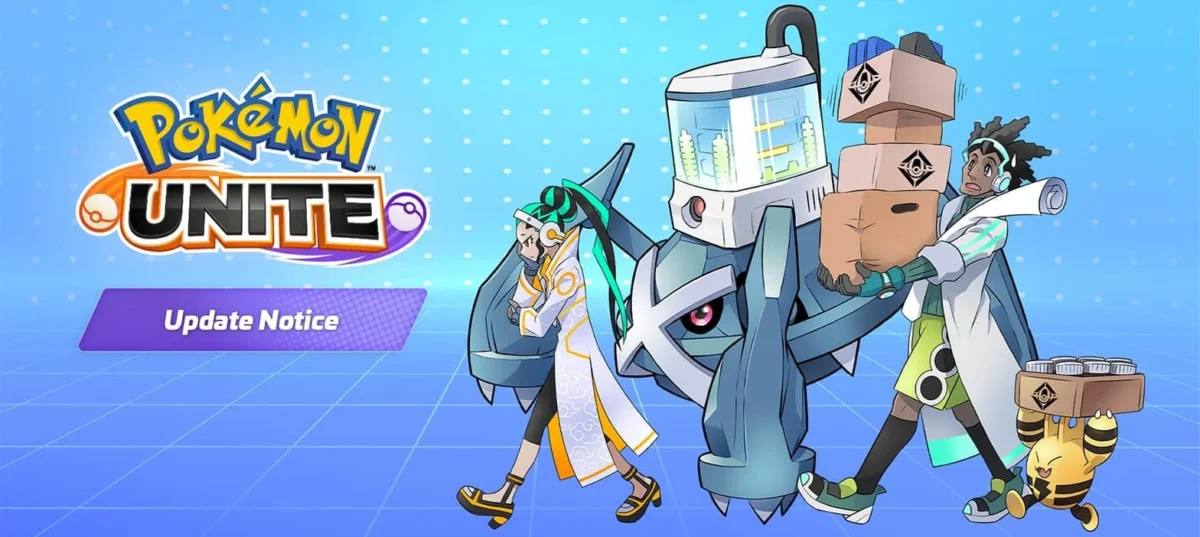
The Pokémon Company has officially announced that Pokémon Unite, the franchise’s first foray into the Multiplayer Online Battle Arena (MOBA) genre, will cease all operations on March 23, 2027. This decision marks the conclusion of a significant chapter in the brand’s mobile and console expansion, ending a service that will have spanned nearly six years by the time the servers are deactivated. The shutdown will affect players on both the Nintendo Switch and mobile platforms globally, following a structured "sunset" period designed to wind down the game’s economy and competitive ecosystem.
The announcement, which appeared on the game’s official website, did not provide a specific reason for the termination of service. Instead, the publisher focused on expressing "sincerest gratitude" to the millions of players who participated in the Aeos Island battles since the game’s debut in 2021. While the final closure is still years away, the process of dismantling the game’s infrastructure has already begun. Effective October 27, 2024, all sales of in-game currency, known as Aeos Gems, have been suspended. Furthermore, the "Unite Club" memberships and their associated automatic renewals have been paused. Players who currently hold outstanding balances of currency or active membership benefits have been advised to utilize them before the March 2027 deadline, as no refunds or transfers to other Pokémon titles have been mentioned.
A Detailed Timeline of Pokémon Unite’s Lifecycle
To understand the weight of this announcement, one must look at the trajectory of Pokémon Unite from its inception. Developed by Tencent Games’ TiMi Studio Group—the powerhouse behind massive hits like Honor of Kings and Call of Duty: Mobile—Pokémon Unite was first revealed in a dedicated Pokémon Presents broadcast in June 2020. The initial reception was mixed, as many fans were expecting a traditional RPG, but the game quickly found a dedicated audience upon its release.
The game launched first on the Nintendo Switch on July 21, 2021, followed by a mobile release for iOS and Android on September 22, 2021. Its arrival was bolstered by a heavy marketing campaign and cross-platform play capabilities, which allowed Switch and mobile users to compete in the same matches. By late 2021, the game had already surpassed 50 million downloads, signaling a strong start for the experimental title.
However, signs of a regional retreat began to surface earlier than the global announcement. The Pokémon Company had previously confirmed that service would end in Belgium and the Netherlands by November 2025. This move was widely interpreted by industry analysts as a response to stringent local regulations regarding "loot boxes" and paid randomized digital items, which are central to the game’s monetization of "Holowear" (character skins). The jump from regional closures to a total global shutdown in 2027 suggests a broader strategic shift within The Pokémon Company’s digital portfolio.
Financial Performance and Market Reach
Despite its impending closure, Pokémon Unite achieved considerable commercial milestones. According to data provided by AppMagic, the title generated approximately $75 million in gross revenue from mobile platforms alone. When factoring in Nintendo Switch microtransactions, this figure is likely significantly higher, though Switch-specific digital revenue is rarely disclosed publicly.
The game’s download metrics are even more impressive, reaching an estimated 127.4 million downloads worldwide. The geographical distribution of this user base highlights the game’s diverse appeal:
- Brazil: 14% of total downloads.
- India: 14% of total downloads.
- United States: 10% of total downloads.
While Brazil and India led in terms of player acquisition, the monetization followed a different pattern. Japan emerged as the most lucrative market for Pokémon Unite, accounting for roughly 29% of its total global revenue despite representing only 5% of the total download count. This discrepancy underscores the "whale" dynamic common in mobile gaming, where a smaller, highly engaged domestic audience in Japan contributed disproportionately to the game’s financial sustainability.
In comparison to other MOBA giants, however, Pokémon Unite occupied a mid-tier position. While $75 million is a success by many standards, it pales in comparison to the multi-billion-dollar revenues seen by Tencent’s other properties or the enduring dominance of Riot Games’ League of Legends. The high costs of maintaining a global live-service game, combined with the licensing fees associated with the Pokémon IP, may have influenced the decision to set an end date.
The Impact on the Competitive Circuit and Esports
One of the most surprising elements of the shutdown announcement is its interaction with the professional Pokémon competitive scene. Pokémon Unite has been a staple of the Pokémon World Championships (WCS) since 2022, offering large prize pools and bringing a new demographic of fans to the annual event.
The Pokémon Company previously stated that the game would no longer be featured in future Pokémon Championship events beyond the current cycle. This led to speculation about the game’s health, which has now been confirmed by the shutdown notice. However, the competitive community will be given a "last hurrah." The Aeos Crown 2027 Tokyo tournament is scheduled to proceed as the game’s final major competitive milestone. Qualifiers for this event are set to begin as early as December 5, 2024, providing a long-term roadmap for professional teams to compete one last time on the world stage.
The decision to keep the game running until 2027 is an anomaly in the industry. Most live-service games provide a window of three to six months between a shutdown announcement and the server deactivation. By providing a nearly three-year lead time, The Pokémon Company is likely attempting to honor existing partnership agreements and allow the esports community to conclude its storylines gracefully.
Technical and Developmental Context: The TiMi Partnership
The development of Pokémon Unite was a landmark collaboration between The Pokémon Company and TiMi Studio Group, a subsidiary of the Chinese conglomerate Tencent. This partnership was intended to leverage TiMi’s expertise in the MOBA genre to modernize the Pokémon brand for a competitive, mobile-first audience.
TiMi Studio Group implemented a "streamlined" MOBA experience, removing traditional elements like item shops during matches and replacing them with a "scoring" mechanic. This made the game more accessible to younger audiences and shorter play sessions, typically lasting exactly ten minutes. While the game was praised for its accessibility and high-quality animations, it faced criticism for its monetization practices, specifically the "Pay-to-Win" concerns involving the leveling of "Held Items" using real-world currency during its first year. Although the developers eventually addressed these concerns by introducing "Item Enhancer" rewards through gameplay, the early reputation may have hindered long-term retention in Western markets.
Analysis of the Strategy: Why 2027?
Industry observers are currently analyzing the rationale behind the 2027 date. Several factors likely contribute to this extended sunset period:
- Contractual Obligations: It is highly probable that the licensing agreement between The Pokémon Company and Tencent/TiMi was structured on a five-to-seven-year term. Rather than renewing the contract in a saturated MOBA market, the parties may have agreed to let the current term expire naturally.
- Resource Realignment: The Pokémon Company has recently shifted its focus toward new mobile projects. The recent launch of Pokémon TCG Pocket has seen explosive early success, and the company may be reallocating its internal management and marketing resources to support titles with higher growth potential.
- The Nintendo Switch "Successor": With rumors circulating regarding Nintendo’s next console, the "Switch 2," the company may be cleaning up its portfolio of legacy live-service titles that were built for older hardware architectures.
- Preservation of Brand Equity: By providing a three-year notice, The Pokémon Company avoids the "sudden death" PR backlash that often accompanies the closure of live-service games. This maintains goodwill with a fan base that has invested hundreds of dollars into digital cosmetics.
Reactions and Broader Implications
While official statements from TiMi Studio Group have been sparse, the reaction from the player base has been a mix of resignation and confusion. On social media platforms and community forums, players have expressed frustration that their digital collections—some featuring rare "Legendary" skins that cost upwards of $40—will eventually vanish.
This event reignites the ongoing debate regarding digital ownership in the era of live-service gaming. Unlike traditional Pokémon games on the Game Boy or DS, which can be played indefinitely on original hardware, Pokémon Unite is entirely server-dependent. Once the "Aeos Island" servers go dark in 2027, the software will become essentially non-functional, leaving no "offline mode" for fans to revisit.
For the broader gaming industry, the closure of Pokémon Unite serves as a cautionary tale. Even with one of the most powerful intellectual properties in the world and the backing of the world’s largest gaming company (Tencent), success in the MOBA space is not guaranteed. The market remains dominated by a few entrenched titans, making it difficult for newer entries to maintain the "critical mass" of players required for fast matchmaking and profitable ecosystem maintenance.
As the countdown to March 23, 2027, begins, the Pokémon Unite community faces a bittersweet period. While new content updates may slow down, the scheduled Aeos Crown tournament ensures that the game will remain active in the short term. For now, trainers have roughly 850 days left to score goals, secure Zapdos, and climb the ranked ladders of Aeos Island before the final whistle blows.
About the Author