Polyweft, a new open-source tool developed by Nazeeh Abdul-Hadi, is poised to revolutionize collaborative workflows within the Blender 3D creation ecosystem. This innovative software addresses a long-standing challenge: how to effectively merge independent modifications made to the same 3D asset by multiple artists. Polyweft provides a structured approach to managing these diverging versions, ensuring that distinct edits are preserved while intelligently flagging and resolving conflicts when both collaborators alter the same geometric or material properties. The project’s initial demonstration, showcased through a public review of a "Tide" example, highlights its potential to streamline asset iteration and reduce the friction often associated with team-based 3D content creation.
The Challenge of Collaborative 3D Asset Development
The creation of complex 3D assets, whether for video games, architectural visualization, film, or product design, is increasingly a team effort. Artists often specialize in different aspects of asset creation, such as modeling, UV mapping, texturing, or material setup. This division of labor necessitates the ability for multiple individuals to work on different parts of an asset concurrently. However, when artists inadvertently modify the same elements of a 3D model, merging these changes can become a cumbersome and error-prone process. Traditional methods often involve manual inspection, overwriting changes, or complex version control systems that may not be optimized for the nuances of 3D data.
Historically, version control systems like Git have been adapted for 3D workflows, but they primarily track file changes. For binary file formats like Blender’s .blend files, this means that even minor edits can result in significant file diffs, making it difficult to isolate and merge specific modifications. This often leads to artists working in isolation, with merge conflicts requiring significant manual intervention and potentially leading to the loss of valuable work. Polyweft aims to provide a more granular and intelligent solution specifically tailored to the structure of Blender assets.
Polyweft’s Approach: Preserving Independent Edits and Resolving Conflicts
At its core, Polyweft operates on the principle of maintaining the integrity of independent edits. The tool analyzes two distinct versions of a Blender file, often representing the work of two different artists. It identifies changes made to specific components of the 3D mesh, such as vertex positions, UV coordinates, and material properties like base color and roughness.
The key innovation lies in Polyweft’s ability to store these independent modifications separately. When a conflict arises—meaning both artists have altered the same property (e.g., the XYZ coordinates of a specific vertex)—Polyweft does not automatically overwrite one version with the other. Instead, it flags these competing values for explicit resolution by the user. This ensures that neither artist’s work is unilaterally discarded without careful consideration.
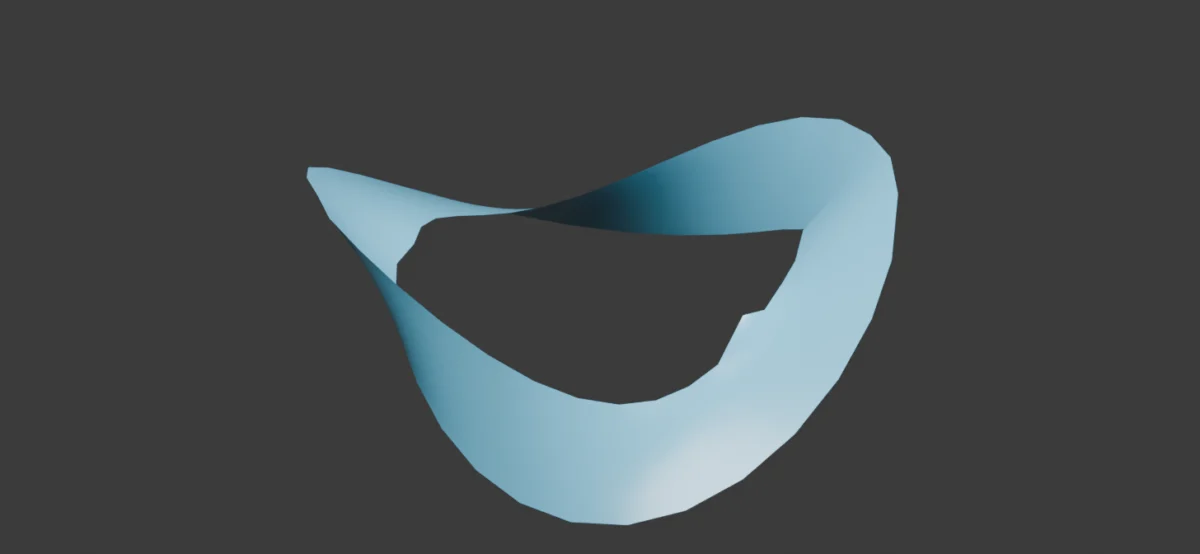
The "Tide" example serves as a practical demonstration of this methodology. This specific asset begins as a shared base mesh—a ribbon composed of 256 vertices and 224 quads. This base mesh then diverges into two separate branches, each representing the work of a distinct artist. The review details that within these branches, there are 18 edits unique to the "left" branch, 19 edits unique to the "right" branch, and crucially, three instances where both branches modified the same value. These conflicting values include:
- Vertex Position: The precise XYZ coordinates of a particular vertex.
- UV Corner: A specific point within a UV map, influencing texture placement.
- Material Roughness: A parameter that controls the surface reflectivity of a material.
Polyweft’s review process explicitly captures the geometry and values of these divergent edits. When resolving conflicting vertex positions, for instance, Polyweft prioritizes selecting one complete XYZ vector rather than attempting to interpolate or arbitrarily combine coordinates from the two artists. This approach ensures a definitive outcome for each conflicting element.
A Practical Demonstration: The "Tide" Example and Public Review
The public review of the "Tide" example is a crucial component of Polyweft’s rollout. This allows potential users to experience the tool’s functionality without the need for any local installation. By visiting the provided URL, users can interact with the review, which visually and programmatically showcases how Polyweft handles independent edits and conflicts. This hands-on experience is invaluable for understanding the practical implications of the software.
For users who wish to integrate Polyweft into their local Blender workflows, a more comprehensive setup is available. This involves downloading the Blender 4.5 "Tide" files, along with the necessary Python wheel. Once installed locally, users can perform a review, make explicit choices for any identified conflicts, and then apply these merged changes back into Blender. Polyweft generates a new .blend file that incorporates the resolved merges. This process involves reopening the newly created file in a separate Blender instance to verify the integrity of the merged data. The supplied merged "Tide" file, for instance, records the choices made for the three identified conflicts, and importantly, retains the original input bytes of the source files, providing a robust audit trail.
Scope and Limitations: Focused Functionality
It is important to note that Polyweft’s current scope is deliberately focused. The tool is designed to handle specific types of asset modifications:
- Vertex Positions: Direct manipulation of individual vertex coordinates.
- UV Face Corners: Edits to the UV mapping at the corner level of faces.
- Principled BSDF Defaults: Modifications to the Base Color and Roughness parameters of the Principled BSDF shader, provided the underlying topology remains unchanged.
The tool is not designed to reconcile more complex issues such as:
- Topology Changes: Significant alterations to the mesh structure, like adding or removing loops, extruding faces, or modifying polygon counts in ways that fundamentally change the connectivity.
- Arbitrary Unprepared Scenes: Polyweft is intended for individual asset merging, not for entire complex scenes with multiple objects, modifiers, and intricate node setups.
- Rigs or Full Scenes: The current version does not address the merging of armature data, constraints, or the entirety of a complex Blender scene.
Furthermore, while Polyweft automates the selection and merging process based on user input, the developer emphasizes that a "numerical merge still needs artistic inspection in Blender." This means that even after Polyweft has processed the data, the final output should be reviewed by an artist within Blender to ensure aesthetic and functional correctness.
Technical Requirements and Platform Support
To leverage Polyweft’s native merging capabilities, users will need Python 3.11 or a later version installed, along with a local executable of Blender. The project has been tested with official Blender 4.5.14 LTS on Linux and a local Blender 5.3 Alpha build. However, official stable releases on Windows and macOS have not yet been fully verified. This indicates that while the core technology is robust, broader platform compatibility is an ongoing area of development.
Polyweft is released under the GNU General Public License (GPL-3.0-or-later), classifying it as free and open-source software. A significant advantage for users is that it requires no account, cloud service, or AI API. This positions Polyweft as a self-contained, privacy-respecting tool for individual artists and studios.
Development Background and Related Technologies
The development of Polyweft, including the initial procedural "Tide" example and the factual package, was undertaken using Codex. This alludes to a sophisticated development environment or framework employed by the creator. The project explicitly acknowledges prior work in the field of mesh merging, citing "MeshGit and BlenDiff" as earlier efforts. Polyweft does not claim to be the sole inventor of mesh merging but rather builds upon existing concepts and offers a specialized implementation for the Blender environment.
Implications for the 3D Industry
The introduction of Polyweft carries several significant implications for the 3D creation industry:
- Enhanced Collaboration: By providing a structured and intelligent method for merging asset versions, Polyweft can significantly reduce the time and effort required for collaborative projects. This can lead to faster iteration cycles and improved team productivity.
- Reduced Data Loss: The explicit conflict resolution mechanism helps prevent accidental overwriting of work, ensuring that valuable artistic contributions are preserved.
- Streamlined Workflows: For studios and individual artists working with complex assets that undergo frequent revisions, Polyweft offers a more efficient alternative to manual merging or less specialized version control strategies.
- Democratization of Advanced Tools: As an open-source project, Polyweft makes advanced asset merging capabilities accessible to a wider range of users, including independent artists and smaller studios that may not have the resources for expensive proprietary software.
- Focus on Asset Integrity: The emphasis on preserving independent edits and offering clear conflict resolution highlights a growing trend towards tools that respect the granular nature of 3D data.
The success of Polyweft will likely depend on its continued development, expansion of platform support, and adoption by the Blender community. As 3D content creation becomes increasingly collaborative and iterative, tools that can efficiently manage diverging asset versions will become indispensable. Polyweft’s focused approach and open-source nature position it as a promising contender in this evolving landscape, offering a tangible solution to a persistent challenge in the digital art pipeline.
About the Author