In a recent presentation delivered at the GDC Vault, a digital repository of lectures and panels from the annual Game Developers Conference, designer Brian Cronin presented a compelling argument for a playtesting methodology he advocates as profoundly effective: one-on-one, synchronously conducted playtesting via live video call. While his talk, titled "Playtesting Process for Ultra Small Teams," was ostensibly aimed at developers operating with minimal resources, Cronin meticulously demonstrated how the principles and practical benefits of this approach extend far beyond the realm of indie studios, offering invaluable insights for development teams of any scope or scale.
The Pervasive Challenge of Objective Game Assessment
The Game Developers Conference (GDC) stands as the premier event for professionals in the video game industry, a vital nexus for sharing innovation, best practices, and lessons learned. Among the myriad challenges faced by developers, objectively assessing the "fun factor" and clarity of their own creations remains one of the most enduring. Designers, deeply immersed in their projects for months or even years, often develop a ‘curse of knowledge,’ making it difficult to perceive their game through the fresh eyes of a new player. This inherent bias can lead to assumptions about player understanding, overlook obscure mechanics, or misjudge emotional impact.
Historically, game development has employed various methods to combat this challenge, ranging from internal Quality Assurance (QA) teams to large-scale focus groups and remote asynchronous testing platforms. While each method offers distinct advantages, they often come with significant financial costs, logistical complexities, or a degree of detachment that can dilute the quality of feedback. Internal QA, for instance, eventually suffers from familiarity, while large focus groups can sometimes yield superficial feedback or be swayed by group dynamics, masking individual player experiences. Asynchronous testing, though scalable, lacks the immediate, nuanced interaction crucial for deeply understanding player psychology.
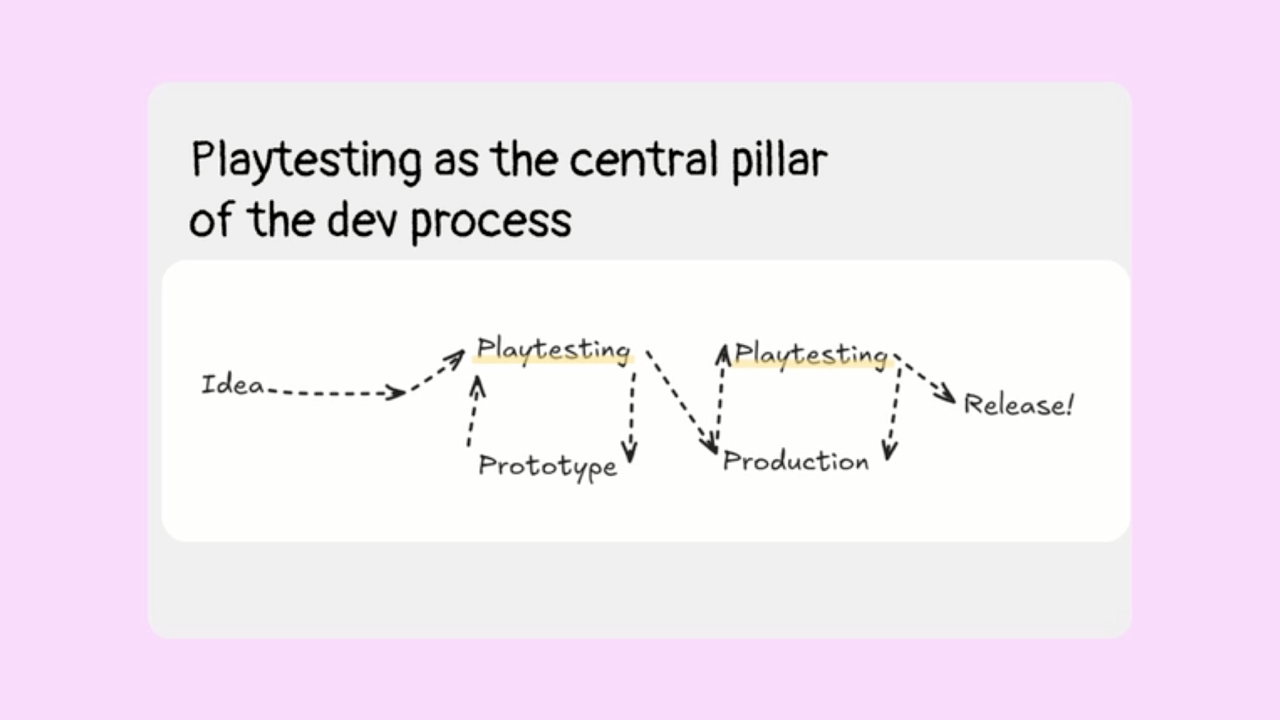
Cronin’s method, presented in March, directly addresses these limitations by prioritizing direct, unfiltered observation and real-time interaction. It positions playtesting not as a final polish step, but as a central, continuous pillar of the development process, aligning perfectly with modern agile development philosophies that emphasize iterative design and rapid feedback loops. The industry has increasingly recognized that the cost of fixing fundamental design flaws escalates exponentially the later they are discovered in the development cycle. A bug or design oversight caught in the "idea" or prototype phase might cost mere hours to rectify, whereas the same issue discovered post-launch could necessitate extensive patches, damage player trust, and incur significant financial losses. This economic reality underscores the critical importance of early and effective playtesting.
Deconstructing the Synchronous One-on-One Playtesting Method
At its core, Cronin’s favored methodology involves a designer directly engaging with a single playtester through a video call, sharing a live demo of the game build. This direct pipeline of communication and observation is what sets it apart. The process is remarkably straightforward yet powerful:
- Setup: The designer prepares the game build, ensuring it’s stable enough for a demo.
- Priming the Playtester: Before the session begins, the designer guides the playtester on how to provide useful feedback, emphasizing honesty and openness. This often includes instructions to verbalize thoughts, confusions, and emotional reactions as they play.
- Live Observation and Interaction: As the playtester navigates the game, the designer actively observes their screen, listens to their verbalizations, and watches their body language (if cameras are on). Crucially, the designer takes detailed notes on specific moments: where the player hesitated, expressed confusion, laughed, or showed frustration.
- Post-Session Analysis: The notes are then systematically processed to identify patterns, recurring pain points, and areas of unexpected delight.
One of the most attractive features of this method is its inherent cost-effectiveness. Potentially, it can be entirely free, leveraging existing communication tools like Zoom, Discord, or Google Meet. This stands in stark contrast to the substantial expenses associated with traditional playtesting labs, specialized eye-tracking equipment, dedicated user research personnel, or licensing advanced telemetry software. For a small independent studio with limited capital, this accessibility is a game-changer, democratizing high-quality user feedback that was once largely the preserve of larger, well-funded companies. Even for larger studios, it offers a nimble, supplementary approach that can yield rich qualitative data without the overhead of more elaborate setups. Industry reports consistently highlight that user research and QA can account for a significant portion of a game’s development budget, sometimes exceeding 10-15% for AAA titles. Cronin’s method presents a compelling alternative for initial, foundational feedback, drastically reducing these early-stage costs.
The Designer’s Blind Spot and the Nuance of Emotional Resonance
Cronin candidly admits a truth often echoed by user experience (UX) professionals across various industries: "Devs are bad at knowing if their game is fun, often." He elaborates on this with a touch of self-deprecating humor, recalling his own experiences: "They’re bad at knowing if their game is understandable—I learned that I have this weakness! Things that I think are super obvious are not!" This phenomenon, often referred to as the "curse of knowledge," means that once a designer possesses certain information about their game’s mechanics or narrative, it becomes incredibly difficult to imagine what it’s like not to have that information.
This is precisely where one-on-one synchronous playtesting shines, especially in capturing the elusive yet critical element of emotional impact. "One-on-one playtesting is the best way to get feedback on emotional impact," Cronin asserts. Games, at their heart, are experiential mediums, designed to evoke a spectrum of feelings from excitement and triumph to tension, wonder, or even melancholy. However, measuring whether a game successfully elicits its intended emotional response is notoriously difficult through surveys or impersonal metrics.
By directly observing a player, designers gain an unparalleled window into their emotional journey. The subtle furrow of a brow indicating confusion, a sudden gasp of surprise, a hearty laugh, or a moment of intense concentration—these non-verbal cues, combined with verbalized thoughts, provide a rich tapestry of qualitative data. "Whether you want to or not, your game is having some emotional impact on the player, and just watching that person play the game, and hearing all the little subtle things that they’re doing, and body language—that’s the best way to pull out ‘is your game having the impact that you want?’" This direct, empathetic observation allows designers to fine-tune their experiences, ensuring that the narrative beats land, the puzzles evoke curiosity, and the challenges inspire engagement rather than frustration. User research experts frequently emphasize that true understanding of user experience comes not just from what users say, but from what they do and how they react, a principle that this method optimizes.
Cultivating Player Loyalty and Forging Community Foundations
Beyond the immediate benefits of actionable design feedback, Cronin highlights a profoundly attractive side benefit: "Players will feel like you’re reading their mind!" This seemingly magical effect stems from the iterative nature of the playtesting process. When a designer consistently tests, identifies recurring issues, and implements solutions, subsequent players encounter a smoother, more intuitive experience.
Cronin recounts a common scenario: "This is one of my favorite things, when I’m running a playtest with someone, and they are confused, and verbalize a question—then they click the next thing, and question answered! I’ve had a couple people say ‘it’s like you read my mind.’" He quickly clarifies, "Of course I didn’t, but I read dozens and dozens of other people’s minds leading up to that playtest. It’s amazing how often patterns repeat." This insight is crucial: individual player feedback might seem unique, but when aggregated across many sessions, distinct patterns emerge. What one player perceives as "just a me problem" is almost invariably a "designer problem," as Cronin humorously points out. This humility in design, recognizing that systemic issues are rarely the player’s fault, is a cornerstone of player-centric development. This iterative refinement builds a sense of intuitive understanding between the game and its player, fostering deep satisfaction and loyalty.
Furthermore, Cronin underscores the immense potential of early playtesting as a community-building exercise, especially for small developers. "For small developers, this is also the seed of your early community," he noted. Treating playtesters with respect, valuing their time, and keeping them informed about how their feedback contributes to the game’s evolution transforms them from mere testers into invested advocates. He cites a compelling statistic from his own experience: approximately 70 percent of the members in his current game’s Discord server are former playtesters. This demonstrates the power of early engagement; these individuals often become the most passionate supporters, spreading positive word-of-mouth and contributing to a vibrant, engaged player base long before launch. They are not just testers; they are early adopters, evangelists, and a critical core of future community managers. This kind of organic community growth is invaluable, especially in a crowded market where traditional marketing can be prohibitively expensive for indie studios.
Systematic Feedback Management and Ethical Communication
The effectiveness of one-on-one playtesting is not solely dependent on conducting sessions; it hinges equally on a systematic approach to collecting, processing, and acting upon the feedback. Cronin stresses that merely observing a few good playtests is insufficient. The raw information must be synthesized into actionable insights. He advocates for structured tools, such as spreadsheets, to track feedback items, categorize them, and prioritize them based on impact and feasibility. This systematic approach ensures that valuable observations aren’t lost and that development efforts are strategically directed towards addressing the most critical issues. Prioritizing "highest level shifts" ensures that foundational problems are tackled first, preventing a cascade of related issues later on.
Beyond the logistical aspects, Cronin also provides crucial advice on the communication dynamics between designer and playtester. He coaches developers on avoiding defensive language, a common pitfall when receiving criticism about one’s creative work. Instead, he suggests simple "script" ideas for priming playtesters to give the most open and honest feedback. This includes setting expectations, assuring them that no feedback is "wrong," and emphasizing that the goal is to improve the game, not to judge the player. This positive and respectful approach is vital for creating an environment where playtesters feel safe and empowered to share their genuine experiences, even if those experiences highlight flaws in the game.
He articulates this ethos by referencing the intrinsic value of a playtester’s contribution: "Time and attention are the most valuable resource on earth right now." Acknowledging this from the outset, by genuinely thanking playtesters for the "gift of feedback," establishes a foundation of mutual respect that encourages deeper engagement and more candid insights. This ethical framework for user research is not just good practice; it’s essential for eliciting high-quality data and building lasting relationships. User experience (UX) research ethics universally emphasize informed consent, respect for participant time, and transparent communication, all of which Cronin’s approach implicitly embodies.
Broader Industry Impact and Future Outlook
While Brian Cronin’s talk originated from the perspective of "ultra-small teams," the universal appeal of his one-on-one synchronous playtesting methodology lies in its adaptability and foundational principles. For larger studios, this method offers a highly effective qualitative research tool that can complement existing quantitative data from telemetry and large-scale QA. Dedicated user researchers within AAA teams could adopt this approach for deep dives into specific mechanics, narrative beats, or early-stage prototypes, providing rich contextual understanding that traditional metrics might miss. It could also serve as an invaluable first pass for concept validation, quickly identifying fatal flaws before significant resources are committed.
The insights from Cronin’s presentation underscore a broader shift in game development towards increasingly player-centric design. The industry is recognizing that successful games are not just technologically advanced or artistically brilliant, but fundamentally resonant with player expectations and experiences. By prioritizing direct player interaction and systematic feedback, developers can craft more enjoyable, understandable, and emotionally impactful games. The GDC Vault, by hosting such accessible and practical advice, continues its crucial role in disseminating knowledge that empowers developers across the spectrum, from aspiring indies to seasoned veterans, to elevate the quality and reach of their interactive creations. Ultimately, Cronin’s method is a testament to the enduring power of empathy and direct communication in the complex art of game design, offering a blueprint for fostering deeper connections between developers and their players, one valuable conversation at a time.
About the Author