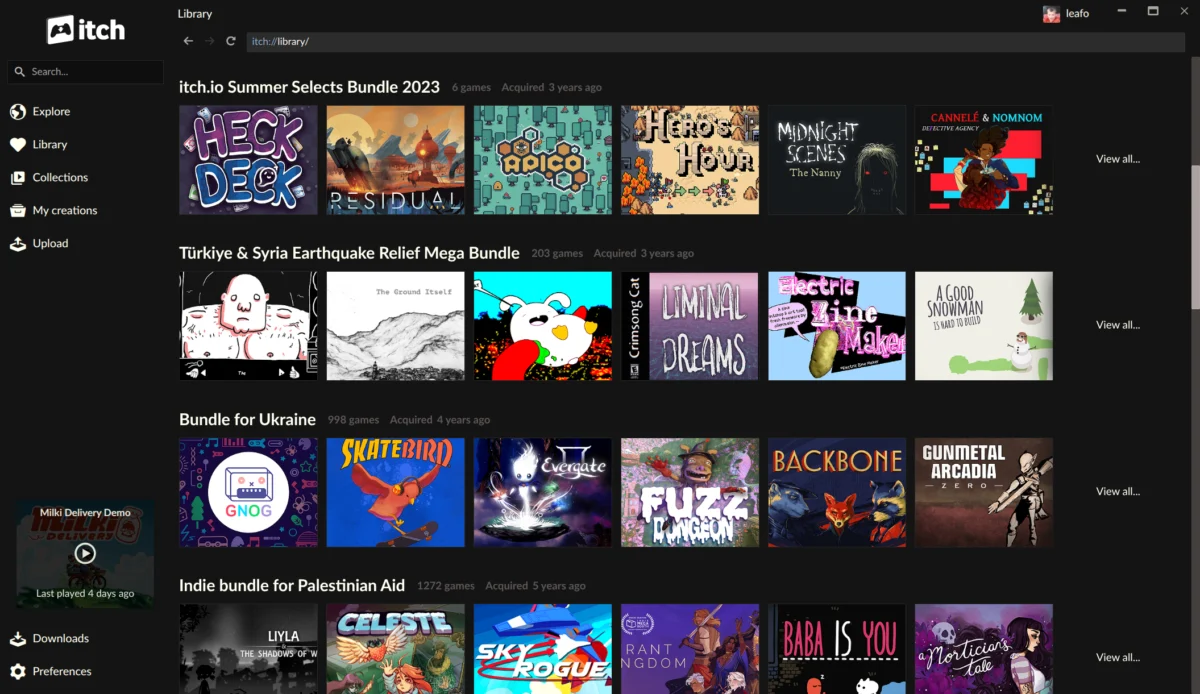
The itch.io desktop application has undergone a significant transformation through two recent updates, versions v26.15.0 and v26.17.0, alongside a critical hotfix, v26.18.0, addressing a macOS crashing issue. These updates, developed in direct response to community feedback and persistent requests from the platform’s issues tracker, introduce a suite of enhancements designed to improve user experience, particularly concerning large game bundles, game launch customization, and broader compatibility. The core improvements include integrating owned bundles as first-class citizens within the library, implementing per-game launch settings, enabling the installation of platform-untagged downloads, and revamping the sidebar search functionality.
Background: Itch.io’s Evolving Ecosystem
Itch.io has long established itself as a vibrant and independent marketplace for digital games, assets, and tools, championing creators and offering unparalleled flexibility in publishing and distribution. Unlike more corporate storefronts, itch.io operates with a strong community focus, often facilitating impactful charitable bundles that have raised millions for various causes. The itch.io desktop app serves as a crucial interface for users to manage their extensive libraries, download games, and interact with the platform’s diverse content. However, as the platform has grown, particularly with the proliferation of massive bundles, the app faced challenges in efficiently managing and presenting this content. These recent updates represent a concerted effort to address these scaling issues and enhance the app’s utility for both casual players and power users alike. The iterative development process, often transparently documented through GitHub changelogs, underscores itch.io’s commitment to continuous improvement driven by user needs.
Revolutionizing Bundle Management within the App
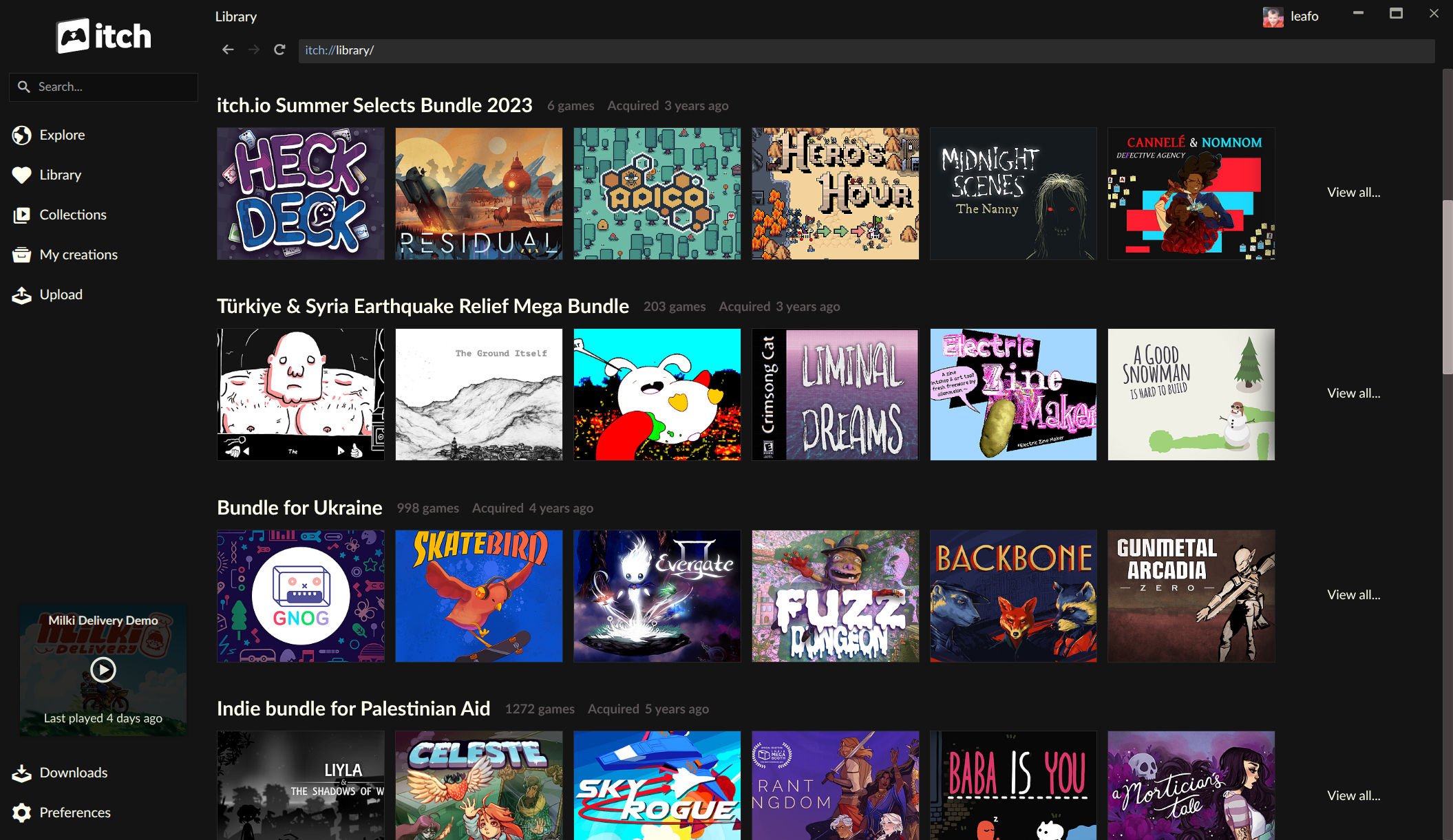
One of the most significant advancements in the latest updates is the comprehensive integration of bundles directly into the user’s library. Previously, users who purchased large bundles, especially those with thousands of items, encountered difficulties browsing and installing games directly from the app. This was primarily due to the unique way itch.io managed ownership for these colossal collections.
Historically, bundles like the "Bundle for Racial Justice and Equality" and the "Bundle for Ukraine" posed unprecedented technical challenges. The "Bundle for Racial Justice and Equality," for instance, featured an astonishing 1,741 items and was purchased over 800,000 times. Similarly, the "Bundle for Ukraine" contained nearly 1,000 items and attracted over 400,000 buyers. Generating an individual download key for every single item for every buyer would have necessitated over a billion database rows for the Racial Justice bundle alone, an impractical and unsustainable data management solution. To circumvent this, ownership for these mega-bundles was recorded as a single entry, with individual game download keys only generated upon explicit claiming by the user on the website. This meant that while users owned the games, they wouldn’t appear in the app until each title was manually claimed, creating a cumbersome and frustrating experience for those navigating vast libraries.
The updated itch.io app now directly understands this unique bundle ownership model. Bundles users own are now prominently displayed in their library, each featuring its own dedicated page. These bundle pages provide a comprehensive listing of every game included, complete with robust sorting options, title-based search functionality, and filters for platform, classification, and installation status. Crucially, games can now be installed directly from within the bundle page, eliminating the need for tedious website navigation and individual claiming. This enhancement dramatically improves discoverability and accessibility for users who have supported these charitable initiatives, allowing them to fully explore the breadth of content they own. For developers and the platform, this streamlined process encourages participation in future large-scale bundles, knowing that the user experience for claiming and playing games will be significantly smoother. Furthermore, itch.io recently revamped its bundle hosting tools, signifying a broader strategic focus on enhancing the bundle ecosystem for both creators and consumers.
Advanced Control: Per-Game Launch Settings
Another highly anticipated feature introduced in these updates is the "Launch settings" area, accessible from the manage dialog for each installed game. This granular control empowers users to customize how their games run, catering to both security-conscious individuals and advanced users seeking to optimize their gaming environment.
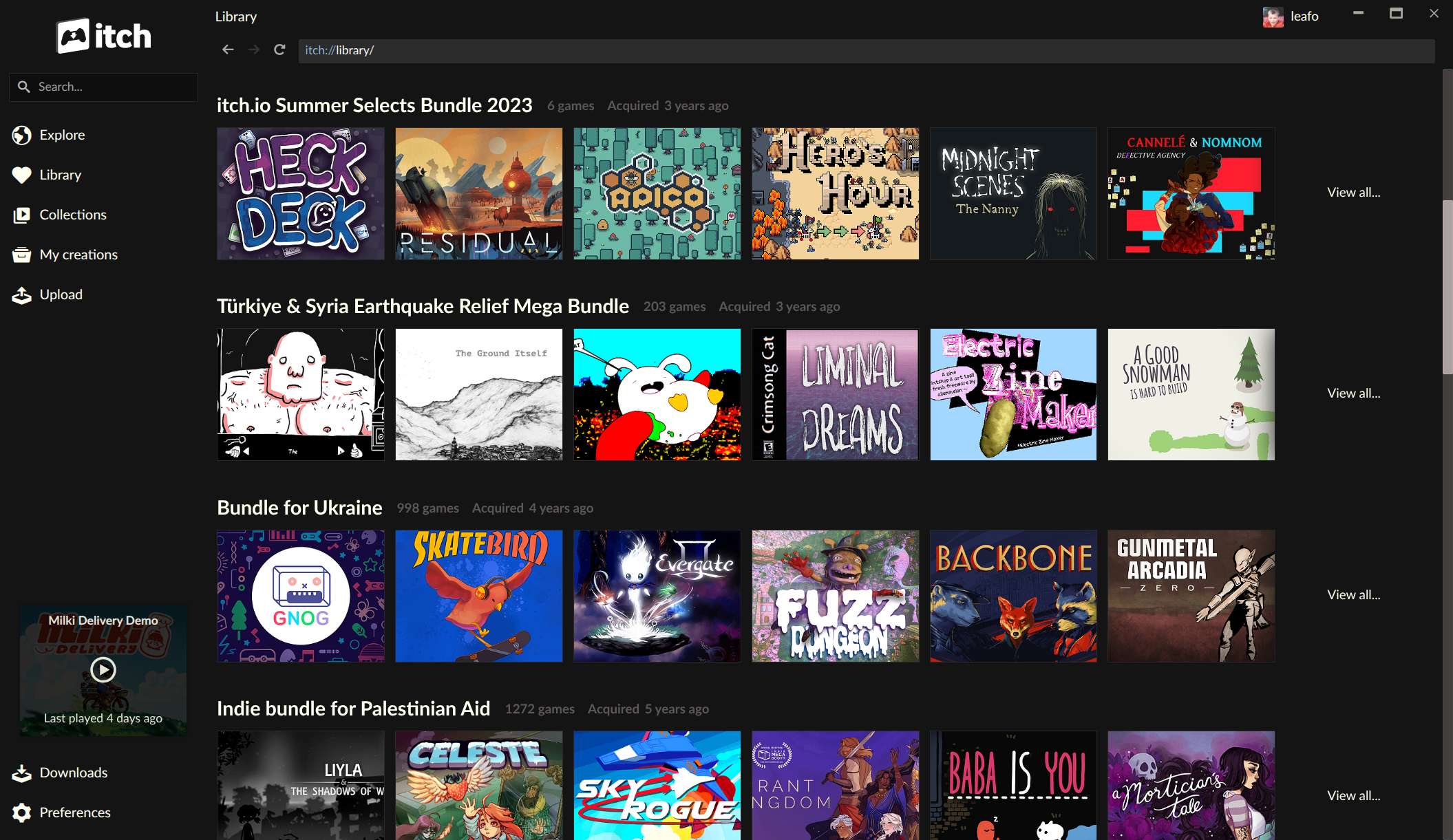
The new settings allow for the configuration of sandbox restrictions, network access, and environment variables on a per-game basis. Sandbox restrictions can isolate games, preventing them from accessing sensitive system resources or other parts of the user’s file system, thereby enhancing security, particularly for games from less familiar sources. Network access controls provide users with the ability to dictate whether a game can connect to the internet, a valuable feature for offline play or for preventing unwanted telemetry. Environment variables offer a powerful mechanism for passing specific configurations or parameters to a game’s executable, useful for developers during testing or for users needing to tweak performance settings.
Perhaps the most significant addition within the launch settings is the "Command pattern" option for launch arguments. This addresses a long-standing request from the community, allowing users to go beyond simply passing plain arguments to the game. With the %%command%% pattern, users can now wrap the game’s launch in another command. This functionality is invaluable for integration with compatibility layers such as Wine or Proton on Linux, enabling users to seamlessly run Windows-native games. It also facilitates the use of debugging tools, performance monitoring software, or custom launchers, all managed directly from within the itch.io app. This level of customization elevates the itch.io app from a simple game launcher to a robust management tool for diverse gaming setups.
Expanding Horizons: Platform-Agnostic Installation
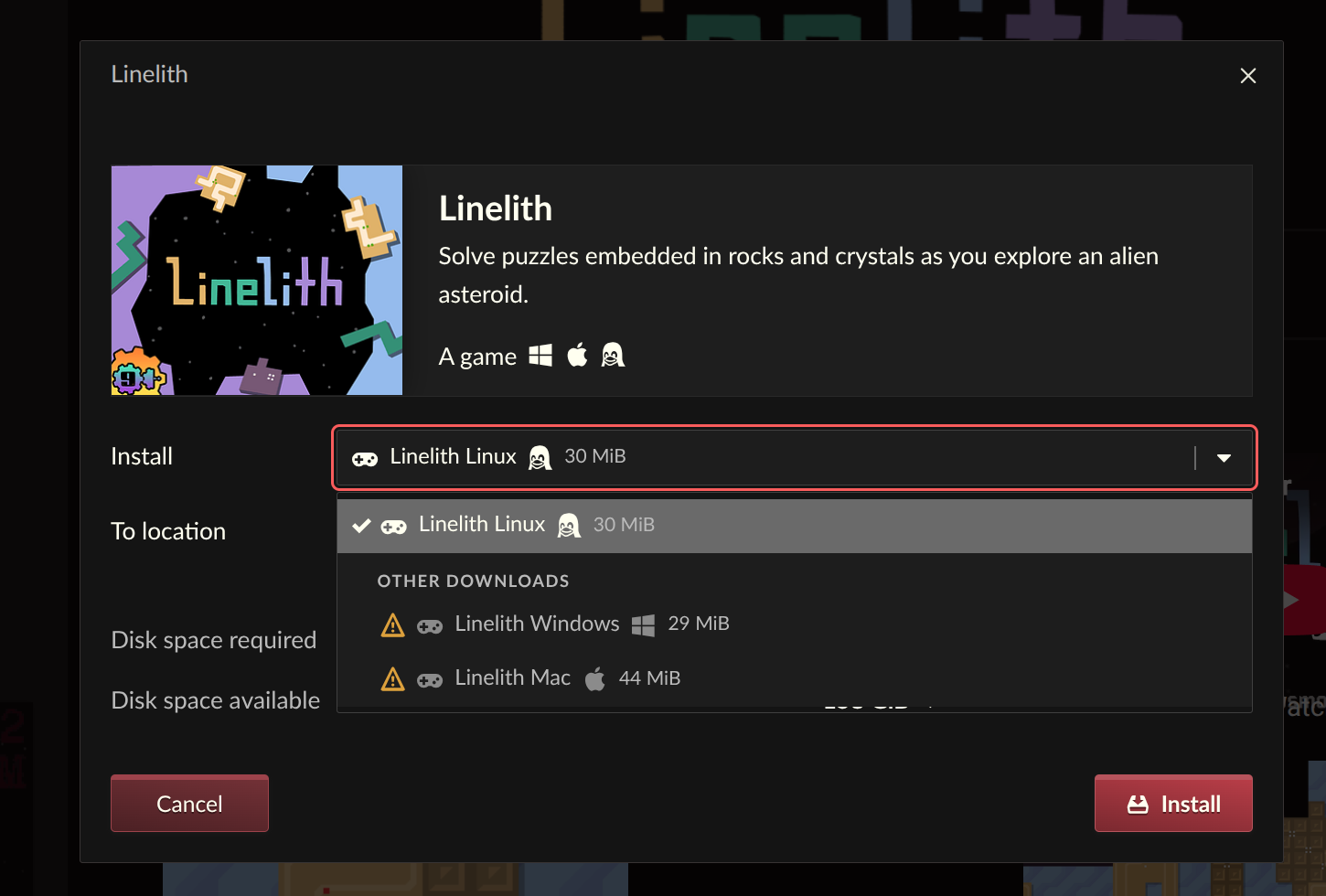
The updates also introduce a critical improvement for cross-platform flexibility: the ability to reveal and install downloads not explicitly tagged for the user’s current operating system. Previously, the app would only display and allow installation of builds that matched the detected platform (e.g., Windows builds on Windows, Linux builds on Linux). This created a barrier for users who wished to leverage compatibility layers or access specific versions of games.
This new feature means that if a developer has uploaded a game but hasn’t explicitly tagged it for a particular operating system, or if a user on Linux wishes to download and run a Windows build via a compatibility layer, they can now do so directly from the install dialog. This greatly enhances user choice and control, particularly benefiting the thriving Linux gaming community that often relies on tools like Proton to play games primarily developed for Windows. It also provides flexibility for users who might want to access older builds, beta versions, or simply maintain an archive of different platform versions of a game, regardless of their current primary OS. This move acknowledges and supports the diverse computing environments of itch.io’s user base, moving towards a more inclusive and adaptable platform experience.
Refined Navigation: The New Sidebar Search
The app’s sidebar search functionality has also received a complete overhaul, aimed at improving clarity and efficiency. The previous search mechanism utilized the itch.io API’s autocomplete feature, which often presented search results in a confusing or unhelpful order, making it challenging for users to quickly locate specific items within their extensive libraries.
The revamped sidebar search now focuses on providing a more intuitive experience. The developers have indicated that autocomplete is best suited for items users already own, guiding them directly to their purchased content. For broader searches and discovery of new titles across the entire itch.io catalog, the system now intelligently directs users to the full search experience on the itch.io website. This strategic separation ensures that users can swiftly find games they intend to play from their existing collection, while also providing a superior and more comprehensive discovery mechanism for new content, leveraging the full power of the website’s search capabilities. The visual interface for the new search is cleaner and more direct, reducing clutter and improving overall usability.
Chronology of Updates and Critical Hotfix
The journey to these comprehensive improvements began with the release of v26.15.0, followed shortly by v26.17.0, both integrating a bulk of the aforementioned features. However, following the deployment of these updates, a critical issue emerged affecting macOS users, causing the application to crash unexpectedly upon launch for some users. This prompted immediate action from the itch.io development team.
In a swift response to community reports, a hotfix, v26.18.0, was released. This patch specifically addressed the macOS crashing issue, demonstrating itch.io’s commitment to promptly resolving critical bugs and maintaining app stability. Users experiencing persistent crash loops on macOS were advised that they might need to reinstall the app from the official setup program available at https://itch.io/app to fully resolve the issue. For all other users, the app is designed to update itself automatically upon launch, ensuring they benefit from the latest features and bug fixes. The full changelogs for each version, including the hotfix, remain publicly accessible on GitHub, upholding itch.io’s tradition of transparency in development.
Community Reaction and Broader Implications
Initial community reactions to these updates have been largely positive, despite the temporary macOS hiccup. Users have expressed appreciation for the long-awaited bundle management improvements, describing them as "great news" and making library navigation "much nicer." The ability to install platform-untagged games has been particularly welcomed by those utilizing compatibility layers, enhancing their freedom to access content. Comments from users like "itch is getting better and better quickly!" reflect a general sentiment of satisfaction with the app’s continuous evolution.
However, some users have also highlighted areas for further refinement. Reports of some owned bundles not appearing in the in-app library suggest that while the core bundle ownership logic has been improved, edge cases or synchronization issues may still exist for a minority of users. Additionally, requests for advanced features, such as the ability to launch web-based games in an external browser while retaining in-app time tracking, indicate an ongoing desire for even greater flexibility and integration with external tools. These comments serve as valuable feedback for future development cycles.
The broader implications of these updates are significant for itch.io as a platform, its developers, and its user base. For users, these enhancements translate into a more organized, powerful, and adaptable gaming library experience. The increased control over game launches and cross-platform installation capabilities empower users to tailor their gaming environment to their specific needs and hardware configurations. For independent developers, a more robust and user-friendly app potentially means wider adoption and smoother access to their games, especially those participating in large bundles. By addressing key pain points and continuously refining its desktop application, itch.io reinforces its position as a leading, community-focused platform dedicated to fostering creativity and providing an accessible, flexible environment for indie games. These updates are a testament to itch.io’s ongoing dedication to evolving its ecosystem in direct response to the needs and feedback of its passionate community.
About the Author