In a significant and sudden move, itch.io, the popular independent game marketplace, has deindexed all adult and NSFW (Not Safe For Work) content from its browse and search pages. The platform announced the drastic measure on July 28th, 2025, citing intense scrutiny from its payment processors following a targeted campaign by the activist organization Collective Shout. This action, described as "sudden and disruptive" by itch.io, underscores the precarious balance platforms face when navigating content moderation, financial partnerships, and user-generated content. The decision has sent ripples through the indie game development community, particularly impacting creators of adult-oriented games and interactive experiences who rely on itch.io for distribution and income.
The Genesis of the Crisis: Collective Shout and the No Mercy Game
The catalyst for itch.io’s sweeping changes traces back to a specific incident involving a game titled No Mercy. While the game was only temporarily available on the platform before being banned in April, its brief presence seemingly attracted the attention of Collective Shout, an organization known for its campaigns against perceived exploitation and objectification in media. The group subsequently launched a targeted campaign against both Steam and itch.io, escalating their concerns directly to the payment processors utilized by these platforms.
Collective Shout’s strategy to engage payment processors like PayPal and Stripe directly highlights a growing trend where financial institutions are increasingly becoming de facto arbiters of content acceptability online. For platforms whose business model relies entirely on facilitating transactions, the threat of losing these critical partnerships is existential. itch.io explicitly stated, "Our ability to process payments is critical for every creator on our platform. To ensure that we can continue to operate and provide a marketplace for all developers, we must prioritize our relationship with our payment partners and take immediate steps towards compliance." This statement underscores the immense pressure faced by itch.io, a smaller entity in the digital marketplace landscape, to conform to the demands of powerful financial intermediaries.
An Abrupt Shift: Immediate Actions and Lack of Prior Notice
The platform’s response to this pressure was swift and without prior warning to its developer community. The decision to deindex all adult NSFW content from public discovery mechanisms was deemed a "time critical moment" by itch.io, necessitated by the rapid development of the situation. The company apologized for the abruptness, explaining that providing advance notice to creators was not feasible given the urgency required to protect its "core payment infrastructure." This sudden shift created significant frustration and confusion among developers, many of whom rely heavily on the platform for their livelihoods and had invested considerable time and resources into their adult-oriented projects.
The deindexing means that while content pages themselves are not immediately deleted, they are no longer discoverable through general browsing or search functions on the site. This severely impacts the visibility and sales potential for thousands of projects, effectively rendering them invisible to new audiences. The move represents a significant challenge to itch.io’s long-standing reputation as an open and permissive platform for indie creators, including those working in niche or controversial genres.
Comprehensive Content Audit and Future Compliance Measures
Following the initial deindexing, itch.io is now engaged in a comprehensive audit of all affected content. This review aims to identify and classify material to ensure compliance with the stringent requirements of its payment processors. During this review period, deindexed pages will remain inaccessible via public search and browse.
Once the audit is complete, itch.io plans to introduce new, stricter compliance measures. A key component of this will be a mandatory step for NSFW content creators, requiring them to explicitly confirm that their content adheres to the policies of the specific payment processors linked to their accounts. This shifts a significant burden of compliance directly onto the creators, demanding a detailed understanding of complex and often opaque financial service acceptable use policies.
Furthermore, the audit is expected to result in the permanent removal of some pages from the platform. Affected accounts will be notified via email from itch.io’s support address. This indicates that certain types of content, even if previously hosted, may no longer be deemed acceptable under the revised compliance framework. The platform has acknowledged the ongoing challenges and uncertainties, asking for patience and understanding from its community as it navigates this "challenging period."
Addressing Community Concerns: The Addendum FAQ
In response to the widespread outcry and numerous questions from its user base, itch.io published an "Addendum FAQ" on July 28th, providing further clarification on the situation. This update, and a subsequent one on July 31st regarding "Reindexing adult NSFW content," sought to address the most pressing concerns.
One of the primary questions raised by the community was why itch.io’s response appeared more severe than Steam’s, which also faced scrutiny from Collective Shout. itch.io explained this disparity by highlighting the fundamental differences in their platform models. Steam operates as a "closed" platform, where every product page undergoes an approval process before appearing on the store. This curated approach allows Steam to have a general awareness of its hosted content and enables a more targeted response to specific problematic titles.
In contrast, itch.io functions as an "open, UGC (User-Generated Content) platform." With over 2 million product pages, anyone can publish content with minimal barriers. The platform admitted it "could not rely on user-provided tagging to be accurate enough for a targeted approach," necessitating a broader, more thorough review. Additionally, itch.io emphasized its status as a "small company, both in team size and in transaction volume, compared to a company like Steam." This limited capacity meant they had "limited ability to ‘push back’" against the demands of powerful payment processors. The potential loss of PayPal or Stripe, critical for processing payouts to countless creators, dictated the necessity of their comprehensive action.
Timeline, Payment Processors, and Library Access
The FAQ also revealed that the situation remains fluid, with no fixed timeline for these changes as itch.io awaits "final determinations from our current payment processors, Stripe and PayPal." In a proactive measure, itch.io is actively seeking out alternative payment processors that may be more amenable to handling adult content. As an immediate step, the ability to pay with Stripe for 18+ content has been suspended "for the foreseeable future," with a focus on content classification reviews and stricter age-gating.
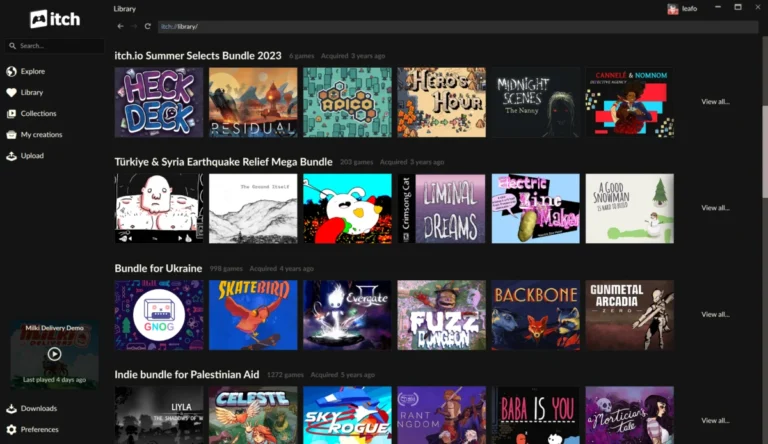
Crucially, itch.io clarified the impact on user libraries. Pages that are "deindexed" are still accessible if users own them; they have not been removed from personal libraries or collections. For pages that have received a "content notice" – signifying content itch.io can no longer support commercially – downloadable files remain available in the user’s library, provided the creator has not independently removed the page or files. The platform urged users experiencing issues with library access to contact support and reiterated its commitment to its DRM-free philosophy, encouraging users to "Download and backup your games and don’t let any corporation dictate what you can own." This advice implicitly acknowledges the volatile nature of platform reliance for digital content.
Regarding payouts, itch.io addressed concerns about withholding creators’ earnings. While their adult content policy contains a rule about not processing payouts for infringing accounts, primarily targeting "bad-actor" situations involving severe terms violations (e.g., content with sexualized minors), the current situation is deemed a "special circumstance." The platform assured creators, "We have no interest in withholding anyone’s earnings. The measures we are taking now are to ensure we do not lose our relationships with our financial partners, which is necessary to continue paying creators without issue."
Evolving Adult Content Policy
The adult content policy itself has also seen updates. While itch.io’s Terms of Service (TOS) and adult content policy always included a general rule about adhering to payment processor acceptable use policies, a specific list of "prohibited themes present in card processing networks" was added. itch.io acknowledged the inherent ambiguities and potential for semantic arguments with such a list but opted to provide more information rather than less, intending to refine this section with greater care as the situation develops. While not explicitly detailed in the public announcement, such lists typically include content related to illegal activities, extreme violence, non-consensual sexual acts, or material deemed exploitative or harmful by payment networks.
Broader Implications for Indie Development and UGC Platforms
The crisis at itch.io serves as a stark reminder of the increasing influence wielded by payment processors over online content. These financial intermediaries, often operating with broad and sometimes vaguely defined acceptable use policies, effectively act as gatekeepers, dictating what kind of content can be monetized or even hosted by platforms. For user-generated content platforms like itch.io, this creates a significant challenge, as the sheer volume and diversity of content make proactive, granular moderation extremely difficult.
The events also highlight the disproportionate impact on smaller, independent platforms and creators. While larger entities like Steam may have the resources and legal teams to negotiate or push back against certain demands, smaller companies like itch.io are often compelled to comply immediately and broadly to protect their core business operations. This can lead to a chilling effect on creative expression, particularly for adult content creators who often operate in niche markets and rely on platforms willing to host diverse material.
The search for alternative payment processors by itch.io suggests a potential fragmentation of the digital payment landscape for certain content types. This could lead to a future where platforms catering to adult or controversial content might need to rely on specialized or alternative financial services, potentially increasing transaction costs or limiting global reach. For indie developers, this adds another layer of complexity and uncertainty to their distribution strategies.
Ultimately, the situation at itch.io is a critical test of its commitment to its open platform philosophy while navigating the harsh realities of commercial compliance. The balance between fostering a diverse creator ecosystem and adhering to the often conservative demands of financial partners will continue to shape the future of independent game development and online content distribution. The community awaits further updates as itch.io works to reindex and redefine its approach to adult content in this challenging new environment.
About the Author