The digital distribution platform itch.io has unveiled a significant enhancement for its developer community, integrating its powerful butler command-line upload utility directly into the itch.io desktop application with a user-friendly graphical interface (GUI). This strategic upgrade, available in app version v26.12.0 and above, aims to democratize the sophisticated build deployment process, making it accessible to a broader spectrum of game developers who may not be comfortable with terminal-based workflows. The introduction of this in-app butler functionality is poised to streamline the update cycle for thousands of independent creators, fostering greater efficiency and reducing friction in delivering their creative works to players worldwide.
Understanding Butler: The Engine Behind Efficient Updates
At its core, butler serves as itch.io’s proprietary command-line interface (CLI) for managing and uploading game builds to the platform. Unlike traditional file uploads via a web browser, butler operates on a sophisticated patching mechanism. When a developer pushes an initial build to a designated "channel" – a customizable identifier like windows-beta, linux-arm64, or macos-preview – butler uploads the complete set of files. However, for every subsequent update to that same channel, butler performs an intelligent comparison against the previous build. This differential analysis identifies only the changed, added, or deleted files, then uploads just these differences as a compact patch.
This delta patching technology is a cornerstone of butler‘s efficiency. Industry estimates suggest that the average size of a game update can be reduced by 70-90% through this method, saving gigabytes of data over a game’s lifecycle for both developers and players. For instance, a 5GB game update that typically requires re-downloading the entire package might only be a few hundred megabytes or less when utilizing butler‘s patching capabilities. Once uploaded, itch.io’s backend servers further optimize and re-compress these patches, ensuring maximum efficiency.
The benefits extend directly to players using the itch.io app. When a game they own receives an update, the app intelligently downloads only the patch, rather than the entire game package. This translates into significantly faster download times, reduced bandwidth consumption, and a smoother, more immediate gaming experience. For developers, this means more frequent and less burdensome updates, encouraging an iterative development process that keeps games fresh and bug-free without imposing heavy download demands on their audience. Until this recent integration, accessing these powerful capabilities required developers to interact directly with a command-line terminal, a barrier for many who prioritize graphical interfaces.
The Evolution of Developer Tools at Itch.io: A Chronology
Itch.io has long carved out a unique niche in the digital game distribution landscape, distinguishing itself as a truly independent and developer-centric platform. Since its inception in 2013, the platform has consistently aimed to empower creators, offering flexible revenue sharing models and a low barrier to entry for publishing games. The introduction of butler several years ago marked a significant milestone in this journey. It provided a robust, efficient solution for managing game builds, particularly for developers dealing with large files, frequent updates, or complex multi-platform deployments.
Initially, butler was conceived as a tool for developers comfortable with scripting and command-line environments. It was highly effective for its intended audience – those who appreciated the precision and automation potential of a CLI. However, as the indie game development scene burgeoned, attracting a wider array of talent, including many artists and designers less inclined towards technical command prompts, a gap began to emerge. Feedback from the community increasingly pointed towards the need for a more accessible method to leverage butler‘s powerful features. Developers, while acknowledging butler‘s technical superiority, often expressed a desire for a more intuitive, visual workflow.
The itch.io desktop application itself evolved into a central hub for players, providing a seamless experience for discovering, downloading, and managing games. It became clear that integrating developer tools directly into this familiar environment would be the logical next step in enhancing the overall platform experience. The groundwork for this integration involved significant development efforts to wrap the complex logic of butler into a user-friendly GUI without sacrificing any of its underlying power or efficiency. This latest update, arriving in app version v26.12.0, represents the culmination of these efforts, bridging the gap between sophisticated backend processes and front-end usability. The timeline from butler‘s initial CLI release to its current GUI integration reflects a continuous commitment by itch.io to adapt its tools to the evolving needs of its diverse developer base.
Navigating the New Interface: A Tour of the Upload Section
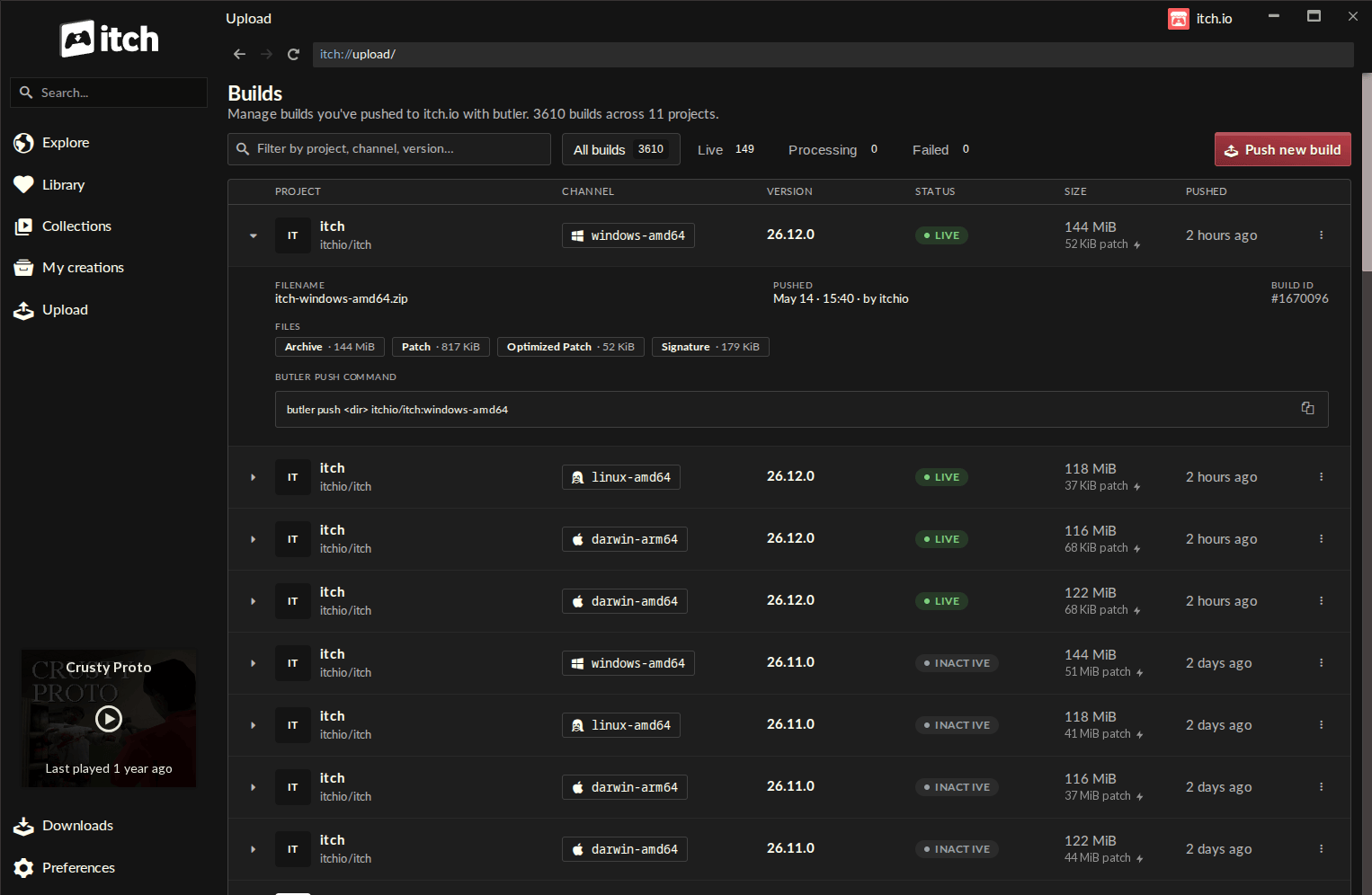
The newly introduced "Upload" section within the itch.io desktop app fundamentally transforms the build management experience. Accessible directly from the sidebar, this new entry leads developers to the "Builds" page – a comprehensive dashboard designed for clarity and control. This screen provides an immediate overview of every build associated with any project the logged-in account has editing permissions for. Each row of the display is meticulously organized, presenting crucial information at a glance: the specific project name, the channel to which the build was pushed, its version number, current upload status, file size, and the timestamp of its last push. This centralized view eliminates the need to navigate through individual project pages or consult terminal logs, offering unparalleled transparency into a developer’s entire build history.
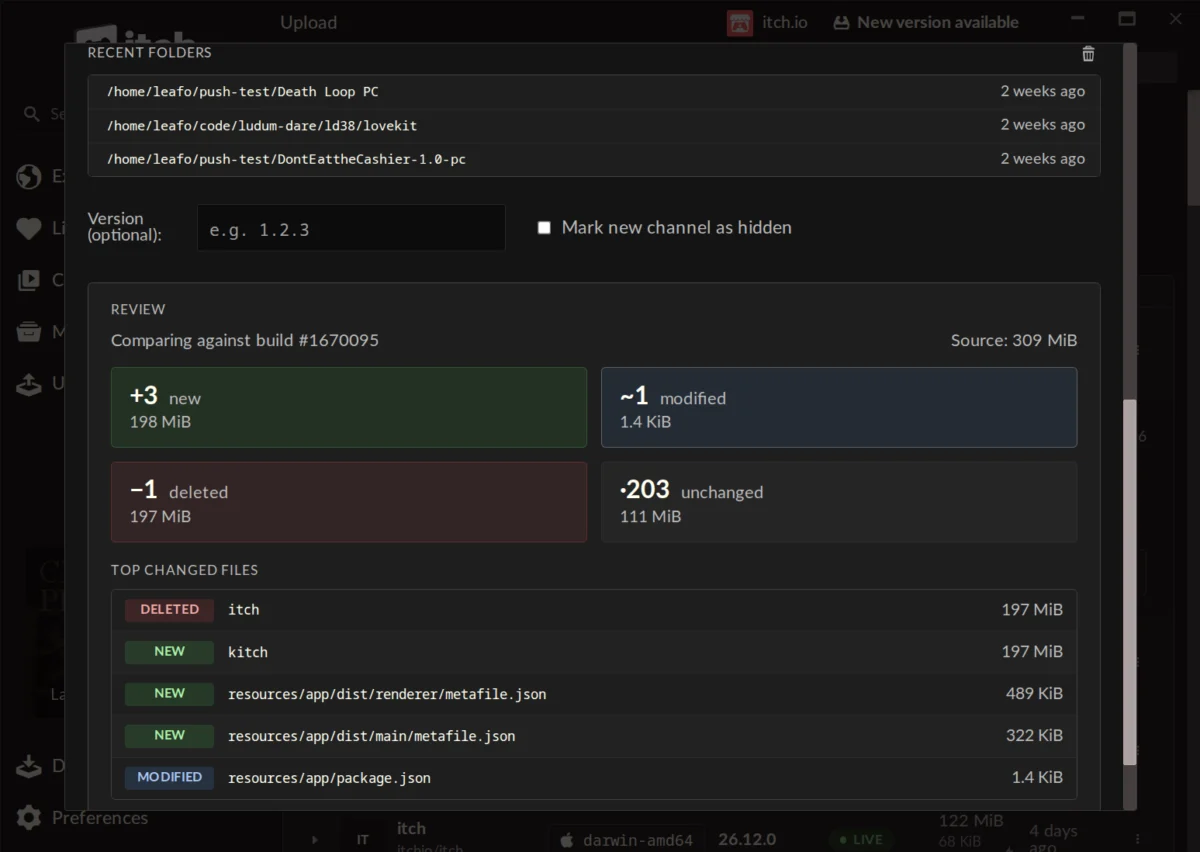
Initiating a new upload is equally straightforward. A prominent "Push new build" button on the Builds screen activates an intuitive push dialog. Here, developers are guided through a simple, multi-step process: selecting the target project from a dropdown menu, choosing an existing channel, or easily creating a new one by simply typing a desired name (e.g., experimental-build, holiday-update). An optional field allows for the input of a version string, enabling clear tracking of iterative releases. The core of the upload process involves a drag-and-drop interface for either a game folder or a .zip archive, making file selection effortless. For added convenience, a "recent folders" list remembers previously used upload locations, drastically cutting down on navigation time for frequently updated projects.
One of the most valuable features integrated into this new workflow is the pre-upload "Preview of changes." Before the actual upload commences, the app generates a detailed report outlining what butler will push. This preview categorizes changes into new files, modified files, deleted files, and unchanged files, providing a size breakdown for each group. Critically, it also lists the largest changed files, offering immediate insight into the nature of the update. This proactive analysis serves as an invaluable error-checking mechanism, allowing developers to catch potential mistakes – such as accidentally including large debugging files or forgetting to remove temporary assets – before they are deployed to players. This transparency empowers developers with a deeper understanding of their game’s binary footprint and the efficiency of butler‘s patching process.
Furthermore, the version of butler embedded within the itch.io app is automatically updated, freeing developers from the manual chore of keeping their command-line tool current. This ensures they are always utilizing the latest optimizations and features without any extra effort. The app leverages the credentials of the currently logged-in itch.io account for all uploads, simplifying authentication and making it exceptionally easy to manage pushes from multiple developer accounts, a common scenario for studios or collaborative projects. The ability to quickly switch between profiles within the itch.io app provides a seamless multi-project workflow previously unattainable with the command-line tool.
Key Advantages for Developers and Players
The integration of butler into the itch.io app’s GUI delivers a cascade of advantages for both developers and the end-users. For developers, the most immediate and impactful benefit is enhanced accessibility. By abstracting the complexities of command-line syntax into a visual, click-and-drag interface, itch.io has effectively lowered the barrier to entry for leveraging butler‘s powerful delta patching. This opens up efficient build management to a wider demographic of creators, including those who may possess exceptional game design or artistic talent but are less technically inclined.
Significant efficiency and time savings are another direct result. Developers no longer need to switch contexts between their development environment, a terminal, and the itch.io website. The entire process, from preparing a build to pushing it live, can now be managed within a single application, reducing cognitive load and accelerating the release cycle. This streamlining is particularly beneficial for indie developers who often wear multiple hats and have limited time.
The reduction in potential errors is also a critical advantage. The "Preview of changes" feature, coupled with the automated updates of the embedded butler tool, minimizes the chances of incorrect builds being pushed. Developers can visually confirm what is being uploaded, catching inconsistencies before they impact players. This proactive error prevention fosters greater confidence in the deployment process.
For players, the benefits primarily revolve around an improved user experience. The inherent efficiency of butler‘s delta patching means faster updates, smaller downloads, and less bandwidth consumption. In an era where game sizes continue to grow, saving hundreds of megabytes or even gigabytes per update is a significant boon, especially for users with limited data plans or slower internet connections. This consistency in efficient updates also builds player loyalty and trust, as they can rely on developers to deliver timely patches without lengthy download interruptions.
Finally, for developers managing multiple projects or working in teams, the app’s native support for multi-account management within a single interface is invaluable. Switching between different developer profiles for various games or collaborative efforts is quick and intuitive, eliminating the need for cumbersome logout/login procedures or complex credential management associated with CLI tools. This holistic approach to build management positions the itch.io app as a central, indispensable tool for independent game creators.
Statements and Community Reception
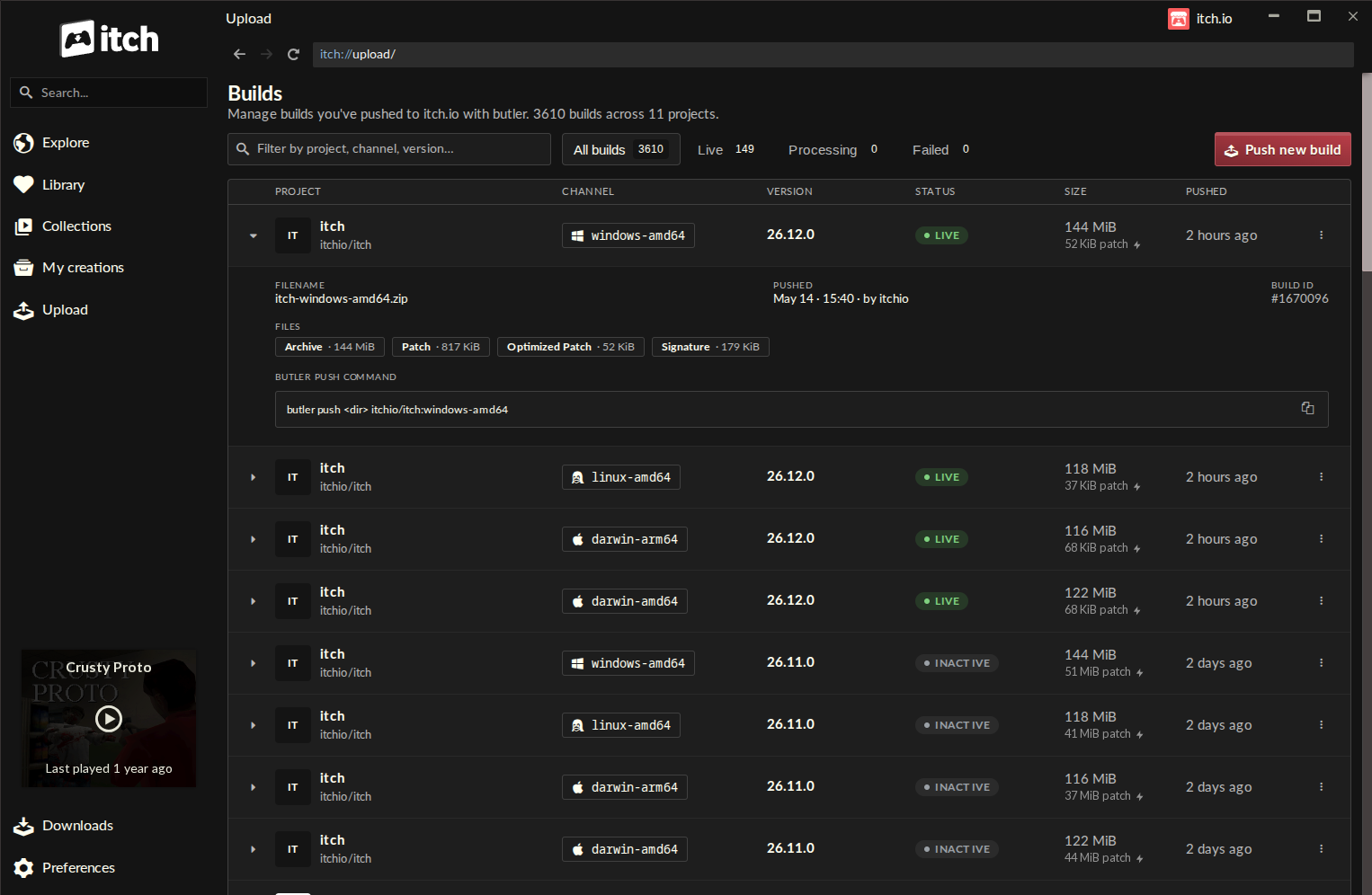
The announcement of butler‘s GUI integration has been met with significant enthusiasm from the itch.io developer community. Early reactions gleaned from comments and social media indicate widespread appreciation for the newfound ease of use. Developers lauded the intuitive interface, highlighting how it transforms a previously technical task into a simple, visual operation. "Honestly? This is a lot faster than manually updating the webpage," remarked one developer, underscoring the efficiency gains. Another commented on the feature’s role in making game updates "so easy and organized." These testimonials affirm itch.io’s success in addressing a long-standing need within its community.
A spokesperson for itch.io, speaking on the platform’s continuous evolution, stated, "Our mission has always been to empower independent creators with the best possible tools. While butler has been a cornerstone of efficient game distribution, we recognized the need to make its power accessible to every developer, regardless of their comfort level with command-line interfaces. Integrating butler directly into the itch.io app with a friendly GUI is a testament to our commitment to streamlining workflows, reducing friction, and ultimately, helping developers focus more on creation and less on technical overhead. We believe this update will significantly enhance the publishing experience and reinforce itch.io’s position as a truly developer-first platform."
While the general reception has been overwhelmingly positive, some community discussions also touched upon unrelated but persistent platform issues, such as moderation queue times or tag filtering. However, these points are distinct from the technical merits of the butler integration, which stands as a clear enhancement to the developer toolkit. The immediate, positive feedback on the new upload system suggests that itch.io has successfully delivered a feature that genuinely improves the quality of life for its creators.
Broader Implications for the Indie Game Ecosystem
The integration of butler with a GUI within the itch.io app carries significant implications that extend beyond mere convenience, potentially reshaping aspects of the indie game ecosystem. Firstly, it represents a substantial lowering of barriers to entry for game distribution. By simplifying the update process, itch.io makes it easier for emerging developers, students, or those without extensive technical backgrounds to publish and maintain their games professionally. This democratizes access to efficient distribution methods, encouraging more diverse voices and projects to enter the market.
Secondly, this move strengthens itch.io’s unique position as a developer-friendly alternative to larger, often more rigid, digital storefronts. While other platforms offer their own upload tools, butler‘s delta patching is highly regarded for its efficiency. Making this technology more accessible enhances itch.io’s value proposition, attracting and retaining developers who prioritize ease of use, control, and a strong community focus. This could potentially lead to a greater volume of high-quality, frequently updated indie titles on the platform.
The ease of updates also encourages more iterative development cycles. Developers are more likely to push smaller, more frequent patches and bug fixes when the process is straightforward and fast. This can lead to better-supported games, a more responsive development process, and ultimately, higher quality experiences for players. This iterative approach is crucial for indie titles, where community feedback often plays a vital role in shaping a game’s evolution.
Moreover, the combination of efficient updates and a streamlined developer experience contributes to enhanced player loyalty and engagement. Players appreciate quick downloads and consistently updated games. When developers can easily deliver these, it fosters a stronger connection between creator and audience, promoting a healthier ecosystem where games remain vibrant and relevant over longer periods.
Looking ahead, this integration could serve as a foundational step for further enhancements within the itch.io app. The platform could explore additional GUI-based tools for build management, analytics, or even community interaction, further solidifying its role as an all-in-one hub for indie game creation and distribution. The commitment to evolving developer tools, as demonstrated by this butler integration, signals a forward-thinking approach that will likely continue to benefit the entire independent game development community.
For developers eager to utilize this new functionality, the itch.io app updates itself automatically, ensuring users always have the latest features. Manual checks for updates can be performed via the Preferences screen if desired. New users can easily download the itch.io app from the official website. It is imperative that developers ensure their app version is at least v26.12.0 to access the new Upload tab and its comprehensive features. For those who still prefer or require the granular control of the command line, the extensive butler documentation remains available, detailing all its capabilities. Itch.io anticipates that this significant upgrade will unlock new levels of efficiency and creative freedom for its vibrant community of creators, fostering an even more dynamic and accessible indie game landscape.
About the Author