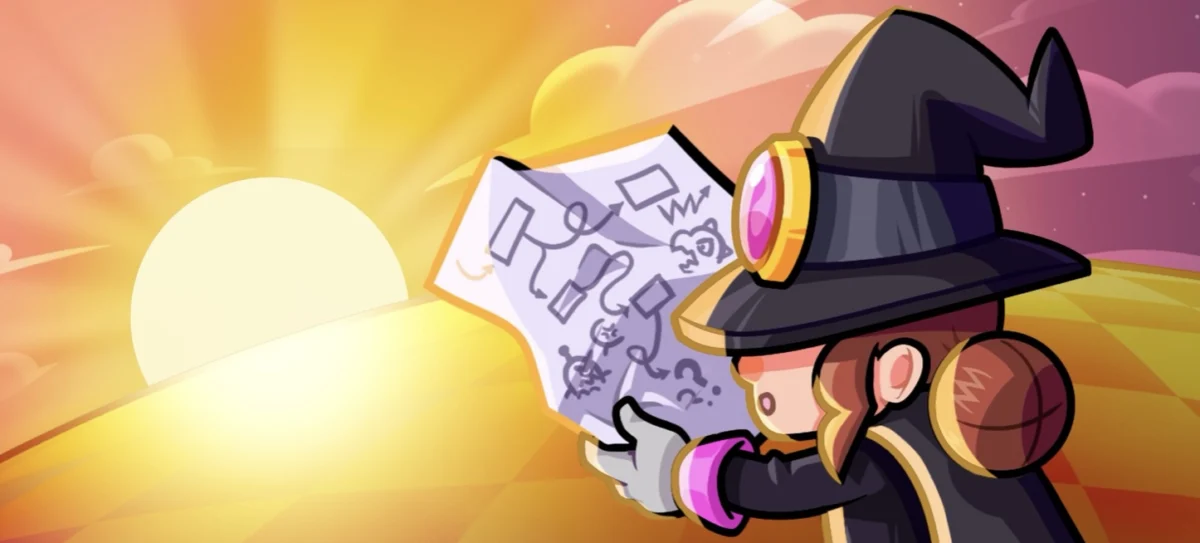
The mobile gaming industry received a significant update as Supercell, the Finnish developer behind global sensations like Clash of Clans and Brawl Stars, officially confirmed the definitive timeline for the shuttering of its latest global release, Squad Busters. According to an official statement from the developer, Squad Busters will be removed from the Apple App Store and Google Play Store on December 1, with all server operations scheduled to cease permanently on December 14. This decision marks a remarkably swift end for a title that was launched worldwide with significant fanfare in May 2024, representing Supercell’s first global launch in over five years.
The developer clarified that players who currently have the application installed on their devices will retain access to the game until the mid-December cutoff. However, all in-game events, progression timers, and seasonal content are synchronized to expire on the December 14 deadline. This move follows a period of mounting uncertainty regarding the game’s longevity. While Supercell had previously signaled an end to active development in October 2024, the original projections suggested the title might remain operational in a maintenance mode until 2026. The acceleration of this timeline to the end of 2024 indicates a strategic shift in how the company manages its portfolio and resources in an increasingly competitive mobile market.
The Strategic Decision and the Supercell Standard
The termination of Squad Busters highlights the rigorous, and often ruthless, quality standards maintained by Supercell. The company is well-known within the gaming industry for its "kill culture," a philosophy where games are discontinued if they do not show the potential to become "forever games"—titles that can be played for years and remain in the top-grossing charts globally.
In its official communication, Supercell noted that it could not identify a "clear path forward" for the game despite multiple attempts to refine the core loop and monetization strategies. A pivotal moment in the game’s short lifecycle was the "Heroes" update, which was intended to deepen the meta-game and provide players with more long-term goals. However, the developer admitted that the feedback and data following these reworks suggested that making the game successful would require changes so fundamental that it would essentially result in a "completely new game." Rather than investing further capital and engineering hours into a foundational structure that was not resonating with a broad enough audience, Supercell opted to reallocate its talent to other projects.
Financial Performance and Market Reception
Data provided by market intelligence firm AppMagic offers a quantitative look at the performance of Squad Busters during its brief tenure on the global stage. Since its worldwide launch in May 2024, the game generated an estimated $67.9 million in lifetime revenue from approximately 58.6 million downloads. While these figures might represent a success for many mid-sized studios, they fell short of the astronomical benchmarks set by Supercell’s previous hits.
A key metric in the analysis of the game’s viability is the Revenue Per Download (RPD). Globally, Squad Busters averaged approximately $1.16 per download. When compared to the early performance of titles like Brawl Stars or Clash Royale, this figure suggested a lower level of monetization efficiency and player retention. The United States emerged as the primary market for the title, accounting for roughly 30% of the total consumer spending. Despite the heavy marketing investment—which included a high-profile live-action commercial featuring Hollywood celebrities—the game struggled to maintain the momentum required to break into the upper echelons of the mobile gaming charts.
A Chronology of Squad Busters’ Lifecycle
The journey of Squad Busters was characterized by a rapid ascent and an equally rapid conclusion. To understand the impact of its closure, it is necessary to look at the timeline of its development and release:
- February 2023: Supercell first announces Squad Busters, unveiling a "multiverse" concept that brought together characters from Clash of Clans, Hay Day, Boom Beach, and Brawl Stars.
- Early 2024: The game enters limited soft launch phases in specific territories to test technical stability and initial player engagement.
- May 29, 2024: Squad Busters launches globally. The launch is supported by a massive marketing campaign, signaling Supercell’s confidence in the title as its next major pillar.
- August – September 2024: The development team introduces several major updates, including the introduction of new characters and the "Heroes" system, attempting to address player feedback regarding the depth of gameplay.
- October 2024: Supercell officially announces the end of active development for Squad Busters. In-app purchases are disabled immediately to prevent further consumer spending on a sunsetting product.
- Late 2025 (Projected): Initially, the window for players to transfer the value of their in-game purchases to other Supercell titles was set to close at the end of 2025, with a 2026 shutdown expected.
- November 2024: Supercell updates the timeline, confirming the December 1 removal from stores and the December 14 server shutdown.
Technical Constraints and the Refusal of Offline Modes
Following the announcement of the shutdown, portions of the player community requested that Supercell release an offline version of the game or allow for private servers to preserve the title’s history and gameplay. However, Supercell has explicitly ruled out these options. The developer explained that Squad Busters is built upon a complex server-side infrastructure that is not easily adaptable for offline play.
Furthermore, the "multiverse" nature of the game presents unique legal and brand challenges. Because the game utilizes intellectual property, assets, and characters from across the entire Supercell ecosystem, the company maintains a strict policy on how these characters are portrayed and accessed. Releasing the source code or allowing private servers would create risks regarding brand integrity and the control of their most valuable assets. Consequently, when the servers go dark on December 14, the game will become entirely inaccessible.
Internal Realignment and Personnel Management
Despite the closure of the project, Supercell has emphasized that the end of Squad Busters does not coincide with layoffs within the company. This is consistent with Supercell’s organizational structure, which is built around small, autonomous "cells." Earlier this year, the company confirmed that the Squad Busters team remains intact and has largely been integrated into other active game teams or new experimental projects.
This internal mobility is a cornerstone of Supercell’s strategy. By moving experienced developers from a closed project to successful live titles like Hay Day or Clash of Clans, or to promising new prototypes like "mo.co," the company retains institutional knowledge and technical expertise. This approach mitigates the morale-dampening effects often associated with game cancellations in the broader tech industry.
Broader Industry Context: The Mobile Gaming "Winter"
The closure of Squad Busters is not an isolated incident but rather reflective of a broader trend in the mobile gaming landscape. The industry is currently grappling with "the death of the middle," where only the most dominant titles or highly niche indie projects seem to thrive.
In the same month as the Squad Busters announcement, other major industry players confirmed similar retreats. Ubisoft announced the closure of Rainbow Six Mobile just seven months after its launch, and Fingersoft revealed it would be shuttering Lego Hill Climb Adventures. These closures are often attributed to the rising costs of user acquisition (UA) and the impact of privacy changes, such as Apple’s App Tracking Transparency (ATT), which have made it significantly more difficult and expensive for developers to target and retain high-value players.
For Supercell, the failure of Squad Busters to reach "forever game" status reinforces the difficulty of launching new IP in 2024. Even with a massive marketing budget and a roster of beloved characters, the modern mobile player base is increasingly fragmented and difficult to engage over the long term.
Analysis of Implications for Supercell’s Future
The decision to terminate Squad Busters so quickly after its global launch suggests that Supercell is becoming even more selective about which titles it supports. For years, the company’s CEO, Ilkka Paananen, has championed the idea that Supercell should be the "best place to make games," which includes the freedom to fail. However, the financial reality of maintaining a global live-service game that isn’t growing necessitates quick decisions.
Industry analysts suggest that Supercell may now pivot back toward a more cautious approach to global launches. The "Supercell Standard" has been reaffirmed; if a game cannot sustain a top-tier position in the market, it will be removed to make room for the next potential hit. This maintains the prestige of the Supercell brand—ensuring that any game bearing their logo is synonymous with long-term quality—but it also raises the stakes for future projects currently in development.
As December 14 approaches, the Squad Busters community is preparing for the final days of the "multiverse" mashup. While the game’s life was short, its journey serves as a case study in the modern mobile gaming era: a testament to the high risks of global expansion and the uncompromising pursuit of excellence that defines one of the world’s most successful gaming entities. For now, the focus shifts back to Supercell’s core stable of games and the mysterious new projects currently being incubated in Helsinki and beyond.
About the Author