Released over 18 years ago, Ubisoft’s Assassin’s Creed (2007) has remarkably stood the test of time, cementing its place as a pivotal title in video game history. Its longevity is not merely a testament to its innovative gameplay mechanics, but primarily to its masterful execution of storytelling, a fundamental element of compelling game design. Players across various platforms, notably on online communities like Reddit, continue to laud the original Assassin’s Creed for its robust script and the philosophical depth embedded within its dialogue. These immersive conversations draw players into a complex world where the lines between good and evil are perpetually blurred, fostering a unique blend of historical action and profound existential inquiry. The resonance of a game centered on clandestine assassins engaging in deep discourse about freedom, truth, and power is particularly striking, distinguishing Ubisoft’s inaugural entry into the franchise from its contemporaries in the historical action genre.
A Groundbreaking Entry in 2007’s Gaming Landscape
The year 2007 marked a significant period in video game development, witnessing the release of several critically acclaimed titles that pushed boundaries, including BioShock, Call of Duty 4: Modern Warfare, and Mass Effect. Amidst this competitive landscape, Assassin’s Creed emerged as a fresh and ambitious intellectual property from Ubisoft Montreal. Initially conceived as a spin-off to the Prince of Persia series, the project evolved into a standalone concept, driven by a vision to create an expansive, historically rich open-world experience centered on stealth, parkour, and a deep narrative.
Upon its release in November 2007, Assassin’s Creed garnered significant critical attention. Review aggregator Metacritic reported an average score of 81/100 for the PlayStation 3 version and 79/100 for the Xbox 360, indicating generally favorable reviews. Critics lauded its innovative free-running system, which allowed players unprecedented freedom of movement across meticulously rendered medieval cities. The game’s visual fidelity, powered by the proprietary Anvil engine (then known as Scimitar), was also a highlight, bringing the 12th-century Holy Land to life with remarkable detail. Commercially, the game was a resounding success, selling over 8 million copies worldwide by 2009, establishing it as a new tentpole franchise for Ubisoft and demonstrating a strong market appetite for narrative-driven, open-world action games with historical settings.
The Dual Narrative: Bridging Past and Present
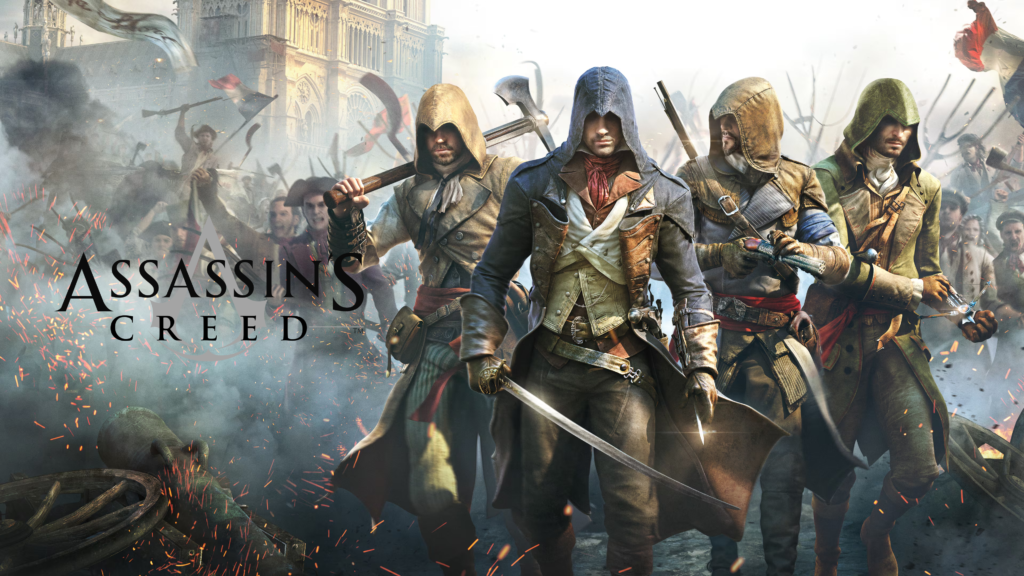
At the heart of Assassin’s Creed‘s innovative storytelling is its unique dual narrative structure. The game introduces Desmond Miles, a modern-day bartender abducted by the enigmatic Abstergo Industries. Desmond is forced into the Animus, a device capable of tapping into his genetic memories, allowing him to relive the experiences of his ancestor, Altaïr Ibn-La’Ahad, a Master Assassin operating during the Third Crusade in 1191 AD. Abstergo’s true motive is to locate a powerful artifact known as a Piece of Eden, believing it holds the key to controlling humanity’s future.
This science-fiction framework, wherein players primarily control Altaïr in the past while occasionally returning to Desmond’s present, was groundbreaking. It provided a meta-narrative that not only justified the historical setting but also introduced a layer of intrigue regarding the true nature of the conflict between the Assassins and the Templars (represented by Abstergo in the modern day). This structure allowed the developers to explore complex themes of historical interpretation, memory, and genetic inheritance, setting a precedent for future titles in the series and influencing other games that would later experiment with non-linear or multi-layered narratives.
Gameplay Innovations and Their Lasting Impact
Beyond its narrative, Assassin’s Creed introduced several gameplay mechanics that would become staples of the franchise and influence the broader gaming industry. The game’s parkour system, allowing Altaïr to fluidly scale buildings, traverse rooftops, and navigate crowded city streets with unprecedented agility, redefined player movement in open-world environments. This "social stealth" mechanic, where blending into crowds was as crucial as hiding in shadows, offered a fresh approach to infiltration and evasion.
Combat, while criticized by some for being repetitive, introduced a counter-based system that emphasized timing and precision over button-mashing, making each engagement feel strategic. The iconic Hidden Blade, a retractable wrist-mounted weapon, became synonymous with the series, enabling swift, silent assassinations that were both brutal and elegant. The game’s open-world design, featuring three major cities (Jerusalem, Acre, and Damascus) and the sprawling Kingdom in between, offered players a vast playground filled with side quests, collectibles, and opportunities for exploration. These innovations laid the groundwork for an entire genre of open-world action-adventure games, demonstrating the potential for historical settings combined with modern gameplay design.
The Philosophical Heart: "Nothing is True, Everything is Permitted"
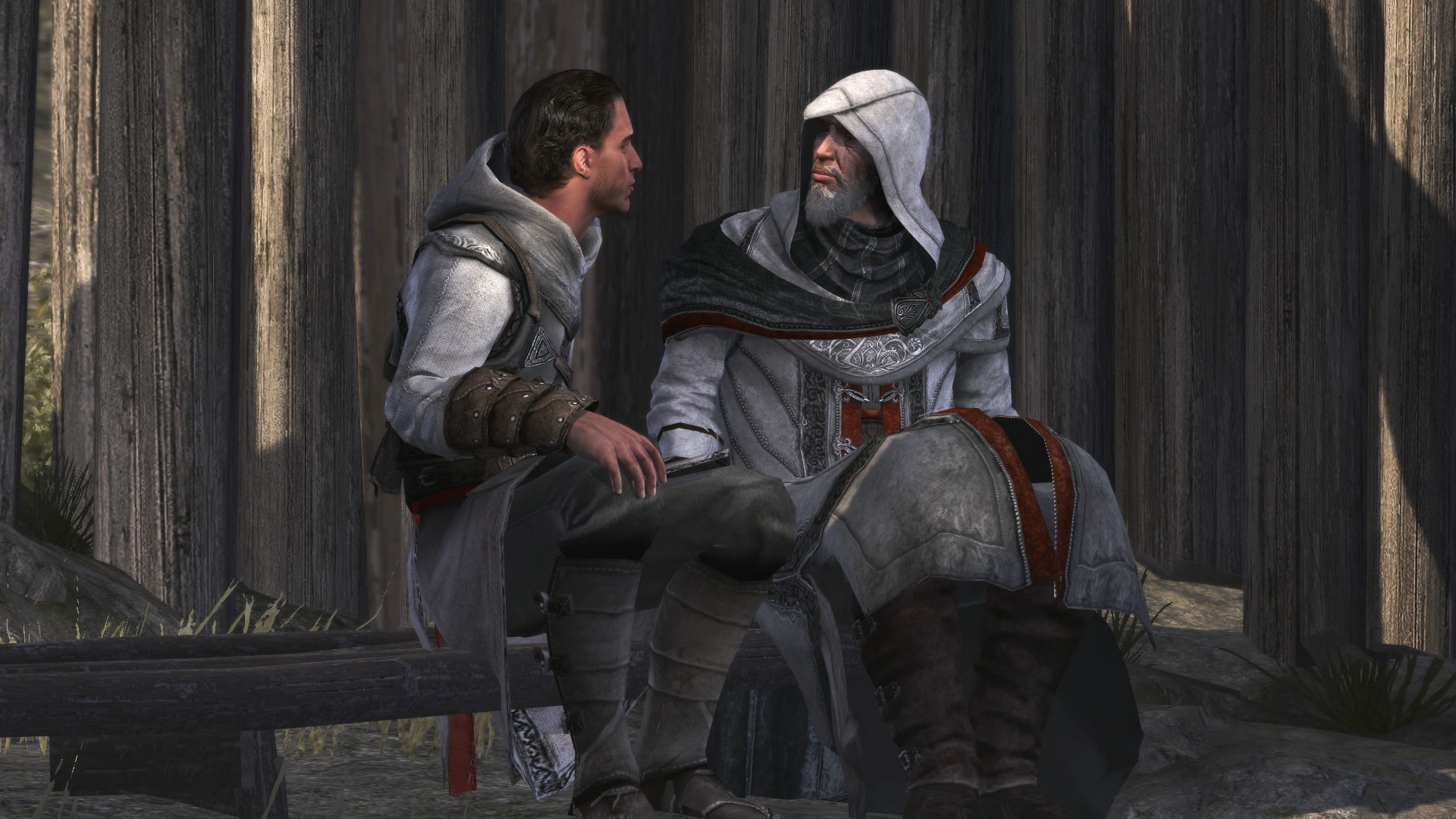
The true depth of Assassin’s Creed lies beneath its layers of historical intrigue and thrilling action, residing in its profound philosophical underpinnings. The game famously introduces the Assassin’s Creed itself: "Nothing is true, and everything is permitted." This maxim, often attributed to Hassan-i Sabbah, the historical founder of the Nizari Isma’ili state (often conflated with the Hashashin), serves as the ethical and existential core of the narrative.
Far from advocating nihilism or unchecked license, the Creed, within the game’s context, is a call to intellectual liberation and personal responsibility. It challenges established dogmas, encourages critical thinking, and questions the absolute authority of any single truth. It suggests that once the illusion of objective truth is shattered, individuals are free to forge their own paths, but with that freedom comes the immense burden of consequence. This philosophy permeates the entire narrative, compelling players to constantly evaluate the motivations of every character, including Altaïr himself. The game pushes players to ask difficult questions rather than passively accept pre-packaged answers, creating a truly interactive moral dilemma.
Character-Driven Dialogue: Voices of the Holy Land
The powerful themes of free will, manipulation, power, and truth are not merely buried in the overarching plot but are consistently woven into the rich dialogue of its characters. The script’s widely praised quality stems from its ability to give voice to these complex ideas through the distinct perspectives of its main players.
Altaïr Ibn-La’Ahad: The Evolving Protagonist
As the primary ancestral protagonist, Altaïr Ibn-La’Ahad undergoes a significant character arc throughout the game. Initially portrayed as arrogant, impatient, and overly confident in his own interpretations of the Creed, his early dialogue reflects a rigid adherence to rules and a sense of unquestioning duty. His early interactions often reveal a man whose pride frequently hinders his success. However, after a failed mission leads to his demotion, Altaïr embarks on a journey of redemption and self-discovery. His subsequent missions to eliminate nine key targets across the Holy Land are not just about assassinations; they are intellectual interrogations. Through these encounters, Altaïr begins to question the very tenets he once held sacred, engaging in philosophical debates with his targets that challenge his worldview. His dialogue evolves from assertive certainty to thoughtful inquiry, marking his transition into a more introspective and truly enlightened Master Assassin. This transformation, reflected in his willingness to critically examine what he has been taught, is central to the game’s narrative impact.
Al Mualim: The Enigmatic Mentor
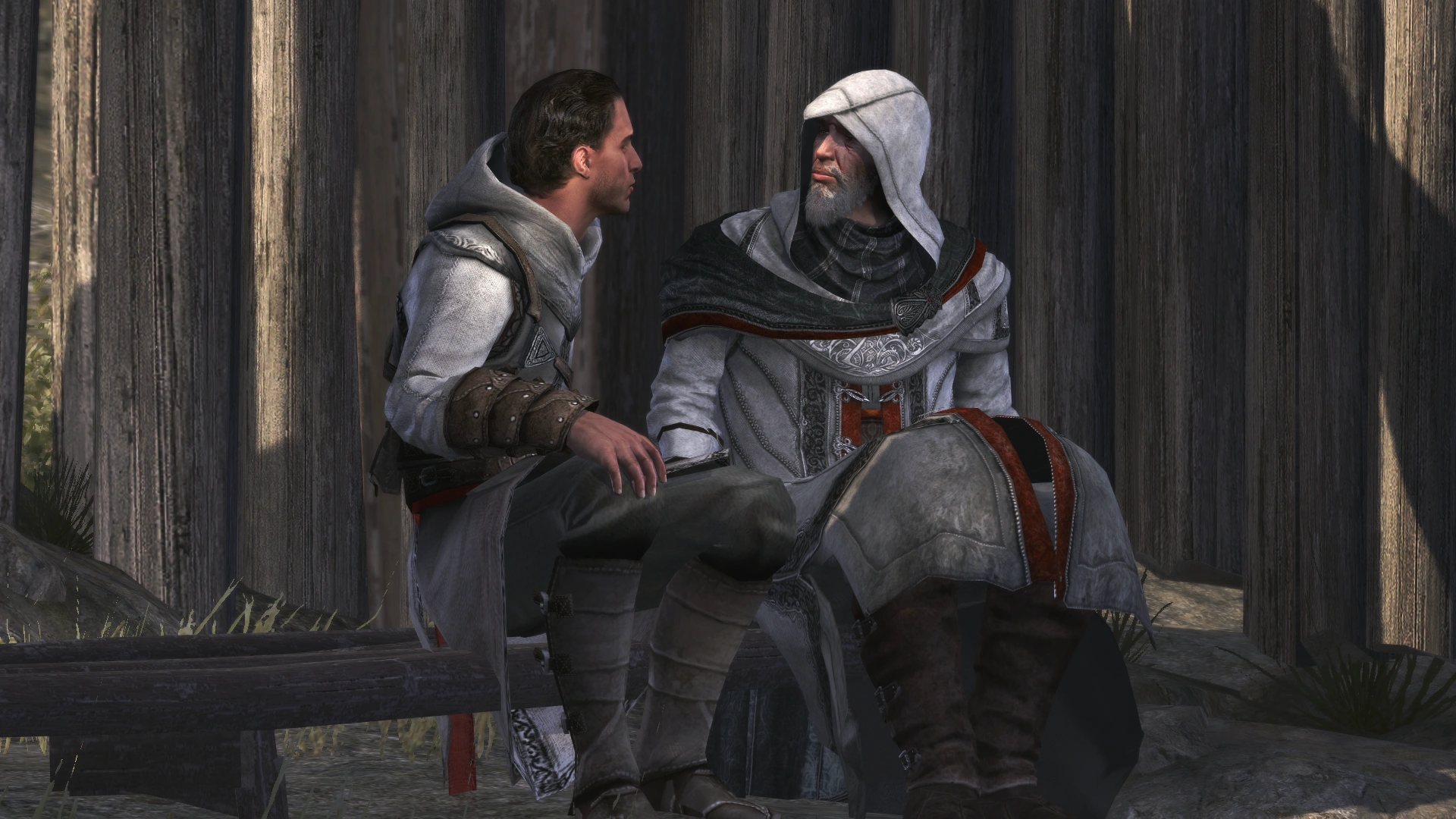
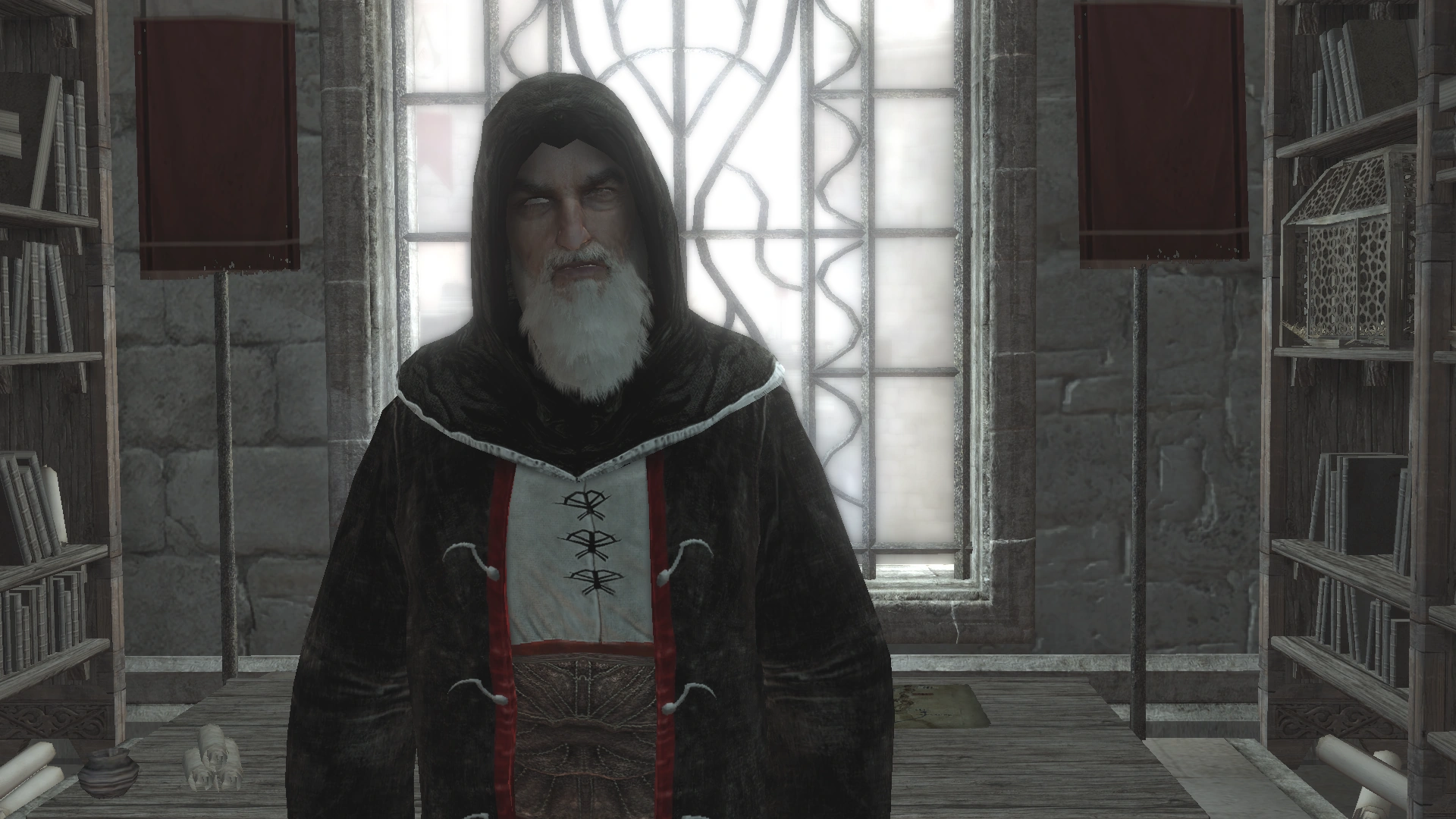
Al Mualim, the wise and seemingly benevolent mentor of the Assassin Order, embodies the complexities of leadership and the corrupting influence of power. For much of the game, his soft-spoken demeanor and sagely advice guide Altaïr’s journey, making him appear as the embodiment of the Order’s ideals. His dialogue is often laden with parables, philosophical musings, and directives that seem to align with the pursuit of peace and justice. However, as the narrative unfolds, Al Mualim’s true ambitions are revealed: a desire for ultimate control through the Piece of Eden, believing humanity too weak to govern itself. His eventual betrayal and the subsequent confrontations with Altaïr expose the hypocrisy inherent in seeking absolute order at the cost of free will. Al Mualim’s words, once perceived as wisdom, are then recontextualized as manipulative rhetoric, highlighting the game’s central theme that appearances can be deceiving, and even those who preach freedom can seek to enslave.
Robert de Sable: The Templar Grand Master
Robert de Sable serves as the Grand Master of the Knights Templar, the primary antagonists of the game. He is depicted as a cunning strategist and a formidable adversary, driven by a deeply held conviction that humanity requires strict guidance to achieve true peace. His dialogue, though less frequent than Altaïr’s or Al Mualim’s, is crucial in presenting the Templar ideology: a belief that order, even if imposed through control, is superior to the chaos of unchecked freedom. De Sable’s arguments, while contrasting sharply with the Assassins’ Creed, are presented with a logical consistency that makes him a compelling, rather than purely villainous, character. He genuinely believes his actions serve the greater good, forcing players to confront the uncomfortable idea that both sides of a conflict might be driven by noble, albeit opposing, intentions. This moral ambiguity is a hallmark of Assassin’s Creed‘s sophisticated storytelling.
The Supporting Cast and Lighter Moments
Even the secondary characters and the game’s lighter moments contribute to the rich tapestry of Assassin’s Creed‘s dialogue. The various targets Altaïr pursues, from greedy merchants to corrupt scholars, each present their own justifications for their actions, further blurring the lines between right and wrong. Conversations with citizens, guards, and even the simple banter heard in the bustling marketplaces enrich the game’s world-building and provide glimpses into the daily lives and concerns of people caught in the midst of a medieval war. While the core themes are serious, there are moments of dark humor and ironic observations that offer brief respite, preventing the philosophical discourse from becoming overly ponderous.
Enduring Legacy and Future Implications
Assassin’s Creed (2007) is far more than a historical action game; it is a foundational text for a multi-billion dollar franchise and a landmark title that profoundly impacted the gaming industry. Its success demonstrated the viability of narrative-heavy open-world games and established a template for blending historical settings with speculative fiction. The ongoing discussions among players on platforms like Reddit, over a decade and a half after its release, underscore its lasting cultural relevance. The themes of free will versus control, the search for truth in a world of conflicting narratives, and the consequences of power remain as pertinent today as they were in 2007, and indeed, in 1191.
As the Assassin’s Creed series continues to evolve, exploring different historical periods and gameplay styles, the original game stands as a powerful reminder of its roots. It laid the philosophical groundwork, introducing the iconic characters and the core tenets that define the struggle between the Assassins and the Templars. The call for a potential remaster or remake of the original title periodically surfaces within the gaming community, further evidence of its cherished status and the desire for a new generation to experience its narrative depth with modern graphical fidelity. Ultimately, it is these powerful quotes and the profound questions they raise that truly established what the Assassin’s Creed series was, and continues to be, about.
About the Author