When discussing Call of Duty, the immediate association for many gamers, whether seasoned veterans or those who experienced its meteoric rise in the mid-2000s, often defaults to its hallmark intensity: the relentless hail of bullets, the concussive barrage of gunfire, and the symphony of explosions that define its visceral combat. This perception, while undeniably accurate to the series’ core gameplay, frequently overshadows one of its most profound contributions to the gaming landscape, particularly in Call of Duty 4: Modern Warfare. Released in 2007, this seminal title transcended the conventions of the first-person shooter (FPS) genre not just through its revolutionary mechanics and presentation, but significantly through its captivating narrative, meticulously crafted characters, and the potent dialogue that brought them to life. Its critical acclaim extended beyond gameplay, earning prestigious accolades such as BAFTA awards for Best Story and Best Character, underscoring the depth of its storytelling and the memorable personalities that populated its grim world. These elements elevated the game beyond a mere shooter, embedding personality and gravitas into the heart of its chaotic battlefields.
Contextualizing the Revolution: The FPS Landscape Before 2007
Before Call of Duty 4: Modern Warfare‘s arrival, the FPS genre, particularly within the military shooter sub-genre, was largely dominated by historical settings, with World War II being a perennial favorite. Titles like Medal of Honor and previous Call of Duty installments had firmly established the formula: linear missions, historical accuracy (to varying degrees), and a focus on grand-scale conflict against identifiable, historical enemies. While these games delivered compelling action, narrative depth often took a backseat to historical reenactment or straightforward objective completion. Character development, if present, was typically functional rather than emotionally resonant. Player characters were often silent protagonists, serving as conduits for the player’s experience rather than fully fleshed-out individuals.
The market was ripe for innovation. Players were seeking new challenges, fresh backdrops, and more sophisticated narratives that could match the evolving graphical fidelity and gameplay mechanics. Call of Duty 4 seized this opportunity by dramatically shifting the setting from the battlefields of the past to a contemporary, politically charged global conflict. This decision was not merely cosmetic; it allowed Infinity Ward, the game’s developer, to explore themes and scenarios far more relevant and resonant with a modern audience, moving beyond the well-trodden ground of WWII heroism to the ambiguous moral complexities of 21st-century warfare.
Development and Vision: Crafting a Modern Conflict
The development of Call of Duty 4: Modern Warfare began with a clear vision: to redefine the military shooter. Infinity Ward’s team, led by creative director Jason West and technical director Vince Zampella, recognized the limitations of the WWII setting. They sought to create a more immediate, cinematic, and character-driven experience. The shift to a modern setting offered a blank slate, allowing for the creation of fictional yet plausible scenarios involving contemporary geopolitics, advanced weaponry, and the moral quandaries inherent in covert operations and conventional warfare.
The team invested heavily in motion capture for realistic character animations and facial expressions, a significant step in making the game’s cast feel more human and expressive. Sound design also received meticulous attention, ensuring that every gunshot, explosion, and line of dialogue contributed to an immersive and intense atmosphere. Crucially, the narrative design moved away from the silent protagonist model for key segments, instead placing players into the boots of specific, voiced characters like Sergeant "Soap" MacTavish and Sergeant Paul Jackson, allowing for more direct engagement with the unfolding drama and the perspectives of those involved. The decision to tell the story through multiple viewpoints, alternating between a British SAS operative and a U.S. Marine, provided a broader, more comprehensive understanding of the global crisis.
A Story of Global Intrigue and Personal Sacrifice
Call of Duty 4: Modern Warfare unfolds as a sophisticated geopolitical thriller, eschewing the straightforward good-versus-evil narratives of its predecessors for a more nuanced exploration of conflict. The plot intricately weaves together two primary military operations, each unfolding across distinct global theaters. One narrative thread follows a British SAS team, led by the unflappable Captain John Price and the player-controlled Sergeant "Soap" MacTavish, as they engage in covert operations across the Middle East and Eastern Europe. Parallel to this, the player experiences the war through the eyes of U.S. Marine Corps Force Reconnaissance member Sergeant Paul Jackson, deployed with his unit to the fictional Middle Eastern country under the command of Lieutenant Vasquez.
Both factions are drawn into a rapidly escalating global crisis, centered around the ultranationalist leader Imran Zakhaev and his right-hand man, Khaled Al-Asad, who pose significant nuclear threats. The game masterfully establishes early on that the familiar World War II backdrop has been retired, replaced with a modern arsenal, advanced tactical operations, and enemies driven by contemporary ideologies. The adrenaline rush of modern combat, replete with cutting-edge weaponry and vehicle sequences, keeps players firmly engaged.
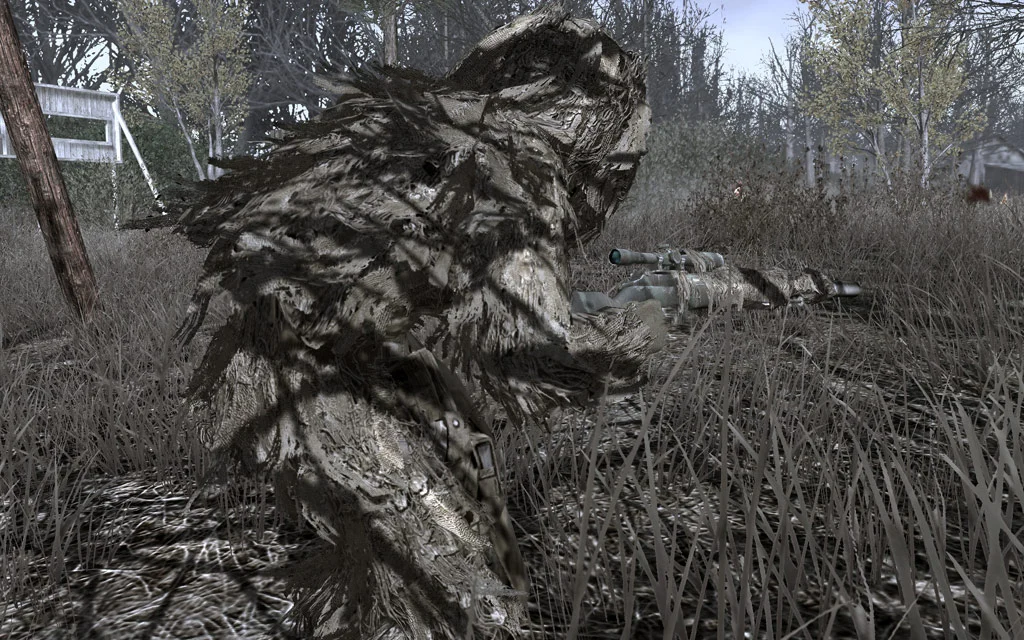
However, the genius of Call of Duty 4 lies in its willingness to punctuate high-octane action with moments of profound narrative depth and unsettling stillness. These slower, more reflective segments allow the complex web of political machinations and personal sacrifices to unfold. Little by little, the game reveals that the situation is far more intricate and morally ambiguous than it initially appears. This is where the dialogue truly shines. Characters’ lines are not mere exposition; they reveal the dark, cyclical nature of war, exposing themes of destruction, moral compromise, and the devastating human cost. As the narrative progresses, the focus subtly shifts from merely "winning a war" to the indelible marks and psychological burdens soldiers carry out of it. The game’s iconic "Death From Above" and "All Ghillied Up" missions are prime examples, slowing the pace to allow for meticulous planning, stealth, and a chilling reflection on past events and their enduring consequences.
The Power of the Spoken Word: Character-Driven Dialogue
While Call of Duty 4 popularized cinematic storytelling in shooter games, much of its narrative power is delivered not through cutscenes alone, but through the dynamic interactions and compelling dialogue exchanged between its richly drawn characters. Despite often featuring largely silent player characters, the world is populated by individuals who are "loaded with lines," each contributing to the game’s emotional and thematic weight.
Captain John Price: The Stoic Veteran
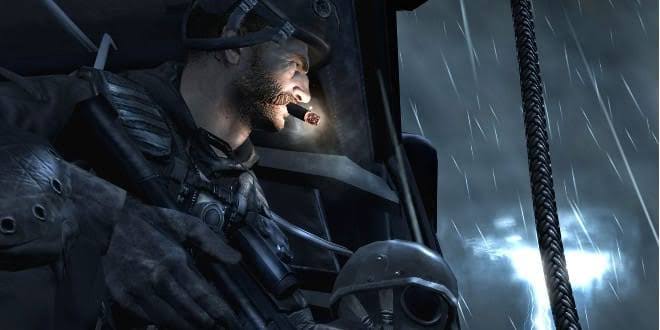
Captain John Price stands as one of the most recognizable and enduring characters in gaming history. An experienced SAS officer, Price embodies the weary wisdom of a soldier who has witnessed the brutal realities of warfare firsthand. His demeanor is consistently calm, direct, and often laced with dry, sardonic humor, serving as a grounding force amidst the chaos. When Price speaks, his words carry the weight of experience, often delivered with an urgency that compels action. His narrative arc is defined by his unwavering resolve to do what is necessary, no matter the personal cost or moral ambiguity. His dialogue often serves to provide critical intelligence, issue commands, or offer biting commentary on the unfolding events. For instance, his recollection of the Chernobyl mission with Captain MacMillan in "All Ghillied Up" provides crucial backstory and a chilling perspective on the sacrifices demanded by covert operations. His iconic line, "The healthy human mind doesn’t wake up in the morning thinking this is its last day on Earth. But I think that’s a luxury, not a curse. To know you’re close to the end… is a kind of freedom. Good time to take stock," encapsulates his fatalistic pragmatism and deep understanding of mortality in combat. This dialogue not only characterizes Price but also imparts a profound philosophical dimension to the player’s experience.
Sergeant Kyle "Gaz" Garrick: The Pragmatic Professional
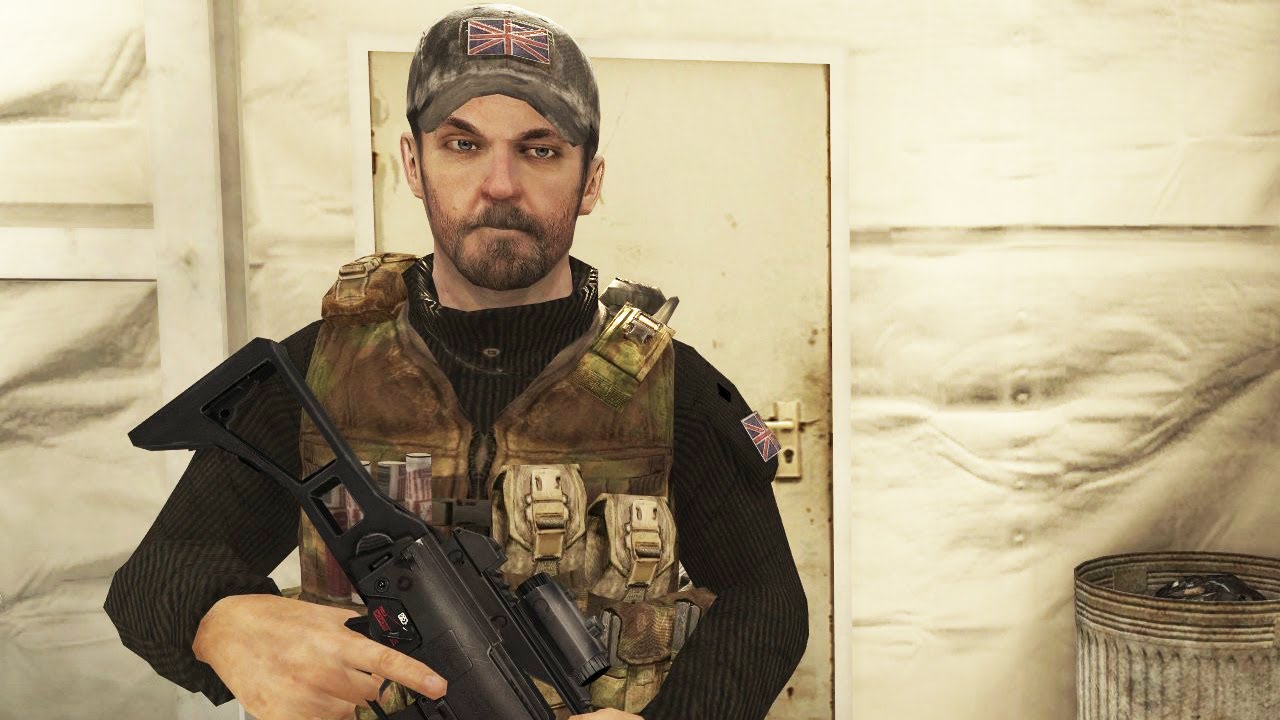
Sergeant Kyle "Gaz" Garrick serves as Captain Price’s loyal and capable second-in-command. Gaz is a consummate professional, exhibiting calm under pressure and sharp tactical acumen. However, his character is deepened by his dynamic banter with other team members, particularly "Soap," which injects much-needed moments of levity into the otherwise grim missions. His dialogue often provides practical information, reinforces objectives, or offers a more human, relatable perspective on the dire situations they face. Gaz’s lines often highlight the camaraderie and dark humor that can exist even in the most perilous environments. His exchanges, like his dry remark, "What the hell kind of name is ‘Soap’ anyway?" during the initial training, immediately establish character and team dynamics, making the player feel part of a unit.
Captain MacMillan: The Ghost of Chernobyl
Captain MacMillan, Captain Price’s former commanding officer and mentor, appears predominantly in the flashback mission "All Ghillied Up." His character is defined by an almost chilling calmness and an economy of words, reflecting the extreme discipline honed through years of clandestine operations. MacMillan’s dialogue is crucial in guiding the player through one of the game’s most iconic and atmospheric missions. His instructions are precise, his observations sharp, and his warnings grim, painting a vivid picture of the sheer danger and moral desolation of the Chernobyl exclusion zone. Lines such as, "Fifty thousand people used to live in this city. Now it’s a ghost town," are delivered with a stoic gravitas that underscores the human cost of the conflict and the enduring scars of history. MacMillan’s character and dialogue serve as a powerful narrative device, providing a historical anchor to Price’s present motivations and deepening the thematic exploration of long-term consequences in warfare.
The Unsung Voices: Other Memorable Exchanges
Beyond the primary characters, Call of Duty 4 excels in using dialogue from various sources to enrich its world. Radio chatter, overheard enemy conversations, and the desperate pleas of civilians all contribute to a vivid and believable warzone. Even minor characters often deliver lines that stick, whether it’s the exasperated "Tango down! Moving to the next!" from a squadmate or the chilling declarations of the antagonists. These incidental dialogues not only enhance immersion but also subtly advance the plot, provide tactical cues, and deepen the emotional impact of the unfolding events. The game’s use of real-world phonetic alphabet and military jargon also adds to its authenticity, immersing players further into the roles of trained soldiers.
Dialogue as a Narrative Tool
The dialogue in Call of Duty 4: Modern Warfare is more than just spoken words; it is a fundamental narrative tool that builds character, advances the plot, and conveys the game’s overarching themes. It fosters a sense of urgency, highlights the moral complexities of modern warfare, and allows for moments of unexpected emotional resonance. The stark contrast between the intense action sequences and the quiet, impactful exchanges underscores the multifaceted nature of conflict. It’s through these words that players grasp the profound implications of their actions and the devastating consequences of war, transforming a high-octane shooter into a thoughtful and enduring military thriller.
Critical Acclaim and Industry Impact
Upon its release in November 2007, Call of Duty 4: Modern Warfare was met with universal critical acclaim. It holds an aggregate score of 94/100 on Metacritic, signifying "universal acclaim." Critics lauded its groundbreaking graphics, immersive sound design, refined gameplay mechanics, and perhaps most significantly, its compelling single-player campaign. Publications such as IGN and GameSpot praised its cinematic presentation and mature storytelling, noting its departure from the traditional WWII setting as a refreshing and impactful change.
Beyond critical praise, the game was a monumental commercial success. Within nine months of its release, it had sold over 10 million copies worldwide, becoming the best-selling game of 2007 and one of the best-selling games of all time. This commercial success demonstrated a clear market appetite for modern military shooters with strong narratives.
The industry quickly recognized its transformative impact. In addition to the two BAFTA awards for Best Story and Best Character, Call of Duty 4 garnered numerous "Game of the Year" accolades from various media outlets and award bodies, including the Academy of Interactive Arts & Sciences (AIAS) for "Overall Game of the Year" and "Action Game of the Year" at the 2008 D.I.C.E. Awards. It also received the "Best Game" award at the 2008 Game Developers Choice Awards. These awards were not solely for its technical prowess or gameplay, but specifically acknowledged its contributions to narrative and character development within the interactive medium.
The Enduring Legacy: A Blueprint for Modern Military Shooters
When Call of Duty 4: Modern Warfare debuted, it didn’t just meet expectations for first-person shooters; it irrevocably reshaped them. The visceral gunfights and unparalleled action sequences captivated players, setting a new benchmark for technical execution and immersive combat. However, its true genius lay in its ability to marry this intense gameplay with a compelling, character-driven narrative. The dialogue, far from being mere exposition, infused the game with the gravitas and emotional depth of a military thriller, unfolding directly before the player’s eyes.
Call of Duty 4 established a new blueprint for the entire military shooter sub-genre. It proved that a game could be both a high-octane action experience and a sophisticated narrative vehicle. Its shift to a modern setting, its multi-perspective storytelling, and its focus on relatable, complex characters set a precedent that countless games would attempt to follow. It popularized the use of cinematic techniques within gameplay, blurring the lines between interactive entertainment and film. The game’s narrative structure, character archetypes like Captain Price, and its willingness to tackle darker, more ambiguous themes profoundly influenced subsequent titles in the Call of Duty series itself, as well as competitors. Its legacy is not just in its memorable moments of action, but in how it elevated the storytelling potential of the FPS, proving that words, even amidst a barrage of gunfire, can bring a world to life and leave an indelible mark on players.
About the Author