The emergence of high-fidelity mixed reality (MR) has transitioned from a conceptual ambition to a functional reality, with the startup 2Sync positioned at the forefront of this technological shift. By developing a solution that replicates the physical dimensions of a user’s environment within a virtual space, 2Sync offers a "responsive" approach to immersive design. This technology ensures that every physical object in a room—from tables and sofas to walls and doorways—is represented by a corresponding virtual asset, effectively bridging the gap between the tangible and the digital.

Technical Foundations and Core Functionality
The 2Sync system operates as a sophisticated Software Development Kit (SDK) compatible with major industry engines, including Unity and Unreal Engine. Unlike traditional virtual reality (VR) experiences that ignore the user’s physical surroundings, 2Sync utilizes environmental data to generate a virtual world that fits the real one. During the initial setup, the application scans the environment to detect boundaries and furniture. On Meta Quest devices, for instance, the system leverages existing Scene Setup data to identify specific objects such as desks or seating areas.
Once the physical layout is mapped, the 2Sync engine applies developer-defined rules to populate the space. A physical dining table might be rendered as a heavy wooden crate in a medieval-themed game or a high-tech terminal in a sci-fi simulation. The system is designed to be "responsive," meaning it can scale and adjust virtual assets to match the precise volume and position of real-world objects. This ensures that the virtual representation is not merely aesthetic but spatially accurate.

The Evolution of Passive Haptics and Safety
One of the primary advantages of the 2Sync solution is the integration of "passive haptics." In immersive technology, passive haptics refers to the use of physical objects to provide tactile feedback for virtual elements. When a user sees a virtual stone bench and sits down, they feel the physical sofa beneath them. This alignment of visual and tactile stimuli significantly enhances the "presence" of the user—the psychological sense of truly being inside the virtual environment.
Beyond immersion, 2Sync addresses a critical safety concern in the XR (Extended Reality) industry. Standard safety protocols, such as the Meta Quest "Guardian" or the SteamVR "Chaperone," rely on a grid-based warning system that appears when a user approaches a boundary. However, these systems often fail to account for obstacles within the play area, such as low tables or stray chairs. By incorporating these obstacles into the game world as visible, thematic objects, 2Sync utilizes human instinct to prevent collisions. Users naturally avoid walking into a virtual wall or crate, thereby eliminating the need for intrusive safety grids that break immersion.

Chronology of Development and Public Demonstrations
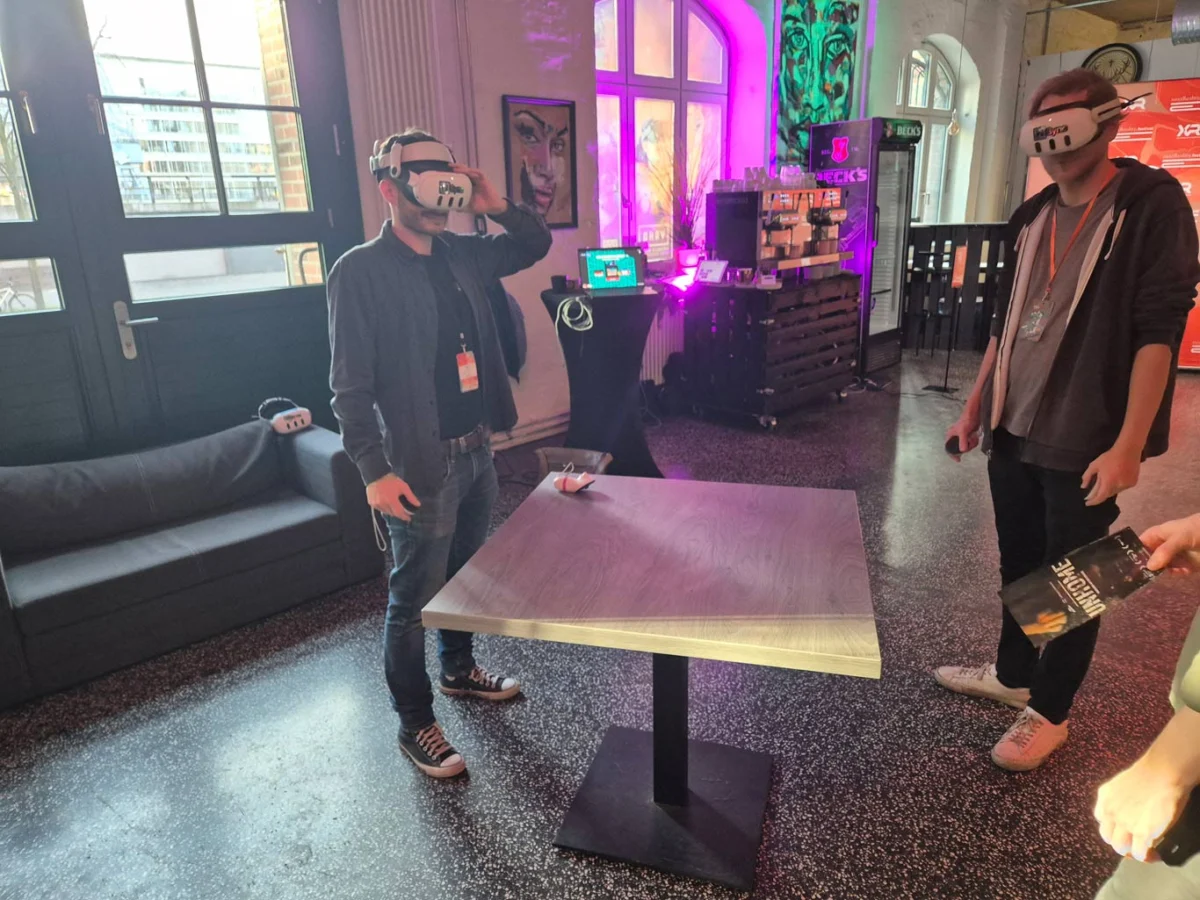
The development of 2Sync has reached significant milestones over the past year, culminating in public demonstrations that showcase its multiplayer and environmental adaptation capabilities. In November, the company presented its technology at the NextReality event in Hamburg, Germany. During this exhibition, 2Sync co-founder Moritz Loos demonstrated the SDK’s ability to handle complex, colocated multiplayer scenarios.
In these demonstrations, two participants were placed in a shared physical space equipped with a sofa and a table. The 2Sync system synchronized both headsets to the same physical layout, transforming the room into a defensive tower. While the participants engaged in a wave-based archery game, the physical table served as a tactical crate within the virtual world. This demonstration highlighted the system’s ability to track multiple users in real-time, representing them as virtual avatars while maintaining a consistent environmental map for all players.

Supporting Data and Market Context
The drive toward spatially aware MR is supported by broader industry trends. According to market analysis, the global Mixed Reality market is projected to grow at a Compound Annual Growth Rate (CAGR) of over 40% through 2030. This growth is fueled by the release of advanced hardware, such as the Meta Quest 3 and the Apple Vision Pro, both of which feature dedicated depth sensors and room-mapping capabilities.
2Sync’s approach aligns with the industry’s shift from "Room-Scale VR" to "World-Scale MR." While early VR required empty rooms to function safely, modern consumers demand experiences that integrate into their existing living spaces. Data from user studies suggest that spatial incongruence—where the virtual world does not match the physical one—is a leading cause of both motion sickness and physical accidents in VR. By resolving this incongruence, 2Sync provides a necessary layer of infrastructure for the next generation of home and commercial entertainment.

Implementation Challenges and Industry Reactions
Despite the technical promise of 2Sync, industry analysts point to several hurdles that must be overcome for widespread adoption. The most significant challenge lies in game design. For 2Sync to be effective, developers must design "environment-agnostic" gameplay. Creating a balanced game that works equally well in a cluttered studio apartment and a sprawling open basement is a complex task. If a game requires a user to sit on a virtual chair, but the user’s room has no physical seating, the "passive haptics" element is lost.
Furthermore, there is the issue of sensory mismatch. While sitting on a sofa that looks like a rock is immersive, the difference in texture and firmness can occasionally break the illusion. There are also technical limitations regarding dynamic environments; currently, most room-mapping technologies struggle to update in real-time if furniture is moved during a session.

Initial reactions from the developer community have been cautiously optimistic. Developers focused on Location-Based Entertainment (LBE)—such as VR arcades and escape rooms—have shown the most interest. In these controlled environments, operators can ensure that physical props are perfectly aligned with virtual counterparts, maximizing the potential of the 2Sync SDK.
Broader Impact and Future Implications
The long-term implications of 2Sync extend beyond gaming. The ability to transform a physical environment into a functional virtual one has applications in industrial training, architectural visualization, and remote collaboration. For instance, a factory floor could be overlaid with virtual machinery that workers can "touch" and interact with via physical proxies.

As 2Sync continues its closed beta phase, the company is inviting developers to experiment with its SDK for both Quest and Pico headsets. The goal is to create a library of "responsive" applications that can adapt to any interior layout. If successful, 2Sync could set the standard for how virtual content interacts with the physical world, moving the industry closer to a seamless "Metaverse" where the distinction between real and digital spaces becomes increasingly blurred.
The success of the platform will ultimately depend on developer adoption and the ability of the software to handle the infinite variety of real-world room configurations. However, the move toward environmental synchronization represents a logical and necessary step in the evolution of immersive technology, prioritizing user safety and sensory consistency in an increasingly digital age.
About the Author