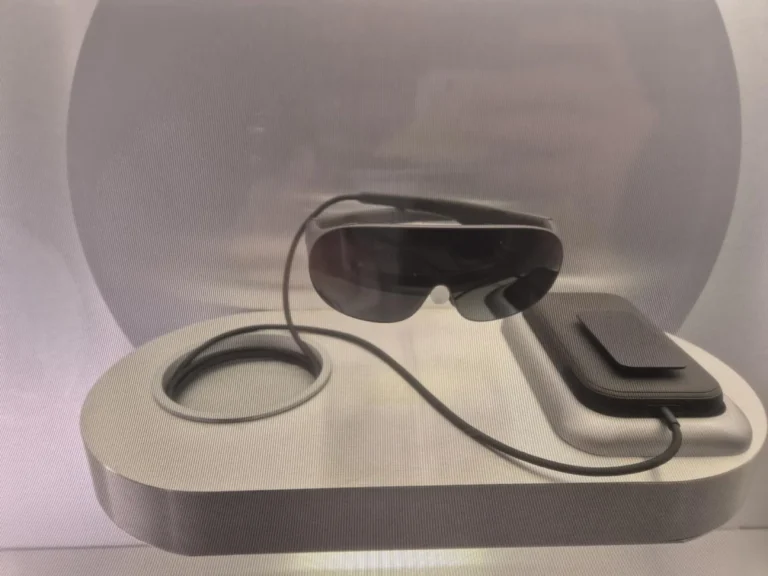
The recent unveiling of Snap Inc.’s fifth-generation Spectacles at the Augmented World Expo (AWE) has ignited a significant conversation within the technology sector regarding the commercial viability and public reception of wearable augmented reality (AR). While the device represents a decade of iterative development by Snap, the reception from the broader tech community has been polarized, characterized by a mix of technical admiration and aesthetic derision. This dichotomy highlights the ongoing tension between the necessity of "innovating in the open" and the high expectations of a consumer market accustomed to the sleek profiles of traditional eyewear.
Technical Specifications and the AWE Reveal
The new Spectacles, often referred to simply as "Specs," represent a significant leap in hardware capability compared to their predecessors. Unlike the camera-only versions released in 2016 or the limited-distribution AR glasses of 2021, the fifth-generation model is a standalone AR device. It features four built-in cameras that power the Snap Spatial Engine, enabling hand-tracking and environmental mapping with a reported latency of just 13 milliseconds.
The device utilizes Liquid Crystal on Silicon (LCoS) micro-displays and advanced waveguides to project digital content onto the user’s field of view. Notably, the field of view has increased to 46 degrees diagonally, nearly double that of the previous AR iteration. The glasses are powered by Snap OS, a custom operating system designed specifically for spatial interaction, and utilize a dual-processor architecture featuring two Qualcomm Snapdragon chipsets to manage the heavy computational load of AR rendering while minimizing heat.

Despite these advancements, the physical footprint of the device remains a point of contention. Weighing approximately 226 grams—significantly heavier than standard eyewear but lighter than traditional Mixed Reality (MR) headsets—the device has been criticized for its "bulky" appearance. Furthermore, Snap has opted for a developer-focused distribution model, offering the glasses via a subscription service priced at $99 per month with a one-year commitment, rather than a traditional retail purchase.
A Decade of Iteration: The Evolution of Snap Wearables
The journey toward the current iteration of Spectacles began ten years ago, marking one of the longest-running hardware experiments in the social media era. To understand the current climate of criticism, it is essential to review the chronology of Snap’s hardware development:
- 2016: The Original Spectacles: Launched via "Snapbot" vending machines, these were essentially wearable cameras for recording 10-second "Snaps." They were praised for their novelty but criticized for limited utility and battery life.
- 2018–2019: Iterative Refinement: Generations 2 and 3 improved water resistance, media quality, and introduced dual cameras for depth perception, though they remained "smart glasses" rather than true AR glasses.
- 2021: The First AR Spectacles: Snap introduced its first see-through AR glasses, distributed exclusively to a small group of creators. This model established the baseline for the company’s spatial computing ambitions.
- 2024: The Fifth Generation: The current model seeks to transition from a creator tool to a robust developer platform, featuring improved optics and a dedicated spatial operating system.
Industry analysts note that each generation has addressed specific technical hurdles, yet the public perception often remains tethered to the device’s aesthetic and price point rather than its incremental engineering successes.
The Comparison Trap: AR Glasses vs. Smart Glasses
A significant portion of the criticism leveled at the new Spectacles stems from comparisons to the Meta Ray-Ban Smart Glasses. However, from a technical standpoint, these two products occupy different categories. The Meta Ray-Ban glasses are "smart glasses" focused on audio, photography, and AI assistance without a visual display. In contrast, Snap’s Spectacles are true AR glasses capable of rendering 3D digital objects in the physical world.

The disparity in form factor—the Ray-Bans looking like traditional eyewear and the Spectacles appearing as thick, oversized frames—is a direct result of the hardware required for see-through AR. Integrating batteries, dual processors, waveguides, and thermal management into a frame that fits the human face remains one of the most difficult challenges in modern engineering. Critics argue that Snap’s decision to market these as "consumer-oriented" in early teasers may have backfired, as the current form factor remains firmly in the "developer kit" category.
Historical Precedents of Innovation Backlash
Snap is not the first technology giant to face public ridicule for attempting to pioneer a new hardware category. The history of wearables is defined by a cycle of early adoption, social friction, and eventual refinement.
- Google Glass (2014): Perhaps the most famous example, Google’s early attempt at wearable head-up displays led to the coining of the term "glasshole." The device was criticized for its privacy implications and "nerdy" appearance, leading Google to pivot the product entirely to the enterprise sector.
- Meta and the "Metaverse": Meta Platforms Inc. has faced years of scrutiny and financial pressure over its multi-billion-dollar investment in Reality Labs. The company’s vision for the Metaverse was often mocked, particularly following the release of early avatars in Horizon Worlds. However, the recent reveal of their "Orion" AR prototype has begun to shift the narrative back toward technical respect.
- Apple Vision Pro (2024): Even Apple, known for its design prowess, faced criticism regarding the weight and external battery pack of the Vision Pro. While Apple avoided the "consumer" label by positioning it as a high-end "spatial computer," the device still faces questions regarding its long-term utility versus its $3,499 price tag.
The PR Gap: Communication Errors in Emerging Tech
A recurring theme in the criticism of Snap’s latest release is the perceived gap between marketing promises and technical reality. Observers have noted several communication hurdles that may have exacerbated the negative reception:
- Expectation Management: When executives define early-stage prototypes as "consumer-ready," they invite comparisons to mature products like smartphones. Analysts suggest that if Snap had positioned the fifth-generation Specs strictly as a "Developer Laboratory," the reception might have focused more on its impressive 13ms latency and less on its thickness.
- The Demo Experience: Reports from AWE indicated that some attendees were shown older, bulkier models alongside the new ones, leading to confusion in social media reporting. This lack of clarity in public demonstrations can result in a diluted brand reputation.
- The Visual Aesthetic: The "selfie" has become a liability for tech CEOs. Just as Mark Zuckerberg’s avatars were used as memes to symbolize Meta’s struggles, photos of Snap leadership wearing the bulky Spectacles have been used to characterize the device as impractical.
Broader Implications for the Innovation Ecosystem
The debate surrounding Snap’s Spectacles raises a fundamental question about the future of innovation: can companies afford to develop groundbreaking technology in the public eye? The "agile" method of development—releasing imperfect products to gather real-world data—is increasingly at odds with a social media culture that prioritizes aesthetic "vibe" and instant meme-ability.

If the tech community continues to respond with overwhelming negativity to "innovative-but-unpolished" devices, there is a risk that corporations will retreat into "secret lab" development cycles. This shift would deprive the developer community of the early-access hardware needed to build the software ecosystems that eventually make these devices useful to the average consumer.
Furthermore, the economic pressure to prioritize short-term revenue over long-term R&D is immense. Critics of Snap and Meta often suggest these companies should abandon hardware to focus on their core advertising businesses. However, industry proponents argue that such a path leads to stagnation. Without the "bold moves" seen at AWE, the transition from handheld computing to spatial computing would likely stall.
In conclusion, while the fifth-generation Snap Spectacles may not yet be ready for the average pedestrian, they represent a vital step in the evolution of augmented reality. The challenge for Snap—and the industry at large—is to bridge the gap between high-level engineering and public relatability. Achieving a "glasses-only" form factor with all-day battery life remains the "North Star" of the industry, and every bulky, expensive, and criticized iteration is a necessary milestone on that journey.
About the Author