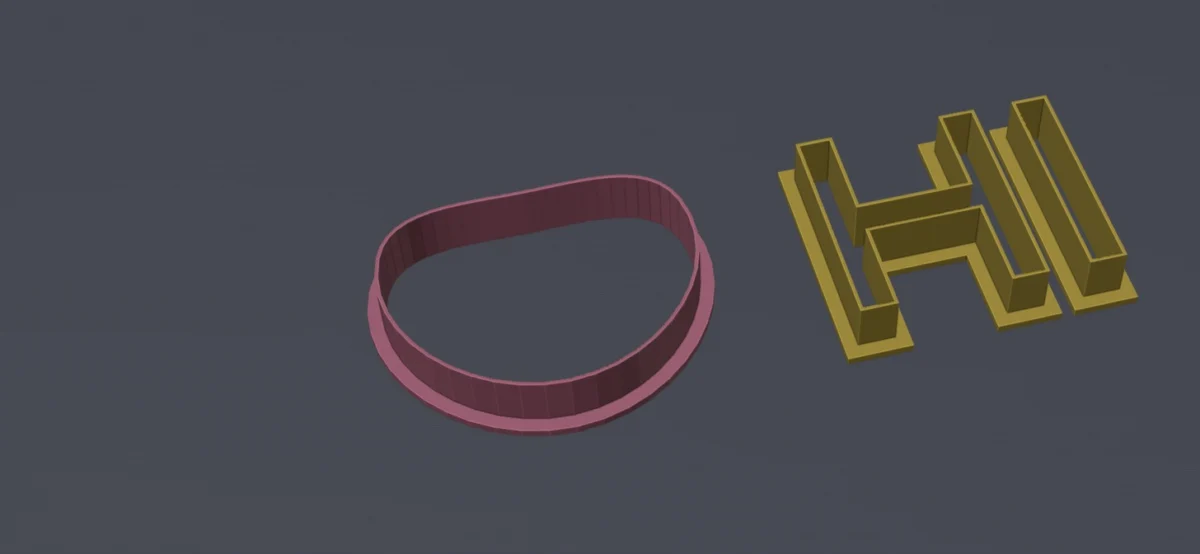
A groundbreaking new Blender add-on, aptly named "Cookie Cutter Maker," has emerged, poised to significantly streamline and democratize the creation of custom 3D printed cutters. This innovative tool is designed for a broad spectrum of users, from home bakers and culinary artists seeking unique shapes for cookies, clay, or fondant, to entrepreneurs looking to produce and sell personalized cutters. The add-on’s intuitive workflow and robust functionality promise to unlock new levels of creativity and efficiency in the burgeoning field of custom 3D printed goods.
Developed by Hanru Croucamp, Cookie Cutter Maker addresses a common challenge faced by 3D printing hobbyists and professionals alike: the often intricate and time-consuming process of designing functional, print-ready objects. Traditionally, creating a 3D printable cutter involved detailed modeling, precise Boolean operations, and careful attention to ensure the resulting geometry was manifold and suitable for slicing and printing. This new add-on significantly simplifies this process, transforming complex design tasks into a few straightforward steps.
Streamlined Design Workflow
The core of Cookie Cutter Maker’s appeal lies in its remarkably simple yet powerful design process. Users can initiate the creation of a cutter by drawing a desired shape directly within Blender. This shape can be a custom drawing, text entered as a string, or even the outline of an imported logo. Once the 2D outline is established, users can specify the desired dimensions of the cutter in millimeters. The "Make Cutter" function then automatically generates a fully realized 3D model, complete with a sharp, thin cutting blade and a sturdy, flat flange at the base. This flange is crucial for ensuring that the cutters print reliably without the need for support structures, a common hurdle in 3D printing that can add significant post-processing time and material waste.
The add-on’s underlying technology is particularly noteworthy. Instead of relying on potentially problematic Boolean operations, Cookie Cutter Maker employs a sophisticated outline tracing and profile sweeping method. It meticulously traces the user’s input outline and then extrudes an "L"-shaped profile—comprising the blade and the flange—around it. This approach guarantees that every generated cutter is a closed, watertight shell, even for intricate designs that include internal holes, such as those found in letters like ‘O’, ‘A’, or ‘B’. This topological integrity is paramount for successful 3D printing, preventing slicing errors and ensuring clean, precise cuts.
Technical Specifications and Limitations
Cookie Cutter Maker is built to integrate seamlessly with Blender, requiring version 4.2 or newer. It operates under the GPL-3.0-or-later license, signifying its commitment to open-source principles and community contribution. While the add-on offers remarkable flexibility, certain prerequisites are in place to ensure optimal performance and printability. The input outline must be a closed, filled shape and must lie flat within the object’s XY plane. Users should also be aware that if letters or distinct parts of the design touch, the slicer software might interpret them as overlapping walls, though this is generally a manageable issue for most modern slicers.
Furthermore, as with any tool intended for use with food products, the developers strongly advise using food-safe filaments and adhering to proper food handling practices if the cutters are to come into contact with edible materials. This highlights a responsible approach to the add-on’s application, acknowledging the critical importance of safety and hygiene in culinary contexts.
Background and Potential Impact
The emergence of Cookie Cutter Maker arrives at a time when 3D printing technology is experiencing exponential growth in accessibility and adoption. Personalization and customization have become key drivers in consumer demand across various industries, and the culinary arts are no exception. For small businesses and individual makers, the ability to rapidly prototype and produce unique, niche products like custom cookie cutters can represent a significant competitive advantage.
Historically, the creation of custom cutters involved either expensive professional manufacturing or time-consuming manual crafting. The advent of desktop 3D printers has already begun to democratize this process, but the design hurdle has remained a barrier for many. Cookie Cutter Maker directly addresses this by lowering the barrier to entry for creating professional-grade, 3D printable custom designs. This could foster a new wave of micro-entrepreneurship, enabling individuals to easily launch online shops selling personalized cutters for special occasions, themed parties, or specific dietary needs.
The add-on’s capabilities extend beyond the kitchen. Clay artists, crafters, and even educators could leverage this tool to create custom stamps, molds, or educational aids. The ability to quickly iterate on designs and produce functional prototypes makes it an invaluable asset for rapid product development and creative exploration.
Supporting Data and Industry Trends
The market for personalized goods is experiencing robust growth. A report by Statista indicated that the global personalized gifts market was valued at approximately $28.2 billion in 2021 and is projected to reach $37.2 billion by 2027, with a compound annual growth rate (CAGR) of 4.8%. This trend underscores a strong consumer appetite for unique and bespoke items, a demand that 3D printing is ideally positioned to fulfill.
The 3D printing market itself is also expanding rapidly. According to Grand View Research, the global 3D printing market size was valued at USD 15.2 billion in 2022 and is expected to grow at a compound annual growth rate (CAGR) of 23.4% from 2023 to 2030. This growth is fueled by advancements in materials, printing technologies, and, critically, user-friendly software solutions like Cookie Cutter Maker. The integration of accessible design tools with accessible printing hardware creates a powerful ecosystem for innovation and entrepreneurship.
Potential Reactions and Future Developments
While official statements from industry bodies or major players in the 3D printing or culinary sectors regarding this specific add-on are unlikely at this early stage, the reception within the Blender and 3D printing communities is expected to be overwhelmingly positive. User forums, social media groups, and maker communities are likely to become hubs for sharing creative designs, printing tips, and success stories facilitated by Cookie Cutter Maker.
One could anticipate that established manufacturers of baking accessories might see this as both a challenge and an opportunity. Some may integrate similar design tools into their own platforms, while others might partner with creators to offer bespoke designs. For open-source advocates, the GPL-3.0-or-later license ensures that the tool will continue to evolve with community contributions, potentially leading to even more advanced features and broader applications.
Future developments could include enhanced features for handling complex geometries, integrated material recommendations based on intended use, or even direct integration with popular 3D printing marketplace platforms. The core functionality of simplifying the creation of functional 3D printed objects, however, remains the immediate and most significant contribution of Cookie Cutter Maker.
Broader Implications and Conclusion
Cookie Cutter Maker represents a significant step forward in making 3D printing more accessible and practical for specialized applications. By abstracting away the complexities of 3D modeling and topology, it empowers individuals with creative ideas but without extensive technical expertise to bring their visions to life. This democratization of design and manufacturing has far-reaching implications, fostering innovation, supporting small businesses, and enabling a more personalized consumer experience.
The add-on’s focus on creating print-ready, functional objects with minimal post-processing aligns with the growing demand for efficient and sustainable manufacturing processes. As 3D printing continues to mature, tools like Cookie Cutter Maker will be instrumental in unlocking its full potential across a multitude of creative and commercial endeavors, proving that the future of custom creation is increasingly within reach for everyone.
About the Author