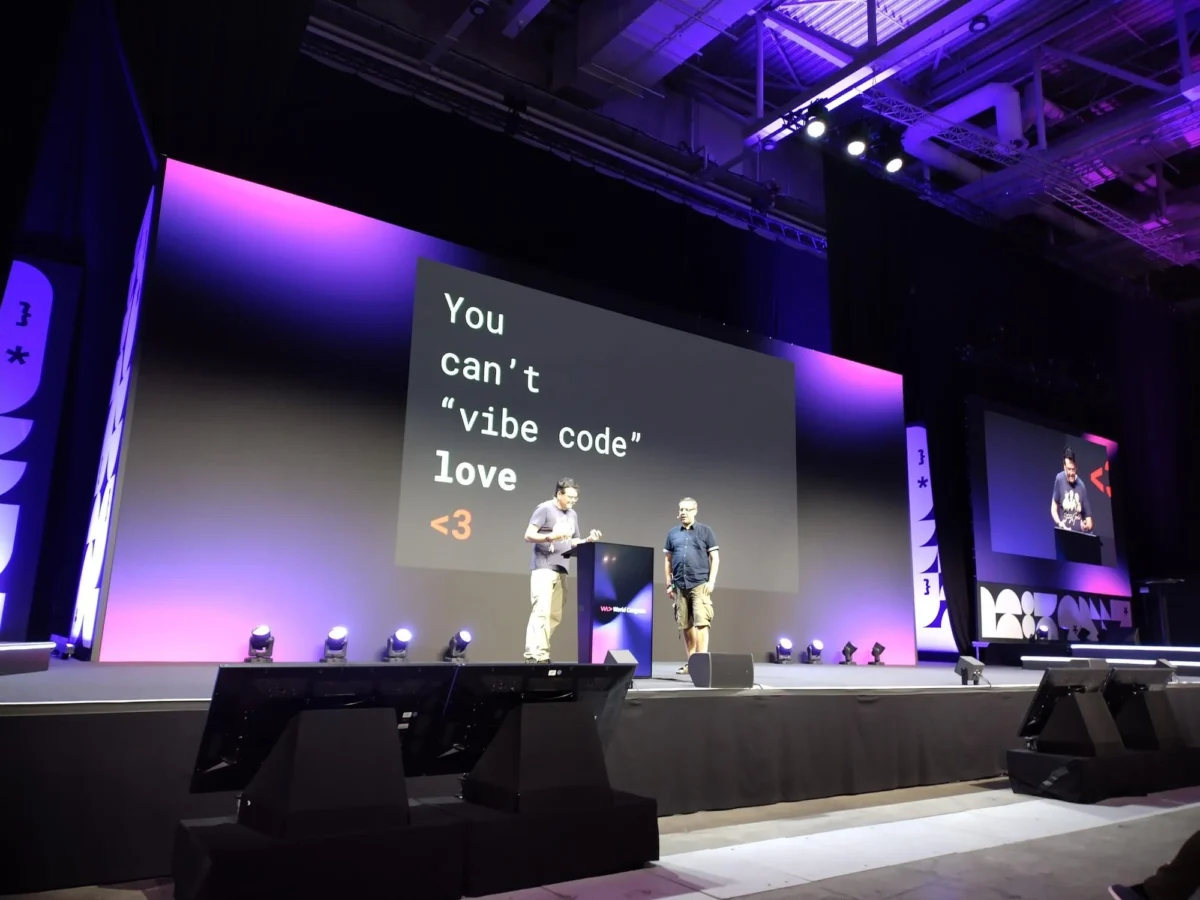
BERLIN – A critical dialogue on the future of collaborative knowledge and community in the age of artificial intelligence took center stage on Friday, July 10, at the WeAreDevelopers World Congress held at Berlin’s CityCube. Jeff Atwood, co-founder of the seminal programming Q&A platform Stack Overflow, and Ben Dumke-von der Ehe, an early and influential community hire for the platform, delivered a joint presentation titled "None of Us Is As Dumb As All of Us: Community And Knowledge Go Hand In Hand." Their address explored the profound shifts occurring as Large Language Models (LLMs) increasingly dominate information retrieval for developers, prompting vital questions about the sustainability of human-driven knowledge commons.
The presentation emerged from a rare speaking engagement for Atwood, who typically shies away from international events. However, the confluence of timing, location, and the unique opportunity to collaborate with Dumke-von der Ehe, a Berlin resident and a pivotal figure in Stack Overflow’s early community development, made the occasion irresistible. The duo, despite having slightly different perspectives, shared a unified urgency to discuss the evolving dynamic between individual learning, communal growth, and the transformative power of AI.
A Decade of Community Building: The Stack Overflow Legacy
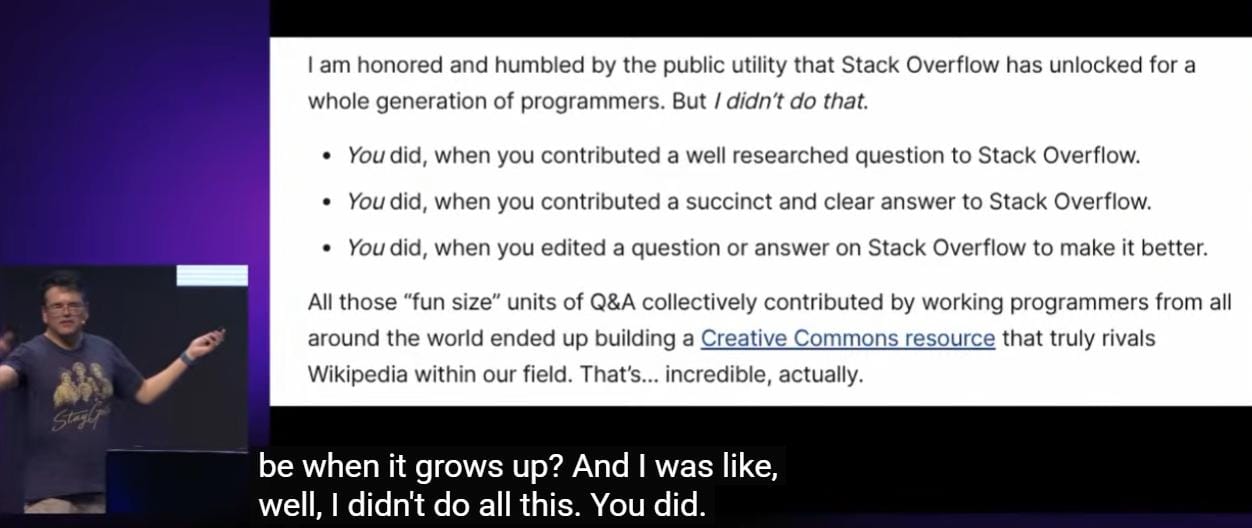
The core of their discussion was deeply rooted in the human story of Stack Overflow, a platform launched in 2008 by Jeff Atwood and Joel Spolsky. Conceived as a more effective, gamified, and community-driven alternative to existing developer forums, Stack Overflow rapidly became an indispensable resource for programmers worldwide. Its success was predicated on a model where users ask questions, and a global community of peers provides answers, which are then upvoted, downvoted, and refined through collective intelligence. This collaborative effort was enshrined under a Creative Commons license, ensuring that the vast repository of knowledge remained openly accessible and attributed to its contributors.
By the mid-2010s, Stack Overflow had amassed millions of questions and answers, serving hundreds of millions of developers annually. Data from the platform’s own reports indicated that by 2018, it was receiving over 50 million unique visitors per month, with its database containing over 16 million questions and 25 million answers. This made it arguably the most comprehensive and trusted knowledge base for programming challenges globally. The platform’s commitment to open access and community ownership via the Creative Commons Attribution-ShareAlike 3.0 Unported License (CC BY-SA 3.0) fostered an environment of mutual benefit, where individual contributions collectively built an invaluable public good.
The Human Connection: Atwood and Dumke-von der Ehe’s Shared Journey
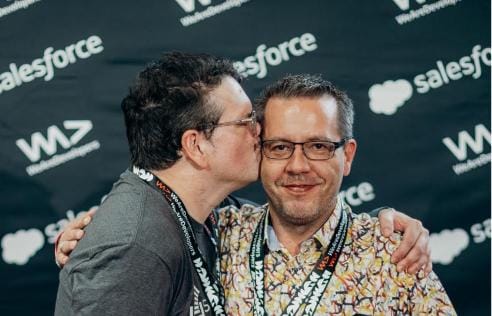
Atwood underscored the profound personal connection that underpinned their presentation, stating, "The long version of this story is that we changed each others’ lives. The short version is: unicorns." This cryptic reference hints at the serendipitous and often transformative encounters that define vibrant online communities. Ben Dumke-von der Ehe’s journey with Stack Overflow exemplifies this. As an early community hire, Ben played a crucial role in shaping the platform’s culture and operational dynamics from within. His story, which Atwood encouraged the audience to hear directly from him, details his initial departure from Stack Overflow, a return, and a subsequent second departure – a testament to the complex, evolving relationship individuals have with the projects they help build. Atwood openly acknowledged his debt to Ben and "everyone who participated on Stack Overflow," emphasizing, "We did it together, under a bedrock Creative Commons license that respected the effort everyone put into their work to build this commons, this hugely influential Stack Overflow dataset."

AI’s Double-Edged Sword: Efficiency vs. Erosion of the Commons
The advent of Large Language Models has introduced a paradigm shift in how developers seek and obtain information. Atwood acknowledged the undeniable efficiencies brought by LLMs. He reiterated Stack Overflow’s long-standing higher-level goal: to make answers so readily available that "98% of programmers should get all the answers they need from reading search result pages and wouldn’t need to ask or answer a single question in their entire careers." This vision, he noted, aligns remarkably well with the capabilities of LLMs, which can instantaneously provide solutions to common programming queries.
Furthermore, LLMs have proven remarkably adept at tackling one of Stack Overflow’s most persistent challenges: duplicate questions. Atwood described the "gordian knot of constant duplicate questions" as previously "almost impossible" to solve. On a platform with millions of existing questions, asking a truly unique query becomes an arduous task, requiring users to navigate a "vast, enormous field of prior art questions without stepping on any of the vaguely similar looking landmines." LLMs, with their advanced semantic understanding, can map differently worded questions to existing answers with unprecedented accuracy, significantly reducing redundancy. "Less duplication. More answers, faster. That’s the point," Atwood asserted, highlighting the undeniable net positive impact of AI in this regard.
The Looming Question: What Happens to the Commons?
Despite these acknowledged benefits, Atwood and Dumke-von der Ehe pivoted to a more pressing, existential concern: "But what happens to the commons when everyone is privately whispering to LLMs?" This question strikes at the heart of the collaborative knowledge ecosystem that platforms like Stack Overflow painstakingly built over more than a decade. If developers increasingly turn to private AI assistants for answers, the public forum for asking, answering, and refining knowledge could diminish.
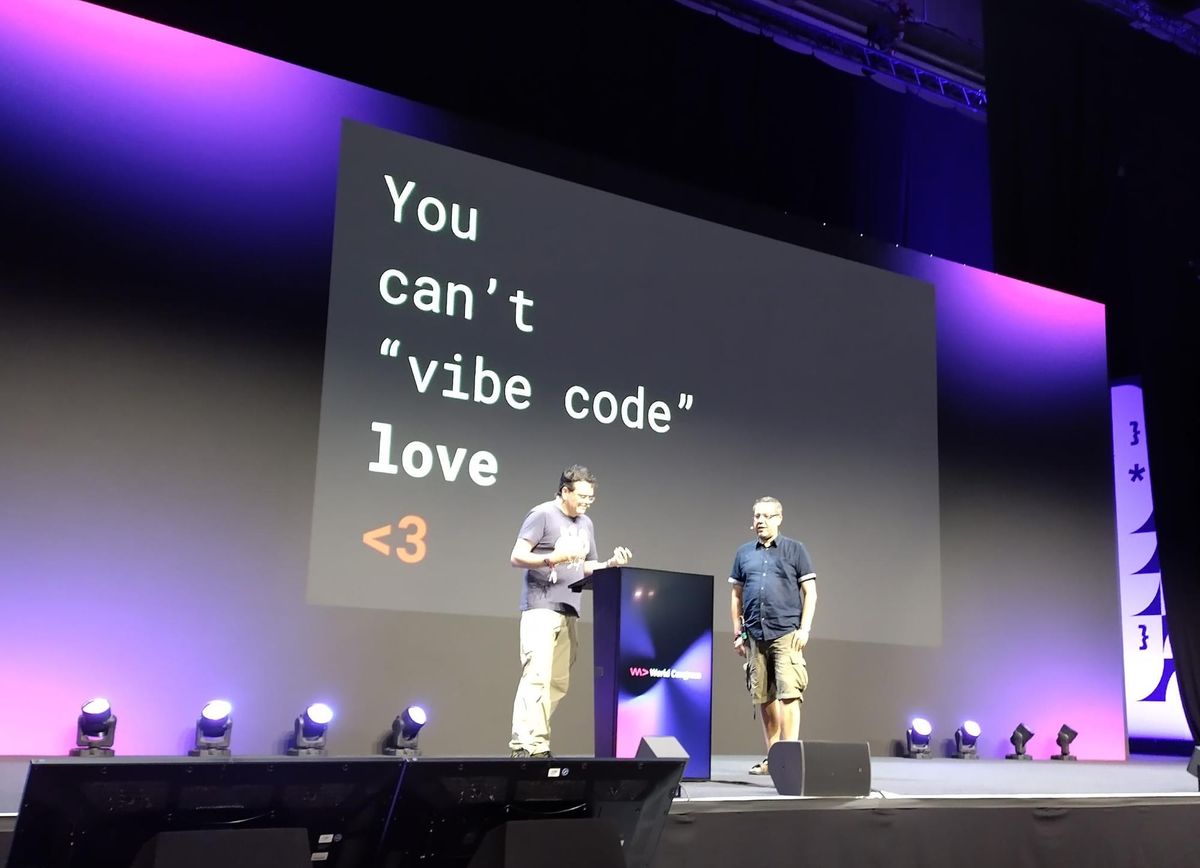
The fear is that this shift could lead to a "tragedy of the commons" in the digital realm, where individual convenience (private AI queries) inadvertently undermines the collective resource (the public knowledge base). Dumke-von der Ehe’s own experience of "having so much fun becoming a programmer" and "getting hired for doing things he loved" within the Stack Overflow community underscores the intrinsic value of these human interactions—a value that extends beyond mere information exchange. The shared learning, the mentorship, the collaborative problem-solving, and the sense of belonging fostered within these communities are elements that LLMs, by their nature, cannot replicate. "You can’t ‘vibe code’ love," Atwood poignantly stated, emphasizing the irreplaceable human dimension of community and growth.
Implications for Future Knowledge and AI Training Data
The long-term implications of this trend extend to the very sustenance of AI itself. The vast datasets that power today’s LLMs are largely derived from human-generated content, much of it from publicly accessible platforms like Stack Overflow, Wikipedia, and open-source repositories. If the rate of new, human-contributed knowledge slows down due to decreased community engagement, where will the next generation of LLMs find their training data? The concern is that if the wellspring of human innovation and collaborative problem-solving dries up, AI models could eventually become stagnant, merely recirculating existing knowledge without the capacity to learn from novel human insights or address emerging, complex challenges.
Industry analysts echo these concerns. Dr. Anya Sharma, a researcher specializing in AI ethics and digital commons, commented from Berlin, "While LLMs are incredibly powerful tools for democratizing access to existing knowledge, their long-term efficacy relies on a continuously growing and evolving human knowledge base. If communities like Stack Overflow see a significant decline in active contribution, we face a potential ‘knowledge desertification’ where AI models might struggle to find fresh, cutting-edge data to train on."
The Call to Protect and Nurture Community
The presentation by Atwood and Dumke-von der Ehe served as a powerful call to action for the developer community and the broader tech industry. It highlighted the urgent need to protect and nurture the digital commons where programmers learn from each other and collaborate. This includes recognizing the value of the Creative Commons licenses that underpin much of this shared knowledge, ensuring fair attribution, and exploring new models that incentivize human contribution in an AI-dominated landscape.
Their message resonated deeply with the attendees at WeAreDevelopers, a congress dedicated to fostering innovation and connection within the global developer community. The dialogue initiated in Berlin is expected to continue across various forums, as the tech world grapples with the profound questions surrounding AI’s role in knowledge creation, dissemination, and the preservation of the invaluable human spirit of collaboration. The challenge, as Atwood and Dumke-von der Ehe articulated, is not to resist AI, but to strategically integrate it in a way that amplifies, rather than diminishes, the human capacity to share knowledge—and love—with each other, ensuring the continuous enrichment of our collective intellectual heritage.
About the Author