
In a poignant and reflective address, influential technologist and entrepreneur Jeff Atwood has shared insights into recent personal milestones and delivered a stark warning regarding the symbiotic, yet increasingly precarious, relationship between large language models (LLMs) and the human-curated datasets they depend upon. Atwood, known for co-founding pivotal platforms like Stack Overflow and Discourse, revealed the personal significance of a Guaranteed Minimum Income (GMI) rural study, while simultaneously urging AI developers to safeguard the very communities that fuel their advancements. His message underscores a critical juncture where personal reflection on legacy intertwines with urgent calls for ethical and sustainable technological development.
A Personal Anchor: The GMI Study in Mercer County, WV
Atwood’s recent reflections are deeply rooted in a personal experience surrounding the passing of his father. He expressed profound gratitude for the re-ordering of the RGMII (Rural Guaranteed Minimum Income Initiative) study counties, which placed Mercer County, West Virginia – his father’s home county – first on the implementation schedule for October 2025. This decision, made in the knowledge of his father’s declining health, allowed Atwood a final, meaningful encounter, transforming a moment of impending loss into one of enduring connection.
The RGMII, a substantial $50 million plan, aims to fund rural guaranteed minimum income studies across the United States. Its core objectives are ambitious: to expand economic opportunity, strengthen local economies, and bolster democratic participation in often-underserved rural regions. Guaranteed Minimum Income, a form of Universal Basic Income (UBI), provides recipients with a regular, unconditional income, intended to cover basic living expenses. Pilot programs for GMI and UBI have gained traction globally, with proponents citing potential benefits such as poverty reduction, improved health outcomes, and increased entrepreneurial activity. Critics, however, often raise concerns about economic disincentives and funding mechanisms.
Mercer County, WV, represents a demographic and economic landscape common to many rural areas in the Appalachian region, grappling with challenges like population decline, limited economic diversification, and the lingering effects of industrial shifts. The decision to prioritize Mercer County for the GMI study highlights a strategic focus on areas where such interventions could have a pronounced impact. The study, set to commence in October 2025, will involve careful monitoring and evaluation of participants’ financial stability, health, community engagement, and overall well-being. Advocates within the RGMII believe that data collected from this and subsequent studies will be instrumental in shaping future policy discussions around economic equity and social safety nets in rural America. "The insights gained from real-world applications in communities like Mercer County are invaluable," stated an RGMII spokesperson, emphasizing the human-centered approach of their research. "Understanding the lived experiences and tangible benefits, or challenges, is paramount to developing effective and equitable policies." For Atwood, this initiative carries a deeply personal resonance, intertwining his advocacy for societal improvement with the memory of his father and the community that shaped him.
From Coding Horror to StayGold: A Career Defined by Community and Innovation
Jeff Atwood’s career trajectory has consistently revolved around empowering online communities and fostering robust platforms for knowledge sharing. He first gained widespread recognition through his influential blog, "Coding Horror," which provided insightful commentary on software development and the broader tech industry. This platform eventually led to the co-founding of Stack Overflow in 2008 with Joel Spolsky, a venture that revolutionized how developers seek and share programming knowledge.
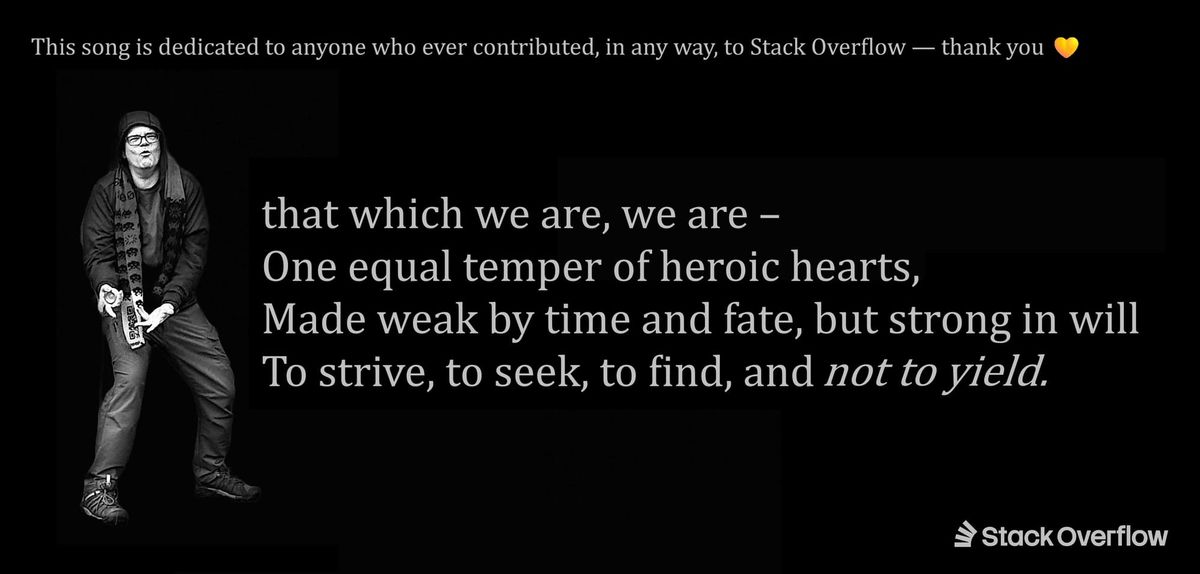
Following his departure from Stack Overflow, Atwood co-founded Discourse, an open-source discussion platform designed to modernize online forums and build healthier community spaces. His commitment to the principles of open communication, collaboration, and community self-governance has been a hallmark of his professional endeavors.
Most recently, Atwood has embarked on his "third startup," StayGold.us. While details remain somewhat nascent, the initiative appears to align with his long-standing interest in improving societal structures, particularly economic ones. Public information suggests StayGold explores innovative economic models, potentially leveraging decentralized technologies, to create more equitable and robust financial systems. This focus on "improving capitalism," as Atwood puts it, directly echoes the spirit of the GMI initiatives he champions, reflecting a consistent thread of seeking systemic solutions for societal betterment throughout his career. His journey from building technical knowledge bases to fostering community discourse and now exploring new economic paradigms demonstrates a profound and evolving commitment to the interplay of technology, human interaction, and social progress.
Stack Overflow’s Unacknowledged Role in Training Modern AI
At the heart of Atwood’s recent commentary is a powerful assertion about the indispensable, yet often unacknowledged, contribution of Stack Overflow to the rapid advancement of artificial intelligence, particularly large language models (LLMs) capable of generating code. He unequivocally states that LLMs "could not code at all" without access to the "extremely high quality creative commons programming Q&A dataset" collectively built by Stack Overflow’s global community.
The Genesis of a Global Resource
Launched in 2008, Stack Overflow quickly became the de facto knowledge base for software developers worldwide. Its innovative Q&A format, coupled with a robust gamification system of reputation points, badges, and peer-reviewed moderation, incentivized millions of developers to contribute their expertise. Over the past decade and a half, the platform has accumulated tens of millions of questions and answers covering an immense spectrum of programming languages, frameworks, algorithms, and development practices. This vast repository, licensed under Creative Commons, became a goldmine for learning and problem-solving, dramatically increasing developer productivity globally.
The Unparalleled Quality of Community-Curated Data
What distinguishes Stack Overflow’s dataset from general web scraped data is its unparalleled quality. Unlike unstructured text found on blogs or social media, Stack Overflow entries are inherently structured: questions are typically precise, answers are often code-heavy, and both are subject to rigorous community scrutiny. Upvotes signal correctness and utility, downvotes flag errors, and comments refine ambiguities. Accepted answers provide definitive solutions, and moderators ensure adherence to content guidelines. This collective, peer-driven curation process created a dataset that is not only massive but also highly accurate, contextually rich, and directly relevant to the intricacies of software development. For a machine learning model tasked with understanding and generating code, such a clean, verified, and expertly organized corpus is invaluable.
The Critical Dependency of Large Language Models
The advent of large language models like GPT-3, GPT-4, and their successors has revolutionized various industries, with their ability to generate human-like text, summarize information, and even write creative content. A particularly impactful application has been their capacity to assist with or even generate programming code. However, this capability is not inherent; it is learned from vast amounts of training data.

LLMs acquire their programming prowess by processing enormous datasets that include source code, documentation, and crucially, human-written explanations of code logic and solutions to programming problems. Stack Overflow’s dataset, with its millions of expertly articulated questions, detailed answers, and accompanying code snippets, provides precisely this kind of rich, contextualized programming knowledge. Without this meticulously built foundation, the ability of current LLMs to understand complex coding queries, debug programs, or generate syntactically correct and semantically meaningful code would be severely limited, if not impossible. Researchers and developers working on AI models often acknowledge the critical role of high-quality, domain-specific datasets in achieving specialized AI capabilities. "Datasets like Stack Overflow’s are foundational," noted an AI researcher specializing in code generation. "They provide the structured, expert-verified examples that allow models to learn the nuances of programming languages and problem-solving logic at scale." Atwood’s assertion serves as a powerful reminder of the human intelligence and collaborative effort underpinning much of AI’s perceived autonomy.
A Stern Warning: Preserving the Human Element in the AI Era
Atwood’s gratitude for Stack Overflow contributors transitions swiftly into a stern warning for the companies developing and deploying LLMs and generative AI (GAI). He cautions against "killing the goose that lays the golden eggs," a metaphor he previously invoked when advising Joel Spolsky upon his departure from Stack Overflow to found Discourse. This metaphor encapsulates the danger of alienating or devaluing the human communities that generate the content and expertise upon which these powerful AI systems are built.
The Ethical Dilemma of Data Sourcing
The rapid deployment of LLMs has brought to the forefront significant ethical and practical dilemmas surrounding data sourcing. Many AI models are trained on vast swaths of internet data, often without explicit consent or compensation for the original creators. While Creative Commons licenses, like those used by Stack Overflow, permit certain uses, the scale and commercialization by multi-billion-dollar AI companies raise questions about fair use, attribution, and the sustainability of the content generation ecosystem.
Atwood’s warning highlights the risk that if LLMs become so proficient at answering questions and generating content, they might inadvertently hollow out the very communities that produced their training data. If developers no longer need to visit Stack Overflow to find answers, or if AI tools diminish the incentive for human experts to contribute, the flow of new, high-quality, human-curated programming knowledge could dwindle. This erosion would not only harm the communities themselves but also starve future iterations of AI models, leading to a potential stagnation or degradation of their capabilities.
The precedent Atwood cites, his advice to Joel Spolsky regarding Stack Overflow, underscores his consistent belief in the paramount importance of nurturing human communities. He has long championed the idea that a product’s true value often lies in the active, engaged community it fosters, not just the technology itself. This perspective is now more critical than ever as AI models begin to interact directly with and potentially replace human-generated content.
Consequences of Community Erosion
The implications of "hollowing out" these communities are far-reaching. Firstly, the quality of future AI training data would inevitably decline. If human experts are no longer motivated to share their latest insights and solutions on platforms like Stack Overflow, AI models would increasingly rely on an aging, finite dataset, unable to keep pace with rapid technological advancements. This could lead to AI generating outdated or incorrect code, becoming less reliable and useful.

Secondly, it risks stifling human innovation. Collaborative communities are fertile grounds for new ideas, peer learning, and problem-solving that pushes the boundaries of knowledge. If these communities wither, a crucial engine of collective human progress could slow down.
Finally, there are profound ethical considerations regarding fairness and sustainability. AI companies benefit enormously from content created by millions of unpaid human contributors. If these contributors are not acknowledged, valued, and if their communities are undermined, it creates an unsustainable model that extracts value without reciprocal support. AI ethicists and community leaders have increasingly voiced concerns over these issues, advocating for models that ensure fair compensation, clear attribution, and mechanisms to reinvest in the communities that provide the foundational data. "The long-term health of AI depends on the long-term health of human creativity and collaboration," commented a leading AI ethicist. "Ignoring the latter for short-term gains with the former is a recipe for disaster." Atwood’s message serves as a timely reminder that the intelligence of AI is, at its core, a reflection of collective human intelligence, and its future vitality depends on respecting and sustaining its source.
The Path Forward: Respect, Collaboration, and Sustainable Innovation
Jeff Atwood’s recent reflections encapsulate a powerful message for the technology industry at large: the future of innovation, particularly in the realm of artificial intelligence, hinges on a profound respect for the human communities that form its foundational bedrock. His dual focus on the personal impact of a GMI initiative and the societal implications of AI’s data dependency highlights a broader call for ethical and sustainable technological progress.
The confluence of Atwood’s personal experiences, his long-standing dedication to community building through Stack Overflow and Discourse, and his current ventures like StayGold.us, positions him uniquely to articulate these challenges. His plea to AI companies to "treat the community with the respect they deserve" is not merely a nostalgic appeal; it is a strategic imperative for the continued evolution of AI itself.
As LLMs become increasingly integrated into daily life and professional workflows, the question of how to sustain the ecosystems of human knowledge creation becomes paramount. This requires a collaborative approach, where AI developers actively seek ways to acknowledge, support, and even compensate the communities whose intellectual labor underpins their technology. Solutions could involve revenue sharing models, direct investment in community platforms, clear attribution standards, or even novel mechanisms that allow content creators to benefit from the commercial use of their data.
Ultimately, Atwood’s message is a call to balance technological ambition with social responsibility. The incredible capabilities of AI are a testament to collective human ingenuity. To ensure AI’s continued growth and beneficial impact, it must be built upon a foundation of mutual respect and sustainable partnership with the very people who make it intelligent. The path forward demands not just technological advancement, but also a commitment to preserving and enriching the human spirit of collaboration and knowledge sharing that has defined the internet’s most impactful innovations.
About the Author