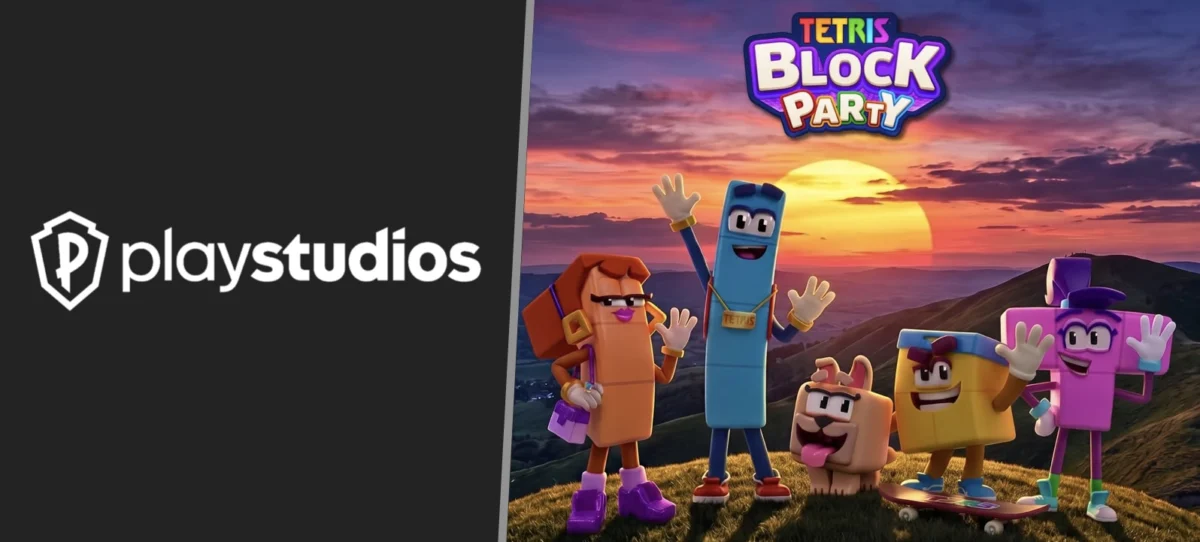
Las Vegas-based mobile gaming developer PlayStudios has officially announced the closure of Tetris Block Party, a move that comes on the heels of a tumultuous period characterized by significant layoffs and a major overhaul of the company’s internal studio structure. This decision marks the latest development in a broader corporate strategy aimed at streamlining operations and restoring financial stability following a period of market volatility and shifting consumer trends in the mobile gaming sector. The discontinuation of Tetris Block Party represents not only the end of a specific product line but also a pivotal moment in PlayStudios’ ongoing efforts to reconcile its ambitious expansion goals with the harsh realities of current macroeconomic conditions.
The closure of Tetris Block Party follows a summer of intense contraction for the company. Earlier this year, PlayStudios initiated a second major restructuring program, which resulted in the closure of four of its nine development studios and the termination of 177 employees. These measures are part of a multi-phase effort to reduce overhead and focus resources on the company’s most profitable assets, primarily its social casino and loyalty-integrated gaming titles. The financial implications of these moves are substantial, as the company seeks to navigate a challenging landscape defined by high user acquisition costs and a tightening of the Nasdaq’s compliance requirements.
Performance Metrics and Financial Impact
According to data provided by market intelligence firm AppMagic, Tetris Block Party had shown a degree of commercial traction prior to its cancellation. Since its launch in January 2025, the title generated approximately $8.1 million in estimated revenue from in-app purchases (IAP). This revenue was derived from a total of 5.6 million downloads across global markets. While these figures represent a respectable performance for a mid-tier puzzle title, industry analysts note that the IAP estimates do not include revenue generated from in-game advertisements or the company’s proprietary webshop, which often serve as significant contributors to the total bottom line for casual mobile games.
Despite these earnings, the decision to shutter the game suggests that the costs of maintaining and scaling the title did not align with the company’s revised profitability targets. In its forthcoming third-quarter financial report, scheduled for release on November 9, PlayStudios is expected to record an impairment charge of up to $3.5 million specifically related to the closure of Tetris Block Party. This charge reflects the write-down of assets and capitalized development costs associated with the game, further impacting the company’s short-term earnings profile as it seeks to pivot toward a leaner operating model.
The Dual Strategy: Reinvention and Renewal
The current state of PlayStudios is the result of two distinct restructuring initiatives designed to stabilize the company’s balance sheet. The first program, titled "Reinvention," was launched in early 2024 with the goal of optimizing the company’s development pipeline and enhancing its loyalty platform, myVIP. This initial phase successfully reduced annual operating costs by an estimated $29 million, primarily through the consolidation of back-office functions and the streamlining of marketing expenditures.
However, as the mobile gaming market continued to face headwinds—including the lasting effects of Apple’s App Tracking Transparency (ATT) framework and increased competition in the puzzle genre—PlayStudios management determined that more drastic measures were necessary. This led to the "Renewal" program, announced in March 2025. This second phase was significantly more aggressive, targeting an additional $39 million in annual cost savings. The closure of four studios and the layoff of 177 staff members were the cornerstones of this initiative, representing a significant reduction in the company’s total workforce. The termination of Tetris Block Party is viewed as a direct extension of this "Renewal" strategy, as the company shifts away from experimental or underperforming titles to protect its core franchises.
Nasdaq Compliance and the Reverse Stock Split
Parallel to its internal restructuring, PlayStudios has faced significant pressure from capital markets. In November 2025, the company received a formal notification from the Nasdaq Stock Market warning that it was at risk of being delisted. The warning was triggered by the company’s common stock trading below the minimum bid price requirement of $1.00 per share for thirty consecutive business days. Delisting from a major exchange like the Nasdaq can have catastrophic effects on a company’s liquidity and its ability to raise capital, often leading to a loss of investor confidence.
To address this crisis, PlayStudios executed a reverse stock split. This corporate action reduced the number of outstanding shares while proportionally increasing the share price, effectively boosting the stock back above the $1.00 threshold. According to recent filings with the Securities and Exchange Commission (SEC), the company successfully regained compliance with Nasdaq’s listing requirements following the split. While the reverse split resolved the immediate regulatory threat, it also highlighted the volatility of the company’s valuation and the urgent need for the operational "Renewal" to produce tangible financial results.
A History of Tetris-Brand Volatility
The closure of Tetris Block Party is not an isolated incident in PlayStudios’ history with the iconic Tetris intellectual property. Since securing the mobile rights to the franchise, the company has experimented with various gameplay formats, many of which have been short-lived. Previous titles that were launched and subsequently shuttered include Tetris Block Blast, Tetris World Tour, and Tetris Story.
These closures suggest a difficulty in finding a sustainable monetization model for the Tetris brand within the modern mobile ecosystem. While the Tetris IP remains one of the most recognized names in gaming history, translating that brand recognition into long-term player retention and high-value IAP revenue has proven challenging. Many of these discontinued titles attempted to blend classic Tetris mechanics with modern "meta" features, such as narrative progression or competitive multiplayer leagues, but failed to achieve the necessary scale to justify ongoing development costs.
Despite these setbacks, PlayStudios continues to operate its flagship Tetris title. Unlike the recently closed Block Party, the primary Tetris app appears to rely heavily on an ad-driven revenue model. AppMagic estimates suggest that this flagship version has garnered approximately 115 million downloads since its 2020 launch, yet it has only earned $2.8 million in IAP revenue. The vast discrepancy between download volume and IAP earnings underscores the brand’s reliance on high-volume, low-ARPU (Average Revenue Per User) advertising strategies rather than the high-spending "whale" mechanics typical of the social casino games that form the core of PlayStudios’ business.
Industry Context and Market Pressures
The struggles faced by PlayStudios are emblematic of broader trends within the mobile gaming industry. The "gold rush" era of mobile gaming, characterized by rapid growth and easy user acquisition, has largely given way to a more mature and difficult market. Companies are currently grappling with several systemic challenges:
- User Acquisition Costs: The cost to acquire a new paying user has skyrocketed, making it difficult for new titles to reach profitability unless they possess exceptional retention metrics.
- Privacy Regulations: Changes to data privacy laws and platform policies (such as IDFA) have limited the ability of developers to target high-spending users effectively, impacting the efficiency of marketing budgets.
- Market Saturation: The casual puzzle and social casino categories are highly saturated, with a few dominant players holding the majority of market share, leaving little room for mid-tier titles.
For PlayStudios, which went public via a SPAC (Special Purpose Acquisition Company) merger during the height of the market boom, the pressure to deliver quarterly growth to shareholders has been intense. The "Renewal" program represents a strategic retreat to "safe ground"—focusing on the company’s core strengths in social slots and its unique myVIP loyalty program, which rewards players with real-world prizes such as hotel stays and cruises in Las Vegas.
Future Outlook and Strategic Implications
As PlayStudios prepares to report its Q3 financials on November 9, investors will be looking for signs that the cost-cutting measures are beginning to stabilize the company’s margins. The $3.5 million impairment charge for Tetris Block Party will likely weigh on the bottom line, but management is expected to emphasize the long-term benefits of a leaner organization.
The future of the Tetris license within the PlayStudios portfolio remains an area of interest for industry observers. While the company has demonstrated a willingness to kill underperforming titles, the sheer volume of downloads for its flagship Tetris app provides a massive top-of-funnel audience for its myVIP loyalty ecosystem. The challenge remains whether PlayStudios can effectively cross-promote these millions of casual Tetris players into its more lucrative social casino titles.
In conclusion, the closure of Tetris Block Party is a symptomatic response to a period of forced evolution. By sacrificing secondary titles and consolidating its studio footprint, PlayStudios is betting that a more focused, disciplined approach will allow it to survive a volatile market. Whether the "Renewal" program will be enough to drive long-term share price appreciation and institutional investor confidence remains to be seen, but for now, the company is firmly in a defensive posture, prioritizing fiscal health over speculative growth.
About the Author