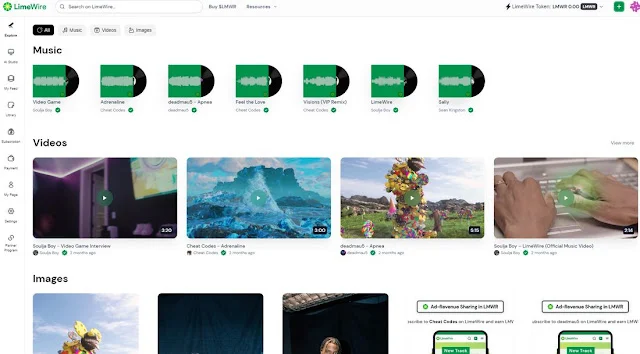
The digital landscape is in constant flux, and few platforms exemplify this evolution as dramatically as LimeWire. Once synonymous with the peer-to-peer file-sharing controversies of the early 2000s, LimeWire has undergone a radical metamorphosis, re-emerging as a sophisticated AI content publishing platform. This transformation positions the revived entity not just as another tool in the burgeoning generative AI market, but as a comprehensive ecosystem designed to empower creators, foster community, and unlock new avenues for monetization. With a focus on AI image generation and ambitious plans for music and video, LimeWire is carving out a unique niche, attracting both individual creators and established artists alike.
From Infamy to Innovation: The Genesis of the New LimeWire
The original LimeWire, launched in 2000, became a household name for its role in the widespread distribution of digital media, often without proper licensing. Its notoriety led to legal challenges and its eventual shutdown in 2010. However, the brand’s legacy was not entirely extinguished. In 2021, the LimeWire name was acquired with a vision to reinvent it for the Web3 era. This reinvention culminated in the launch of LimeWire Studio, a platform that leverages cutting-edge generative artificial intelligence. The platform’s core mission is to democratize content creation, making sophisticated AI tools accessible to a broad audience while simultaneously providing robust mechanisms for creators to share, engage with, and monetize their digital output.
The pivot towards AI content generation marks a significant departure from its past. Instead of facilitating the sharing of existing content, the new LimeWire champions the creation of original digital assets. This strategic shift aligns with the explosive growth of the generative AI sector, which has seen rapid advancements in image, text, music, and video generation capabilities. By integrating these technologies, LimeWire aims to become a central hub for creators looking to harness AI for their artistic endeavors.
Empowering Creators: Features and Benefits of LimeWire Studio
LimeWire Studio is designed with the creator at its forefront, offering a suite of tools and features aimed at simplifying the creative process and maximizing potential returns. At present, the platform’s primary offering is its AI Image Generation tool, but its roadmap indicates a significant expansion into AI music and video generation in the near future.
AI Image Generation: A Versatile Creative Toolkit
The core of LimeWire’s current creative offering lies in its advanced AI image generation capabilities. The platform supports leading AI models, including Stable Diffusion 2.1, Stable Diffusion XL, and DALL-E 2, providing users with a powerful and flexible toolkit. This allows creators to produce a wide array of visual content, from simple illustrative pieces to complex, photorealistic imagery.
Users can initiate their creative journey with straightforward text prompts, or delve into more intricate instructions to achieve highly specific artistic outcomes. The platform’s strength lies in its seamless integration of these AI models and its diverse range of stylistic options. Creators can effortlessly switch between different AI models and explore a multitude of design styles, including cinematic, digital art, pixel art, anime, and analog film effects. Each style imparts a unique visual identity, enabling users to experiment and discover new aesthetic possibilities.
Beyond model and style selection, LimeWire offers additional features such as "samplers" that allow for fine-tuning of image quality and detail. Customization options and prompt guidance further enhance the user experience, making the platform approachable for beginners while offering depth for experienced AI artists. The platform is also actively developing its proprietary AI model, a move that signals a commitment to continuous innovation and further expansion of its creative potential.
The NFT Integration: Ownership and Authenticity in the Digital Realm
A key differentiator for LimeWire is its built-in mechanism for turning digital creations into Non-Fungible Tokens (NFTs). Upon completing a creative piece, users have the option to publish their content, and LimeWire automatically mints it as an NFT on either the Polygon or Algorand blockchain. This process imbues each creation with a unique digital signature, verifying its authenticity and establishing verifiable ownership in the decentralized digital space.
Creators on LimeWire have control over the accessibility of their NFT creations. They can opt for a public release, making their work discoverable by anyone within the LimeWire community and beyond, fostering engagement and enabling the trading of these digital assets. Alternatively, creators can choose to share their posts exclusively with their premium subscribers, cultivating a more intimate and exclusive experience for their dedicated fanbase. This flexibility in distribution empowers creators to tailor their engagement strategies according to their specific goals.
Monetization Streams: Earning from Creative Output
LimeWire has been designed with robust monetization strategies to ensure creators can benefit financially from their work. Beyond the potential for NFT sales, creators can earn ad revenue from their published content. When content is viewed on the platform, creators receive a significant portion of the generated ad revenue. For instance, the platform states that creators can receive up to 70% of ad revenue from users who view their images, music, and videos. This model offers a consistent income stream, particularly for designers who can experiment with AI tools and share their creations while generating a supplementary income.
The revenue earned through these channels is disbursed in LMWR tokens, LimeWire’s native cryptocurrency. These tokens can be traded on major cryptocurrency exchanges such as Kraken, ByBit, and UniSwap, providing creators with liquidity and the ability to convert their earnings into fiat currency or other cryptocurrencies. Additionally, LMWR tokens can be used to pay for prompts and other services within the LimeWire generative AI tools, creating a self-sustaining ecosystem.
A Timeline of Evolution and Expansion
The journey of the new LimeWire has been one of strategic development and phased rollout. While the exact initial public release date of the AI platform is not detailed in the provided text, its emergence in the latter half of 2021 and subsequent growth indicate a focused development cycle.
- Acquisition and Rebranding: The LimeWire brand was acquired in 2021 with the explicit intent to relaunch it as a Web3-focused platform. This marked the beginning of its transformation from a file-sharing relic to an innovative technology company.
- Launch of LimeWire Studio: The platform, initially focusing on AI image generation, was rolled out, allowing users to create and publish AI-generated art. This phase established the core functionality of content creation and NFT minting.
- Artist Adoption: By early to mid-2022, the platform began attracting notable figures in the music and entertainment industry. Artists like Deadmau5, Soulja Boy, and Sean Kingston started utilizing LimeWire Studio to publish their content, including NFT music, videos, and images. This lent significant credibility and visibility to the platform.
- Expansion into Music and Video: As of the current reporting, LimeWire has publicly stated its ambitious plans to introduce AI music and video generation tools. This expansion is anticipated to significantly broaden the platform’s appeal and utility for a wider range of creators. While specific dates for these additions are not yet available, the announcement signals ongoing development and a commitment to evolving with the AI landscape.
Pricing Plans: Access and Enhanced Benefits
LimeWire offers a tiered pricing structure, catering to different user needs and budgets, while maintaining a free entry point.
- Free Tier: Users can sign up for free and receive 10 credits, allowing for approximately 20 AI image generations per day. This tier also includes a 50% ad revenue share.
- Premium Plans:
- $9.99/month: Offers 1,000 credits per month (up to 2,000 image generations), early access to new AI models, and a 50% ad revenue share.
- $29/month: Provides 3,750 credits per month (up to 7,500 image generations), early access to new AI models, and a 60% ad revenue share.
- $49/month: Includes 5,000 credits per month (up to 10,000 image generations), early access to new AI models, and a 70% ad revenue share.
- $99/month: Delivers 11,250 credits per month (up to 22,500 image generations), early access to new AI models, and a 70% ad revenue share.
All premium plans come with additional benefits, including a "Pro" profile badge, access to full creation history, faster image generation speeds, and an ad-free experience. These plans are structured to provide increasing value and enhanced features as users invest more in the platform, incentivizing deeper engagement and more extensive content creation.
Broader Impact and Implications: Reshaping the Creator Economy
LimeWire’s re-emergence as an AI content platform has significant implications for the broader creator economy. By lowering the barrier to entry for sophisticated AI tools and integrating monetization and ownership mechanisms, the platform democratizes creative production and distribution. This is particularly relevant in an era where digital art, music, and video are increasingly valued and commodified.
The integration of NFTs offers a novel way for creators to establish provenance and scarcity for their digital works, potentially creating new revenue streams and fostering direct engagement with their audience. The royalty system for NFT resales ensures that creators continue to benefit from the secondary market of their work, a crucial aspect of sustainable artistic careers.
Furthermore, the platform’s appeal to established artists like Deadmau5 and Soulja Boy suggests a growing acceptance and integration of AI tools within mainstream creative industries. This can lead to innovative artistic expressions and collaborations, pushing the boundaries of what is possible in digital art and media.
The development of AI music and video generation tools, when launched, will further amplify these effects. It could empower musicians and filmmakers to experiment with new sounds and visual styles, produce content more efficiently, and distribute it directly to their fans through the NFT ecosystem. This could disrupt traditional media gatekeepers and foster a more direct artist-to-fan relationship.
However, like all AI technologies, LimeWire’s platform also raises questions regarding copyright, originality, and the ethical implications of AI-generated content. As the technology evolves, so too will the discussions surrounding these issues, and LimeWire’s role in navigating these complexities will be closely watched.
Conclusion: A New Era of Digital Creation
In conclusion, LimeWire has successfully reinvented itself, transforming from a controversial file-sharing service into a forward-thinking AI content publishing platform. By providing accessible generative AI tools, seamless NFT integration, and robust monetization opportunities, LimeWire is empowering a new generation of creators. Its commitment to innovation, evidenced by ongoing development and planned expansion into music and video generation, positions it as a significant player in the evolving digital creative landscape. For aspiring artists, established professionals, and anyone interested in the future of digital content, LimeWire offers a compelling and accessible entry point into the world of AI-driven creativity and ownership. The platform’s free tier ensures that experimentation and exploration are available to all, fostering a dynamic ecosystem where creativity and commerce can converge in novel ways.
About the Author