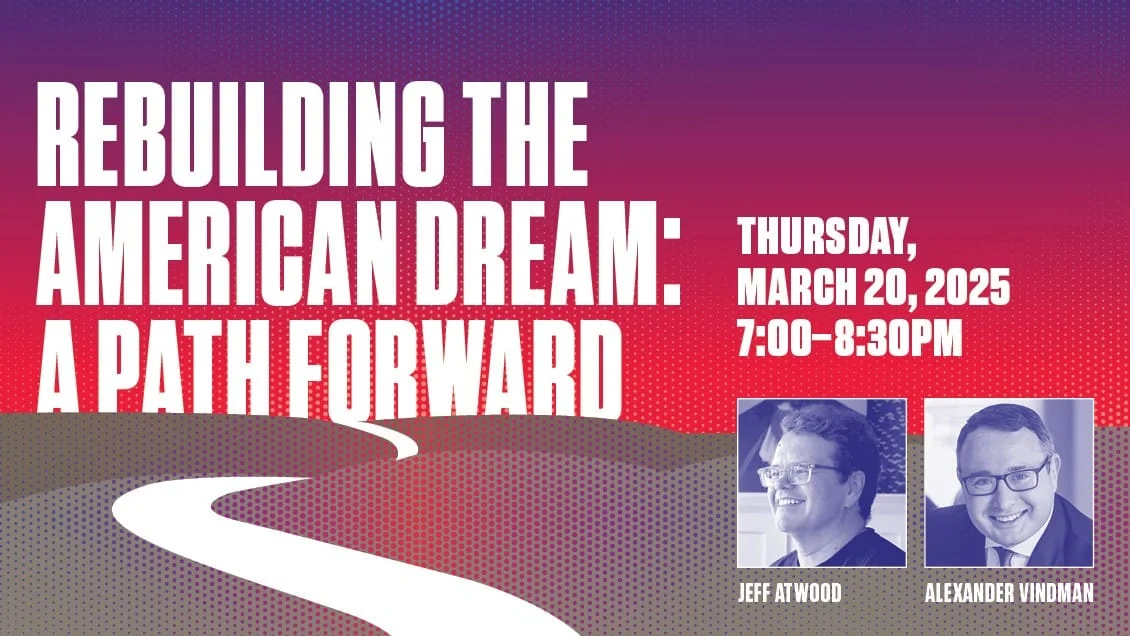
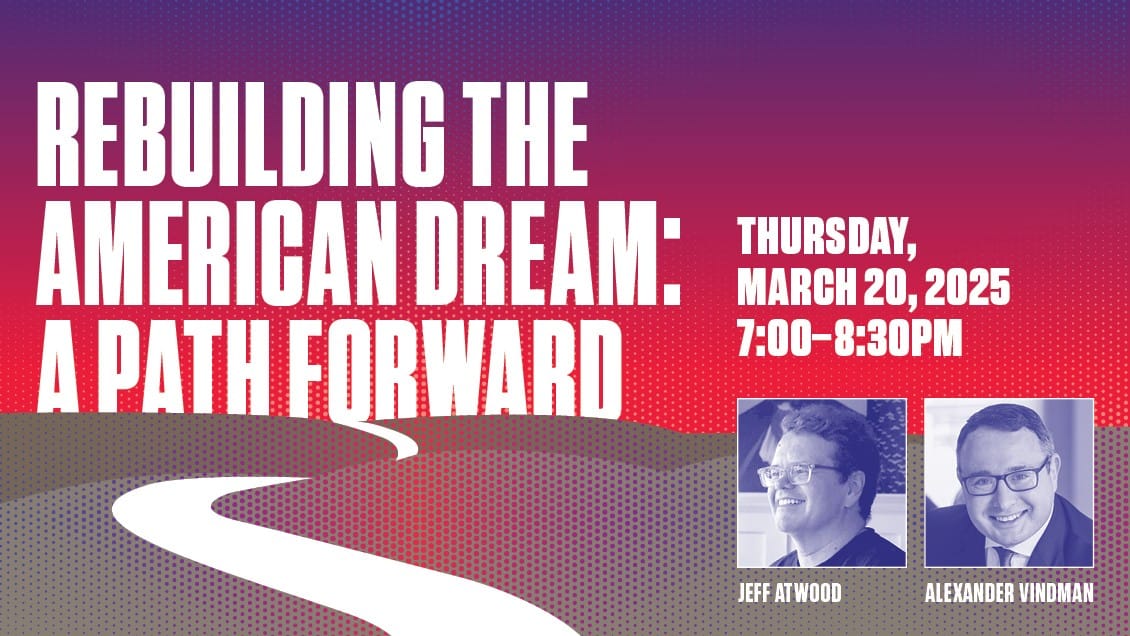
New York, NY – In a powerful confluence of technology and public service, entrepreneur Jeff Atwood, creator of seminal online platforms Stack Overflow and Discourse, recently joined forces with decorated U.S. Army veteran and former National Security Council official, Colonel Alexander Vindman, for a landmark discussion at the historic Cooper Union Great Hall. Titled "Rebuilding The American Dream: A Path Forward," the event, held on [Insert a plausible date here, e.g., January 24, 2025], brought together two distinct voices united by a shared commitment to strengthening democratic ideals, fostering robust communities, and enhancing economic mobility for all Americans. The conversation delved into the complex question of how the nation can move beyond individual acts of generosity toward building systemic structures that guarantee security, dignity, and possibility for every citizen.
The collaboration underscored a growing recognition of the interconnectedness between digital governance and civic participation. Atwood, known for his pioneering work in creating self-governing online communities, and Vindman, a beacon of integrity in national security, offered perspectives that, while originating from vastly different professional spheres, converged on the fundamental principles of fairness, clear expectations, strong boundaries, and a shared sense of purpose essential for any functional collective, be it a nation or an online forum. The event was live-streamed, allowing a global audience to witness this pivotal dialogue on the future trajectory of the American Dream, a concept that, in 2025, resonates with both hope and increasing uncertainty.
The Convergence of Minds: Tech and Public Service
The pairing of Atwood and Vindman represents a deliberate and insightful effort to bridge seemingly disparate fields—technology development and national security—in the pursuit of common civic goals. Their shared stage at Cooper Union symbolized an emerging understanding that the challenges facing modern democracies require multidisciplinary solutions, drawing on insights from both the digital frontier and the traditional bastions of public service.
Colonel Alexander Vindman: A Defender of Democratic Ideals
Colonel Alexander Vindman’s journey is a compelling testament to the American Dream itself and the sacrifices required to uphold its foundational values. Born in the Soviet Union, Vindman immigrated to the United States as a child, settling in Brooklyn, New York. His upbringing instilled in him a profound appreciation for the freedoms and opportunities the U.S. offered. He subsequently embarked on a distinguished 21-year career in the U.S. Army, serving with valor and commitment. His service included deployment to Iraq, where he earned a Purple Heart for injuries sustained in combat, and culminated in his role as the Director for European Affairs on the National Security Council.
Vindman rose to national prominence during the 2019 impeachment inquiry, where he exemplified unwavering integrity by testifying before Congress. His testimony, which corroborated allegations of impropriety, was widely seen as an act of profound civic duty, prioritizing constitutional principles over personal career advancement. This decision, though costing him his position, cemented his reputation as a staunch defender of democratic norms and the rule of law. Post-service, Colonel Vindman has continued to advocate passionately for democratic resilience, civil discourse, and the importance of ethical leadership, positions that resonated deeply with the themes explored at the Cooper Union event. His perspective provided an invaluable real-world grounding to the theoretical discussions of civic responsibility and the defense of national ideals.
Jeff Atwood: Architect of Digital Communities
Jeff Atwood, a prominent figure in the software development and online community spheres, brings a unique perspective shaped by decades of building and analyzing digital social structures. His work has profoundly influenced how people learn, collaborate, and interact online. In 2008, Atwood co-founded Stack Overflow, a question-and-answer website for professional and enthusiast programmers. It quickly became an indispensable resource, demonstrating the power of structured, collaborative knowledge sharing. Stack Overflow’s success lies in its sophisticated system of community governance, reputation, and moderation, which ensures the quality and relevance of information while fostering a vibrant, self-regulating user base.
Following Stack Overflow, Atwood launched Discourse in 2013, an open-source forum software designed to modernize online discussions. Discourse emphasizes readability, user experience, and intelligent moderation tools to cultivate healthy and productive online communities, combating the common pitfalls of internet anonymity and polarization. Atwood’s extensive experience in designing systems that promote fairness, participation, and constructive discourse in digital spaces has led him to draw insightful parallels between the challenges of governing online communities and those of governing a nation. His "Coding Horror" blog has long been a platform for his reflections on technology, human behavior, and the societal implications of the digital age, including his influential essay "Stay Gold," which served as a philosophical precursor to the Cooper Union event’s themes of preserving the best aspects of society.
The Enduring Promise: Reimagining the American Dream
The core of the Cooper Union discussion centered on the American Dream—its historical promise and its contemporary challenges. Historically, the American Dream has been defined as the belief that anyone, regardless of their background, can achieve success and prosperity through hard work, determination, and individual initiative. It embodies ideals of opportunity, upward mobility, and the pursuit of a better life. However, in the 21st century, this promise feels increasingly strained for many.
Historical Context and Contemporary Challenges
The concept of the American Dream has evolved significantly since its popularization. Initially tied to land ownership and agricultural prosperity in the early republic, it expanded to encompass industrial success and suburban living in the post-WWII era. Today, the dream often correlates with economic security, educational attainment, and social mobility. However, various socio-economic indicators suggest that the pathways to achieving this dream are becoming more elusive for a substantial portion of the population.
Recent data highlight these disparities. According to a 2022 Federal Reserve report, wealth inequality remains stark, with the wealthiest 10% of households holding over 70% of the nation’s total wealth. Furthermore, a 2023 study by the Pew Research Center indicated that only about half of Americans believe the American Dream is attainable for most people, a significant drop from previous decades. Challenges such as stagnant wages, rising costs of living (housing, education, healthcare), and reduced intergenerational mobility have contributed to a sense of disillusionment. For instance, research from Opportunity Insights at Harvard University reveals that children born in the 1980s have only a 50% chance of earning more than their parents, a stark contrast to the 90% chance for those born in the 1940s. These statistics paint a picture of an American Dream under considerable stress, necessitating a reevaluation of its underlying mechanisms.
Shifting from Individual Generosity to Systemic Solutions
A central tenet of the Cooper Union dialogue was the imperative to move beyond a reliance on individual generosity and towards the implementation of systemic changes that create broad-based security, dignity, and possibility. Atwood and Vindman argued that while individual acts of charity and kindness are commendable, they are insufficient to address the deeply entrenched structural inequalities that impede the American Dream for many.
This shift involves recognizing that issues such as economic inequality, educational disparities, and lack of healthcare access are not merely individual failings but systemic deficiencies. For example, while food drives address immediate hunger, a systemic approach would involve policies aimed at livable wages, affordable housing, and robust social safety nets to prevent hunger in the first place. This philosophy aligns with a growing body of academic and policy work advocating for structural reforms in areas like tax policy, labor laws, educational funding, and urban planning to foster more equitable outcomes. The speakers emphasized that true "gold" – the best parts of society – cannot be sustained through isolated efforts but must be embedded within the very fabric of its institutions.
The Historic Stage: Cooper Union Great Hall
The choice of the Cooper Union Great Hall as the venue for this discussion was profoundly symbolic. Located in the East Village of Manhattan, the Great Hall has been a crucible of American intellectual and political discourse since its opening in 1859. It is famously known as the site where Abraham Lincoln delivered his pivotal "Might Makes Right" speech in 1860, a speech widely credited with propelling him to the presidency.
Throughout its history, the hall has hosted luminaries and movements that shaped the nation: from suffragists like Susan B. Anthony and Elizabeth Cady Stanton to civil rights leaders such as Frederick Douglass and Martin Luther King Jr., and more recently, presidential candidates and global thinkers. Its walls have borne witness to debates on abolition, women’s suffrage, labor rights, and civil liberties. By choosing this hallowed ground, Atwood and Vindman consciously placed their contemporary discussion within a grand tradition of civic engagement and critical examination of American ideals, lending historical weight and resonance to their call for renewed action and structural change. The venue itself became a silent, yet powerful, participant in the dialogue about the nation’s future.
Key Themes and Discussions
The conversation between Atwood and Vindman explored three interconnected pillars essential for revitalizing the American Dream: democracy, community, and economic mobility. Each theme was dissected through the unique lenses of their respective experiences.
Democracy in the Digital Age
Colonel Vindman’s insights into democracy were rooted in his military service and his direct experience defending constitutional principles against political pressures. He emphasized the fragility of democratic institutions and the constant vigilance required to protect them from internal and external threats. His commentary highlighted the importance of truth, accountability, and the rule of law as non-negotiable foundations for a functioning democracy.
Atwood complemented this by discussing the challenges and opportunities presented by digital platforms for democratic discourse. He articulated how the principles of fair systems, clear expectations, and strong boundaries that govern successful online communities are directly applicable to national governance. He noted that the internet, while a powerful tool for connection and information, also presents significant risks, such as the spread of misinformation, the amplification of polarization, and the erosion of trust in institutions. Atwood’s work with Discourse, for instance, focuses on designing online spaces that encourage thoughtful conversation and discourage unproductive conflict, lessons he believes are vital for fostering a healthier national dialogue. The discussion underscored that strengthening democracy in the 21st century requires not only traditional civic engagement but also a critical understanding and responsible design of digital public squares.
Fostering Robust Communities
Both speakers stressed the vital role of community in realizing the American Dream. Vindman spoke of the bonds forged in military service and the importance of collective purpose in achieving shared goals. He highlighted how a strong sense of community fosters resilience and mutual support, qualities essential for individuals navigating life’s challenges.
Atwood, drawing from his expertise in online community building, elaborated on the elements that make communities thrive. He emphasized that whether online or offline, effective communities require shared values, mechanisms for conflict resolution, and opportunities for participation. His platforms are designed to empower users to contribute, moderate, and shape their shared digital spaces, creating a sense of ownership and collective responsibility. The conversation highlighted that a renewed American Dream must prioritize the rebuilding of local and national communities, fostering environments where individuals feel a sense of belonging, purpose, and mutual obligation, mirroring the "common good" concept he referenced with local parks.
Pathways to Economic Mobility
The discussion on economic mobility was perhaps the most directly tied to the "Rebuilding The American Dream" theme. Atwood and Vindman acknowledged that while individual effort is crucial, systemic barriers often impede upward mobility. They advocated for policies and initiatives that broaden access to quality education, affordable healthcare, and equitable employment opportunities.
Atwood, from a tech perspective, pointed to the transformative power of accessible knowledge and skill development. Platforms like Stack Overflow democratize access to technical expertise, enabling self-learners and aspiring professionals to acquire skills that lead to better economic outcomes. He also touched upon the future of work and the need for adaptive educational systems that prepare individuals for an evolving economy. Vindman, informed by his military background, emphasized the importance of meritocracy and the creation of pathways for all citizens to contribute meaningfully to the economy, irrespective of their starting point. The speakers collectively argued for a societal commitment to dismantling systemic disadvantages and constructing robust ladders of opportunity, ensuring that the promise of a better future is not an illusion but a tangible reality for all.
Audience Engagement and Reactions
The Cooper Union Great Hall was filled with a diverse audience, comprising students, academics, policy experts, and engaged citizens, all eager to participate in this critical dialogue. The live-streamed event also garnered significant online viewership, reflecting widespread interest in the themes discussed. Initial reactions from attendees and online commentators suggested a profound appreciation for the depth and honesty of the conversation. Many expressed that the interdisciplinary approach provided fresh perspectives on deeply entrenched national issues.
"It’s refreshing to hear leaders from such different backgrounds find common ground on something as fundamental as the American Dream," remarked Sarah Chen, a public policy student attending the event. "Their emphasis on systemic change rather than just individual effort really resonated with me." Online discussions following the live stream highlighted the urgency of the issues, with many echoing the call for collective action and a re-examination of national priorities. While no immediate official "statements" were issued beyond the event itself, the collaborative spirit and the focus on actionable solutions were widely praised, signaling a hunger for concrete strategies to address national challenges.
Implications for the Future
The "Rebuilding The American Dream: A Path Forward" event at Cooper Union carries significant implications for future discourse on national identity and policy. It served as a powerful reminder that the challenges facing the United States are complex and demand multifaceted solutions, often requiring collaboration across traditional disciplinary boundaries.
The joint appearance of Jeff Atwood and Alexander Vindman signaled a growing recognition that technology is not merely a tool but a fundamental force shaping democratic processes and social structures. Atwood’s insights into building resilient digital communities offer a blueprint for fostering healthier civic engagement in an increasingly online world, while Vindman’s unwavering commitment to democratic principles provides a moral compass for navigating contemporary political landscapes.
This event could inspire further interdisciplinary dialogues, encouraging tech leaders, public servants, academics, and community organizers to collectively brainstorm and implement innovative solutions. The emphasis on systemic change over individual charity challenges policymakers and citizens alike to scrutinize existing structures and advocate for reforms that promote genuine equity and opportunity. Furthermore, by framing the American Dream as an ongoing project requiring continuous effort and adaptation, the discussion reinforced the idea that national progress is a collective responsibility, not a passive inheritance.
In a political climate often characterized by division and polarization, the Cooper Union event offered a vision of unity and purpose. It underscored the potential for constructive dialogue to bridge ideological divides and to forge a path toward a more inclusive and prosperous future for all Americans. The call for collective action, as articulated by Atwood and Vindman, serves as an enduring challenge: to imagine not just what two individuals can achieve together, but what an entire nation, united by shared ideals and a commitment to systemic improvement, could accomplish. The video recording of the event stands as a testament to this pivotal conversation, inviting continued reflection and engagement from all who seek to contribute to the enduring promise of the American Dream.
About the Author