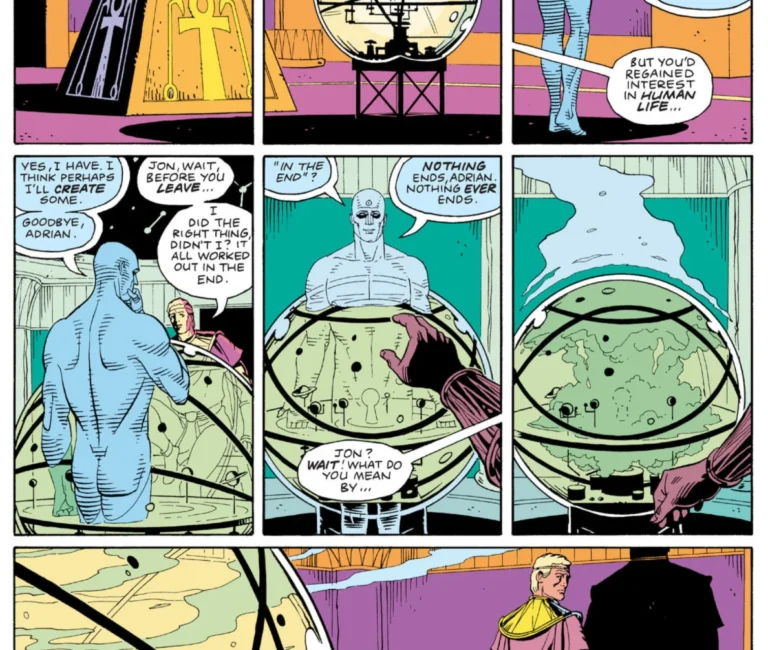
The acquisition of Twitter by Elon Musk in October 2022, followed by its controversial rebranding to X, has ignited a profound debate within the tech community and among global users regarding the nature of centralized social media platforms. This seismic shift has prompted widespread reevaluation of digital public squares, ownership models, and the delicate balance between free speech and content moderation, driving many towards decentralized alternatives. The ensuing changes, characterized by significant policy overhauls, mass layoffs, and a dramatic transformation of the platform’s identity, have been met with both fervent support from some and staunch criticism from others, illustrating the inherent risks when a single individual assumes control over a globally influential communication network.
The Genesis of X: Elon Musk’s Vision and Acquisition
Before Elon Musk’s takeover, Twitter had established itself as a critical global platform, often dubbed the "digital town square," where real-time news, political discourse, cultural trends, and personal interactions converged. Founded in 2006, it grew into a behemoth with hundreds of millions of daily active users, serving as an indispensable tool for journalists, politicians, activists, and everyday citizens alike. However, Twitter also grappled with persistent challenges, including content moderation controversies, the proliferation of misinformation and hate speech, and a struggle for consistent profitability. Its decentralized nature in terms of user-generated content contrasted sharply with its highly centralized corporate ownership and control.
The saga of Musk’s acquisition began in April 2022, when he disclosed a significant stake in the company, quickly followed by an offer to buy Twitter outright for $44 billion. His stated motivations were ambitious and often contradictory: to unlock Twitter’s "extraordinary potential," to transform it into an "everything app" (X), to combat bot accounts, and, most prominently, to uphold "free speech absolutism." This last promise resonated with critics of Twitter’s previous content moderation policies, who argued the platform was biased against certain viewpoints. The acquisition process was tumultuous, marked by Musk’s attempts to withdraw his bid, allegations of bot account misrepresentation, and a legal battle that ultimately compelled him to proceed with the purchase. On October 27, 2022, Elon Musk officially acquired Twitter, taking the company private.

Navigating the New Era: Policy Shifts and Operational Changes
Immediately following the acquisition, X underwent a radical restructuring that sent shockwaves through the tech industry. One of Musk’s first and most impactful decisions was to implement aggressive cost-cutting measures, including several rounds of mass layoffs that saw the company’s workforce reduced by an estimated 80% – from approximately 7,500 employees to around 1,300 by early 2023. These layoffs affected critical departments, including engineering, product development, and, notably, content moderation and trust and safety teams, raising immediate concerns about the platform’s ability to combat harmful content.
Concurrently, Musk initiated a significant overhaul of Twitter’s content moderation policies. He famously reinstated numerous previously banned accounts, including those of controversial public figures, under the banner of promoting broader free speech. This move, while celebrated by some, led to widespread alarm among civil rights groups, advertisers, and a segment of the user base who feared a surge in hate speech, harassment, and misinformation. Reports from organizations like the Center for Countering Digital Hate (CCDH) indicated a notable increase in hateful and inflammatory content on the platform following these changes, though X officials disputed the methodology and findings of such reports.
Perhaps the most visible policy change was the revamp of Twitter’s verification system. The legacy blue checkmark, once signifying authenticated identity, was replaced by a subscription-based service, Twitter Blue (later rebranded to X Premium). For a monthly fee, users could obtain a blue checkmark, alongside other features like longer posts and fewer ads. This shift democratized verification but also led to significant confusion and a rise in impersonation incidents, as accounts could easily pay to appear authoritative. The financial incentive behind this change was clear, aiming to diversify revenue streams beyond advertising, but its implementation proved disruptive.
The culmination of these transformations was the rebranding of Twitter to X in July 2023. The iconic blue bird logo was replaced with a stark "X," and the domain twitter.com began redirecting to x.com. Musk articulated his long-term vision for X as an "everything app," encompassing payments, messaging, and a wide array of services, akin to WeChat in China. This rebrand signified a complete break from Twitter’s past, attempting to shed its legacy and embrace a new, albeit vaguely defined, future.

User and Advertiser Exodus: A Platform in Flux
The dramatic changes at X have had a tangible impact on its user base and, critically, its advertising revenue. While official user statistics from X have been inconsistent or opaque, anecdotal evidence and third-party analyses suggest a decline in active engagement among certain demographics and a notable migration of users to alternative platforms. Data intelligence firms like Sensor Tower and Apptopia reported declines in X’s daily active users and engagement metrics in the months following the acquisition, particularly in Western markets. Many long-time users expressed disillusionment with the platform’s new direction, the perceived increase in problematic content, and technical instabilities.
The most significant financial repercussion has been a substantial exodus of advertisers. Major brands, citing concerns over brand safety and the proliferation of hate speech and misinformation, significantly reduced or entirely paused their advertising campaigns on X. By late 2023, reports indicated that X’s advertising revenue had plummeted by more than 50% compared to pre-acquisition levels. This advertiser boycott highlighted the commercial vulnerabilities of a platform reliant on advertising income, especially when its content moderation policies become perceived as lax or inconsistent. Elon Musk himself acknowledged the severe financial impact, attributing it partly to "activist groups" pressuring advertisers. The platform’s valuation has also reportedly fallen drastically from the $44 billion acquisition price, with Fidelity, a major investor, marking down its stake in X multiple times.
The Call for Decentralization: Voices from the Tech Community
Amidst these upheavals, a growing chorus of voices from the tech community has intensified its critique of centralized social media models, advocating instead for decentralized, user-controlled alternatives. Jeff Atwood, a prominent software developer and co-founder of Discourse, articulated this sentiment in a widely circulated blog post, lamenting what he perceived as the "destruction" of Twitter under Musk’s leadership. Atwood, whose platform, Coding Horror, has long influenced discussions in the developer world, framed Musk’s actions as a stark demonstration of the "very real dangers of any platform run by a king, a dictator, a tyrant, a despot, an autocrat."
Atwood’s perspective echoes a broader skepticism about the efficacy of massive, centrally controlled "town squares" in fostering healthy human interaction. He cites author Paul Ford’s observation that humans thrive in smaller groups, drawing on social science research suggesting that stable relationships scale optimally to about 150 individuals (Dunbar’s number). Ford’s poignant metaphor, "When we gather in groups of more than, say, eight, it’s a disaster," underscores the inherent difficulty of moderating and maintaining civility in platforms designed for global, unchecked interaction. The core argument here is that the initial "strategery of jam a million people in a colosseum and let them fight it out with free speech" was fundamentally flawed, a flaw now amplified by singular, autocratic control.
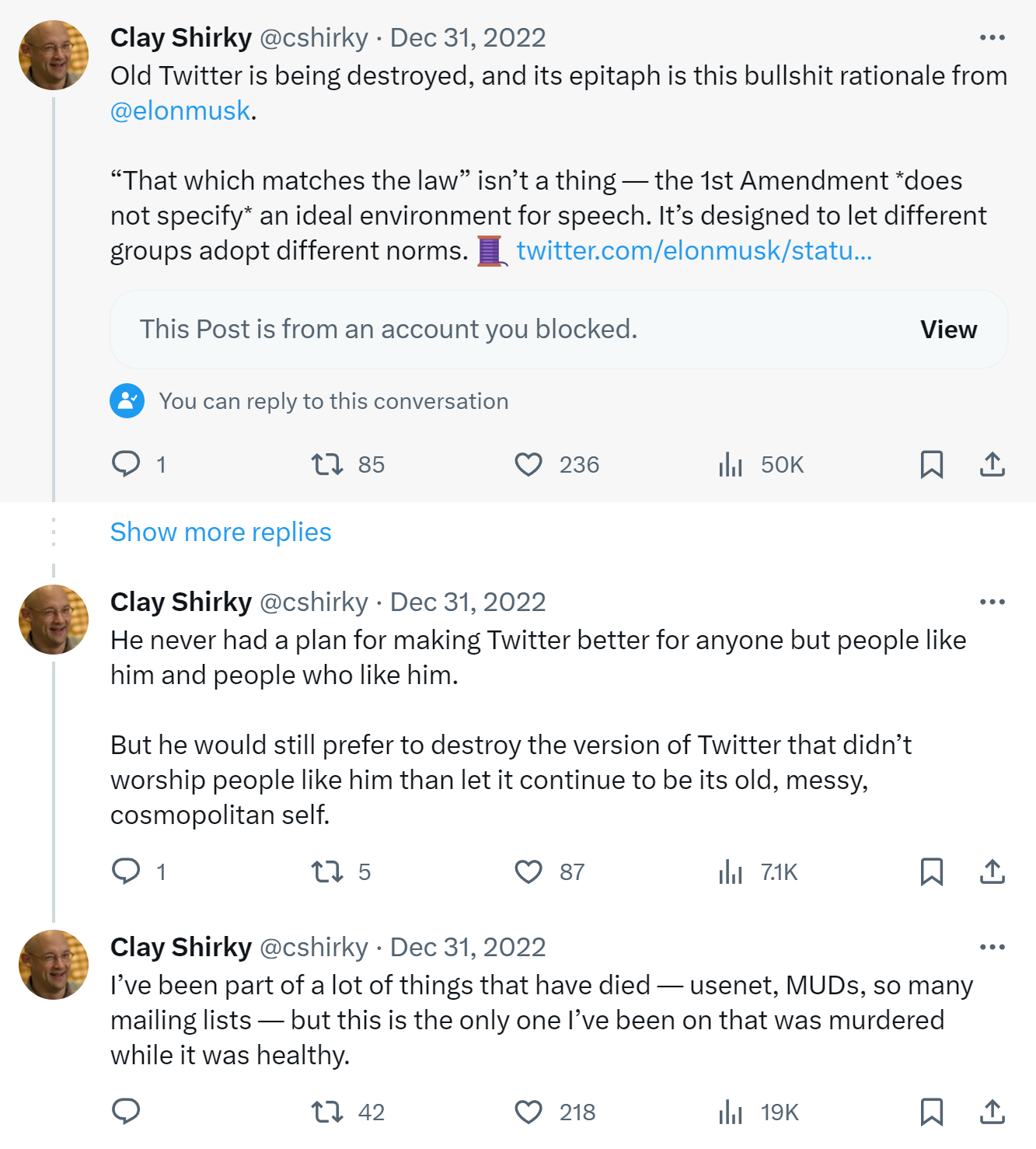
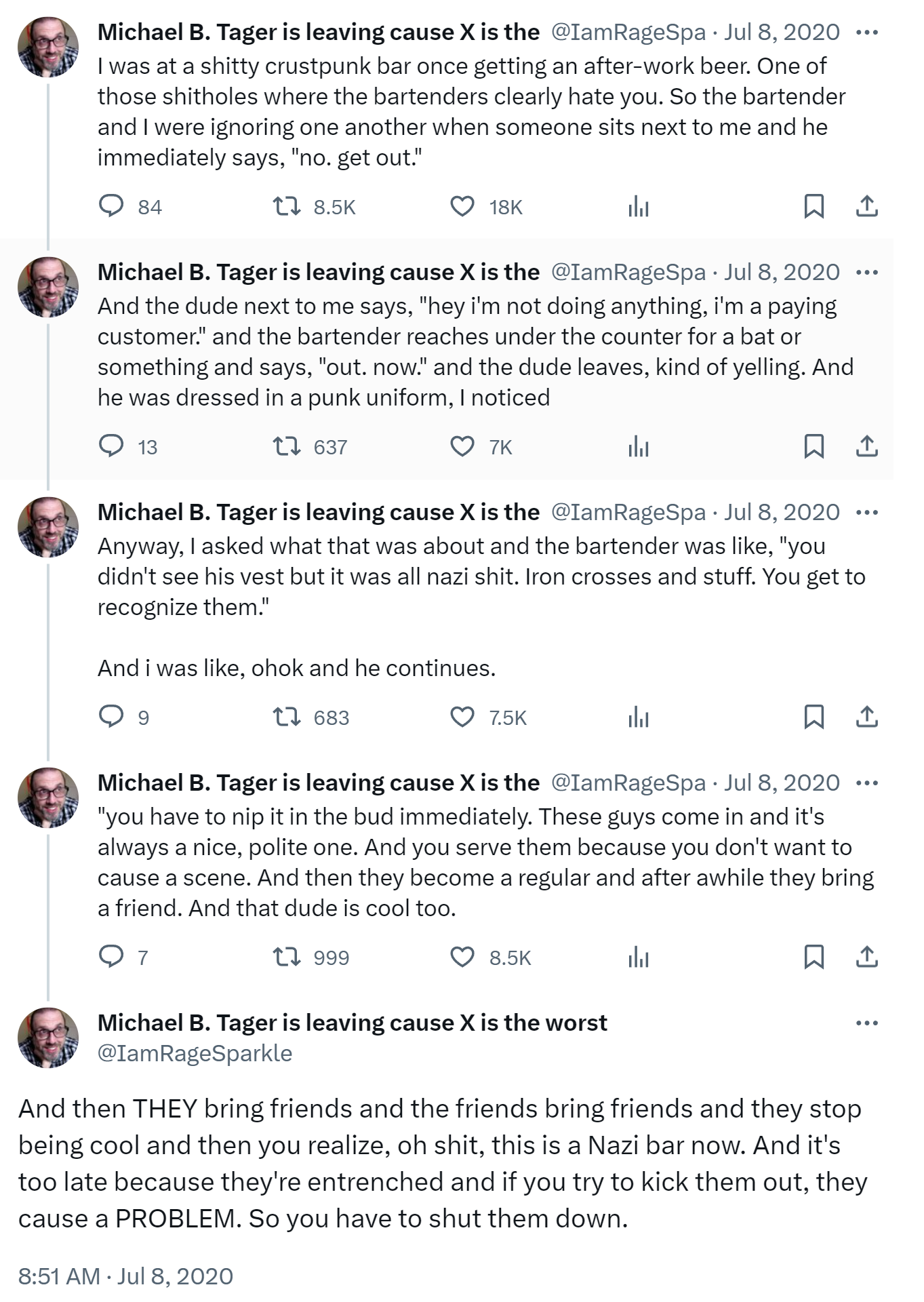
A particularly vivid and controversial analogy used by critics like Atwood to describe the degradation of centralized platforms is the "Nazi bar" scenario. This analogy posits that if a proprietor allows even a single individual with extremist views to frequent their establishment without immediate intervention, they risk normalizing such presence. Over time, these individuals bring like-minded friends, slowly but surely transforming the space until it becomes overtly hostile and unwelcoming to its original patrons, and impossible to reclaim without drastic measures. This analogy serves as a cautionary tale about the slippery slope of content moderation decisions and the potential for a platform to be irrevocably altered by unchecked influences, particularly when driven by a single owner’s whims.
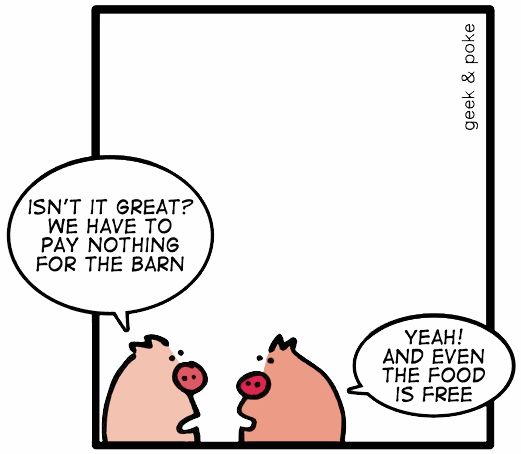
The philosophical underpinning of these critiques is a rejection of the "digital sharecropper" model, where users generate content and value for platforms over which they have no control or ownership. Instead, proponents of decentralization advocate for collective ownership of content and communities, arguing that users should be empowered with robust moderation tools and agency over their digital spaces. While acknowledging that such models may involve more effort and may not be "free" in the traditional sense, they contend that the cost is justified by the enhanced control, resilience, and ethical foundation provided to users.
The Rise of Alternatives: Mastodon and the Fediverse
In response to the perceived instability and ideological shifts at X, there has been a significant surge of interest and growth in decentralized social media alternatives, particularly those operating within the "Fediverse." Mastodon, an open-source, federated microblogging platform, has emerged as a leading contender. Unlike X, which is a single, monolithic entity, Mastodon comprises thousands of independently run "instances" or servers, all of which can communicate with each other using the ActivityPub protocol. Users choose an instance to join, much like choosing an email provider, and can interact with users on any other instance.
The appeal of Mastodon and the Fediverse lies in its distributed nature. Each instance has its own moderation policies, which are set and enforced by its administrators and community. This allows for diverse communities with tailored rules, theoretically mitigating the "Nazi bar" problem by enabling communities to "nip it in the bud" and curate their own spaces. If a user disagrees with their instance’s policies or administration, they can migrate their account to another instance. This model removes the single point of failure and the autocratic control characteristic of platforms like X.
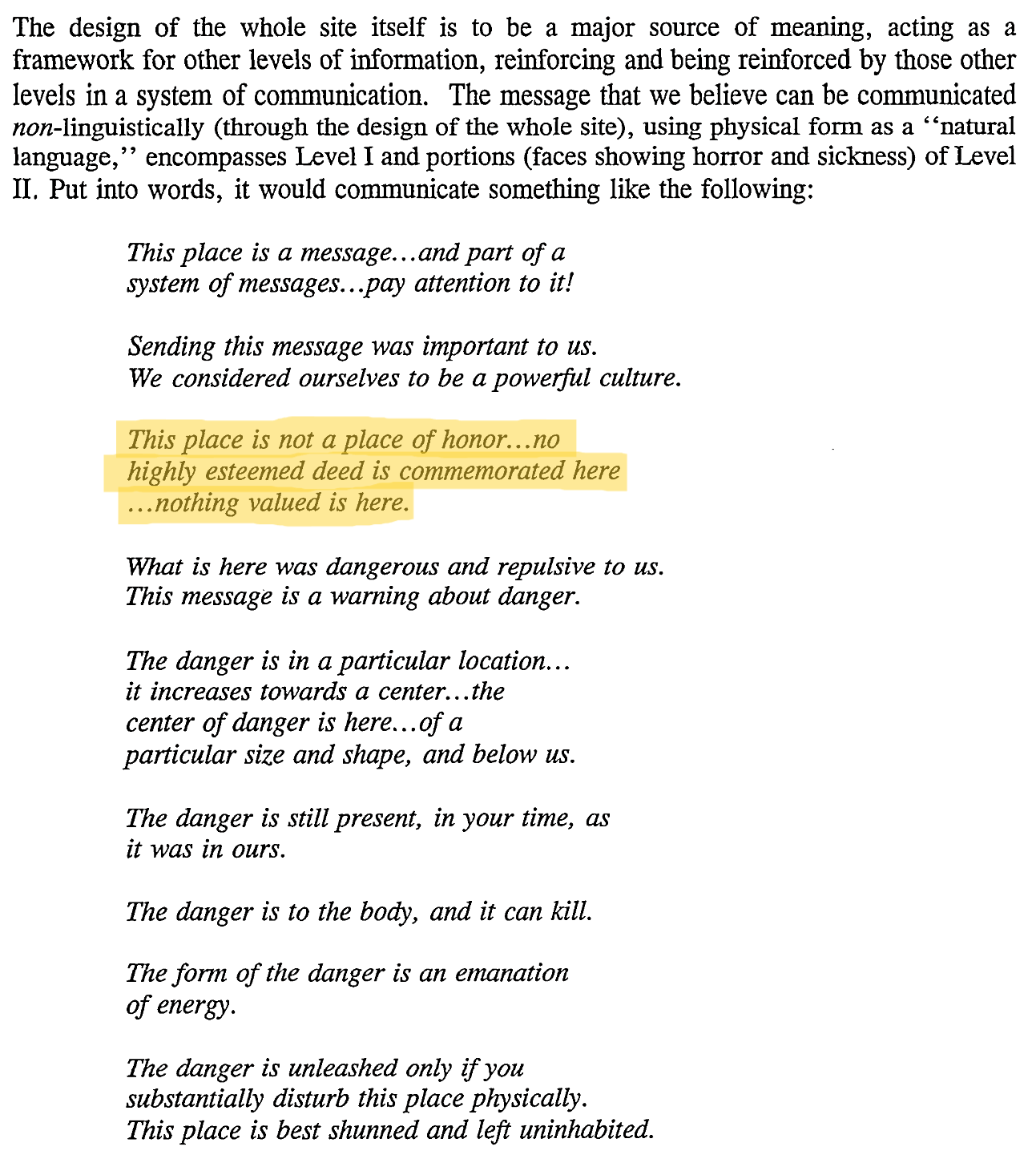
Since Musk’s acquisition of Twitter, Mastodon has reported significant spikes in user registrations. In late 2022, it crossed the 2 million active user mark, experiencing growth rates of over 1000% in some periods. While still considerably smaller than X’s user base, this growth signifies a genuine desire among a segment of users for alternatives that prioritize community control, privacy, and transparent moderation. Other decentralized platforms like Bluesky, developed with support from Twitter co-founder Jack Dorsey, and Meta’s Threads (which announced plans for ActivityPub integration), also represent different approaches to the decentralized vision, indicating a broader industry trend towards exploring alternatives to traditional centralized models.
Proponents acknowledge that the decentralized landscape is "messy." It requires users to understand concepts like instances and federation, and the user experience can be less streamlined than highly polished, centralized platforms. However, they argue that this "messiness" is akin to democracy itself – more work, less immediate gratification, but ultimately more resilient and empowering. As Jeff Atwood asserts, "Anything worth doing is never easy," suggesting that the effort invested in building and participating in decentralized networks is a necessary step towards a more equitable and robust digital future.
Broader Implications: Free Speech, Mental Health, and Digital Futures
The transformation of Twitter into X under Elon Musk’s ownership has profound broader implications extending beyond just one platform. It has reignited the global debate on the very definition of "free speech" online, particularly concerning the limits of expression and the responsibility of platform providers in moderating harmful content. Musk’s "absolutist" stance has been criticized for potentially creating an environment where hate speech and misinformation can thrive, impacting public discourse and potentially real-world events. Conversely, proponents argue that stricter moderation amounts to censorship, suppressing legitimate viewpoints. This ongoing tension underscores the complexity of governing digital spaces at a global scale.
The changes have also brought the issue of mental health into sharper focus. Critics, including Jeff Atwood, explicitly warn against remaining on X for mental well-being, citing the increased exposure to negativity, conflict, and potentially harmful content. Research consistently links excessive or unmoderated social media use to increased anxiety, depression, and other mental health challenges. The volatility and unpredictable nature of content moderation under X’s new leadership have added another layer of stress for users trying to navigate the platform.
Economically, the saga highlights the precariousness of "free" online services. While users often perceive platforms like Twitter as free, they implicitly pay with their data, their attention, and their susceptibility to advertising. The reliance on advertising revenue, as demonstrated by X’s dramatic financial downturn, grants significant power to advertisers, who can exert influence over platform policies through boycotts. This reinforces the argument for alternative business models, such as subscriptions or collective ownership, which might align incentives more closely with user well-being and platform stability rather than pure advertising metrics.
Ultimately, the events surrounding X serve as a critical case study in digital governance and the power concentrated in the hands of a few. The ability of a single individual to drastically alter a platform that serves as a vital communication channel for hundreds of millions underscores the imperative for diverse, resilient, and user-centric digital infrastructure. It has accelerated the conversation around what kind of internet we want to build: one dominated by powerful, centralized entities, or one that is federated, open, and controlled by its communities.
Community-Driven Initiatives and the Path Forward
In this evolving landscape, the call for collective action and the development of community-driven platforms have gained significant momentum. Projects like Discourse, co-founded by Jeff Atwood, embody the principle of collective ownership and robust moderation tools, offering a model for building online communities that prioritize user empowerment and healthy interaction. Discourse aims to provide a more democratic and transparent framework for online discussion, contrasting sharply with the top-down control seen on large social media platforms.
To further underscore his commitment to these ideals and to actively encourage a shift away from X, Jeff Atwood initiated a charitable auction. He put up for bid 10 museum-quality brass plaques featuring what he humorously declared "the best tweet of all time." All proceeds from these auctions are designated to benefit The Trevor Project, an organization dedicated to providing crisis intervention and suicide prevention services to LGBTQ youth. This initiative serves a dual purpose: raising funds for a worthy cause aligned with values of inclusivity and support, and making a symbolic statement against the direction of X, aiming to "piss Elon off" while promoting a vision of a more compassionate and community-focused digital space. The act itself is a testament to the idea that even in the face of centralized power, individuals and communities can take meaningful action to shape the digital world they inhabit.
The journey of Twitter to X has undoubtedly been a tumultuous one, but it has also catalyzed a crucial re-evaluation of our digital infrastructure. As the dust settles, the imperative for building decentralized, open-source, and user-empowering services remains a cornerstone for navigating the complex future of online interaction. The debate is no longer just about which platform is most popular, but what fundamental principles should govern the spaces where humanity connects, communicates, and shapes its collective future.
About the Author