Valve Corporation has officially signaled the end of an era in high-end virtual reality by discontinuing the Valve Index, its flagship PC VR headset originally launched in 2019. The move, while anticipated by industry analysts, marks a significant pivot in Valve’s hardware strategy as the company transitions its focus toward the recently launched Steam Frame ecosystem. To facilitate the clearing of remaining inventory, Valve has implemented a 20% discount on the Index headset, its proprietary controllers, and the external base stations required for its operation. This transition reflects a broader industry trend away from external tracking infrastructure in favor of integrated, camera-based "inside-out" tracking solutions.
The Sunset of the Valve Index and the Lighthouse Ecosystem
The Valve Index was widely considered the gold standard for PC-tethered virtual reality for several years, offering high-fidelity audio, a 144Hz refresh rate, and "knuckle" controllers capable of individual finger tracking. However, by 2026 standards, the hardware has faced increasing competition from standalone and hybrid devices offering higher resolutions and wireless freedom.
The discontinuation of the Index has caused concern within the "prosumer" VR community, primarily regarding the future of SteamVR Tracking, commonly known as "Lighthouse" technology. Unlike modern consumer headsets that use onboard cameras to determine position, Lighthouse tracking relies on external base stations that sweep the room with infrared lasers. This method remains the most accurate in the industry, favored by enthusiasts for high-precision gaming and by enterprise users for motion capture and location-based entertainment.
While Valve is ceasing production of its own Lighthouse components, the ecosystem is not yet defunct. HTC Vive has officially stated that it will continue to manufacture and sell compatible base stations. Additionally, third-party manufacturers such as Pimax and Shiftall continue to offer controllers and peripherals that utilize SteamVR tracking. Nevertheless, the end of the Index suggests that Lighthouse tracking is shifting from a consumer-grade standard to a niche, premium, or enterprise-only solution.
Evolution of the Steam Frame: OS Updates and Hardware Expansion
As the Index recedes, Valve is aggressively iterating on its successor, the Steam Frame. The company recently deployed SteamOS version 0.4, a significant firmware update focused on hardware optimization. Data from early testing indicates that the update improves battery efficiency by approximately 12%, addressing one of the primary criticisms of the mobile-tethered device. The update also includes refined color calibration for wireless streaming and various stability patches.

In a move consistent with Valve’s historical commitment to open-source hardware, the company has released the full CAD (Computer-Aided Design) files for the Steam Frame. This documentation allows third-party manufacturers and the "maker" community to design ergonomic mods, specialized facial interfaces, and cooling accessories. By open-sourcing the physical dimensions of the device, Valve aims to foster a secondary market of accessories similar to those seen with the Steam Deck and the original Index.
The "Plano" Leak: High-Resolution OLED Refinement
Internal code discovered in recent Valve software repositories has fueled speculation regarding a premium hardware refresh codenamed "Plano." Technical specifications suggest that this potential device would feature OLED displays with a resolution of 3,552 × 3,840 pixels per eye. The inclusion of OLED technology is particularly significant for the VR community, as it provides "infinite" contrast ratios and true black levels that standard LCD panels cannot replicate.
The leaked data indicates the device would utilize the Snapdragon 8 Gen 3 chipset. To manage the high computational demand of the 3K-per-eye displays, the hardware reportedly employs "Foveated Scaling." This technology uses eye-tracking to render the user’s central point of vision at full resolution while upscaling peripheral areas from a lower base resolution, thereby maintaining a stable 90Hz or experimental 120Hz refresh rate without overtaxing the mobile processor. Analysts estimate that if "Plano" moves into production, a commercial release would likely occur no earlier than late 2027.
Market Shifts: Sony’s PSVR 2 Delisting and Meta’s Expansion
The landscape for high-end VR hardware is facing further volatility following reports that the PlayStation VR2 (PSVR 2) has been delisted from the official PlayStation Direct store in the United States. Users attempting to access the product page were met with "404 Error" messages, suggesting that current stock has been exhausted or that Sony Interactive Entertainment (SIE) is re-evaluating its distribution strategy.
This development follows Sony’s recent divestment of several XR-related patents to Meta. While PSVR 2 remains available in European markets, the delisting in the U.S. has prompted speculation regarding Sony’s long-term commitment to the VR hardware sector. In contrast, Meta continues to expand its ecosystem through strategic partnerships. SanDisk has recently announced a "Made for Meta" line of microSD cards specifically optimized for the new Meta VR Glasses, which feature expandable storage slots to accommodate high-definition spatial video and large-scale applications.
Innovation in Augmented Reality and Artificial Intelligence
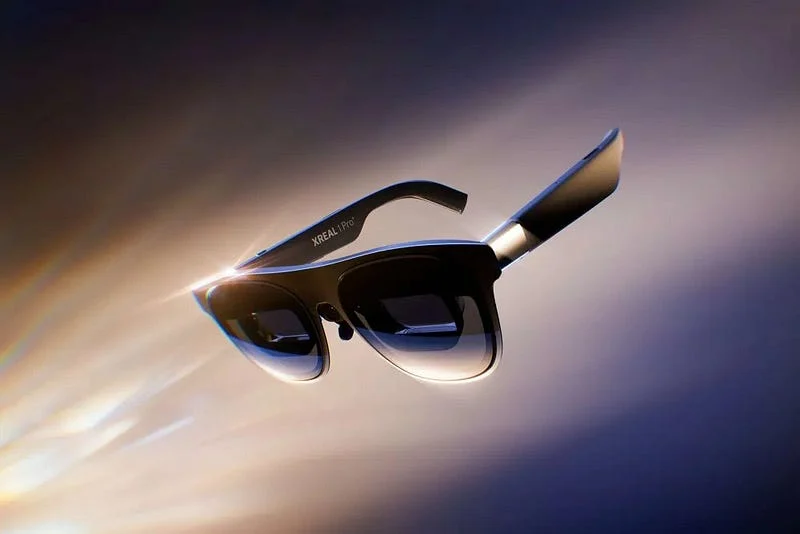
The AR sector is seeing a surge in "AI-first" wearable technology. XREAL has announced the 1 Pro+, an iterative update to its AR glasses that increases peak brightness to 1,200 nits and introduces AI-driven High Dynamic Range (HDR) processing. These improvements are designed to make AR overlays more legible in bright outdoor environments.

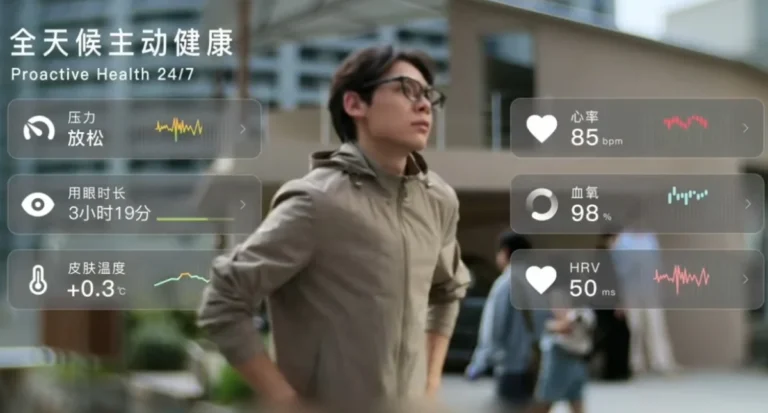
Simultaneously, Alibaba has entered the market with its N1 and N1 Pro AI glasses. While these devices lack a traditional visual display—resembling the Ray-Ban Meta glasses—they distinguish themselves by integrating eye-tracking sensors. This hardware allows the onboard AI to "see" exactly what the user is focusing on, providing more contextually relevant audio feedback and enabling biometric security via iris identification for mobile payments.
Enterprise and Development Trends
The shift in the industry is also reflected in software and platform support. Microsoft has officially discontinued "Immersive Events" within Microsoft Teams, effectively ending the legacy of the Microsoft Mesh framework. This retreat signals Microsoft’s move away from broad metaverse social platforms in favor of targeted industrial and productivity applications for its HoloLens and IVAS programs.
In the development sector, Unity has unveiled "Unity Spark," a web-based engine that utilizes generative AI to assist in game creation. This "vibecoding" approach allows developers to use natural language prompts to generate game logic and assets. This reflects a broader trend championed by Epic Games CEO Tim Sweeney, who has recently advocated for the aggressive integration of AI in development pipelines to reduce production costs and timelines.
Impact Analysis: The Future of High-Fidelity XR
The simultaneous discontinuation of the Valve Index and the potential retreat of Sony from the dedicated VR hardware space marks a transition point for the industry. The market is moving away from complex, cable-dependent systems that require external sensors and toward "all-in-one" devices that leverage AI for tracking, upscaling, and user interaction.
While the "hardcore" PC VR market may see a temporary reduction in hardware options, the arrival of open-source projects like the Vector Gear—which recently launched on Kickstarter with 3K-resolution displays and an independent XRUIOS operating system—suggests that innovation is shifting toward smaller, more agile manufacturers. As Valve consolidates its position with the Steam Frame and potential OLED refreshes, the industry appears to be prioritizing portability and visual clarity over the raw, infrastructure-heavy performance of the previous decade.
About the Author