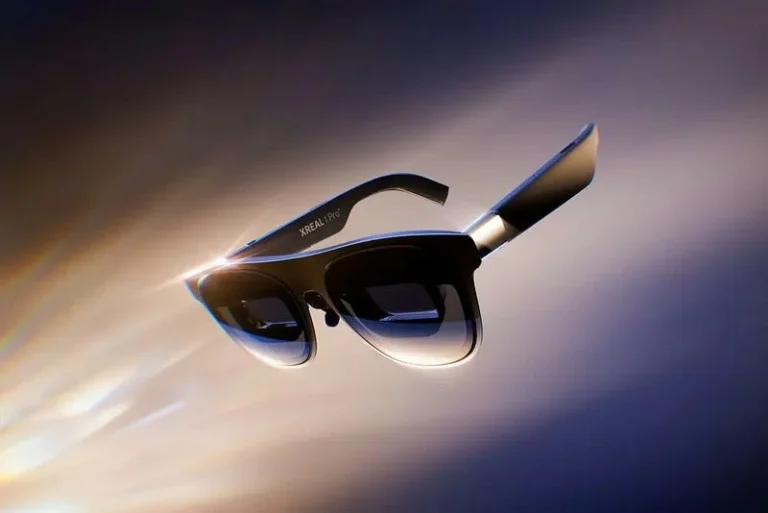
Alibaba Group has officially expanded its hardware portfolio with the introduction of the N1 series smartglasses, a move that signals the Chinese conglomerate’s deepening commitment to the intersection of artificial intelligence and wearable technology. Announced at a major technology summit in Hangzhou, the N1 and the high-end N1 Pro are designed to integrate seamlessly with Alibaba’s proprietary Qwen large language models (LLM). Unlike previous iterations of smart wearables from the company that featured monochrome heads-up displays, the N1 series adopts a display-less design, focusing instead on high-fidelity audio, advanced imaging, and sophisticated sensor arrays to facilitate AI-driven interaction.
The launch marks a strategic pivot for Alibaba, which has spent the last decade establishing dominance in e-commerce, cloud computing, and digital payments. By entering the smartglasses market, the company is positioning itself to compete directly with global tech giants, most notably the collaboration between Meta and Ray-Ban. However, the N1 series distinguishes itself through a suite of technical specifications and hardware integrations that aim to surpass current industry standards for consumer-grade AI wearables.
A Chronological Evolution of Alibaba’s Wearable Strategy
The debut of the N1 series is the culmination of a multi-year research and development cycle within Alibaba’s hardware divisions. The company’s journey into smart eyewear began with internal prototypes that focused on utilitarian applications, such as swappable battery systems and high-luminance monochrome displays intended for industrial use. These early iterations allowed Alibaba to refine the ergonomics of its frames, addressing common consumer complaints regarding battery life and weight distribution.

In early 2024, Alibaba began integrating its Qwen AI family into its cloud infrastructure, providing the "brain" necessary for a truly interactive wearable device. The transition from industrial prototypes to the consumer-centric N1 series reflects a broader trend in the Chinese tech sector: the move toward "AI-first" hardware. The timeline of this development suggests that Alibaba intended to bypass the traditional augmented reality (AR) display hurdles—such as field-of-view limitations and power consumption—in favor of a robust audio-and-camera-based AI assistant.
Technical Specifications and Hardware Performance
The Alibaba N1 series represents a significant leap in the technical capabilities of smartglasses. While the Meta Ray-Ban glasses utilize a 12-megapixel sensor, the Alibaba N1 is equipped with a 50-megapixel camera capable of recording 4K video. This high-resolution hardware is intended to provide the underlying AI with a clearer "vision" of the user’s environment, theoretically improving the accuracy of object recognition and real-time translation services.
Power management has also been a focal point of the N1’s design. The series boasts a battery life of up to nine hours of continuous music streaming or 25 hours of standby time. This performance nearly doubles the six-hour streaming limit of its primary Western competitors. Such longevity is critical for a device intended to be worn throughout a full workday, particularly as the glasses are designed to handle constant background processing for AI assistance and biometric monitoring.
The N1 Pro: Advanced Eye Tracking and Intent Recognition
The flagship model, the Qwen N1 Pro, introduces a feature rarely seen in consumer-grade smartglasses: integrated eye tracking. The device utilizes two 1.7mm micro-cameras, one dedicated to each eye, to monitor the user’s gaze with a claimed accuracy error of less than one degree. This hardware allows the glasses to determine exactly what a user is looking at, rather than relying on head-pose estimation.

According to technical briefings provided by Alibaba engineers, this eye-tracking capability is designed to enhance the contextual awareness of the Qwen AI. For instance, if a user asks the AI for information about a specific product in a store, the glasses can confirm the user’s focus via gaze tracking, ensuring the AI provides data on the correct item even in a crowded environment. This level of precision has significant implications for productivity and industrial training, where hands-free verification of tasks is paramount.
Furthermore, the eye-tracking module serves a secondary function in biometric security. The N1 Pro supports iris authentication, allowing users to authorize digital payments and access sensitive information through a secure, "look-to-pay" system. This integration effectively turns the wearable into a secure hardware token for the Alibaba ecosystem.
Biometric Health Monitoring and Wellness Integration
In addition to its AI and security features, the N1 Pro incorporates a suite of health sensors located within the nose bridge. This placement allows for the continuous monitoring of the wearer’s body temperature and heart rate. While smartwatches have long dominated the fitness tracking market, Alibaba’s inclusion of these sensors suggests a strategy to capture "wellness data" from the head, which can provide different insights into user stress levels and cognitive load.
The integration of health sensors into the frame of the glasses allows the device to function as a holistic lifestyle assistant. The Qwen AI can theoretically analyze physiological data alongside environmental context to offer suggestions—such as recommending a break if it detects rising stress levels during a work session. This functionality positions the N1 Pro not just as a communication tool, but as a proactive health monitor.

Deep Integration with the Alibaba Ecosystem
The primary value proposition of the N1 series for the Chinese market lies in its deep integration with Alibaba’s existing services. The glasses are designed to function as a primary interface for Alipay and Taobao. Through the use of the camera and AI, users can scan QR codes for payments or initiate voice-activated purchases on Taobao without needing to reach for a smartphone.
This ecosystem-centric approach is a cornerstone of Alibaba’s strategy. In China, where digital payments and e-commerce are deeply embedded in daily life, the ability to interact with these services via a hands-free wearable offers a level of convenience that may drive adoption rates higher than in Western markets. The glasses act as a bridge between the physical and digital worlds, leveraging the Qwen AI to navigate the complexities of Alibaba’s vast service network.
Market Positioning and Pricing Strategy
Alibaba has positioned the N1 series as a premium but accessible product within the Chinese market. The Qwen N1 Pro is priced at 3,499 yuan (approximately $490 USD), with a launch-window discount bringing the price down to 2,600 yuan (approximately $390 USD). The standard N1 model, which lacks the eye-tracking and advanced health sensors, is priced at 2,999 yuan (approximately $450 USD).
This pricing strategy places the N1 series at a higher price point than the Ray-Ban Meta glasses, reflecting the inclusion of more advanced hardware such as the 50MP camera and eye-tracking modules. Analysts suggest that Alibaba is targeting tech-savvy professionals and early adopters who prioritize hardware specifications and ecosystem utility over brand-name fashion aesthetics.

Implications for Privacy and Global Availability
The introduction of eye tracking and continuous biometric monitoring in a consumer wearable raises significant questions regarding data privacy and surveillance. Because the eyes are an involuntary indicator of interest and attention, the data harvested by the N1 Pro could provide an unprecedented look into user psychology. While privacy regulations in China differ from those in the West, the potential for data harvesting remains a point of contention for international observers.
As of the current launch, Alibaba has not announced plans to release the N1 series outside of China. The device’s heavy reliance on Alibaba’s domestic services—many of which are not widely used in Europe or North America—suggests that the N1 series is currently intended as a regional product. However, the hardware innovations introduced by the N1 Pro are expected to influence the global smartglasses market, as competitors evaluate the feasibility of integrating similar eye-tracking and health-monitoring technologies into future designs.
The launch of the N1 series underscores a broader shift in the tech industry toward ambient computing, where AI is always present and ready to assist through non-obtrusive hardware. Whether Alibaba can successfully transition from a software and services giant to a hardware innovator will depend on the long-term reliability of these new sensors and the continued evolution of the Qwen AI models.
About the Author