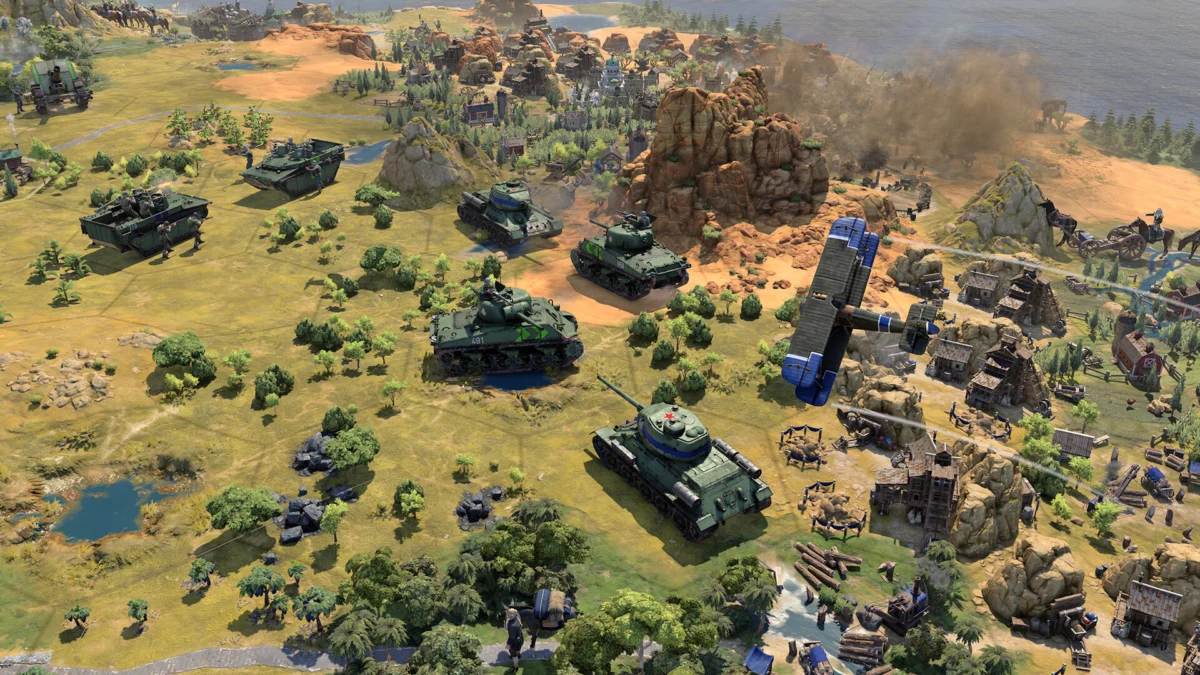
Firaxis Games, the venerable developer behind iconic strategy franchises such as Sid Meier’s Civilization, XCOM, and the more recent Marvel’s Midnight Suns, has initiated a substantial restructuring effort that includes employee layoffs. The studio, located in Hunt Valley, Maryland, confirmed these changes, which coincide with a period of significant anticipation for its parent company, Take-Two Interactive, as it gears up for the highly anticipated launch of Grand Theft Auto VI from its Rockstar Games division. This move signals a strategic pivot for Firaxis, aiming to consolidate its focus on what it describes as its "core strength": designing world-class strategy games.
The news was first confirmed by a spokesperson for 2K, a Take-Two subsidiary responsible for managing Firaxis, in a statement provided to GameDeveloper.com. The spokesperson elaborated that the restructuring is intended to "recentering around the studio’s core strength—designing world class strategy games that have set the industry standard for the genre for the last 30 years." This realignment will see a reduction in the studio’s overall size, with an explicit emphasis on "design, technology and the player experience." The statement acknowledged the difficult nature of these decisions, lamenting the necessity of "saying goodbye to talented colleagues who helped build Firaxis," but asserting their importance for "the next chapter of Firaxis."
Adding another layer to this transitional period, Firaxis studio head Heather Hazen is also departing the company. According to the 2K spokesperson, Hazen believes that "with the studio entering this reset, she feels this is the right, deliberate moment to hand over the reins to ensure the next studio leader has full ownership of this new era from the start." The company expressed deep gratitude for the contributions of all team members, characterizing the current moment as "a hard day, but it’s a necessary one for the health and future of our studio, our game franchises and our fans who deserve the very best."
A Legacy of Strategy: Firaxis Games’ Illustrious History
Founded in 1996 by industry luminaries Sid Meier, Brian Reynolds, and Jeff Briggs, Firaxis Games quickly established itself as a titan in the strategy genre. Its inception followed the trio’s departure from MicroProse, where Meier had already cemented his legend with titles like Civilization and Railroad Tycoon. Firaxis continued this legacy, launching Sid Meier’s Gettysburg! in 1997, but it was the subsequent Sid Meier’s Alpha Centauri (1999) that truly showcased their ability to innovate within the 4X strategy framework, earning critical acclaim for its deep narrative and complex gameplay.
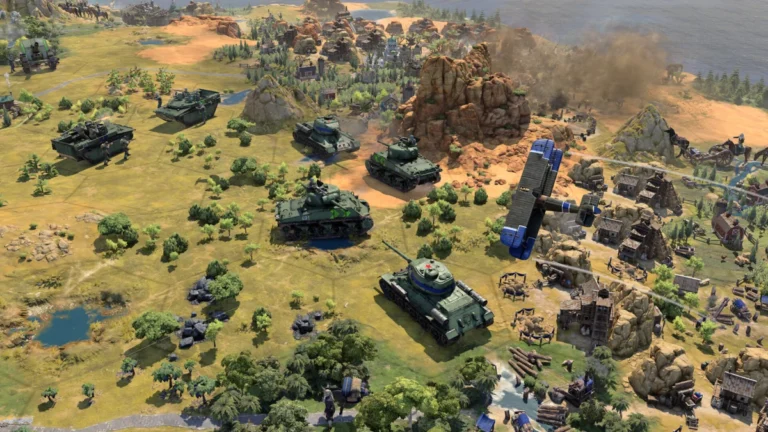
The studio’s flagship series, Civilization, has remained a cornerstone of PC gaming for decades, evolving through multiple iterations. From the groundbreaking Civilization III to the universally praised Civilization IV (2005), which introduced prominent voice acting by Leonard Nimoy, and the highly successful Civilization V (2010) and Civilization VI (2016), Firaxis has consistently refined and expanded the turn-based strategy experience. The studio’s acquisition by Take-Two Interactive in 2005 solidified its position within a larger publishing ecosystem, providing resources while largely preserving its creative autonomy.
Beyond Civilization, Firaxis successfully revived the dormant XCOM franchise with XCOM: Enemy Unknown (2012) and its sequel XCOM 2 (2016), reimagining the tactical turn-based combat for a new generation and earning significant critical and commercial success. Their most recent major release, Marvel’s Midnight Suns (2022), ventured into a different blend of tactical RPG and card-battler mechanics, receiving positive reviews for its innovative combat and character interactions, though its commercial performance was reported by Take-Two as below expectations, a factor that industry observers speculate may have contributed to the current strategic re-evaluation. The announcement of Civilization VII at Summer Game Fest 2024 has further underscored the studio’s commitment to its most successful and enduring franchise, making the current "recentering" particularly poignant.
The Official Stance: Restructuring for a New Era
The statement from 2K’s spokesperson provides critical insight into the rationale behind the layoffs and leadership change. The emphasis on "restructuring and recentering around the studio’s core strength—designing world class strategy games" strongly suggests a prioritization of the Civilization series, especially with Civilization VII already in development. This strategic focus aims to streamline operations and allocate resources more efficiently towards projects aligned with their proven track record. The mention of focusing on "design, technology and the player experience" indicates an internal effort to enhance core development processes and ensure the highest quality output for their defined genre.
Such statements are common in corporate restructurings, often designed to reassure investors and the public that the changes are part of a calculated move towards greater efficiency and future success, rather than a sign of distress. However, the accompanying "saying goodbye to talented colleagues" acknowledges the human impact, which is a recurring theme in the broader industry landscape of recent years. The timing, particularly with the explicit reference to a "new era" and the "next chapter of Firaxis," suggests a comprehensive re-evaluation of the studio’s operational model and project portfolio.
Heather Hazen’s Tenure and Departure
Heather Hazen, who assumed the role of Firaxis studio head in May 2022, is stepping down amidst these changes. Her appointment followed the departure of Steve Martin, who had led the studio for 25 years. Hazen’s tenure saw the launch of Marvel’s Midnight Suns and the initial phases of Civilization VII‘s development. The official explanation for her departure—that she feels it is the "right, deliberate moment to hand over the reins" for a new leader to have "full ownership of this new era from the start"—is framed as a proactive and considered decision.
In the fast-paced and often tumultuous video game industry, leadership changes frequently accompany significant strategic shifts or corporate restructurings. While Hazen’s departure is presented as a mutual decision aligned with the studio’s reset, it nonetheless marks a complete overhaul of Firaxis’s executive structure in a relatively short period, setting the stage for new leadership to steer the studio through its announced "new chapter." The search for her successor will be crucial in defining the direction and culture of Firaxis moving forward, especially as it zeroes in on its core strategy game development.
Take-Two Interactive’s Broader Strategic Realignment
The layoffs at Firaxis are not an isolated incident but rather fit into a broader pattern of strategic realignment and cost-cutting initiatives observed across Take-Two Interactive’s extensive portfolio. As one of the largest video game publishers globally, Take-Two manages a diverse array of studios and franchises, including Rockstar Games (Grand Theft Auto, Red Dead Redemption), 2K (NBA 2K, Borderlands, BioShock), and Private Division, alongside its significant mobile gaming division following the acquisition of Zynga in 2022 for approximately $12.7 billion.
In recent earnings calls, Take-Two executives have frequently discussed "efficiency initiatives" and "cost reduction programs" aimed at streamlining operations and enhancing profitability. For instance, in its Q3 FY2024 earnings report, Take-Two revised its full-year net bookings outlook downwards and emphasized its commitment to optimizing its cost structure. While the company projects substantial growth in fiscal year 2025—largely driven by the anticipated launch of Grand Theft Auto VI—it has also indicated ongoing efforts to improve operational efficiency across its various labels.
The timing of the Firaxis layoffs, preceding the expected monumental launch of Grand Theft Auto VI in 2025, is noteworthy. Industry analysts often observe that major publishers may consolidate resources or implement cost-saving measures in anticipation of a flagship title that is expected to generate massive revenue. This allows companies to present a leaner, more efficient operational structure to investors while also potentially freeing up capital or internal development talent for future projects. While there is no direct causal link confirmed between GTA VI and the Firaxis layoffs, the broader context of Take-Two’s financial strategy and its upcoming releases suggests a concerted effort to maximize profitability and focus on core strengths across its entire ecosystem. The integration of Zynga also signifies a major shift towards mobile gaming, potentially influencing resource allocation for traditional PC/console studios.
A Widespread Phenomenon: The Gaming Industry’s Layoff Crisis
The restructuring at Firaxis Games is unfortunately not unique; it is part of a pervasive and alarming trend of job losses that has swept across the video game industry since late 2022. According to various industry trackers, over 10,500 jobs were cut in 2023, and the figure for 2024 has already surpassed that, with estimates exceeding 11,000 layoffs in the first five months alone. This widespread crisis has impacted companies of all sizes, from indie studios to major publishers and platform holders.
The underlying causes are multifaceted. Many analysts point to a "post-pandemic correction" following a period of accelerated growth and over-hiring during the COVID-19 lockdowns, when gaming saw unprecedented engagement. As consumer spending patterns normalized and macroeconomic pressures like inflation and rising interest rates took hold, companies began re-evaluating their staffing levels. Additionally, rising development costs, increasing competition, and a push for greater profitability from shareholders have contributed to the current environment. Consolidation within the industry, through mergers and acquisitions, has also led to redundancies as companies integrate operations.
Examples of other major companies affected include Unity Technologies, which underwent multiple rounds of layoffs; Embracer Group, which initiated a vast restructuring program affecting numerous studios; PlayStation, which laid off 900 employees globally and shuttered its London Studio; Microsoft’s Xbox division, which cut 1,900 jobs across Activision Blizzard, Bethesda, and Xbox itself; Epic Games, Riot Games, and Electronic Arts, among many others. This extensive list underscores that the challenges faced by Firaxis and Take-Two are reflective of systemic issues plaguing the entire industry, highlighting a shift towards leaner operations and a heightened focus on proven, high-revenue generating intellectual properties.
Implications for Firaxis’s Future and its Flagship Franchises
The "recentering" strategy outlined by 2K for Firaxis Games has significant implications for the studio’s future, particularly concerning its cherished franchises. The explicit emphasis on "world class strategy games" strongly suggests that Civilization VII will be the primary beneficiary of this renewed focus. This could mean increased resources, a more streamlined development process, and a heightened commitment to ensuring the game meets the high expectations set by its predecessors. Fans of the Civilization series, who have eagerly awaited news on the next installment, might see this as a positive sign that the studio is doubling down on its most successful IP.
However, the implications for other franchises developed by Firaxis, such as XCOM, are less clear. While XCOM is undeniably a "strategy game," the specific language used by 2K might imply a focus on the grand strategy genre that Civilization embodies, potentially leaving the tactical turn-based combat of XCOM in a secondary position, or even on hiatus. The commercial performance of Marvel’s Midnight Suns, which deviated from Firaxis’s traditional genre, may also serve as a cautionary tale, reinforcing the publisher’s desire for the studio to stick to its most reliably successful format.
Internally, such restructurings can have a profound impact on studio culture and morale. Layoffs, even when framed as necessary for long-term health, inevitably create uncertainty and stress among remaining employees. The departure of a studio head like Heather Hazen further contributes to a sense of transition. The incoming leadership will face the crucial task of rebuilding morale, clearly communicating the new vision, and ensuring that the talent retained at Firaxis feels valued and motivated to contribute to the "new era." Attracting new talent in this environment will also be a key challenge, requiring a clear and compelling future trajectory for the studio.
Market Reaction and Analyst Perspectives
From a market perspective, moves like those at Firaxis are often viewed positively by investors, especially when presented as part of a broader strategy to enhance efficiency and profitability. Publicly traded companies like Take-Two Interactive are under constant pressure to optimize their operations and deliver strong financial results. Layoffs, while controversial, are a common corporate tactic to reduce operating costs and improve profit margins, particularly in industries facing economic headwinds.
Analysts will likely interpret these actions as Take-Two’s commitment to disciplined capital allocation and a strategic focus on its most valuable assets. The explicit mention of "core strength" in strategy games, coupled with the ongoing development of Civilization VII, signals a rationalization of resources towards proven revenue generators. The company’s stock performance and investor confidence will ultimately hinge on the successful execution of these strategies and the performance of upcoming titles, particularly Grand Theft Auto VI. However, the broader industry trend of layoffs also raises questions about the long-term sustainability of development models that prioritize short-term financial gains over stable employment and sustained innovation across a diverse portfolio.
The Human Cost of Corporate Restructuring
While corporate statements emphasize strategic necessity and future health, the human cost of such restructurings is significant. The "talented colleagues" who are "saying goodbye" face immediate challenges including job searching in a highly competitive market, financial insecurity, and the emotional toll of displacement. The video game industry, despite its creative and often passionate workforce, has become increasingly prone to boom-and-bust cycles, with periods of rapid expansion followed by sharp contractions and widespread job losses.
The repeated cycles of layoffs prompt ongoing discussions within the industry about better labor practices, job security, and the responsibility of large publishers towards their employees. While companies frequently state that these decisions are "never easy," the reality for affected individuals is often devastating. The ongoing challenge for the video game industry remains to balance the demands of growth and profitability with the need to foster a stable, supportive environment for the creative professionals who drive its innovation and success. The restructuring at Firaxis Games, a studio with a revered history, serves as another stark reminder of the volatile nature of the modern video game development landscape.
About the Author