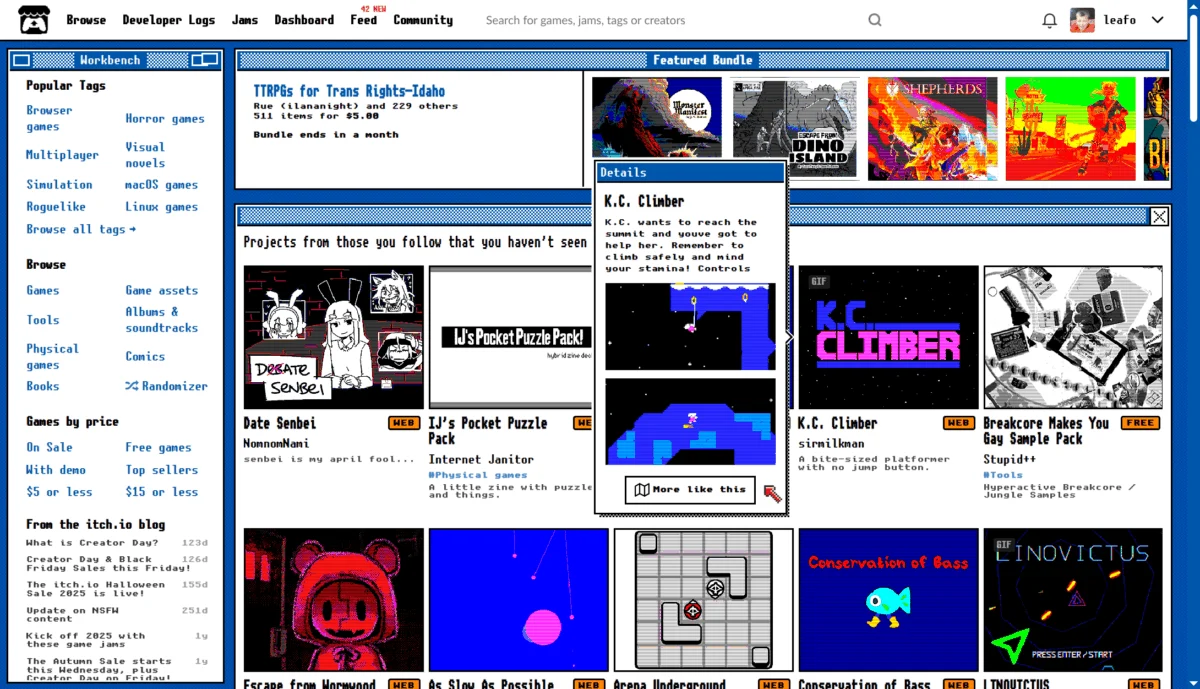
The whimsical "Ameyega mode," itch.io’s ASCII art-infused April Fools’ Day homepage transformation, has officially concluded, bringing an end to a brief but memorable foray into retro computing aesthetics that garnered widespread community attention and a diverse range of reactions. Initially launched on April 1st, the temporary visual overhaul, which reimagined the popular independent game marketplace with blocky characters and monochromatic charm reminiscent of early computer systems, was extended beyond its traditional one-day lifespan due to its delayed deployment. While the primary "Ameyega mode" experience has reverted to itch.io’s standard interface, the platform has graciously maintained a direct link for users logged in, accessible via https://itch.io/?ameyega, promising its availability until significant changes are implemented on the homepage. This lighthearted prank, a testament to the tech industry’s enduring tradition of April Fools’ Day jests, served as both an entertaining diversion and a catalyst for broader discussions about platform design, accessibility, and community engagement within the vibrant indie game ecosystem.
The Enduring Tradition of April Fools’ in the Tech Landscape
April Fools’ Day has long been a curious fixture in the technology sector, with companies ranging from internet giants to niche platforms leveraging the occasion for creative, often elaborate, pranks. This tradition, which sees brands momentarily shed their corporate veneer to engage in playful deception, serves multiple purposes. Beyond simply generating amusement, these stunts can foster a sense of community, reinforce brand personality, and even subtly test new ideas or gauge user reactions to experimental interfaces. For platforms like itch.io, which prides itself on its indie spirit and close-knit developer-player community, an April Fools’ joke is not merely a fleeting moment of humor but an opportunity to connect with its audience on a more personal and unexpected level. The "Ameyega mode" fits squarely within this lineage, drawing upon a shared cultural memory of early computing to create a moment of collective nostalgia and playful disruption.
Ameyega Mode: A Deep Dive into Retro Aesthetics
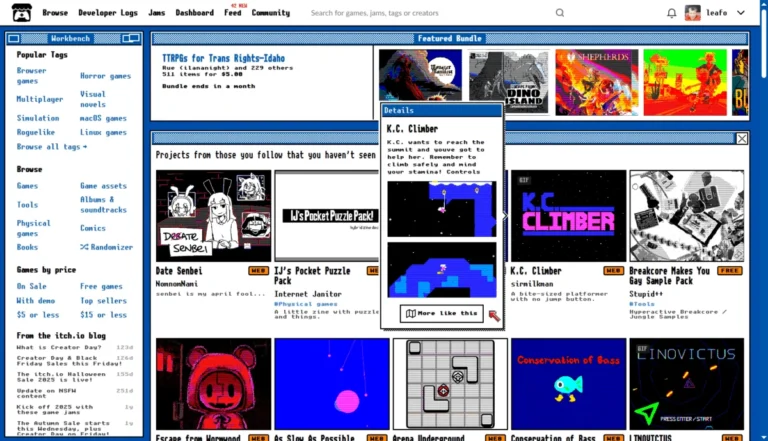
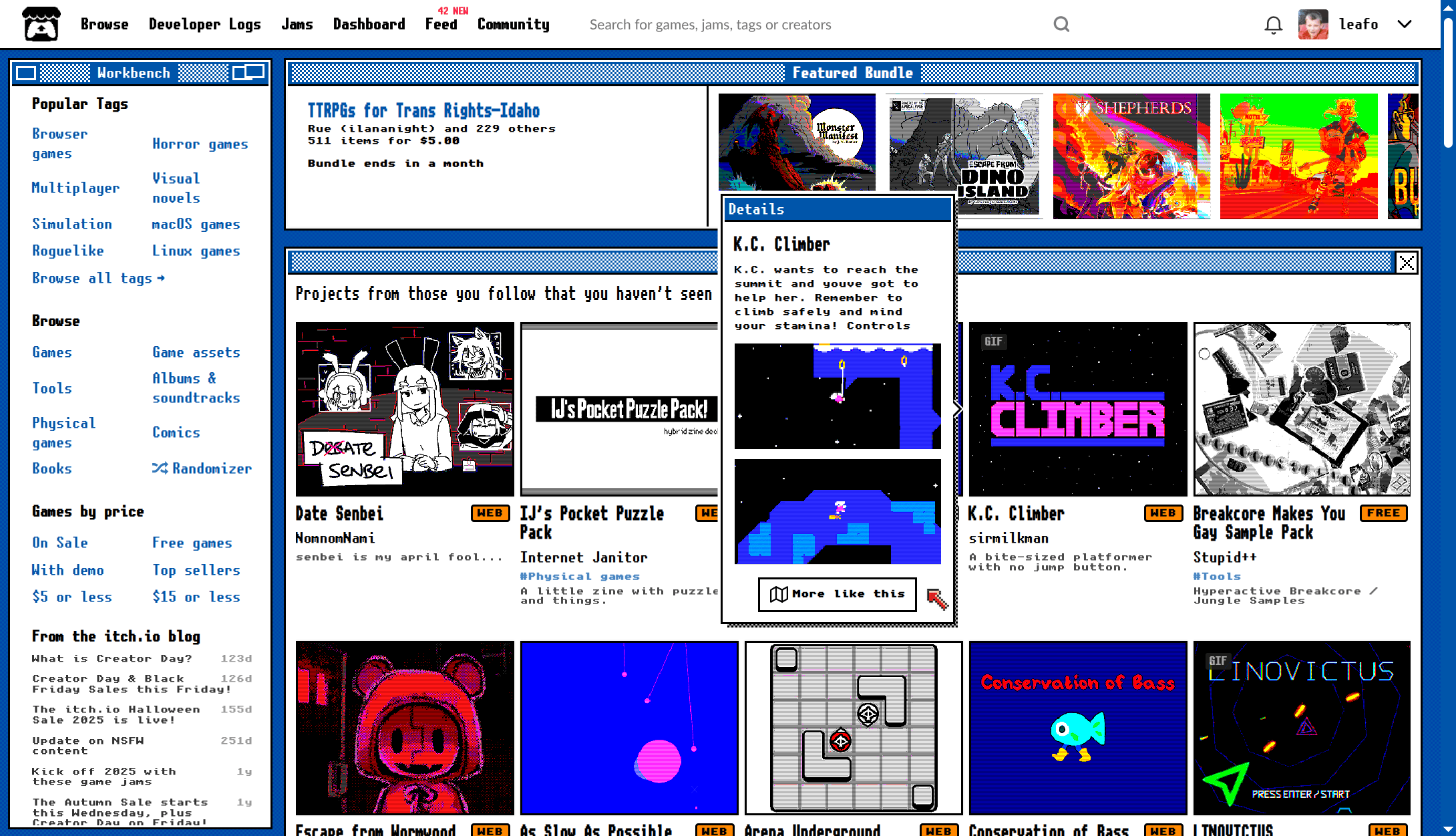
At its core, "Ameyega mode" was a meticulously crafted homage to the Amiga computer era, combined with the ubiquitous charm of ASCII art. Upon activation, the standard itch.io homepage transformed into a grid of characters, symbols, and limited color palettes, effectively rendering the modern web interface through the lens of a decades-old display technology. This wasn’t merely a filter; it was a comprehensive reinterpretation of the site’s layout, where images were pixelated into recognizable patterns of text characters, and navigation elements adopted a stark, blocky appearance. The very name "Ameyega" itself is a clear portmanteau, playfully nodding to the iconic Amiga computer, which holds a revered place in the history of personal computing, particularly for its contributions to gaming and multimedia in the late 1980s and early 1990s.
The authenticity of the "Ameyega mode" experience was underscored by the platform’s acknowledgment of its font source: http://viznut.fi/unscii/. Unscii is a popular Unicode font designed to look like classic console and computer fonts, often used in demoscene productions and retro computing projects. This choice of font was crucial in faithfully replicating the visual language of the past, demonstrating a keen attention to detail that resonated with users familiar with the era. For many, navigating itch.io in "Ameyega mode" was more than just a visual gimmick; it was an immersive, albeit temporary, journey back to a time when computing interfaces were defined by their textual nature and limited graphical capabilities, evoking a powerful sense of nostalgia for the pixelated pioneers of digital entertainment.
Chronology of a Nostalgic Prank
The "Ameyega mode" saga unfolded over several days, beginning with its anticipated launch and extending due to a minor scheduling hiccup.
- April 1st, 2024: itch.io officially rolled out "Ameyega mode" to coincide with April Fools’ Day. However, as noted in the platform’s update, the feature was deployed later than originally intended on the day.
- Early April: Recognizing the delayed launch and the positive initial buzz, itch.io made the decision to extend the availability of "Ameyega mode" beyond the typical 24-hour window of an April Fools’ prank. This extension allowed more users to experience the retro interface, particularly those who might have missed it on April 1st itself.
- Post-Extension Period: Following its extended run, itch.io formally announced the conclusion of the "Ameyega mode" as the default homepage experience. The platform reverted to its standard, modern interface.
- Ongoing Availability: In a gesture of goodwill and acknowledging the mode’s popularity among some users, itch.io established a persistent, albeit login-gated, URL (
https://itch.io/?ameyega) where users could still access the "Ameyega mode." This link is promised to remain active until the platform undergoes "substantial changes to the homepage," providing a semi-permanent archive of the playful experiment.
This timeline highlights not only the execution of the prank but also itch.io’s responsiveness to its community, adapting its plans to maximize engagement and satisfy user curiosity.
A Spectrum of User Reactions: Delight, Disruption, and Debate
The "Ameyega mode" elicited a remarkably diverse range of feedback from the itch.io community, underscoring the subjective nature of aesthetic preferences and user experience. The comments section of the official update became a lively forum for users to express their opinions, which broadly fell into categories of enthusiastic praise, constructive criticism, and outright frustration.
On one end of the spectrum were users who embraced "Ameyega mode" with genuine delight. Many lauded the nostalgic trip it offered, praising itch.io for its creativity and humor. Comments such as "The ASCII art homepage was a delightful throwback – it actually made browsing feel nostalgic and charming. Kudos to the team for the creativity, and props for keeping it available a little longer" exemplified this sentiment. A significant number of users went further, expressing a desire for "Ameyega mode" to become a permanent, optional theme. Phrases like "I would like for itch.io to change to it permanently. I was sad to find out it was a joke" and "Please please please make an option to keep this, it’s SO much easier to read for me wow I love love love it" highlighted a genuine affection for the retro aesthetic and, for some, even a preference for its perceived readability or unique visual clarity. These reactions underscore the strong emotional connection many users have with retro computing culture and the potential for alternative interface designs to cater to diverse visual preferences.
Conversely, a substantial portion of the community expressed significant dissatisfaction. The primary complaints revolved around the mode’s impact on usability and accessibility. Users found the ASCII art interface difficult to navigate, with comments like "omg please change it back this is so hard to navigate" illustrating the challenges posed by the unconventional design. Eye strain was another frequently cited issue, as the blocky text and limited contrast proved uncomfortable for extended viewing. "please do not keep it as a permanent home page theme, it hurting my eyes" was a common refrain. More critically, some users raised significant accessibility concerns, with one user exclaiming, "Oh so cool, i’m disabled and I CAN’T WATCH THIS! How do you get this crap off?!" This feedback serves as a crucial reminder that while playful experiments can be engaging, they must also consider the diverse needs of all users, particularly regarding visual accessibility.
A notable technical issue that emerged during the "Ameyega mode"’s tenure was its initial incompatibility with itch.io’s dark mode setting. Users reported that the front page, when in "Ameyega mode," would not display correctly with dark mode enabled, leading to further visual discomfort. "it’s over but dark mode is not working now…" was a common complaint early on. However, itch.io’s team demonstrated swift responsiveness; as one user noted just hours after their initial complaint, "four hours after posting this, the front page is showing Dark mode correctly. Apparently they’re paying attention!" This quick resolution highlights the platform’s commitment to addressing user-reported issues promptly, even for temporary features.
Broader Implications: Community, Brand, and Design Lessons
The "Ameyega mode" prank, beyond its immediate humorous impact, offers several valuable insights into community dynamics, brand identity, and interface design within the indie game space.
Community Engagement and Brand Identity: The event successfully sparked a high level of interaction and discussion. The volume of comments, both positive and negative, indicates a highly engaged user base willing to voice their opinions. This direct feedback loop is invaluable for itch.io, reinforcing its image as a platform that listens to its community, even in the context of a prank. The distinct personality showcased through such an unconventional joke further solidifies itch.io’s brand as an innovative, slightly rebellious, and fun-loving space, distinct from more corporate gaming storefronts. This aligns perfectly with its mission to support independent game developers who often push boundaries in their own creations.
Accessibility as a Paramount Consideration: The negative feedback, particularly concerns related to eye strain and disability access, underscores the critical importance of inclusive design. While "Ameyega mode" was a temporary jest, it inadvertently highlighted how even fleeting interface changes can significantly impact user experience for those with visual impairments or specific cognitive needs. This serves as a valuable lesson for any platform considering alternative themes or experimental layouts: accessibility checks must be integrated into all design processes, ensuring that creativity does not inadvertently create barriers for segments of the user base.
Future Design Possibilities: The enthusiastic calls for "Ameyega mode" to become an optional, permanent theme suggest a genuine appetite within the community for greater customization and alternative interface options. While a full ASCII art theme might not be universally practical, the feedback could inspire itch.io to explore other nostalgic or stylistic themes, or even more granular customization features, allowing users to tailor their browsing experience to their personal preferences. This could enhance user satisfaction and retention by offering a more personalized platform experience.
Supporting Data and Metrics (Inferred): While specific usage statistics for "Ameyega mode" have not been publicly disclosed, it is reasonable to infer several key metrics. The extensive comment thread, reaching 43 distinct posts within a short period, indicates a high level of direct user engagement. Social media mentions across platforms like Twitter (now X), Reddit, and various gaming forums would likely have spiked, as users shared screenshots and opinions on the unusual homepage. The continued availability of the direct link suggests that there was enough positive sentiment or sustained curiosity to warrant its preservation, even if only for a limited time. Such metrics, if tracked internally, would provide valuable data on user interaction with experimental features and the overall reach of platform-led community initiatives.
Conclusion: A Playful Experiment with Lasting Impressions
The "Ameyega mode" was more than just an April Fools’ Day joke; it was a brief, playful experiment in platform aesthetics that generated significant discussion and offered valuable insights. It successfully tapped into a vein of retro nostalgia, delighting many users and reinforcing itch.io’s distinct brand identity. At the same time, the diverse feedback, particularly concerning usability and accessibility, provided crucial lessons for future interface design and the importance of inclusive practices. As itch.io continues to evolve as a vital hub for independent game development, such community-engaging events, even temporary ones, play a significant role in shaping its identity and strengthening its relationship with its dedicated user base. The "Ameyega mode" may have concluded its default run, but its memory, and the conversations it sparked, will likely resonate within the itch.io community for some time to come, perhaps even inspiring future retro-themed explorations.
About the Author