The emergence of sophisticated Large Language Models (LLMs) and specialized coding assistants like Anthropic’s Claude Code has fundamentally lowered the barrier to entry for mobile game development. In 2024, the digital storefronts of Apple and Google have been inundated with a new wave of applications built almost entirely by artificial intelligence. However, a comprehensive investigation into the performance of these titles reveals a stark disconnect between the ease of production and the reality of commercial viability. While the tools allow amateurs and hobbyists to bypass traditional years of computer science education, the resulting products are largely failing to gain traction in an increasingly crowded and sophisticated marketplace.
The phenomenon is characterized by a "quantity over quality" surge that has begun to strain the infrastructure of the mobile gaming ecosystem. Reports from industry observers and developers alike indicate that the sheer volume of AI-generated submissions is contributing to significantly longer app review times. Furthermore, the technology is being leveraged for more controversial purposes, such as the aggressive cloning of successful titles and the reverse-engineering of high-grossing games like Candy Crush and Subway Surfers to extract their proprietary monetization logic. Despite this technical prowess, the financial return for the average AI-assisted solo developer remains negligible, often failing to cover the basic operational costs of the AI tools themselves.
The Financial Reality of AI-Assisted Development
The promise of AI in game development is the democratization of creation—the idea that anyone with a concept can bring it to market. Yet, the data gathered from various creators suggests that "market-ready" does not equate to "market-successful." For many, the cost of generating code through AI tokens—the currency used to pay for LLM processing power—far outweighs the revenue generated from the final product.
Consider the case of Iain Atkinson, a retired professional tennis player who utilized Claude Code to develop Tennis Tycoon, a management simulation. While Atkinson successfully navigated the complexities of game logic and store submission, the financial outcome was modest. The game generated approximately $3,000 in total sales, a figure that would be considered a success for many hobbyists, but Atkinson noted that his expenditure on AI tokens reached into the thousands. For Atkinson, the project was a pedagogical exercise and a passion project rather than a profit-seeking venture, but his experience highlights a critical bottleneck: the "input cost" of AI intelligence is not yet low enough to guarantee a return on investment for niche titles.
Other developers report even more discouraging figures. Ahmed Alshuail released Sprout: Cozy Idle Garden on both major platforms between August and September 2024. By late October, the game had accrued only 121 downloads and a total revenue of $6, split between in-app purchases and advertisements. Similarly, Marc Fienberg’s Zen Ten Match, which utilized a sophisticated stack including React Native, Supabase, and AdMob, saw a total of 74 players across iOS, Android, and web browsers in its first three weeks. The total revenue for the period was approximately $3.
A Chronology of the AI App Surge
The timeline of this surge can be traced back to the release of more capable coding models in late 2023 and early 2024. As models like GPT-4 and Claude 3.5 Sonnet demonstrated an ability to write functional, bug-free code snippets, the "weekend developer" movement gained momentum.
- Early 2024: Solo developers began experimenting with Google’s Flutter platform and AI to create simple math and logic puzzles. Arin Agrawal’s Calc Quest launched during this period. While it eventually reached 25,000 players, its lifetime revenue currently sits at a meager $120.
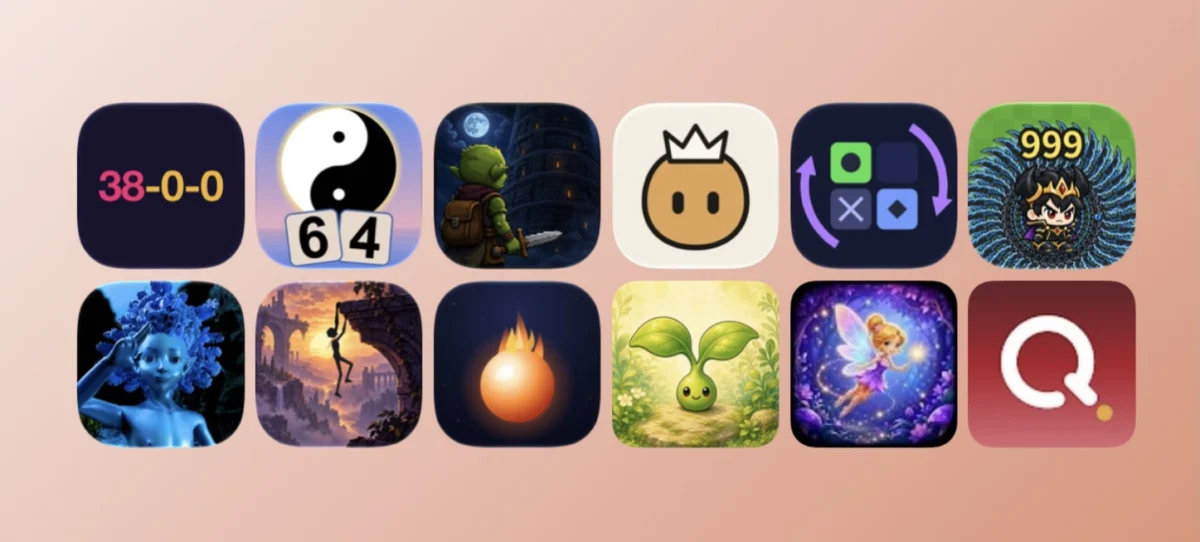
- Summer 2024: The "breakout" moment occurred with the release of 38-0-0, a football drafting game created by Deniz Sancar. Built almost overnight using Claude, the game defied the odds by topping the UK App Store charts. This success story fueled a gold-rush mentality, leading to a massive spike in AI-assisted submissions.
- Late 2024: The market reached a saturation point. Developers like Raúl Hernández Solano and William-Arno Clément released titles such as Hadadada: Fairy Game and Ego Fabula, respectively, only to find that organic discovery had become nearly impossible. Solano’s game generated less than €0.10 in ad revenue after a month, while Clément reported a single download in his first week of release.
The "Great Equalizer" and the Discoverability Crisis
The shift in the industry has led to what developer Keith Jacobs calls the "great equalizer." Jacobs, who previously spent $25,000 on human contractors to build his first app, Queztions, later used AI to build Endless Racing: Dingo Dasher in two weeks at a fraction of the cost. However, Jacobs noted that neither game significantly outperformed the other in terms of revenue. This suggests that while AI reduces the cost of production, it does nothing to solve the more difficult problems of marketing, user acquisition, and retention.
The mobile gaming market is currently dominated by a "winner-takes-all" dynamic. According to industry data, the top 1% of publishers generate over 90% of the total revenue. For an AI-generated game to succeed, it must compete with titles that have multi-million dollar marketing budgets and teams of psychologists dedicated to optimizing player engagement. Most AI-made games, by contrast, rely on "organic" discovery, which has become a relic of the early App Store era.
Data Analysis of Performance Metrics
When analyzing the performance of recent AI-driven releases, several trends emerge regarding the "failure to launch" phenomenon:
- The Token Deficit: Developers are frequently spending between $500 and $2,000 on AI API fees to debug and iterate their games. Without a marketing budget of at least equal size, the probability of recouping these costs is statistically low.
- The Retention Gap: Many AI-generated games are mechanically sound but lack the "polish" and deep progression systems required to keep players returning. For example, Ivan Soyer spent $1,500 on AI tools to create Dusk Climber. Despite achieving 1,000 downloads, the game has yet to generate any revenue, likely due to a lack of effective monetization loops or long-term engagement.
- The Ad Spend Trap: Gökhan Us, creator of the block puzzler Fallmatch, attempted to break the cycle by spending $500 on a Google App campaign. This resulted in a jump to 1,600 installs, but the developer declined to share revenue figures, often a sign that the cost per install (CPI) exceeded the lifetime value (LTV) of the player.
Implications for the Mobile Ecosystem
The influx of AI games has broader implications for Apple and Google. Both platforms are currently facing a dilemma: how to maintain a high-quality storefront while allowing for the democratization of development. The "flood" of AI apps is not merely a financial issue for developers but an operational one for the platforms.
Increased review times are the most immediate consequence. As AI allows for the rapid generation of thousands of slight variations of the same game—a practice known as "reskinning" or "cloning"—store reviewers must sift through a mountain of derivative content to find legitimate innovations. This slows down the release cycle for established studios and independent developers who do not use AI.
Furthermore, there is the risk of "platform fatigue" among users. If the "New Releases" sections of app stores are consistently populated by low-effort, AI-generated clones that lack depth or contain bugs, users may stop exploring those sections entirely, further cementing the dominance of the top-grossing charts.
Future Outlook and Expert Perspectives
While the current financial data is bleak, some developers remain optimistic about the future of AI in the industry. The consensus among the "new wave" is that AI should be viewed as a tool for rapid prototyping and learning rather than a "get rich quick" scheme. Yevhen Melnychenko, developer of the roguelike Goblin Card RPG: Tower Trials, spent five months refining his game using a suite of AI tools. While his projected revenue of $50 per month is modest, he plans to pivot to Steam, a platform with a different discovery algorithm that may favor his game’s niche appeal.
Industry analysts suggest that the next phase of AI development will move away from "full-game generation" toward "AI-augmented creativity." In this model, developers use AI to handle the tedious aspects of coding and asset generation, while focusing their human efforts on game design, narrative, and community building—the elements AI still struggles to replicate effectively.
For now, the data serves as a cautionary tale. The ability to generate a game with a prompt is a technical marvel, but in the hyper-competitive $90 billion mobile gaming market, code is only one part of the equation. Without a clear strategy for user acquisition and a unique value proposition, the vast majority of AI-made games appear destined to remain buried in the depths of the digital storefronts, generating more data for the LLMs that created them than revenue for the developers who prompted them.
About the Author