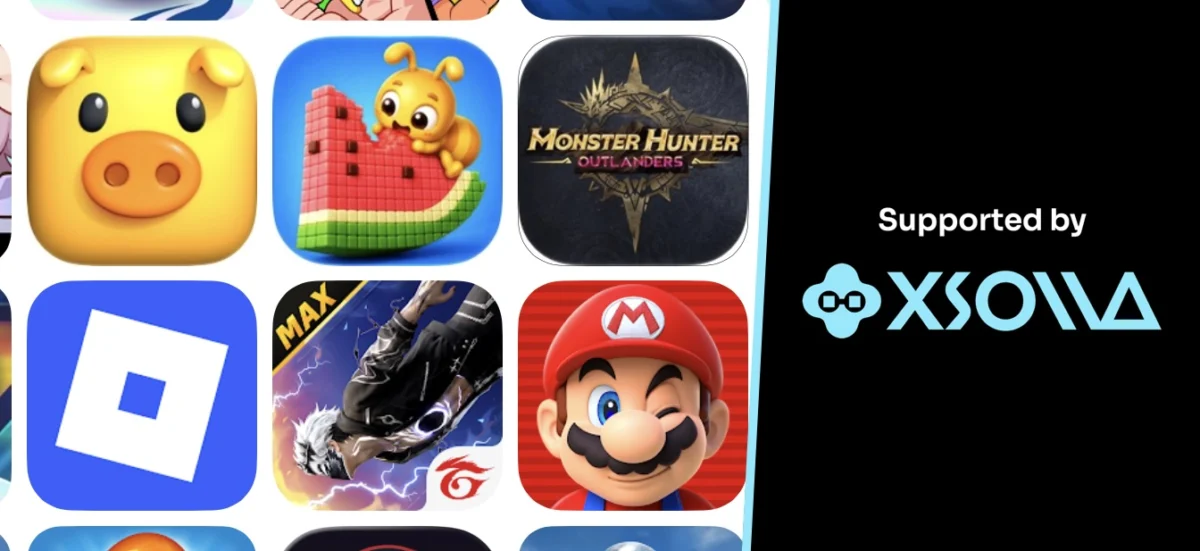
The global mobile gaming landscape exhibited significant shifts in consumer behavior and revenue distribution throughout October 2026, characterized by a modest recovery in overall spending and a dramatic realignment within specific genres. According to the latest industry data, worldwide mobile game spending reached $6.26 billion in October, marking a 1.7% increase month-on-month. This growth was mirrored by a 2.4% rise in total downloads, which hit 3.65 billion for the period. These figures suggest a stabilizing market as publishers navigate the complexities of post-IDFA (Identifier for Advertisers) user acquisition and the rising importance of hybrid monetization models.
Hybridcasual Puzzles: The Dominance of the Flow Mechanic
The puzzle genre has undergone a fundamental transformation with the rise of the "hybridcasual" category—games that blend the accessible mechanics of hypercasual titles with the sophisticated meta-progression and monetization strategies of mid-core games. In the third quarter of 2026, Loom Games’ Pixel Flow emerged as the definitive leader in this space. The title generated $31.3 million in in-app purchase (IAP) revenue, underscoring the lucrative potential of the "flow" or conveyor-based sub-genre.

Data from AppMagic indicates a high level of concentration within this niche, as six of the top ten grossing hybridcasual puzzle games utilized variations of conveyor-belt or directional flow mechanics. This trend suggests a specific player preference for logic puzzles that emphasize spatial organization and rhythmic efficiency. However, market leadership remains volatile. Colony Flow, a title that adapts the conveyor mechanic into an ant colony simulation, demonstrated remarkable upward mobility. The game climbed 434 places in the rankings to reach the number seven spot in Q3 and ultimately surpassed Pixel Flow in October to become the top-grossing title in the category.
While revenue remains concentrated among a few top performers, the download charts tell a different story of market reach. Grand Games’ Block Out secured the position of the most downloaded game within the top ten, amassing over 28.9 million installs. This disparity between download volume and revenue highlights the ongoing challenge for hybridcasual developers: converting a massive, broad-interest audience into a consistent, paying user base.
Monster Hunter Outlanders: A Multi-Publisher Strategy for Global Reach
Capcom’s expansion of its flagship Monster Hunter IP into the mobile sector has seen a major new milestone with the launch of Monster Hunter Outlanders on October 28, 2026. The open-world RPG, published through a collaborative effort between Tencent’s Level Infinite and Garena, generated $10.2 million in IAP revenue and 5.1 million downloads within its first 15 days on the market.

The performance of the title reveals distinct regional variations based on publishing territory:
- Level Infinite Version: This version accounted for $7.3 million of the total revenue from 2.2 million downloads. Japan proved to be the most critical market for this release, contributing 79% of its total revenue. This reinforces the enduring strength of the Monster Hunter brand in its home country.
- Garena Version: Targeting Southeast Asia and other emerging markets, this version saw higher download numbers at 2.9 million but lower revenue at approximately $2.9 million. Key markets for this version included Hong Kong, Taiwan, and South Korea.
When viewed within the broader context of the franchise, Monster Hunter Outlanders currently ranks as the second-highest-grossing active mobile title in the series. It remains behind Scopely’s Monster Hunter Now, which has generated $193.6 million since its 2023 debut. Industry analysts note that Outlanders has yet to launch in the massive Chinese market, suggesting significant untapped revenue potential that could eventually challenge the dominance of Monster Hunter Now.
Global Market Leaders: Roblox and Free Fire Sustain Momentum
In October 2026, the global revenue charts were led by established giants, with Roblox reclaiming the top spot. Its performance was bolstered by "The Hollow," a large-scale Halloween event integrated across nine of its most popular user-generated experiences. This seasonal strategy successfully drove engagement and monetization, allowing it to edge out competitors like Honor of Kings and Royal Match.

The download charts were dominated by Free Fire, which continues to see immense popularity in Southeast Asia and Latin America. It was followed by Roblox and the puzzle sensation Block Blast. Notably, the title Rotate Rings, which launched in August, secured the seventh spot on the download charts, reaching 18.7 million installs and demonstrating that there is still room for new entries to disrupt the charts through viral mechanics.
Nintendo’s Cumulative Mobile Success
Nintendo’s conservative yet highly profitable approach to mobile gaming reached a new milestone as of September 30, 2026. According to an investor presentation, the company’s mobile applications have surpassed 980 million cumulative downloads. This figure encompasses unique users across all of Nintendo’s mobile offerings, including legacy titles no longer available for download.
Available in 164 countries and regions, Nintendo’s mobile strategy continues to serve as a bridge between its hardware ecosystem and a broader global audience. While the company has slowed the cadence of new mobile releases to focus on its primary console business, the sheer scale of its mobile footprint remains a significant asset for brand visibility and cross-platform marketing.

AdTech Recovery: Liftoff’s Transition to Profitability
The mobile advertising sector showed signs of robust health in Q3 2026, as evidenced by the financial results of Liftoff. The adtech firm, which listed on the Nasdaq in June 2026, reported a 32% year-on-year revenue increase, reaching $238 million. This is a notable rise from the $180 million reported in the same period the previous year.
Key financial highlights from Liftoff’s Q3 report include:
- Core Advertising Revenue: Rose 33% to $237 million.
- Net Income: The company swung to a profit of $87 million, a stark contrast to the $6 million loss recorded in Q3 2025.
- Adjusted EBITDA: Grew 45% to $145 million.
CEO Jeremy Bondy attributed these results to performance exceeding the high end of internal guidance. Looking ahead, Liftoff has raised its Q4 revenue projections to between $244 million and $249 million, signaling confidence in the continued recovery of the mobile advertising market and the effectiveness of AI-driven targeting tools.

The Indian Market: Free Fire’s Triumphant and Controversial Return
One of the most significant regional events in October was the launch of Free Fire India. Developed by Garena as a localized version of the original title—which was banned by the Indian government in February 2022 due to data security concerns—the new version launched on October 28. In its first 15 days, it generated over $640,000 in IAP revenue and 10.8m downloads.
The game held the position of the most downloaded app in India for eleven consecutive days, peaking at 958,000 daily downloads on November 7. While daily installs have since stabilized at approximately 300,000, revenue has remained steady between $43,000 and $54,000 per day. Currently, Garena occupies the top two spots on India’s grossing charts with Free Fire Max and Free Fire India. This successful re-entry demonstrates the immense pent-up demand for the franchise within the Indian gaming community, despite the prolonged absence.
Challenges in the Social Casino and Casual Sectors
In contrast to the growth seen in other categories, the social casino market is currently facing a period of "ongoing softness." Light & Wonder’s subsidiary, SciPlay, reported its third consecutive quarterly revenue decline. Q3 revenue fell to $173 million, a 12% decrease year-on-year. While paying users are spending more—with average monthly revenue per paying user (ARPPU) rising 5% to $132.80—the total number of monthly paying users dropped by 17%.

To combat these market pressures, SciPlay has pivoted toward Direct-to-Consumer (D2C) platforms. D2C revenue rose to $53 million, now accounting for 31% of total revenue. This shift allows the company to bypass app store fees, improving margins even as total revenue fluctuates.
Similarly, Playstudios reported a 15% revenue decline to $48.9m in Q3. The company has taken aggressive measures to streamline operations, including the closure of Tetris Block Party and The Win Zone. These moves resulted in significant impairment charges but are intended to refocus the company on more sustainable core titles. Like SciPlay, Playstudios is seeing success in D2C initiatives, with that segment now accounting for 41.7% of its virtual currency revenue.
Strategic Marketing and IP Launches
Ten Square Games reported a 15% increase in bookings to $24.5 million in Q3, though this growth came at the cost of a 112.5% increase in marketing spend. The company is aggressively scaling newer titles like Trophy Hunter and Medal Hunter to diversify its portfolio away from its legacy "Clash" franchise.

Meanwhile, Bandai Namco’s Bleach Mirrors High proved the enduring value of anime IPs. Launching on October 28, the game earned $1.7 million in its first 15 days. Japan remains the primary driver of this success, accounting for nearly half of the game’s revenue and downloads.
As the final quarter of 2026 begins, the mobile gaming industry appears to be entering a phase of specialized growth. While legacy genres face saturation, the success of localized versions, IP-driven RPGs, and the shift toward D2C platforms provide a roadmap for sustainability in an increasingly competitive global market.
About the Author