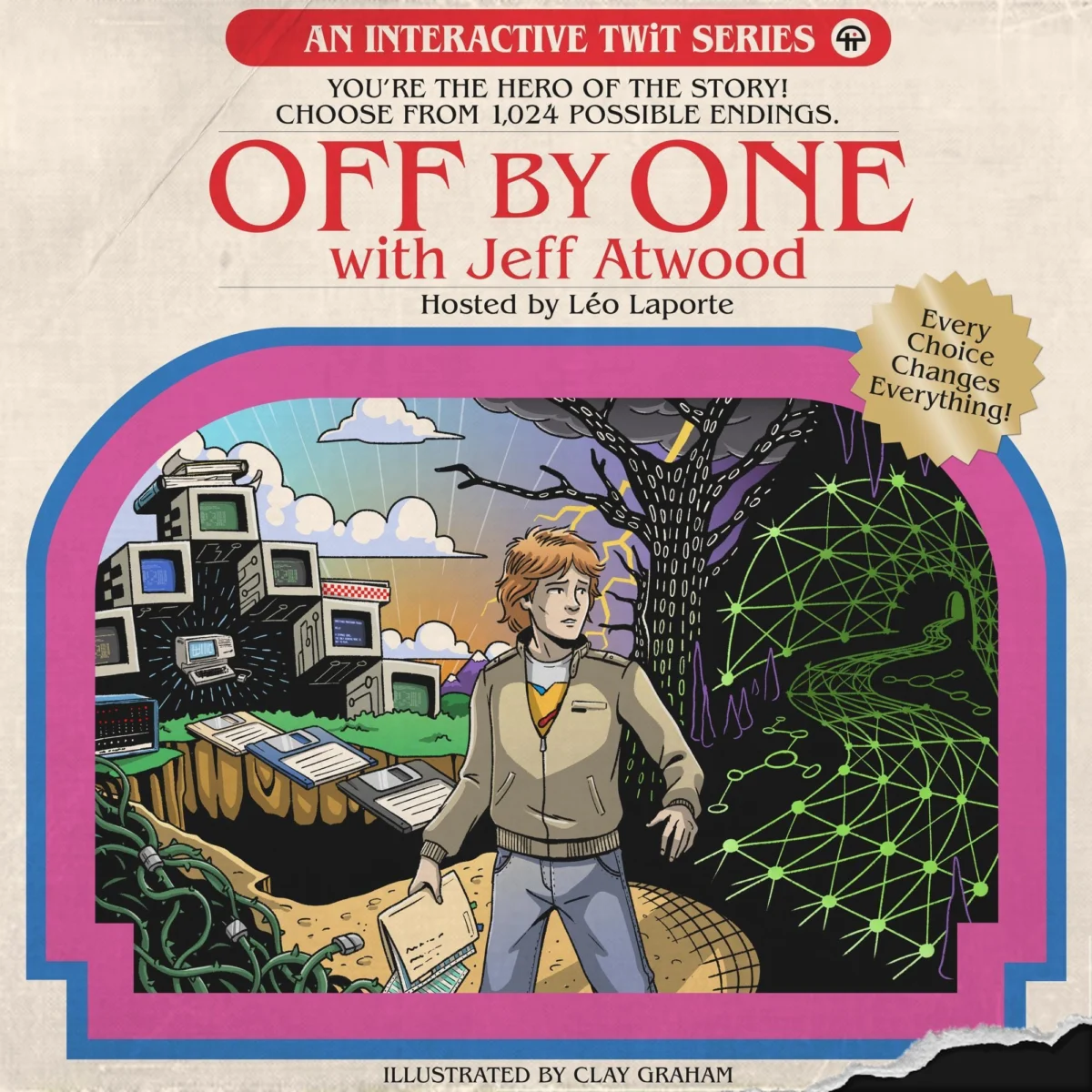
A new monthly program titled "Off By One with Jeff Atwood," hosted by technology pundit Leo Laporte and featuring acclaimed software developer and entrepreneur Jeff Atwood, has commenced broadcasting on the TWiT network. The show, which recently aired its second episode, aims to offer a deep dive into technology, computing history, and broader societal topics, presented with a unique, often unconventional, approach. The series marks a significant new venture for Atwood, co-founder of Stack Overflow and Discourse, and further diversifies TWiT’s extensive programming lineup.
Genesis and Naming of "Off By One"
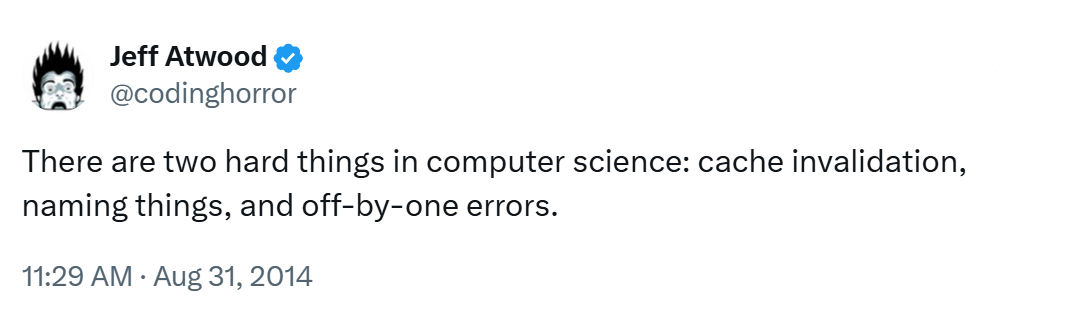
The concept for "Off By One" emerged approximately three weeks prior to the recording of its inaugural episode. The show’s title itself is a nod to a well-known programmer’s joke, humorously expanding upon the classic "Two Hard Things in Computer Science" quote by Phil Karlton (often attributed to Martin Fowler). Karlton’s original statement famously listed "cache invalidation and naming things" as the two most challenging aspects of computer science. The popular programmer’s variation adds "and off-by-one errors," highlighting a common pitfall in software development where iterative loops or array indexing are miscalculated by a single unit. This self-aware, jocular title immediately signals the program’s intended blend of technical insight and lighthearted, reflective commentary.
The naming process for "Off By One" initially mirrored the collaborative spirit that once defined the naming of Stack Overflow, Atwood’s highly successful question-and-answer platform for programmers. While a community vote was considered, the hosts quickly settled on "Off By One," recognizing its multi-layered humor and relevance to the computing world. The title subtly implies a show that might deliberately diverge "by one topic" from conventional tech discussions, embracing tangential yet insightful explorations.
The Hosts: Jeff Atwood and Leo Laporte
Jeff Atwood brings a wealth of experience and a distinctive perspective to the program. Known for his influential "Coding Horror" blog, which he launched in 2004, Atwood has been a prominent voice in the software development community for nearly two decades. His work on Stack Overflow, co-founded with Joel Spolsky in 2008, revolutionized how developers seek and share technical knowledge, creating an indispensable resource that now serves millions globally. Following his departure from Stack Overflow, Atwood co-founded Discourse in 2013, an open-source platform designed to modernize internet forums and community discussions. His professional journey reflects a consistent commitment to fostering collaborative online environments and advocating for practical, user-centric software development.
Leo Laporte, the veteran technology broadcaster and founder of the TWiT.tv network, serves as Atwood’s co-host. Laporte’s career in tech media spans several decades, establishing him as a trusted and recognizable figure in the industry. TWiT.tv, launched in 2005, pioneered independent podcasting and continues to produce a wide array of technology-focused shows, attracting a dedicated global audience. Laporte’s expertise in interviewing and facilitating discussions provides a structured yet flexible framework for Atwood’s expansive insights. The pairing of Laporte’s seasoned broadcasting acumen with Atwood’s deep technical knowledge and philosophical leanings creates a dynamic conversational environment.
Program Format and Thematic Scope
"Off By One with Jeff Atwood" is designed as a monthly program, offering extended discussions that typically run close to two hours. The show’s official description on twit.tv/obo characterizes it as a conversation that "follows its own logic," promising a blend of "prop comedy, computing history, the open web, wealth inequality, yo-yos." This eclectic list underscores the program’s intention to stray beyond typical tech news cycles, delving into the broader cultural and societal implications of technology. The tagline, "Off by one topic at all times, in the best possible way," reinforces this commitment to unconventional, yet engaging, discourse.
The second episode, titled "From Stack Overflow to Stay Gold, America," exemplified this broad scope, covering a range of subjects from Atwood’s personal reflections on his career to broader socio-economic commentary. The show’s production features custom artwork by Clay Graham, depicting an interactive, choose-your-own-adventure style narrative, further emphasizing its unique and exploratory nature.
Key Discussions and Philosophical Underpinnings

Several profound themes emerged from the initial episodes, highlighting the show’s potential to contribute significantly to ongoing discussions within the tech community and beyond.
On Coding Philosophy and "Survivable Code":
During the second episode, Atwood articulated his pragmatic philosophy on software development, stating, "I am not an elite coder by any stretch of the imagination… I am very persistent." He elaborated on his advocacy for "survivable code," which he defined as code that "doesn’t kill you in so many different ways." This concept extends to the radical notion that "ideally, no code at all… That’s the best code, is none." This seemingly paradoxical statement reflects a deeper engineering principle: the most robust, secure, and maintainable system is often the simplest one, requiring minimal or no custom code. It advocates for leveraging existing solutions, prioritizing clarity, and minimizing complexity—a sentiment widely echoed by experienced software architects and developers concerned with technical debt and system resilience. Atwood framed his role as an "advocate for good engineering. Good process. A process that recognizes that we’re human and we should do this together, and we should actually kinda like each other, even." This human-centered approach to software development resonates with contemporary movements emphasizing ethical AI, user experience, and collaborative team dynamics.
Wealth Inequality and Social Responsibility:
A particularly striking aspect of Atwood’s commentary involved his outspoken views on wealth inequality. In the second episode, he presented a direct challenge to the current economic structure: "If we simply collected a fair tax from Billionaires, we could literally eliminate all poverty in this country at the 100% FPL level, which is $15,000 per year. All poverty. We would have zero poverty. We have the means to do it. We lack the will." This statement aligns with a growing public discourse on economic justice and the role of the ultra-wealthy in society. Data from organizations like the Institute for Policy Studies and Oxfam frequently highlight the concentration of wealth among a small percentage of the global population, often sparking debates about progressive taxation, wealth redistribution, and social welfare programs. Atwood’s assertion, while a simplified economic model, underscores a pervasive concern about the distribution of resources and the potential for systemic solutions to alleviate poverty.
These themes were further explored in a preceding appearance by Atwood on TWiT’s "Intelligent Machines #859" on February 25th, which effectively served as a pilot for "Off By One." In that discussion, alongside Paris Martineau and Jeff Jarvis, Atwood engaged with Leo Laporte on the ethical responsibilities of those who have accumulated significant wealth. He questioned the purpose of immense personal fortunes: "What is money even FOR? I don’t even have ‘that much’, what do you.. how do you spend it all? I don’t have.. I just want a simple life, man!" This personal reflection broadens into a societal imperative: "If you have everything you need, then help others have everything they need." This echoes philanthropic philosophies and the concept of "effective altruism," which advocates for using wealth and resources to do the most good.
AI and the "JPEG for Words" Analogy:
Atwood also offered a compelling analogy for understanding the current capabilities and limitations of large language models (LLMs) and generative AI: "I call it JPEG for words, which it kind of is." He elaborated, noting that LLMs excel at "playing a game of global brain statistics and copy paste," particularly in tasks like summarization. He recounted a positive experience with Discourse’s implementation of AI summarization, where complex internal discussions were accurately condensed, capturing key points "without much loss." This comparison to JPEG, a lossy compression format for images, is insightful. Just as JPEG reduces image data while retaining perceptual quality for most uses, LLMs condense information, providing coherent summaries or generating text that is statistically plausible, even if it lacks true understanding or originality. However, Atwood quickly noted the limitations, asking, "Now does JPEG work on EVERY image? No. Garfield is a bad choice, for, yknow, JPEG," implying that some forms of information or creative expression are ill-suited for this kind of statistical compression or generation. This analogy provides a nuanced perspective on AI, acknowledging its utility while cautioning against overestimating its cognitive depth.
The Second Gilded Age:
The discussion on "Intelligent Machines #859" also drew a parallel between the current era and the "first Gilded Age" of the late 19th century. Atwood stated, "Ok, the first guilded age, we’re deep in the second one now. I mean, just look up the numbers. More money in the hands of fewer people than in any other period of time." He linked the "railroad barons" of the past to today’s tech magnates, observing, "I’m in this picture and I don’t like it." This historical comparison highlights concerns about unprecedented wealth concentration, monopolies, and their potential impact on democratic institutions and social equity. The Gilded Age was characterized by rapid industrial growth, vast fortunes, and significant social inequality, leading to calls for reform. Atwood’s analogy serves as a provocative call to action, urging a critical examination of contemporary economic structures and their consequences.
Community Engagement and the Future of the Show
The program actively encourages community participation. While comments on the Coding Horror blog are welcome, Atwood explicitly directs viewers to the TWiT community Discourse platform for more direct engagement, stating he is "much more likely to answer on the TWiT community Discourse." This strategy leverages Discourse, a platform he co-founded, to foster deeper discussions and build a dedicated community around the show. The promotion of "Club TWiT Memberships," including a limited-time offer from Atwood to cover a year’s membership for early viewers, aims to cultivate a loyal audience and provide access to exclusive content, such as live stream recordings of future episodes. The emphasis on fostering coherent narratives and improving communication skills through paragraph writing, a recurring theme from Atwood’s "Coding Horror" blog, further underscores the show’s commitment to thoughtful interaction.
"Off By One with Jeff Atwood" represents a deliberate effort by both Atwood and Laporte to "make happiness real" by sharing their enthusiasm and insights with a broader audience. As Atwood noted, the visual and auditory medium allows for the conveyance of emotions and nuances impossible to capture through text alone. The show is positioned as a platform for authentic, unscripted conversations that explore the multifaceted world of technology, its historical context, and its profound impact on human society. By embracing an "off-by-one" approach, the program promises to deliver discussions that are both intellectually stimulating and refreshingly unconventional, fostering a unique space for critical thought and genuine connection within the tech community.
About the Author