
Technology luminary and entrepreneur Jeff Atwood has recently shared profound reflections that bridge the personal and the public, encompassing a deeply moving family milestone, the launch of a significant rural economic initiative, and a crucial commentary on the ethical obligations of artificial intelligence companies. In a concise yet impactful message, Atwood revealed the passing of his father, coinciding with the inaugural phase of the Rural Guaranteed Minimum Income Initiative (RGMII) in Mercer County, West Virginia, a project he champions. Simultaneously, he issued a potent caution to the burgeoning AI industry, emphasizing its foundational reliance on human-generated data, particularly from platforms like Stack Overflow, and the peril of undermining the very communities that fuel its progress. These dual themes underscore Atwood’s enduring commitment to community, innovation, and responsible technological advancement.
The RGMII: Pioneering Economic Resilience in Rural America
The Rural Guaranteed Minimum Income Initiative (RGMII) represents a forward-thinking endeavor to address economic disparities and foster stability in underserved rural communities across the United States. Spearheaded by a $50 million funding commitment, the initiative aims to conduct comprehensive studies on the impact of Guaranteed Minimum Income (GMI) on rural populations, with the overarching goals of expanding opportunity and strengthening democratic participation. The program envisions a future where economic security can empower individuals and revitalize local economies, moving beyond traditional welfare models to explore proactive wealth distribution strategies.
Mercer County, WV: A Personal and Programmatic Nexus
The RGMII’s pilot program commenced in October 2025, strategically prioritizing Mercer County, West Virginia, as its initial study site. This decision, as revealed by Atwood, carried significant personal resonance, as Mercer County is his father’s ancestral home. The deliberate re-ordering of study counties ensured that his father witnessed the launch of this transformative project in his community, marking a poignant intersection of personal legacy and public service. This prioritization highlights the human element embedded within large-scale social initiatives, demonstrating how individual connections can shape programmatic timelines and focus.
West Virginia, like many rural states, has faced considerable economic challenges, including population decline, limited access to high-paying jobs, and the lasting impacts of deindustrialization. Mercer County, situated in the southern part of the state, shares many of these characteristics, making it a representative and critical location for evaluating the efficacy of GMI. The study aims to gather robust data on how a guaranteed income affects various socio-economic indicators, including employment rates, health outcomes, educational attainment, and overall community well-being. Proponents of GMI argue that such programs can reduce poverty, improve public health, and stimulate local economies by providing a stable financial floor, allowing recipients to invest in education, healthcare, or local businesses.
The Broader Context of Universal Basic Income (UBI) and GMI
The RGMII’s efforts contribute to a growing global conversation around Universal Basic Income (UBI) and GMI programs. While UBI typically implies an unconditional payment to all citizens, GMI often refers to targeted programs that ensure a minimum income level for specific populations or demographics. Pilot programs have been implemented in various forms across the globe, from Finland’s national experiment to Stockton, California’s "Stockton Economic Empowerment Demonstration" (SEED), and more recently, the "Mayors for a Guaranteed Income" coalition in the United States.
Data from these pilot programs often indicates positive outcomes. For instance, the Stockton SEED project, which provided $500 per month to 125 residents for two years, reported that recipients were more likely to find full-time employment, experienced reduced income volatility, and demonstrated improved mental and physical health. These findings challenge common criticisms that guaranteed income disincentivizes work, suggesting instead that it can provide the stability necessary for individuals to pursue more sustainable opportunities. The RGMII’s focus on rural communities adds a crucial dimension to this research, exploring the unique challenges and opportunities present in these often-overlooked regions.
Jeff Atwood’s Enduring Entrepreneurial Philosophy
Atwood’s engagement with the RGMII is consistent with his broader philosophy of leveraging technology and community to "improve capitalism for everyone." His career trajectory, from co-founding Stack Overflow to establishing Discourse and now his "third startup," Stay Gold, US, reflects a persistent drive to build platforms that empower individuals and foster collaborative environments. His personal reflections on his father’s passing — "There is no loss, because nothing ever ends… Everything was gained" — underscore a deeply ingrained belief in the enduring value of human experience and connection, a principle he has consistently applied to his professional endeavors.
Stack Overflow, launched in 2008, revolutionized how programmers seek and share knowledge. Discourse, founded in 2013, aimed to create a more humane and effective platform for online discussions and community building. While details about Stay Gold, US, remain largely under wraps, Atwood’s involvement suggests it will likely align with his pattern of creating impactful, community-centric digital tools designed to enhance human collaboration and solve real-world problems. This consistent thread highlights a career dedicated not just to technological innovation, but to its ethical application for societal benefit.
Stack Overflow: The Unsung Pillar of AI Development
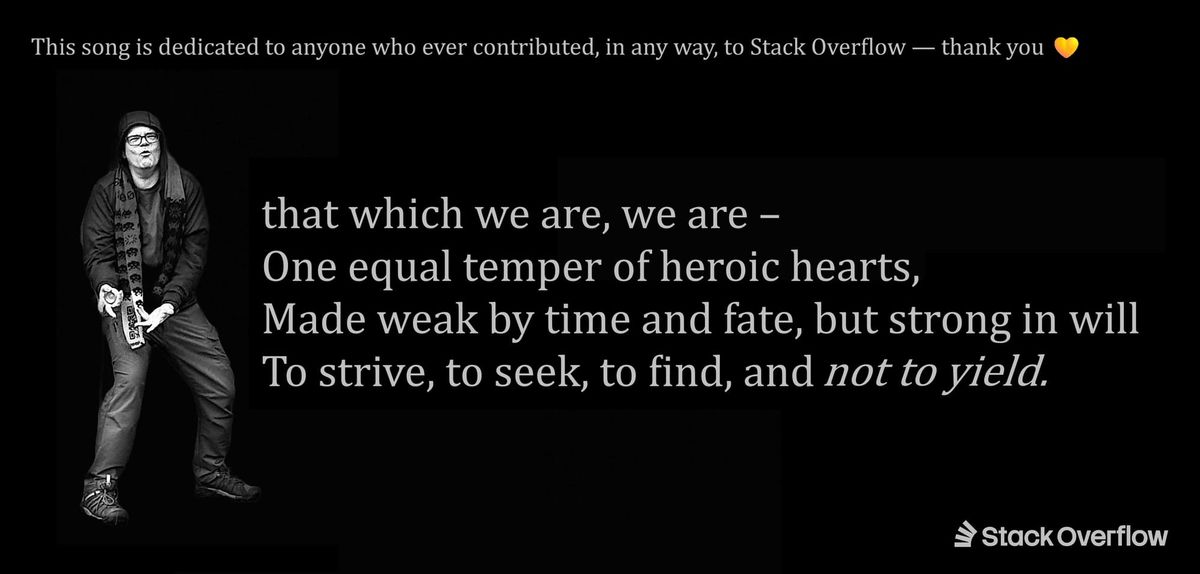
Perhaps the most salient point of Atwood’s recent statement is his direct address to the artificial intelligence industry, specifically regarding its reliance on Stack Overflow. He asserts that large language models (LLMs) "basically could not code at all" without access to the "extremely high quality creative commons programming Q&A dataset" collaboratively built by the global developer community on Stack Overflow. This declaration is not merely anecdotal; it reflects a widely acknowledged truth within the AI research community.
The Genesis of a Global Knowledge Base
Stack Overflow emerged as a response to the fragmented and often unreliable nature of programming help available online in the early 2000s. Its Q&A format, coupled with a robust moderation and reputation system, quickly established it as the definitive resource for developers worldwide. With millions of questions and answers, meticulously curated and peer-reviewed, Stack Overflow accumulated an unparalleled repository of programming knowledge, covering virtually every language, framework, and problem imaginable. This vast dataset, made available under Creative Commons licenses, became a prime target for AI researchers seeking to train models on high-quality, real-world code and problem-solving dialogues.

Quantifying the Unquantifiable Contribution
While precise figures are difficult to ascertain, industry estimates suggest that Stack Overflow’s content constitutes a significant portion – potentially tens of millions of code snippets and associated explanations – of the training data used by leading LLMs. Companies like OpenAI, Google, and Meta have tacitly acknowledged, through various research papers and public statements, the critical role of publicly available code repositories and Q&A forums in developing their coding-capable AI models. Without this foundational knowledge base, the current capabilities of LLMs in code generation, debugging, and explanation would be severely curtailed, if not impossible to achieve at their current sophistication levels. The platform essentially served as an enormous, freely accessible, human-curated textbook and problem set for artificial intelligences.
The AI Paradox: Hollowing Out the Golden Goose
Atwood’s gratitude to Stack Overflow contributors is immediately followed by a stark warning: "If the LLMs end up hollowing out the very communities that produce all their training data, they’re going to really, really regret that." This sentiment echoes a growing concern across various online communities whose content has been extensively used for AI training without explicit consent, compensation, or a clear understanding of the long-term implications.
The "Kill the Goose" Analogy
The metaphor of "killing the goose that lays the golden eggs" perfectly encapsulates the ethical dilemma. The "golden eggs" are the high-quality, human-generated data that powers AI. The "goose" is the vibrant, active human community that continually produces and refines this data. If AI tools become so effective that they diminish the need for human contributions to platforms like Stack Overflow, or if the platforms themselves fail to adequately compensate or recognize their contributors, the incentive for humans to participate and create new data diminishes. This could lead to a decline in data quality, stagnation of knowledge, and ultimately, a degradation of the very resource AI models depend upon.
This concern is not unique to Stack Overflow. Other platforms, such as Reddit, have also grappled with the implications of AI companies scraping their content for training data. Reddit recently implemented changes to its API access, imposing fees on large-scale data usage, in an attempt to monetize its valuable content and push back against what it perceived as unchecked exploitation by AI firms. These actions highlight a burgeoning conflict between data creators, platform hosts, and AI developers.
Implications for Developer Communities and Knowledge Creation

The "hollowing out" effect could manifest in several ways:
- Reduced Human Contribution: If developers increasingly rely on AI tools to answer coding questions, they may be less inclined to post questions or provide answers on Stack Overflow. This would slow the growth of new knowledge on the platform.
- Diminished Quality: A decline in active community participation could lead to less rigorous peer review and moderation, potentially allowing lower-quality or outdated information to persist.
- Economic Disruption: The demand for human expertise in certain coding tasks might decrease, impacting developer jobs or shifting their nature significantly.
- Erosion of Trust: If contributors feel exploited or unacknowledged, it could foster resentment and discourage participation in open-source projects and collaborative knowledge-sharing initiatives.
Atwood’s advice to AI companies mirrors the counsel he gave Joel Spolsky when leaving Stack Overflow to start Discourse: "do not, for any reason, under any circumstances, kill the goose that lays the golden eggs, aka the human community around your product that does all the real work." This principle, rooted in his experience building and sustaining online communities, underscores the paramount importance of respecting and nurturing the human element in any technological ecosystem.
Calls for Responsible AI Development and Community Engagement
Atwood’s warning is a clarion call for responsible AI development and a re-evaluation of the relationship between AI companies and the data-generating communities they rely on. The industry is at a critical juncture where ethical frameworks and sustainable models for AI-human collaboration must be established.
Potential Pathways Forward:
- Data Licensing and Compensation: AI companies could establish licensing agreements and compensation models with platforms and individual creators whose data is used for training. This could involve direct payments, revenue sharing, or other forms of value exchange.
- Attribution and Recognition: Implementing mechanisms for attributing AI-generated content back to its source data, acknowledging the original human creators.
- Community Engagement: AI companies could actively engage with data-contributing communities, involving them in the development process, offering tools that enhance their productivity, or investing directly in the health and growth of these communities.
- Ethical AI Guidelines: Developing and adhering to industry-wide ethical guidelines that prioritize fair data usage, transparency, and the long-term sustainability of human knowledge creation.
- Hybrid Models: Exploring hybrid models where AI tools augment human capabilities rather than replace them, fostering a symbiotic relationship between artificial intelligence and collective human intelligence.
Jeff Atwood’s recent statements serve as a potent reminder of the intricate connections between personal journey, social innovation, and technological ethics. His championing of the RGMII highlights a commitment to addressing fundamental economic challenges through bold experimentation, while his candid warning to the AI industry underscores a critical need for foresight and responsibility. As AI continues its rapid ascent, the imperative to value and sustain the human communities that underpin its very existence becomes increasingly clear. The future of both technological advancement and societal well-being hinges on whether the "golden goose" of human creativity and collaboration is nurtured or inadvertently destroyed.
About the Author