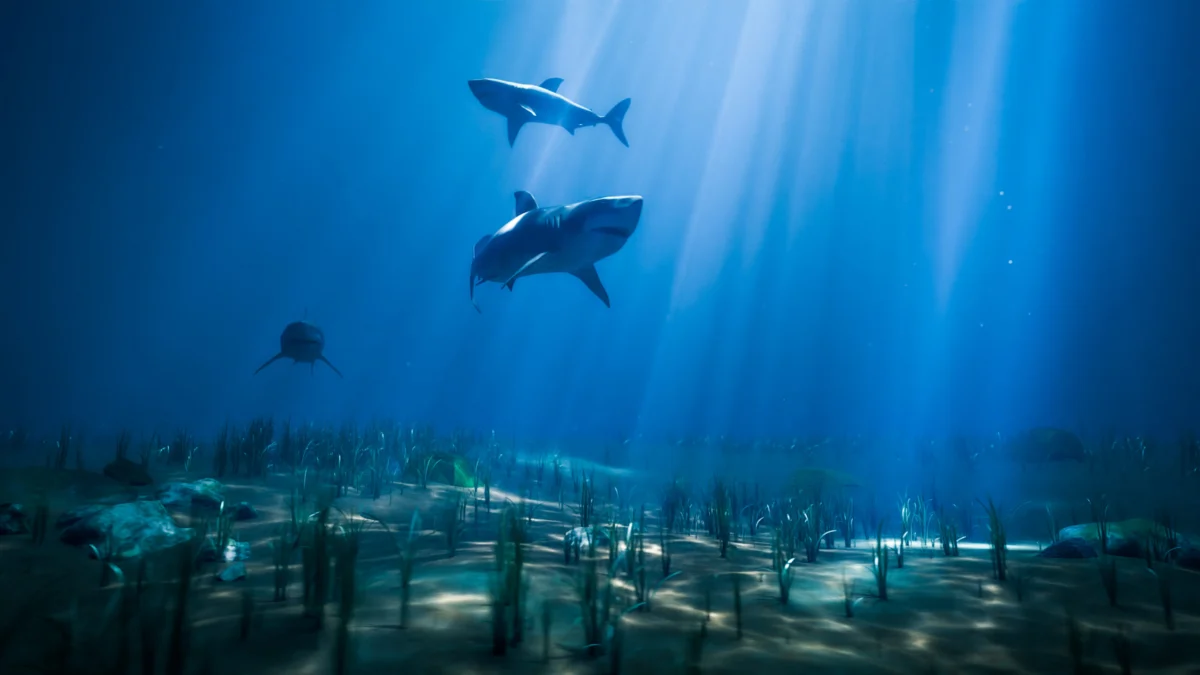
Blender, the powerful open-source 3D creation suite, continues to empower artists and developers with its ever-expanding capabilities. A recent tutorial, released by veteran Blender artist Kenan Proffitt, offers a comprehensive guide to crafting exceptionally realistic and cinematic underwater environments within the software. This detailed walkthrough, presented through a video tutorial, aims to demystify the complex process of simulating aquatic settings, focusing on three fundamental elements that contribute to their believability.
Proffitt, who boasts over 15 years of experience with Blender and a professional background in the film industry, including contributions to Hollywood animated features, emphasizes that achieving a convincing underwater scene is not merely about visual aesthetics but about understanding the physics and optical phenomena that govern light and matter in aquatic environments. His tutorial, accessible via YouTube, serves as a valuable resource for both aspiring and seasoned 3D artists looking to elevate their scene creation skills.
The Pillars of Believable Underwater Worlds
The tutorial systematically breaks down the creation process into three core components, each crucial for establishing an immersive and convincing underwater world:
-
Volumetric Lighting and Scattering: This is perhaps the most critical element in simulating an underwater environment. Light behaves dramatically differently beneath the surface of water compared to air. Proffitt’s tutorial delves into how to accurately represent the way light scatters and attenuates through water. This involves understanding concepts like Rayleigh scattering (responsible for the blue hue of the sky and, by extension, the ocean) and Mie scattering (which affects how light interacts with particles in the water, creating visible light shafts or god rays). Achieving this in Blender involves leveraging the software’s volumetric shaders and carefully tuning their parameters to mimic the absorption and scattering of light at different wavelengths. The tutorial likely demonstrates how to set up volumetric fog or mist, controlling its density, color, and interaction with light sources to create a palpable sense of depth and atmosphere. This is crucial for conveying the vastness and mystery of the ocean.
-
Water Surface Simulation and Interaction: The interface between air and water is a dynamic boundary that significantly influences the visual appearance of an underwater scene. Proffitt’s guide likely addresses how to create realistic water surfaces, including waves, ripples, and caustics (the patterns of light that form on the seabed due to the water’s surface). This often involves using Blender’s physics simulation tools, such as the fluid simulation system or displacement modifiers driven by procedural textures, to generate believable surface motion. The tutorial would then explain how to render these surfaces to capture their refractive and reflective properties, ensuring that light from above is accurately distorted and bounced, further enhancing the sense of being submerged. The interplay of light passing through a disturbed water surface and projecting onto underwater objects is a hallmark of realistic underwater imagery.
-
Particle Systems and Environmental Details: The subtle yet vital details of an underwater environment are often brought to life through particle systems and carefully placed environmental assets. This can include anything from fine sediment suspended in the water, creating that characteristic murkiness, to schools of small fish, drifting seaweed, or even larger marine life. Proffitt’s tutorial is expected to cover how to effectively utilize Blender’s particle systems to generate these elements. This involves configuring emission rates, particle types (e.g., simple spheres for sediment, animated models for fish), and their interaction with forces like water currents. The strategic placement of these details adds layers of realism and visual interest, transforming a sterile scene into a vibrant ecosystem. For instance, the density and distribution of plankton or suspended particles can dramatically affect the visibility and mood of the scene.
The Evolution of Underwater Rendering in 3D
The pursuit of realistic underwater scenes in computer graphics has a long history. Early attempts often relied on simpler techniques, such as applying blue filters and basic fog effects. However, advancements in rendering technology, particularly the development of physically based rendering (PBR) engines and sophisticated volumetric scattering algorithms, have revolutionized the possibilities. Blender, as a leading open-source 3D software, has been at the forefront of this evolution, with its Cycles and Eevee renderers offering powerful tools for simulating complex optical phenomena.

The ability to achieve photorealism in underwater environments has significant implications across various industries. In filmmaking, it allows for breathtaking visual effects in documentaries, animated features, and live-action productions. In video game development, immersive underwater levels enhance player engagement. Architectural visualization can use these techniques to showcase underwater structures or coastal developments. Furthermore, scientific visualization can employ these methods to create educational models of marine ecosystems or to study underwater phenomena.
Kenan Proffitt: A Seasoned Guide in the Blender Community
Kenan Proffitt’s extensive experience and professional background lend significant credibility to his tutorial. His statement, "With over 15 years of experience working in Blender, I’ve had a front-row seat to the software’s incredible evolution, and I have to say, I love it!", reflects a deep understanding and passion for the tool. His journey, which began over a decade ago with a YouTube channel dedicated to Blender for VFX, highlights his commitment to both learning and sharing within the Blender community. This emphasis on community engagement and knowledge sharing is a cornerstone of Blender’s success, fostering a collaborative environment where artists constantly push the boundaries of what’s possible.
Proffitt’s involvement in professional film production, contributing to Hollywood animated features, provides him with invaluable insights into the demands of high-end visual creation. This practical, real-world experience undoubtedly informs the practical advice and techniques he shares in his tutorial. His ability to translate complex technical concepts into accessible steps for a wider audience is a testament to his skill as both an artist and an educator. The fact that he continues to integrate Blender into his creative workflow, even after years of professional work, underscores its enduring power and versatility.
Broader Impact and Future Implications
The release of such detailed tutorials by experienced artists like Proffitt has a ripple effect throughout the Blender community and beyond. It democratizes access to advanced 3D creation techniques, enabling individuals and smaller studios to achieve results previously only attainable by large, well-funded production houses. This fosters innovation and creativity, potentially leading to new artistic expressions and technological advancements.
The increasing sophistication of tools like Blender, coupled with accessible educational resources, suggests a future where hyper-realistic digital environments become increasingly commonplace. This has implications for how we consume media, how we learn about the world, and how we interact with digital spaces. As the fidelity of these simulations improves, the line between the real and the virtual continues to blur, opening up new avenues for storytelling, education, and entertainment.
The specific focus on underwater scenes also highlights the ongoing interest in exploring and understanding our planet’s oceans, which remain largely undiscovered. Realistic digital recreations can serve as powerful tools for scientific communication, raising awareness about marine conservation, and even for simulating potential future scenarios in aquatic environments.
In conclusion, Kenan Proffitt’s tutorial on creating epic and realistic underwater scenes in Blender is more than just a technical guide; it’s a testament to the power of community-driven learning and the continuous evolution of digital art. By breaking down complex visual challenges into manageable steps, Proffitt empowers a new generation of artists to bring their aquatic visions to life with unprecedented realism, contributing to the ever-expanding creative potential of Blender. The implications of such accessible and high-quality tutorials extend far beyond individual artists, shaping the landscape of digital content creation across numerous industries.
About the Author