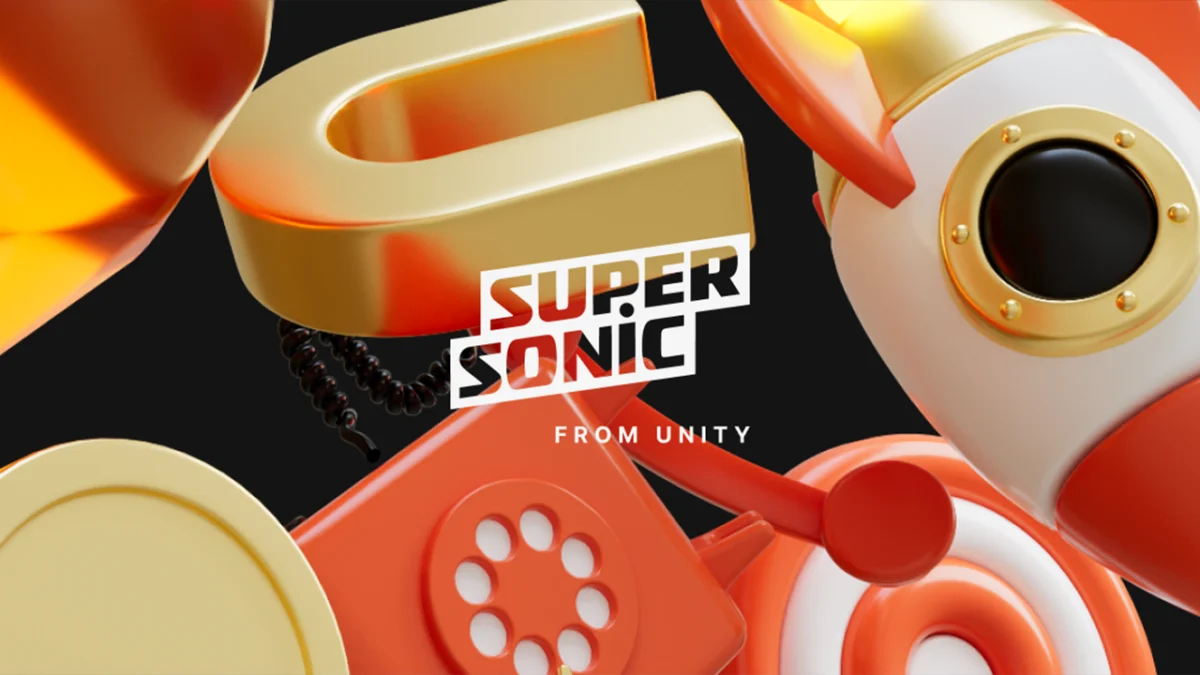
Game engine giant Unity has confirmed a significant strategic pivot, announcing the discontinuation of its IronSource Ads Network and the divestiture of its mobile publishing label, Supersonic. These moves, detailed in a recent SEC filing, signal a concerted effort by the company to streamline operations, sharpen its focus, and accelerate revenue growth following a period of intense scrutiny and internal restructuring. The IronSource Ads Network is slated to cease operations on April 30, 2026, while a financial advisor has already been engaged to facilitate the sale of Supersonic.
A Bold Strategic Pivot for Unity Technologies
The decision to sunset the IronSource Ads Network and sell Supersonic represents a major recalibration of Unity’s long-term strategy, particularly concerning its engagement with the mobile monetization and publishing sectors. This announcement comes as Unity reported preliminary revenue and adjusted EBITA for the first quarter of 2026 above its initial guidance, suggesting a foundational stability from which to execute these significant changes. The company explicitly stated that these maneuvers are designed to deliver faster revenue growth, indicating a move towards higher-margin activities and a potentially leaner operational model.
The IronSource Ads Network was a core component of the controversial 2022 merger between Unity and IronSource, an acquisition valued at approximately $4.4 billion at the time. The merger was initially positioned as a transformative step for Unity, promising to create an end-to-end platform that would empower developers not only to create games but also to acquire users and drive revenue through integrated advertising and monetization tools. However, the integration proved complex, and the ad network’s performance, as implied by Unity’s current statements, did not meet long-term expectations. The company anticipates "minimal contribution" from the Ads Network business after the first quarter of 2026, underscoring its diminished strategic value in the eyes of Unity’s current leadership.
Supersonic, Unity’s internal mobile publishing label, has been a notable player in the hyper-casual gaming market since its inception in February 2020. The label boasts an impressive track record, having generated an estimated 6.6 billion downloads and published over 130 titles that served more than 190 million monthly active users as of October 2024, according to figures shared on Unity’s official website. Its mission, as described on its business overview webpage, was to guide developers through the entire process from game creation in the Unity engine to monetization with Unity networks and performance optimization with Unity services. The divestiture of such a high-volume publishing arm suggests a re-evaluation of Unity’s direct involvement in the content publishing value chain, potentially signaling a desire to return to a more focused role as a technology provider rather than a direct competitor or partner in the publishing space.
Chronology of Key Events Leading to the Realignment
To fully appreciate the significance of Unity’s latest strategic decisions, it is crucial to examine the timeline of pivotal events that have shaped the company’s trajectory in recent years.
- February 2020: Supersonic, Unity’s mobile publishing label, is launched. It rapidly establishes itself in the hyper-casual gaming market, leveraging Unity’s engine and network to publish numerous titles.
- July 2022: Unity announces its intention to merge with IronSource, an ad-tech and monetization platform. The deal, valued at approximately $4.4 billion, is met with a mixed reception from the developer community, with some expressing concerns about the integration of an ad-tech company into a core game engine provider.
- November 2022: The merger between Unity and IronSource is officially completed. Unity CEO John Riccitiello states the combined entity will provide "an even more comprehensive set of solutions for developers to create, grow, and monetize their games and apps."
- September 2023: Unity faces widespread backlash and a significant erosion of developer trust following its announcement of a controversial "runtime fee" policy. This policy would have charged developers a fee each time their game, built with the Unity engine, was installed. The outcry from the development community was swift and severe, leading to boycotts, public condemnations, and threats to switch engines.
- October 2023: Under immense pressure, Unity leadership issues a public apology and significantly revises the "runtime fee" policy, backtracking on many of its most contentious aspects. This episode highlights the delicate balance between Unity’s financial ambitions and its relationship with its developer base.
- January 2024: Unity announces significant layoffs, impacting approximately 1,800 employees, roughly 25% of its workforce. This restructuring is part of a broader effort to streamline operations and refocus on core business areas. Amidst these layoffs, IronSource CEO Tomer Bar-Zeev and other co-founders of IronSource depart Unity, signaling a potential shift away from the original vision of the merger.
- October 2024: Supersonic continues to demonstrate strong performance, with figures indicating it has published over 130 titles and engaged more than 190 million monthly active users.
- March 27, 2026: Unity publicly confirms the decision to sunset the IronSource Ads Network and divest Supersonic, outlining the strategic rationale in an SEC filing and via official communications.
- April 30, 2026: The IronSource Ads Network is scheduled to be officially discontinued.
The IronSource Merger: Unfulfilled Promises and Integration Challenges
The 2022 merger with IronSource was heralded by Unity as a strategic move to create a more robust ecosystem for developers. The vision was clear: by combining Unity’s powerful creation tools with IronSource’s monetization and user acquisition expertise, developers would have a seamless, end-to-end solution for their entire game lifecycle. IronSource’s Ads Network was central to this promise, designed to help developers acquire users efficiently and generate substantial revenue through in-app advertising.
However, the integration of a massive ad-tech firm into a game engine company presented numerous challenges. Culturally, the two entities had distinct operating models and priorities. Technically, fully integrating IronSource’s complex advertising infrastructure into Unity’s core services likely proved more intricate than anticipated. Furthermore, the broader mobile advertising market has faced headwinds, including increased privacy regulations (like Apple’s App Tracking Transparency framework), rising user acquisition costs, and increased competition, which may have impacted the network’s profitability and long-term growth prospects within Unity.
The departure of IronSource co-founders, including CEO Tomer Bar-Zeev, in early 2024 amidst mass layoffs, was a strong indicator that the initial vision for the combined entity was undergoing significant revision. Their exit suggested a potential disagreement over the strategic direction or the inability to fully realize the synergies initially projected. By sunsetting the Ads Network, Unity is effectively stepping back from directly managing a complex, competitive, and potentially lower-margin advertising business, opting instead to focus on its core engine technology and potentially partnering with external ad platforms rather than owning one outright. This move could simplify Unity’s internal structure and reduce operational overhead, allowing resources to be reallocated to areas deemed more strategic.
Supersonic’s Success and the Evolving Mobile Publishing Landscape
Supersonic’s journey within Unity has been marked by impressive growth and scale. Its ability to generate billions of downloads and cultivate a massive monthly active user base demonstrates its effectiveness as a mobile publisher, particularly in the hyper-casual segment. The model, as described, aimed to provide comprehensive support to developers, leveraging Unity’s tools and services to optimize game design, economies, and market research to maximize retention, engagement, and revenue.
The divestiture of such a successful operation raises questions about Unity’s current philosophy regarding its ecosystem. While Supersonic clearly benefited from its association with Unity, and vice-versa, the mobile publishing landscape, particularly for hyper-casual games, has become increasingly challenging. The market has matured, with intense competition, escalating user acquisition costs, and a constant demand for fresh, engaging content. Publishers in this space operate on tight margins and require rapid iteration and deep market insight.
For Unity, maintaining Supersonic as an internal entity meant dedicating significant resources to a business that, while successful, might not align with its renewed focus on core engine development and platform services. By selling Supersonic, Unity can monetize a valuable asset, inject capital into other strategic initiatives, and eliminate the potential for perceived conflict of interest with other mobile publishers who also use the Unity engine but might view Unity’s direct publishing arm as a competitor. The sale could also signal a strategic decision to simplify Unity’s business model, moving away from being a direct participant in content creation and publishing and reinforcing its role as a foundational technology provider for the entire industry.
Broader Implications for Unity and the Gaming Industry
These strategic realignments have several far-reaching implications for Unity, its developer community, and the broader gaming industry.
For Unity:
- Refocused Core Business: The moves strongly suggest a return to Unity’s roots as a pure-play game engine and development tools provider. By shedding non-core assets like an ad network and a publishing arm, Unity can dedicate more resources, talent, and strategic attention to enhancing its engine, editor, and developer services, which are its primary value propositions.
- Financial Optimization: Divesting Supersonic will generate capital, and sunsetting the IronSource Ads Network will reduce operational costs associated with managing a large ad infrastructure. This aligns with Unity’s stated goal of "faster revenue growth," implying a focus on profitability and efficiency. The positive preliminary Q1 2026 results provide a stable base for these changes, suggesting Unity is proactively addressing areas of underperformance or misalignment.
- Developer Trust and Perception: While the IronSource merger initially sparked concerns, and the "runtime fee" controversy severely damaged trust, these latest actions could be interpreted positively by some developers. A more focused Unity, less entangled in direct monetization and publishing, might be perceived as a more neutral and supportive platform partner. However, frequent strategic shifts can also create uncertainty, requiring Unity to clearly articulate its long-term vision.
For Developers:
- Migration for Ads Network Users: Developers currently relying on the IronSource Ads Network will need to transition to alternative ad monetization solutions before April 30, 2026. This will involve re-integrating SDKs and potentially re-optimizing their ad strategies, representing an operational burden.
- Impact on Publishing Partnerships: For developers who might have considered partnering with Supersonic, they will now need to seek other mobile publishers. This shifts the competitive landscape among hyper-casual and mobile game publishers.
- Clearer Value Proposition: If Unity successfully pivots to a stronger focus on its engine and development tools, developers could benefit from improved features, better performance, and more stable pricing models. This could foster a more reliable environment for game creation.
For the Gaming Industry:
- Mobile Ad-Tech Landscape: The exit of the IronSource Ads Network from Unity’s direct management will slightly alter the competitive dynamics in the mobile ad-tech space, potentially benefiting other major players or smaller, specialized networks.
- Hyper-Casual Market: The divestiture of Supersonic reflects ongoing trends in the hyper-casual market, where consolidation and increasing sophistication are becoming the norm. It underscores the challenges even large entities face in maintaining sustained profitability and growth in this segment.
- Engine Competition: Unity’s strategic moves are also likely influenced by the competitive landscape, particularly with rivals like Unreal Engine and the growing prominence of open-source alternatives like Godot. By streamlining its operations, Unity aims to compete more effectively by focusing on its core strengths and delivering superior developer experiences.
In conclusion, Unity’s decision to sunset the IronSource Ads Network and divest Supersonic marks a pivotal moment in the company’s evolution. It represents a clear strategic shift away from an expansive, integrated ecosystem that included direct involvement in ad-tech and mobile publishing, towards a more focused approach centered on its core game engine and development tools. While these changes bring operational adjustments for developers and ripple effects across the industry, Unity’s leadership is banking on these maneuvers to deliver "faster revenue growth" and solidify its position as a leading technology provider in the dynamic world of interactive content creation. The coming months will reveal how effectively Unity executes this strategic realignment and how the developer community responds to its renewed focus.
About the Author