The mobile gaming industry has undergone a fundamental shift in its development lifecycle, moving away from high-stakes global debuts toward a more calculated, data-driven methodology known as the soft launch. By releasing titles in restricted geographical markets—most notably the Philippines, Canada, and Scandinavia—publishers can gather critical telemetry on player retention, monetization efficiency, and technical stability before committing to a multi-million dollar global marketing campaign. This strategic approach allows developers to refine gameplay loops or, in some cases, cancel projects that fail to meet stringent internal key performance indicators (KPIs).

As of late 2024 and heading into 2025, the pipeline of titles currently in regional testing represents a diverse cross-section of the industry, ranging from established intellectual properties (IP) like Overwatch and Borderlands to experimental new genres from boutique studios founded by industry veterans.

The Strategic Shift in Competitive Shooters and Action Titles
The competitive mobile landscape is currently dominated by high-fidelity shooters and extraction-based mechanics. A significant entry in this category is Field Day, the debut project from the Finnish studio Bit Odd. Founded by former senior members of the Clash of Clans and Clash Royale teams at Supercell, Bit Odd is attempting to bridge the gap between the MOBA and extraction shooter genres. Currently available in early access across Canada, Indonesia, Malaysia, and the Philippines, Field Day represents a move toward more "odd" and creative gameplay loops that depart from the traditional military shooter aesthetic.

Concurrently, Blizzard Entertainment is expanding its footprint with Overwatch Rush. Unlike its PC and console counterparts, this title is a mobile-exclusive, top-down hero shooter. While Blizzard has yet to officially announce a wide-scale testing phase, market intelligence from Appmagic indicates that an iOS edition has already surpassed 10,000 downloads in the Philippines. This suggests that Blizzard is utilizing the region’s high mobile engagement and English proficiency to stress-test hero balance and matchmaking algorithms.

In a similar vein, Garena, the publisher behind the massive hit Free Fire, is testing Garena Free City. Observers have noted the title’s strong resemblance to the Grand Theft Auto series, featuring an open-world urban environment. Initially soft-launched on Android in Argentina, the game has recently expanded its testing footprint to the Philippines, Algeria, and Egypt. This expansion indicates a search for a "middle-ground" market that can provide data on how the game performs across varying hardware specifications and network conditions.

The Evolution of the Casual and Puzzle Market
While high-action titles capture headlines, the casual and puzzle segments remain the financial backbone of the mobile industry. Sega, following its acquisition of Rovio, is aggressively testing the longevity of the Angry Birds brand through multiple iterations. Angry Birds Match World has appeared in Finland on iOS, marking a return to pure match-3 mechanics. Meanwhile, Angry Birds Rush, a "luck battle" game developed in collaboration with the French studio OhBiBi, is undergoing testing in the United States. The most traditional of these, Bloom City Match, is currently live in a wider range of markets, including the UK, Spain, and Scandinavia, suggesting it may be the closest to a global rollout.

Playrix, the architect of the "Scapes" sub-genre, continues to iterate on its proven formula while venturing into new territory. Titles such as Aqua Match, Austin’s Odyssey, and FamilyScapes represent refinements of the match-3 and decoration loop. However, Questbound marks a significant departure for the company. A fantasy-themed squad battler currently live on Android in North America and Southeast Asia, Questbound signals Playrix’s intent to diversify its portfolio into mid-core RPG mechanics, potentially targeting a more male-centric demographic than its traditional audience.

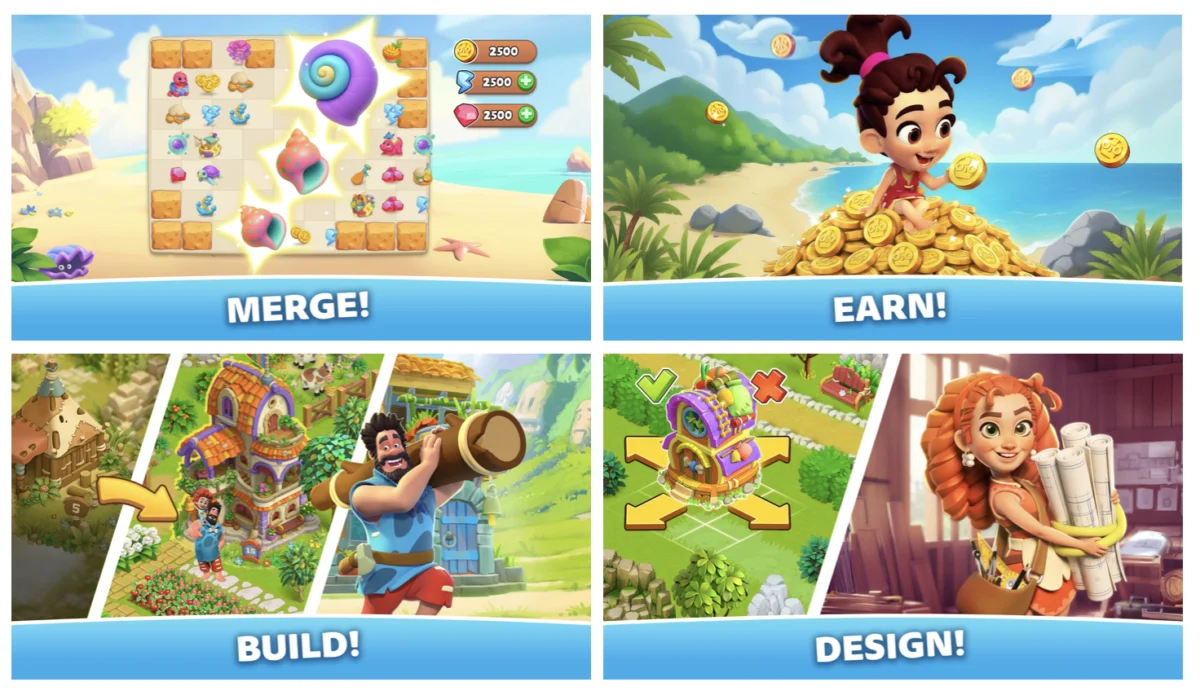
Electronic Arts (EA) and PopCap are also revisiting a legendary franchise with Plants vs. Zombies 3: Evolved. Currently in early access in Ireland and the Philippines, the game introduces a merge-based combat system to the classic tower defense formula. This shift reflects a broader industry trend where developers are incorporating "merge" mechanics—popularized by titles like Merge Mansion—into established IPs to lower the barrier to entry for new players.

Legacy Intellectual Properties and Console Extensions
The bridge between console gaming and mobile platforms continues to strengthen as publishers seek to monetize existing fanbases. PlayStation Mobile is currently testing two major properties: MLB: The Show and Ratchet & Clank: Ranger Rumble. The former is registering significant downloads in baseball-centric markets like the Philippines, Colombia, and the Dominican Republic. The latter, a multiplayer platformer arena shooter, is being tested in France and Northern Europe. These titles represent Sony’s ongoing strategy to bring "PlayStation-quality" experiences to mobile devices, focusing on high-end graphics and competitive multiplayer.

Take-Two Interactive, through its subsidiary Zynga and the studio NaturalMotion, has surprised the market with a limited-time test for an untitled Borderlands Mobile project. Currently restricted to iOS users in the United States, the project aims to translate the "looter-shooter" experience of the Gearbox franchise into a mobile-native format. Zynga is also testing CSR 3, the next installment in its high-performance racing series, across Malaysia, Italy, and South Africa.

Even the world’s most popular sandbox game is seeing new mobile experiments. King and Mojang (both under the Microsoft umbrella) recently soft-launched Minecraft Blast in Malaysia and Canada. Though the game was briefly removed from stores, official FAQs suggest the project is in its infancy. As a puzzle-based spin-off, Minecraft Blast represents a strategic move to leverage the Minecraft brand in the high-retention puzzle category.

Emerging Trends: Farming Sims and Social Roguelites
The success of titles like Stardew Valley and Animal Crossing has not gone unnoticed by major mobile developers. Hoyoverse, the developer behind Genshin Impact, is testing Petit Planet, a farming simulation title confirmed for iOS, Android, and PC. Following a closed beta in late 2023, the game is being watched closely as an indicator of whether Hoyoverse can translate its high-production-value aesthetic into the cozy gaming genre.

Supercell, known for its ruthless approach to killing games that do not meet its "evergreen" criteria, has several projects in the pipeline. Project Rise, a social action RPG roguelite (rebooted from Clash Heroes), and the tentatively titled Boat Game, a third-person looter-shooter, are both in various stages of testing. Additionally, Hay Day Match, developed by the UK-based studio Playabit, is currently being tested in India and the Philippines. This title is particularly noteworthy as Playabit was formed by former executives from Peak, the creators of Toon Blast, suggesting a high level of expertise in puzzle-meta design.

Regional Data and Market Analysis
The choice of soft-launch territories is rarely accidental. The Philippines has emerged as the primary testing ground for Western and Asian developers alike due to several factors:

- Language: High English proficiency allows for accurate feedback on narrative and UI elements.
- Market Diversity: A wide range of mobile hardware, from low-end Android devices to the latest iPhones, allows for comprehensive optimization testing.
- User Acquisition Costs: The cost of acquiring a test user in Southeast Asia is significantly lower than in the US or Western Europe, allowing for larger sample sizes on a limited budget.
Conversely, markets like Canada and Australia are often used for "late-stage" soft launches. These regions have player spending habits that closely mirror the United States, providing publishers with a final check on their monetization systems before a global release.

Implications for the Global Mobile Market
The current volume of high-quality titles in soft launch suggests that 2025 will be a pivotal year for mobile gaming. The trend toward "hybrid-casual" games—titles that combine simple core mechanics with deep, mid-core meta-progression—is evident in projects from Habby (Dicero) and Tripledot (Block Kingdom). Furthermore, the entry of major console publishers like Sony and Microsoft (via King/Mojang) into the mobile testing phase indicates that the distinction between "mobile" and "AAA" gaming continues to blur.

For industry analysts, the success or failure of these soft-launched titles serves as a bellwether for the broader market. If titles like Overwatch Rush or Borderlands Mobile achieve global success, it will likely trigger a new wave of console-to-mobile adaptations. However, the rigorous testing currently underway also serves as a reminder of the volatility of the market; many of these titles may never see a worldwide release, remaining instead as data points in the search for the next multi-billion dollar mobile hit.
About the Author