The landscape of the looter-shooter genre has undergone a seismic shift following the formal conclusion of Destiny 2’s live-service lifecycle and the subsequent financial instability of its mobile successor, Destiny: Rising. On June 9, Bungie released the final major patch for Destiny 2, signaling the game’s transition into a permanent "end of service" phase. This milestone followed a May announcement where developers confirmed that the update would serve as the ultimate infusion of new content, effectively ending a decade of narrative and mechanical evolution. However, the transition has been marred by internal instability at Sony and a failure by the franchise’s mobile spin-off, Destiny: Rising, to capture the displaced player base.
The End of an Era: Destiny 2’s Final Descent
The conclusion of Destiny 2 was not merely a cessation of updates but a structural dismantling of the team that built it. Following the release of the "Monument of Triumph" patch, which sought to revamp decade-old content and introduce final gameplay modes, parent company Sony Interactive Entertainment executed a series of drastic measures. Reports emerged that nearly the entire Destiny 2 development team was laid off, a move that industry analysts described as the loss of "generational talent."
This development marked the end of a long-standing journey for a game that defined the live-service model for the better part of ten years. Since its launch in 2017, and the preceding launch of the original Destiny in 2014, Bungie’s flagship franchise had survived platform migrations, a high-profile split from publisher Activision, and an eventual $3.6 billion acquisition by Sony in 2022. The decision to enter "end of service" status effectively turned Destiny 2 into a legacy product, leaving a vacuum in a genre that the game had largely dominated.
Chronology of the Decline
To understand the current state of the franchise, one must look at the timeline of events leading from the peak of Destiny 2 to the current struggle of the mobile spin-off:
- May 2026: Bungie officially announces that the upcoming June update will be the final content drop for Destiny 2. The announcement stuns the community, despite years of rumors regarding Bungie’s focus shifting toward their new project, Marathon.
- June 9: The final patch, including the "Monument of Triumph," goes live. Destiny 2 enters maintenance mode, where servers remain active but no new seasonal content or expansions are planned.
- Late June: Sony Interactive Entertainment initiates mass layoffs targeting the Destiny 2 division. Internal reports suggest the team has been "almost completely wiped out," leaving only a skeleton crew for server maintenance.
- July – August: Players begin migrating to alternative titles. NetEase’s Destiny: Rising, which launched a year prior as a mobile-exclusive spin-off, becomes the only active "Destiny" title receiving updates.
- September – October: Financial data for Destiny: Rising begins to show a sharp decline, with monthly spending dropping from a launch high of $6 million to under $3 million.
- March – Present: Revenue for Destiny: Rising stabilizes at a stagnant $300,000 per month, signaling a lack of growth despite the death of its predecessor.
The Struggle of Destiny: Rising
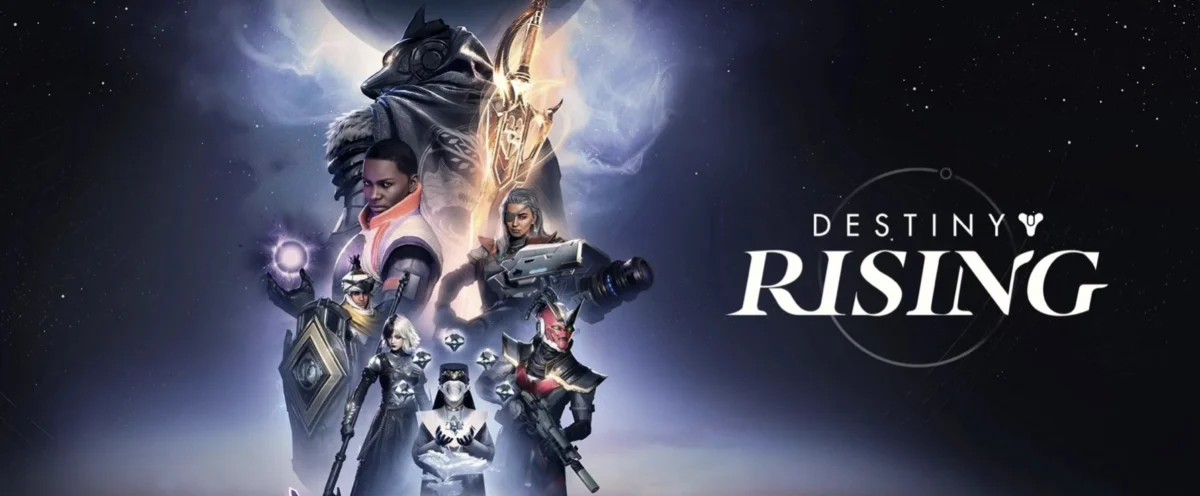
Destiny: Rising was intended to be the franchise’s bridge to the massive mobile gaming markets in Asia and among younger demographics. Developed by NetEase—a Chinese tech giant with a history of successful mobile adaptations like Diablo Immortal—the game takes place in an alternate timeline of the Destiny universe. It focuses on the era of the Iron Lords and the early days of the City Age, offering a fresh narrative perspective.
Despite the pedigree of the IP and the technical proficiency of the port, which many critics admit captures the "feel" of Bungie’s gunplay, the game has failed to find financial footing. According to data from AppMagic, the title experienced a catastrophic "nosedive" shortly after its release. After peaking with $6 million in player spending during its launch month, revenue plummeted by over 50% within thirty days.
Current estimates suggest that since March of this year, Destiny: Rising has been generating approximately $300,000 per month. For a high-fidelity mobile title with significant licensing costs and server overhead, these figures are widely considered unsustainable. While some analysts point out that NetEase utilizes an external web-based payment portal for Android users to bypass store fees—potentially masking some revenue—this system has been in place since launch. Therefore, the downward trend in the data reflects a genuine decline in player engagement and monetization.
Why the Migration Failed: The Gacha Barrier
The primary friction point preventing Destiny 2 veterans from embracing Destiny: Rising appears to be the game’s fundamental design philosophy. While Destiny 2 was a looter-shooter centered on "grinding" for specific weapon rolls and armor sets through gameplay, Destiny: Rising leans heavily into "gacha" mechanics—a monetization style common in mobile games where players spend currency for a chance to "pull" powerful characters or equipment.
Player feedback on platforms such as Reddit and ResetEra suggests a deep-seated resentment toward these mechanics. One prominent community sentiment is that Destiny: Rising is "too much of a gacha game and not enough of a Destiny game." For a community raised on the pursuit of "Exotics" through difficult raids and secret missions, the transition to a luck-based spending model has proven unpalatable.
Even players who initially praised the game for its "fresh" take on the lore have reportedly abandoned the title. The prevailing advice among the remaining community is to enjoy the game as a free-to-play experience but to avoid financial investment. This culture of non-spending, while beneficial for the individual player, has contributed to the "death spiral" indicated by the AppMagic spending estimates.
Season 5 and the Content Drought
The latest update for Destiny: Rising, Season 5, has done little to instill confidence in the game’s longevity. Historically, new seasons in live-service games are expected to provide a surge in revenue and player activity through the introduction of new playable characters, story arcs, and environments. However, the Season 5 update has been criticized for containing "no new content."
Reports from the player base indicate that the update consists almost entirely of rehashed assets from previous seasons. Outside of a new system addition and a "more powerful" variant of the existing main character, there is a lack of the "flashy" new content that typically drives gacha spending. Furthermore, communication from NetEase regarding the future of the game remains sparse. Aside from a vague teaser trailer released last year suggesting that The Witness—Destiny 2’s primary antagonist—might appear in the mobile timeline, there is no roadmap for future expansions.
Broader Implications for Bungie and Sony
The failure of Destiny: Rising to capitalize on the end of Destiny 2 service raises significant questions about the future of the brand. For Sony, the acquisition of Bungie was largely seen as a move to bolster its live-service capabilities. With the original team largely disbanded and the mobile spin-off struggling, the return on that $3.6 billion investment is currently under scrutiny.
The industry at large is also watching closely. The "Destiny-killer" has been a sought-after white whale for years, with titles like Anthem and Outriders attempting to capture the same magic and ultimately failing to maintain a long-term player base. The fact that even a direct spin-off of the Destiny IP cannot retain players highlights the difficulty of replicating the specific alchemy of Bungie’s world-building and mechanical precision.
Analysis of the "Death Spiral"
From a financial perspective, the $300,000 monthly revenue figure is an alarming indicator. In the mobile industry, games of this scale typically require millions in monthly revenue to justify continued development and marketing. If Destiny: Rising has indeed entered a "death spiral," the lack of new content in Season 5 may be a symptom of a reduced development budget, which in turn leads to further player attrition—a self-reinforcing cycle that often ends in server shutdowns.
As it stands, the Destiny franchise exists in a state of limbo. The original game is a static monument to its past, and the mobile successor is struggling to prove its worth. Whether NetEase can revitalize the title with a major content pivot or a full launch in the Chinese market remains to be seen, but for the millions of "Guardians" who once called the Destiny universe home, the horizon looks increasingly bleak.
The tragedy of the situation, as noted by long-time fans, is that there remains no true substitute for the Destiny experience. While Rising attempted to fill the gap, it has served more as a reminder of what was lost than a vision of what is to come. Unless a significant strategic shift occurs, the era of Destiny may be reaching its final, silent conclusion.
About the Author