The extended reality (XR) landscape experienced a transformative week characterized by the insolvency of a prominent European hardware manufacturer, strategic ecosystem updates from industry leaders at the Game Developers Conference (GDC), and significant advancements in cloud-based spatial computing. While the industry continues to grapple with hardware production challenges and corporate restructuring, the underlying software and streaming infrastructure are demonstrating robust growth and technical maturation.
Judicial Liquidation of Lynx Mixed Reality
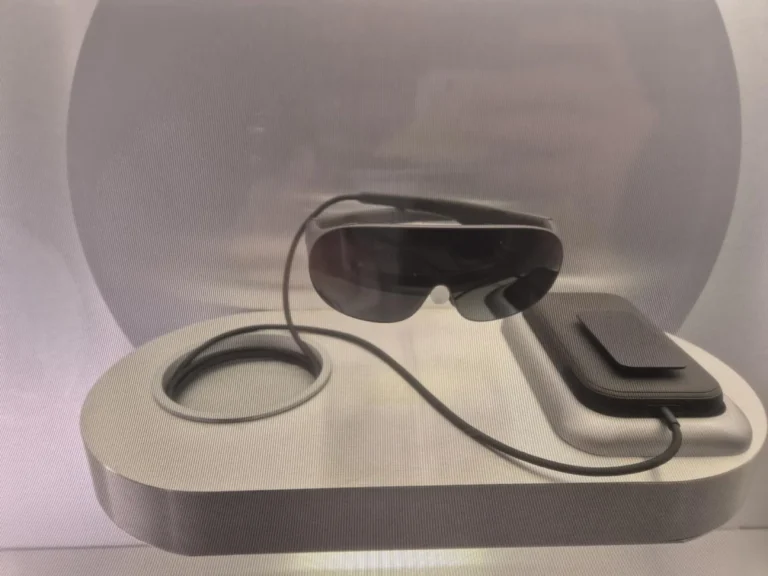
In a significant setback for the European technology sector, the French startup Lynx, recognized for its innovative standalone mixed reality (MR) headsets, has officially entered judicial liquidation. The proceedings, confirmed via French corporate registries and industry reports, mark a critical juncture for the company that positioned itself as a sovereign alternative to American and Chinese hardware giants.
Founded with the ambition of delivering a high-end, privacy-focused MR experience, Lynx successfully launched its R1 headset following a successful crowdfunding campaign. However, the company faced persistent manufacturing delays and capital constraints. The recent announcement of the Lynx R2 was intended to signal a new chapter for the firm, but the transition into judicial liquidation suggests that the R2 may not reach the market under the current corporate structure.
Market analysts suggest that the liquidation phase may lead to the acquisition of Lynx’s intellectual property and hardware assets by a larger entity. This trajectory is common in the capital-intensive hardware sector, where smaller firms often struggle to maintain the supply chain and R2 logistics necessary to compete with the likes of Meta and Apple. The loss of Lynx as an independent player highlights the difficulty of scaling hardware startups in the current economic climate, particularly within the European Union’s regulatory and investment framework.

Meta Strategic Directions and Ecosystem Metrics at GDC
During the annual Game Developers Conference, Chris Pruett, Director of Content Ecosystem at Meta, delivered a comprehensive "State of the VR Ecosystem" address. While the presentation avoided major hardware reveals, it provided critical data regarding the health of the Horizon Store and the evolving habits of the virtual reality (VR) user base.
Key Ecosystem Data Points
The presentation underscored several shifts in the Meta Quest platform’s performance:
- Revenue Growth: A significant number of developers are now reaching multi-million dollar milestones on the Horizon Store, indicating a maturing market for premium content.
- Retention Focus: Meta is shifting its advisory for developers from "initial discovery" to "long-term retention," suggesting that the platform has moved past the novelty phase and is now prioritizing daily active usage.
- Mixed Reality Adoption: Internal data indicates a rising trend in users engaging with MR features over pure VR, justifying Meta’s heavy investment in passthrough technology for the Quest 3 and the rumored Quest 3S.
Simultaneously, rumors regarding Meta’s next hardware iteration, internally codenamed "Puffin," have gained traction. Supply chain leaks suggest that SeeYa Tech has been tapped to manufacture MicroOLED displays for the device. The reported specifications include a resolution of 2560 x 2560 pixels per eye, which would represent a significant visual fidelity upgrade over current consumer-grade LCD panels.
NVIDIA Enhances Cloud Streaming for Spatial Computing
NVIDIA has announced two major updates to its XR streaming suite, targeting both consumer gaming and enterprise-grade visualization. These updates address the "compute gap" between mobile XR chipsets and high-end PC hardware.
High-Frame-Rate Cloud Gaming
NVIDIA’s GeForce Now service has been upgraded to support 90Hz streaming specifically for VR headsets. Previously capped at 60Hz for virtual screen applications, this increase is vital for reducing latency and visual artifacts when playing traditional "pancake" games on large virtual displays. At 90Hz, the fluidity of the experience aligns more closely with the native refresh rates of modern headsets, significantly improving user comfort.

CloudXR Integration with visionOS
In a move that bridges the gap between high-end workstations and Apple’s ecosystem, NVIDIA confirmed that CloudXR is now compatible with visionOS. This allows Apple Vision Pro users to stream complex, high-poly 3D environments and enterprise applications directly from the cloud or local servers. By offloading the rendering workload to NVIDIA GPUs, the Vision Pro can display visual fidelity that exceeds its onboard M2 and R1 processing capabilities, a feature particularly attractive to the automotive, architecture, and medical sectors.
Corporate Restructuring and Legal Challenges at Meta
Despite its dominance in the market, Meta continues to face internal and external pressures. Reports from Reuters indicate that the company is considering a further 20% reduction in its workforce. This potential layoff is reportedly driven by the high operational costs associated with artificial intelligence (AI) development and the increasing efficiency provided by AI tools within the company’s internal workflows.
On the legal front, Meta has been hit with a second class-action lawsuit filed by the law firm Wolf Popper LLP. The litigation centers on privacy concerns regarding Meta’s AI-integrated smart glasses. The plaintiffs allege that human reviewers may have access to video and audio data captured by the devices during AI queries, contradicting user expectations of privacy. This follows a similar lawsuit filed last week, suggesting a growing legal challenge to the deployment of multimodal AI in wearable devices.
Software Innovations and Industry Standards
The Rise of WebXR Gaussian Splatting
Gracia, an XR startup specializing in volumetric capture, has successfully demonstrated the streaming of Gaussian Splats via WebXR. Gaussian Splatting is a technique for representing complex 3D scenes with high photorealism and lower computational overhead than traditional mesh-based rendering. Gracia’s ability to stream these scenes through a web browser without requiring dedicated app installations represents a significant step toward the "democratization" of high-fidelity spatial content.
Valve’s "Steam Frame" Certification
Valve has introduced the "Steam Frame Verified" badge, establishing a new performance benchmark for games on its platform. To earn this certification, VR titles must maintain a consistent 90 frames per second (FPS). While not a mandatory requirement for store listing, the badge serves as a quality assurance marker for consumers, emphasizing the industry-wide push for higher performance standards to ensure user comfort and immersion.

Hardware Trends and Peripheral Developments
The week also saw niche hardware developments and critical reviews of experimental platforms:
- Ray-Ban Meta Updates: Meta released a major OS update for its smart glasses, introducing multimodal AI features, WhatsApp/Messenger video calling support, and experimental audio-based minigames.
- RayNeo Batman Collaboration: RayNeo unveiled a partnership with Warner Bros. to produce Batman and Joker-themed Air 4 Pro glasses. While primarily a collector’s item, the move signifies an attempt to bring XR wearables into mainstream pop culture.
- Virtual Boy for Switch Review: Initial reviews for the Nintendo Switch’s "Virtual Boy" peripheral have been polarized. While XR enthusiasts praised the nostalgic revival, mainstream tech critics have questioned the ergonomics and visual clarity of the device compared to modern standalone headsets.
Analysis of Market Implications
The events of this week illustrate an industry in a state of "forced maturation." The liquidation of Lynx highlights the thinning margins and high stakes of the hardware race, where only the most well-capitalized firms can survive. Conversely, the advancements from NVIDIA and Gracia suggest that the industry is successfully decoupling high-end experiences from local hardware constraints through cloud and web-based solutions.
As Meta navigates legal and structural challenges, its focus on ecosystem retention and MR adoption sets the pace for the consumer market. Meanwhile, Valve’s new performance standards indicate that the era of "experimental" VR is ending, replaced by a demand for polished, high-performance content that meets rigorous technical criteria. The shift from "cool factor" to measurable ROI and user retention remains the defining trend for XR as it enters the second half of the decade.
About the Author