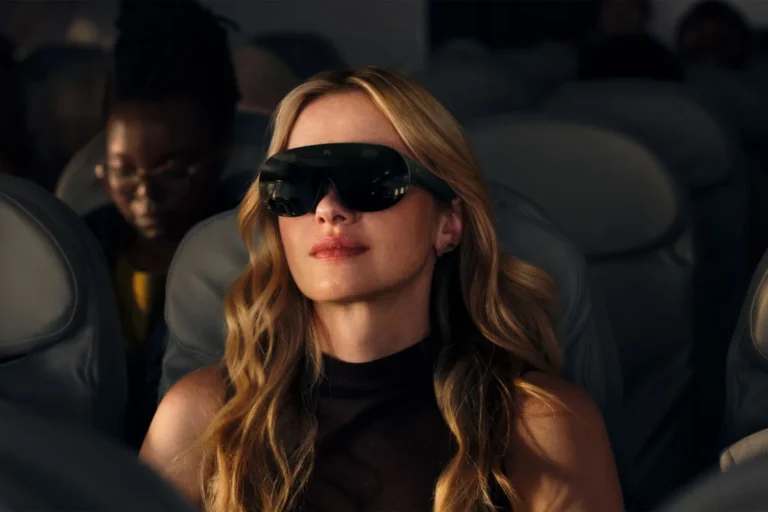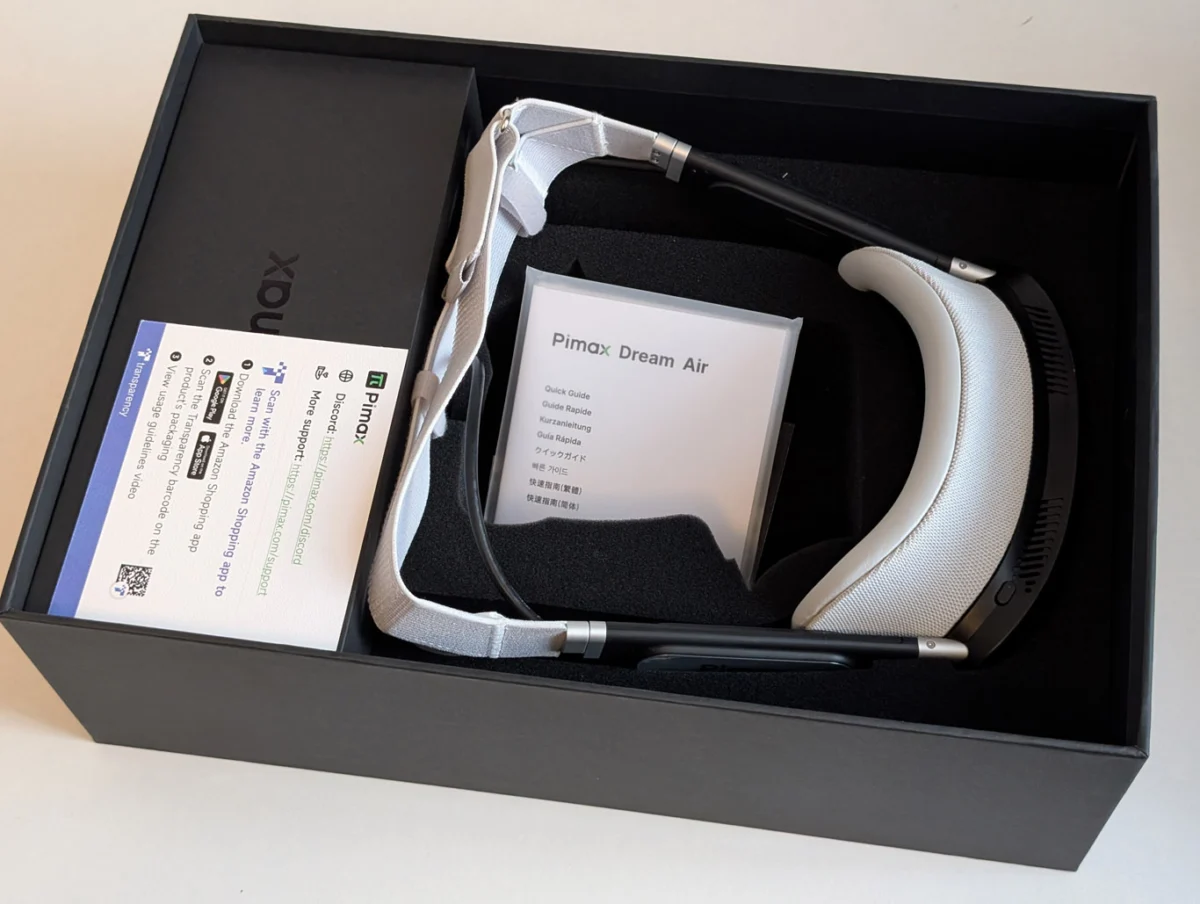
The landscape of personal computer virtual reality (PCVR) is undergoing a significant architectural shift, moving away from the "large box" form factors that defined the first decade of the industry toward ultra-compact, lightweight wearables. Pimax, a manufacturer historically known for its wide field-of-view (FOV) and high-resolution headsets, has officially entered this new era with the release of the Pimax Dream Air. This device represents a departure from the company’s previous design language seen in the Crystal and Super series, focusing instead on a minimalist footprint powered by advanced micro-OLED technology and specialized pancake lenses.

Transitioning from Bulk to Precision
For years, the PCVR market was dominated by headsets that prioritized technical specifications over user comfort, often resulting in devices weighing between 600 and 1,000 grams. The Pimax Dream Air challenges this status quo by weighing approximately 170 grams, a feat made possible by the integration of Sony Micro-OLED display panels and a proprietary "Concave View" lens design. This evolution places Pimax in direct competition with other boutique high-end manufacturers like Bigscreen and Shiftall, who are also targeting enthusiasts seeking long-session comfort without compromising visual fidelity.

The Dream Air is offered in two distinct configurations to cater to different tracking ecosystems. The Lighthouse version, utilized for recent intensive testing by industry enthusiasts, utilizes the SteamVR tracking standard. A second version, featuring Pimax’s proprietary SLAM (Simultaneous Localization and Mapping) tracking and 6DOF controllers, is slated for release later this year. Notably, the hardware architecture does not allow for interchangeable faceplates between these two versions, forcing consumers to commit to a tracking ecosystem at the point of purchase.

Sony Micro-OLED and the Concave View Lens Innovation
The primary driver of the Dream Air’s performance—and its premium pricing—is the inclusion of Sony Micro-OLED panels. These are the same high-density displays found in the Apple Vision Pro, which retails for significantly more. Unlike traditional LCD or older Pentile OLED displays, Micro-OLED technology provides true "inky" blacks, exceptional contrast ratios, and a color vibrancy that LCD-based headsets struggle to replicate. Each panel offers a resolution of 3840 x 3840 pixels per eye, delivering a 4K visual experience that minimizes the "screen door effect" nearly to the point of invisibility.

To complement these displays, Pimax developed the "Concave View" lens system. Traditional pancake lenses often suffer from a restricted field of view or internal reflections. Pimax’s three-layer design features a concave top layer that allows for a horizontal field of view of 110 degrees—the widest currently available in a micro-OLED headset of this size. This geometry is designed to bring the user’s eyes closer to the display while maintaining edge-to-edge clarity.

The Role of Tobii Eye Tracking and Dynamic Foveated Rendering
A critical component of the Dream Air’s internal hardware is the integrated Tobii eye-tracking system. Operating at a frequency of 120Hz, this technology enables Dynamic Foveated Rendering (DFR). By tracking exactly where the user is looking, the system can concentrate GPU resources on rendering that specific area at maximum quality while reducing the resolution in the peripheral vision.

This optimization is essential for maintaining high frame rates at 4K resolutions. In practical testing scenarios utilizing an NVIDIA RTX 5090 and an AMD Ryzen 9800X3D processor, DFR allowed for a consistent 90Hz refresh rate at 100% render resolution in demanding titles. Beyond performance, the eye-tracking suite facilitates automatic Interpupillary Distance (IPD) adjustment and vertical position monitoring, ensuring that the optics are always perfectly aligned with the user’s pupils.

Ergonomic Challenges and the Weight Factor
While the 170-gram weight is a transformative advantage for neck strain and long-term wear, it introduces new challenges in terms of stability and "human factors" engineering. Ergonomics in VR are highly subjective and often vary based on facial structure. During initial testing phases, it was noted that the standard white face cushion supplied with the headset is relatively narrow. For users with broader facial features (often categorized as a "Western fit"), this can result in pressure points across the brow and a perceived reduction in the field of view, as the face cannot move close enough to the lenses.

The industry has responded to these fitment variations through community-driven solutions. Open-source 3D-printable face mask bases have already emerged, allowing users to customize the depth and width of the gasket. Furthermore, Pimax has acknowledged that the initial fabric rear harness, while lightweight, may not provide enough counter-leverage to offset the "tugging" sensation caused by the tether. To address this, an upgraded "DMAS Hard strap" is expected to be released, offering a more secure mechanical clamp to the back of the head.

Audio Performance and Ecosystem Compatibility
The base model of the Dream Air features integrated speakers within the head strap. While functional for tactical communication in multiplayer environments like Pavlov, the audio has been described as "distant" in music-heavy applications. For rhythm games such as Synth Riders, the built-in solution lacks the bass response and immersion required for a premium experience. The upcoming DMAS (Deluxe Modular Audio Strap) upgrade will utilize Balanced Mode Radiator (BMR) speakers, similar to the Tectonic drivers used in the Valve Index, to provide a significant boost in acoustic fidelity.

In terms of connectivity, the Dream Air uses a specialized USB-style split tether. This cable is significantly thinner and more flexible than the copper DisplayPort tethers found on the Pimax Crystal, though it has been noted to generate heat at the link box during extended use. On the tracking front, the Lighthouse version demonstrated exceptional compatibility, pairing seamlessly with Valve Index, HTC Vive Pro, and Pimax Sword controllers without any loss of tracking fidelity in room-scale environments.

Market Positioning and Competitive Landscape
The Pimax Dream Air is positioned as a high-end enthusiast tool, with a price point ranging between $1,542 and €1,783 (excluding taxes and shipping). This puts it in a unique bracket. It is more expensive than mass-market consumer headsets like the Meta Quest 3, but it offers a visual experience that rivals or exceeds professional-grade hardware.

The device serves a specific niche: the PCVR "purist" who demands the black levels of OLED and the precision of Lighthouse tracking in a form factor that does not cause physical fatigue. Its main competitor is the Bigscreen Beyond, which also utilizes micro-OLEDs and a compact frame. However, the Dream Air distinguishes itself with its wider FOV and the inclusion of integrated eye tracking, a feature that the Beyond lacks.

Broader Impact and Implications
The release of the Dream Air suggests that the "megapixel race" in VR is being superseded by a "comfort and clarity" race. As manufacturers successfully shrink the optical stack through pancake lenses and micro-OLEDs, the barriers to entry for long-form VR—such as weight-induced headaches and neck pain—are beginning to dissolve.

However, the Dream Air also highlights the ongoing struggle with "out-of-the-box" ergonomics. As VR headsets become smaller, the margin for error in facial fit becomes slimmer. The reliance on 3D-printed modifications and aftermarket straps suggests that the industry has yet to find a "one size fits all" solution for ultra-compact wearables. Nevertheless, for the high-end PCVR community, the Pimax Dream Air represents a significant milestone in the quest for "presence"—the feeling of truly being inside a virtual world, unburdened by the weight of the hardware.
About the Author