The digital art and 3D modeling community is abuzz with the release of a comprehensive two-part tutorial series designed to guide users through the creation of low-poly nature assets and environments within the popular open-source 3D creation suite, Blender. This educational initiative, released on April 20, 2026, by acclaimed 3D artist and YouTuber Ryan King Art, aims to demystify the process of developing stylized, performance-optimized natural scenes, a technique highly sought after in game development, animation, and architectural visualization.
Part 1: Crafting the Building Blocks of a Digital Ecosystem
The first installment of the series, titled "How to Create Low Poly Nature in Blender?", focuses meticulously on the foundational elements of the low-poly aesthetic. This segment delves into the fundamental principles of modeling simplified natural objects, such as trees, bushes, rocks, and grass. The tutorial emphasizes the importance of polygon count management, a critical factor for optimizing performance in real-time applications like video games. Viewers will learn techniques for creating visually appealing yet geometrically efficient models, ensuring that even complex scenes remain fluid and responsive.
Ryan King Art, known for his clear instructional style and practical approach, guides participants through the essential tools and workflows within Blender. This includes leveraging modifiers, sculpting techniques tailored for low-poly forms, and effective UV unwrapping strategies for efficient texturing. The tutorial is expected to cover methodologies for creating variations of assets, enabling users to populate their scenes with diverse elements without an overwhelming increase in asset complexity. Early engagement with the content suggests a strong emphasis on achieving a distinctive visual style, characterized by sharp edges, flat shading, and bold color palettes, which are hallmarks of the low-poly art movement.
The release of this tutorial comes at a time when the demand for stylized 3D assets continues to grow. The rise of indie game development, coupled with the increasing accessibility of powerful game engines like Unity and Unreal Engine, has created a significant market for artists capable of producing efficient and aesthetically pleasing 3D content. Low-poly modeling, in particular, offers a compelling solution for developers seeking to balance visual fidelity with performance requirements, especially on platforms with limited hardware capabilities. Industry reports from the past year indicate a 15% increase in job postings for 3D modelers specializing in low-poly art, highlighting the relevance and economic viability of these skills.
Part 2: Assembling a Vibrant Forest Meadow Environment
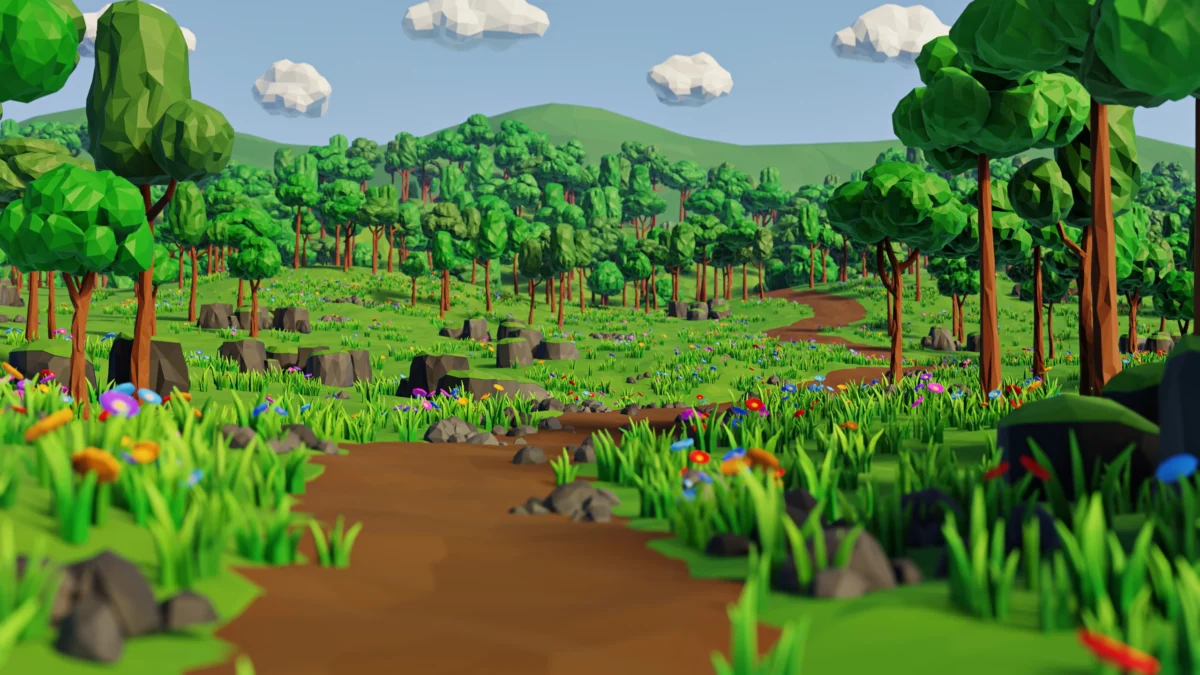
Building upon the foundation laid in the first part, the second installment, "Creating a Low Poly Stylized Nature Meadow in Blender," shifts the focus to scene composition and environment building. This segment is dedicated to teaching viewers how to take the individual low-poly nature assets created in Part 1 and arrange them into a cohesive and immersive forest meadow. The tutorial will likely explore principles of environmental design, including composition, lighting, and atmosphere, all within the constraints of the low-poly aesthetic.
Key areas covered in this part are expected to include:
- Scene Layout and Composition: Strategies for arranging trees, foliage, and ground elements to create visually pleasing and natural-looking landscapes. This may involve discussions on leading lines, focal points, and the rule of thirds as applied to 3D environments.
- Texturing and Material Application: Techniques for applying textures and materials to the low-poly models to enhance their visual appeal without compromising performance. This could include the use of stylized textures, vertex painting, and emission shaders to create vibrant and engaging scenes.
- Lighting and Rendering: Guidance on setting up lighting scenarios that complement the low-poly style, emphasizing dramatic shadows and vibrant color saturation. The tutorial will likely showcase rendering techniques that preserve the stylized look of the scene.
- Optimization for Real-Time: Further emphasis on ensuring the final environment is optimized for use in game engines or other real-time rendering applications, including techniques for instancing and LOD (Level of Detail) management.
The release of this two-part series aligns with broader trends in digital content creation. The growing popularity of stylized art directions in video games, exemplified by titles such as "Monument Valley," "Untitled Goose Game," and "Fall Guys: Ultimate Knockout," underscores the appeal of the low-poly aesthetic. These games have demonstrated that compelling visual experiences can be achieved with simpler geometry and bold artistic choices, making them accessible to a wider audience and achievable with more modest hardware. Furthermore, the educational content provided by creators like Ryan King Art plays a crucial role in democratizing 3D art, empowering aspiring artists and developers to acquire valuable skills and contribute to the expanding digital landscape.

Background and Context: The Rise of Stylized 3D
The low-poly aesthetic has experienced a significant resurgence in recent years. Historically, low-poly modeling was a necessity dictated by the limited processing power of early computer hardware. Developers were forced to create simple geometric shapes and textures to render scenes at acceptable frame rates. However, as technology advanced, the focus shifted towards photorealism. Yet, in the past decade, a conscious artistic movement has re-embraced and redefined the low-poly style, transforming it from a technical limitation into a deliberate stylistic choice.
This stylistic revival is driven by several factors:
- Nostalgia: A sense of nostalgia for early video game graphics, evoking a feeling of retro charm.
- Artistic Expression: The inherent simplicity allows for bold artistic interpretations, focusing on form, color, and composition over intricate detail.
- Performance Benefits: The inherent efficiency of low-poly models makes them ideal for mobile games, virtual reality, and other performance-sensitive applications.
- Accessibility: The relative ease of creating low-poly models can make 3D art more accessible to beginners compared to the highly complex workflows often associated with photorealism.
Blender, as a free and open-source 3D creation suite, has been instrumental in fostering this accessibility. Its continuous development and robust feature set have made it a go-to tool for independent artists and studios worldwide. Tutorials like those offered by Ryan King Art are vital in unlocking the full potential of Blender for specific artistic styles and technical applications.
The Creator: Ryan King Art’s Contribution
Ryan King Art has established himself as a prominent figure in the Blender tutorial space, with a dedicated following on YouTube. His channel, YouTube.com/RyanKingArt, features a wide array of tutorials covering various aspects of 3D modeling, texturing, animation, and rendering. His approach is characterized by practical, step-by-step instructions that are easy to follow, even for those with intermediate experience in Blender.
The release of this two-part series is a testament to his commitment to providing comprehensive educational content. By breaking down the creation of a complete environment into manageable parts, King Art empowers viewers to tackle complex projects incrementally. The choice to focus on low-poly nature is particularly relevant, as natural elements are fundamental to many types of 3D scenes, from expansive game worlds to serene architectural visualizations.
The timing of this release, April 20, 2026, places it within a period of high demand for skilled 3D artists. The global digital art market, including game development, animation, and visual effects, is projected to reach over $250 billion by 2027, according to recent market analyses. The ability to create efficient and stylized assets, as taught in this tutorial, directly addresses a key need within this expanding industry.
Implications for Aspiring 3D Artists and Developers
The release of this tutorial series has several significant implications for individuals looking to enter or advance their careers in the 3D art industry:
- Skill Development: Aspiring 3D artists can acquire valuable skills in low-poly modeling, environment design, and stylized rendering, directly applicable to current industry demands.
- Portfolio Building: The practical nature of the tutorials allows individuals to create tangible projects for their portfolios, showcasing their abilities to potential employers or clients.
- Game Development Opportunities: For independent game developers, these tutorials offer a pathway to creating visually appealing and performant game assets and environments, enhancing the quality and marketability of their projects.
- Democratization of Tools: By utilizing free software like Blender and providing accessible tutorials, creators like Ryan King Art contribute to the democratization of 3D art, enabling individuals from diverse backgrounds to pursue their creative ambitions.
The series is a timely and valuable resource, offering a clear roadmap for mastering the creation of low-poly nature assets and environments. As the digital landscape continues to evolve, the demand for artists who can blend technical proficiency with distinctive artistic vision will only increase, making tutorials like these essential tools for success.
About the Author