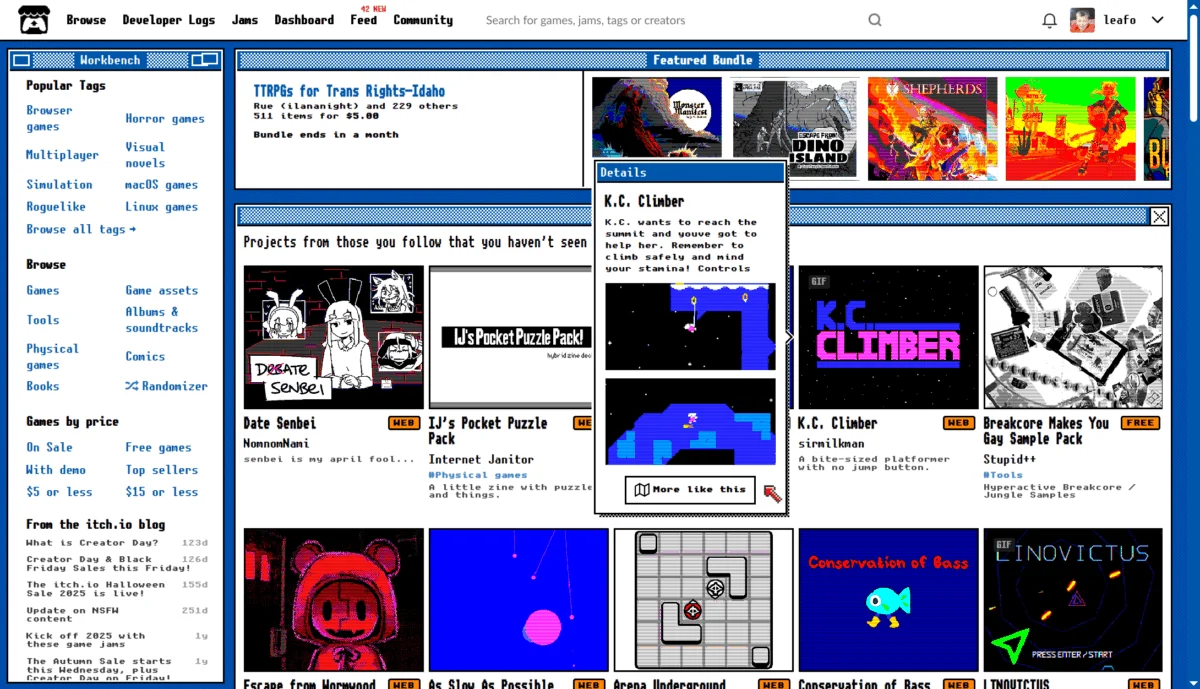
The independent game marketplace itch.io has officially concluded its ‘Ameyega Mode’ event, a distinctive retro-themed aesthetic takeover of its homepage initially launched as an April Fools’ Day prank. This temporary visual overhaul, which transformed the site’s modern interface into a pixelated, ASCII art-inspired display, ran for an extended period beyond April 1st, drawing a wide spectrum of reactions from its global user base. The platform announced the cessation of the mode with a simple message of thanks to its participants, while also confirming that a persistent URL remains accessible for logged-in users eager to revisit the unique experience: https://itch.io/?ameyega. This continued availability is promised until significant changes are made to the homepage’s core design.
Chronology of a Digital Prank
The ‘Ameyega Mode’ materialized on April 1st, 2024, as itch.io’s annual contribution to the widespread tradition of April Fools’ Day pranks within the technology sector. Unlike many fleeting digital gags, itch.io’s implementation was a comprehensive visual redesign, impacting the entire homepage with a distinct retro computing aesthetic. The announcement of its launch was accompanied by a playful message from the itch.io team, acknowledging the late rollout of the prank and, consequently, their decision to extend its run beyond the customary single day. This extension provided a longer window for users to engage with, react to, and even grow accustomed to the transformed interface. The event formally concluded on an unspecified date following this extended period, with the platform then providing the special access link for those who wished to continue experiencing the mode. The credit for the distinctive fonts used in ‘Ameyega Mode’ was explicitly given to Viznut’s unscii project, highlighting the foundational artistic and technical inspiration behind the prank’s visual style. This deliberate nod to the open-source retro computing community underscored the authentic roots of the aesthetic.
The Allure of ASCII: A Deep Dive into Retro Aesthetics
At the heart of ‘Ameyega Mode’ lay a profound embrace of ASCII art and early computing aesthetics. ASCII (American Standard Code for Information Interchange) art, a graphic design technique that uses computers for presentation, consists of pictures assembled from the 95 printable characters defined by the ASCII standard. Originating in the pre-graphical user interface (GUI) era, ASCII art was a necessity for visual communication on early terminals and printers, which lacked the capability to display complex images. Over decades, it evolved from a functional limitation into a celebrated art form, symbolizing a bygone era of computing.
The choice of ASCII art for itch.io’s prank tapped into a rich vein of nostalgia for many users. For those who grew up with DOS prompts, bulletin board systems (BBS), and early internet forums, the ‘Ameyega Mode’ offered a delightful trip down memory lane. It evoked the raw, text-based interfaces that characterized the dawn of personal computing, where creativity often blossomed within severe technical constraints. The distinct blocky fonts and monochromatic (or limited color palette) presentation, characteristic of early home computers like the Commodore Amiga (from which "Ameyega" likely derives its playful name, merging "Amiga" with "mega"), resonated deeply with this demographic. Viznut’s unscii project, specifically credited by itch.io, is a testament to the ongoing fascination with these retro aesthetics, providing authentic, pixel-perfect bitmap fonts that emulate the look and feel of classic computer displays. The project’s commitment to accurately preserving these historical visual styles underscores the artistic integrity behind itch.io’s choice.
Beyond nostalgia, ‘Ameyega Mode’ also served as an intriguing novelty for younger generations of users accustomed to sleek, high-resolution interfaces. It offered a glimpse into the foundational visual language of digital interactions, demonstrating how information was once conveyed before the advent of modern graphics cards and high-speed internet. This blend of historical tribute and contemporary novelty contributed significantly to the widespread discussion surrounding the prank, making it more than just a fleeting joke but a cultural touchstone for the platform’s diverse community. The sheer audacity of replacing a modern, optimized interface with one reminiscent of 1980s computing terminals challenged contemporary expectations of web design, prompting users to consider the evolution of digital aesthetics.
User Engagement: A Spectrum of Reactions
The rollout of ‘Ameyega Mode’ catalyzed a significant wave of user engagement across itch.io’s comment sections and social media channels, revealing a deeply polarized community response. The reactions ranged from enthusiastic acclaim to strong disapproval, highlighting the diverse expectations and preferences of the platform’s extensive user base, which encompasses millions of users and hundreds of thousands of developers.
On one end of the spectrum were users who embraced ‘Ameyega Mode’ with genuine delight. Many expressed profound nostalgia, finding the ASCII art homepage "a delightful throwback" that made browsing feel "nostalgic and charming." Comments such as "I love how most people hate it, and I’m over there being like jack_nicholson_yes.gif" and "Top tier jump scare. This one got me." underscored an appreciation for the prank’s creativity and its ability to evoke a sense of playful surprise. A significant number of users, perhaps surprisingly, also advocated for the mode’s permanence, requesting an option to keep the retro aesthetic. One user exclaimed, "Please please please make an option to keep this, it’s SO much easier to read for me wow I love love love it," suggesting that for some, the high-contrast, blocky text offered unexpected accessibility benefits, potentially reducing visual fatigue or improving readability for specific visual impairments. This unexpected positive feedback regarding readability highlights the complex and individual nature of user experience and accessibility, challenging conventional assumptions about "modern" design being universally superior. The perceived simplicity and starkness of the ASCII interface may have inadvertently created a more legible environment for certain visual processing styles.
Conversely, a substantial segment of the community voiced strong dissatisfaction and frustration. The primary concerns revolved around usability and accessibility. Many users found the ‘Ameyega Mode’ interface "so hard to navigate" and visually jarring. Complaints like "omg please change it back this is so hard to navigate" and "it’s hurting my eyes" were common, indicating that for a significant portion of the user base, the retro aesthetic actively hindered their ability to comfortably browse the site. The stark visual change was perceived by some as disruptive, particularly for those who relied on modern UI conventions for efficient interaction. For users accustomed to responsive design, intuitive navigation menus, and high-fidelity graphics, the sudden shift to a low-resolution, text-based paradigm proved disorienting and inefficient, hindering their ability to discover games, interact with developers, or manage their own projects.
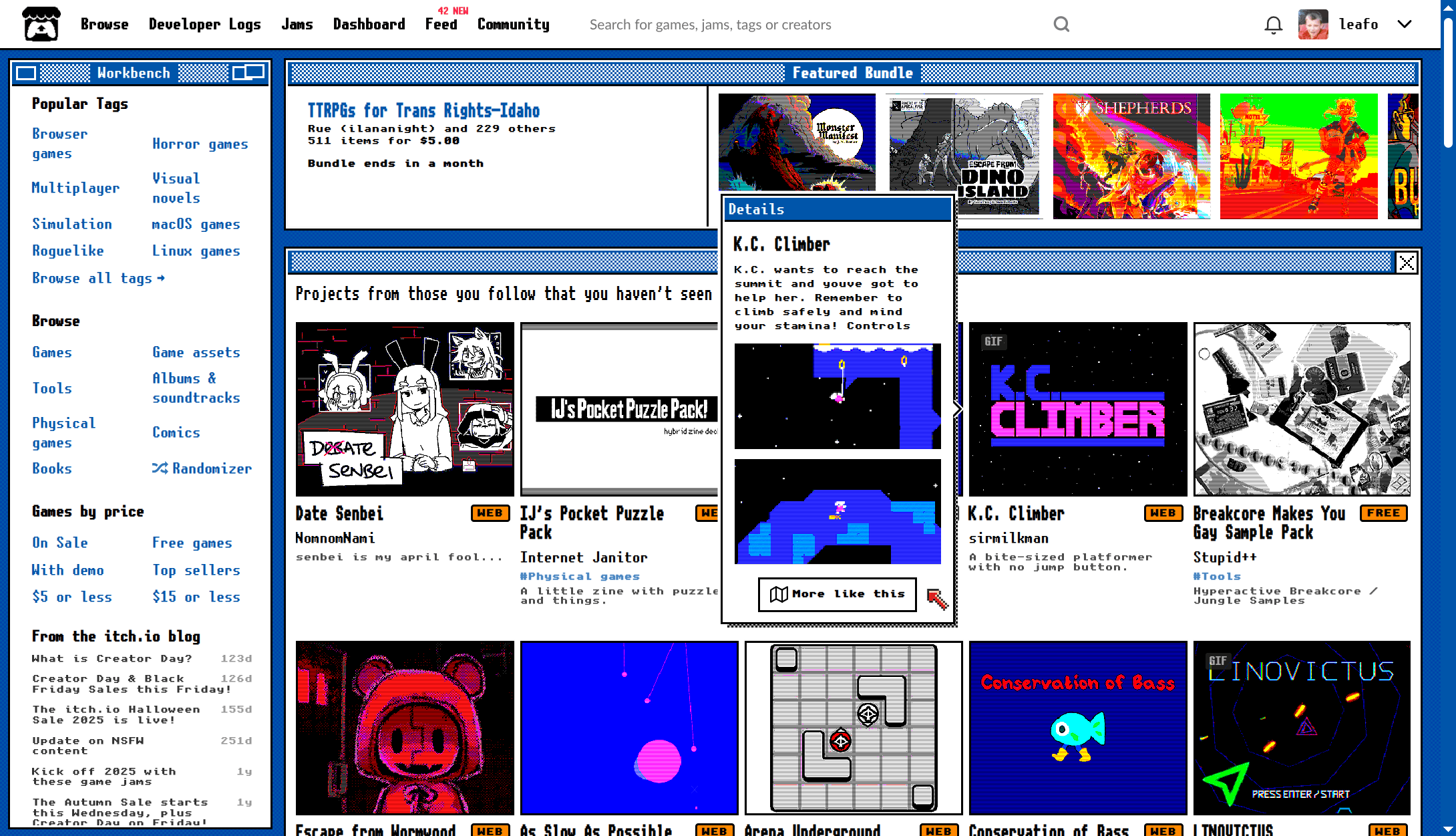
Furthermore, ‘Ameyega Mode’ exposed technical conflicts with existing site features, most notably the dark mode setting. Several users reported that "dark mode is not working now" or that the "front page (the one that got turned into a pixellated mess for April Fools) does not respect that setting anymore." This issue underscored how a seemingly cosmetic prank could inadvertently disrupt core user experience features that many rely on for comfort or specific visual needs. While itch.io’s team appears to have been responsive, with one user noting "four hours after posting this, the front page is showing Dark mode correctly," the initial disruption caused friction and highlighted the intricate dependencies within a modern web platform. Another user’s general complaint about a "huge portion of the community cannot post anything on anyone’s game pages" suggests that while not directly linked to ‘Ameyega Mode,’ pre-existing technical frustrations could have been amplified by the perceived frivolity of the prank, leading to a broader sense of dissatisfaction for some segments of the community.
Beyond visual discomfort, some users articulated more severe accessibility challenges. A user explicitly stated, "Oh so cool, i’m disabled and I CAN’T WATCH THIS! How do you get this crap off?!" This critical feedback underscores the ethical responsibilities of platform developers to consider the diverse needs of their users, even when implementing temporary, lighthearted features. What is a "delightful throwback" for one user can be an insurmountable barrier for another. The professional perception of the site was also a point of contention, with some users arguing that while "nice as a funny thing temporarily," it would "feel pretty odd after a couple of days" and detract from the site’s "professional home page" aesthetic, potentially impacting how developers and publishers viewed the platform for serious work.
Itch.io’s Role in the Indie Game Ecosystem
Itch.io, founded in 2013, has grown to become a pivotal platform for independent game developers, offering a flexible and creator-friendly marketplace for digital games, assets, and tools. Unlike larger, more corporate digital storefronts, itch.io is renowned for its minimalist design, direct developer-to-player engagement, and a strong emphasis on community. It hosts millions of games and projects, ranging from experimental art games to commercial successes, fostering a vibrant ecosystem for creative expression outside mainstream publishing channels. The platform’s commitment to offering developers a high revenue share and robust customization options has cemented its reputation as a champion of indie creators. With an estimated 400,000 games and projects available and a user base in the tens of millions, itch.io’s impact on the indie scene is substantial, providing a crucial alternative to more restrictive platforms.
Given this background, the ‘Ameyega Mode’ prank can be viewed through the lens of itch.io’s brand identity. The platform often embraces unique and unconventional approaches, aligning with the experimental spirit of its user base. An April Fools’ prank that delves into retro computing aesthetics is, in many ways, consistent with a community that appreciates the history of game development and values creative freedom. The choice reflects a deep understanding of a segment of its audience—those who revel in the history and subcultures of computing and gaming. However, the varied user reactions also highlight the challenge of balancing playful brand expression with the practical needs and expectations of a rapidly growing and diversifying user base. As the platform matures and attracts a wider audience beyond its core early adopters, its actions are scrutinized by a broader demographic with potentially different sensibilities and requirements.
Implications and Future Considerations
The ‘Ameyega Mode’ event, while a temporary jest, offers several valuable insights into user experience design, community management, and the broader implications of digital pranks.
User Experience and Accessibility: The most striking implication is the clear demonstration of how varied user needs are, particularly concerning accessibility. What one user found "easier to read," another found actively "hurting my eyes" or impossible to navigate due to disability. This highlights the critical importance of universal design principles and offering user-controlled customization options. While the prank was temporary, the strong calls for a permanent "Ameyega Mode" option suggest that itch.io could explore offering diverse aesthetic themes in the future, allowing users to tailor their browsing experience to their preferences and needs. Such options would empower users and potentially enhance accessibility for various visual styles, moving beyond a one-size-fits-all approach to interface design. This could involve an official "retro theme" or other high-contrast, customizable visual modes.
Community Engagement and Brand Perception: The prank undeniably generated significant discussion and engagement, which can be beneficial for platform visibility and fostering a sense of community. By sparking conversation, itch.io reaffirmed its image as a platform with personality, willing to engage in playful interactions with its users. It also showcased the platform’s technical agility in implementing such a significant visual overhaul. However, the negative feedback also serves as a reminder of the fine line between playful disruption and genuine inconvenience. Maintaining a balance where humor enhances, rather than detracts from, the core utility and professionalism of the platform is crucial for long-term brand perception and user trust. The perceived cost of a prank should never outweigh the benefit of seamless functionality for all users.
Technical Debt and Maintenance: Even a temporary visual overhaul can expose underlying technical complexities. The reported issues with dark mode compatibility indicate that integrating such a significant aesthetic change, even for a limited time, requires careful consideration of how it interacts with existing functionalities and accessibility settings. This underscores the ongoing challenge of maintaining a robust and consistent user experience across different features and settings within a dynamic web platform. The prompt fix for the dark mode issue, however, demonstrates itch.io’s responsiveness to critical user feedback, showcasing a commitment to addressing user concerns even after a lighthearted event.
The Evolution of April Fools’ in Tech: The tradition of April Fools’ pranks in the tech industry has evolved significantly. While once a staple for major companies like Google and YouTube, many have scaled back or abandoned elaborate pranks in recent years, citing concerns about misleading users, creating confusion, or even generating genuine frustration. The ‘Ameyega Mode’ demonstrates that smaller, community-focused platforms like itch.io can still execute such pranks successfully, provided they are well-executed, responsive to feedback, and align with their brand’s ethos. The key often lies in ensuring that the prank is ultimately harmless, easily reversible, and ideally, offers a nod to the community’s shared interests, as the retro computing theme did for many. It suggests that authenticity and a deep understanding of one’s user base are paramount in successfully navigating this tradition.
In conclusion, itch.io’s ‘Ameyega Mode’ was more than just an April Fools’ joke; it was a fascinating experiment in digital aesthetics and user interaction. It successfully generated buzz and nostalgic amusement for many, while simultaneously revealing critical insights into the diverse needs and expectations of its user base. As itch.io continues to grow and evolve as a vital hub for indie game development, the lessons learned from this retro adventure will undoubtedly inform future decisions regarding design, accessibility, and community engagement, ensuring the platform remains both innovative and user-centric. The lingering availability of ‘Ameyega Mode’ for logged-in users stands as a testament to its memorable, if divisive, impact on the itch.io landscape.
About the Author