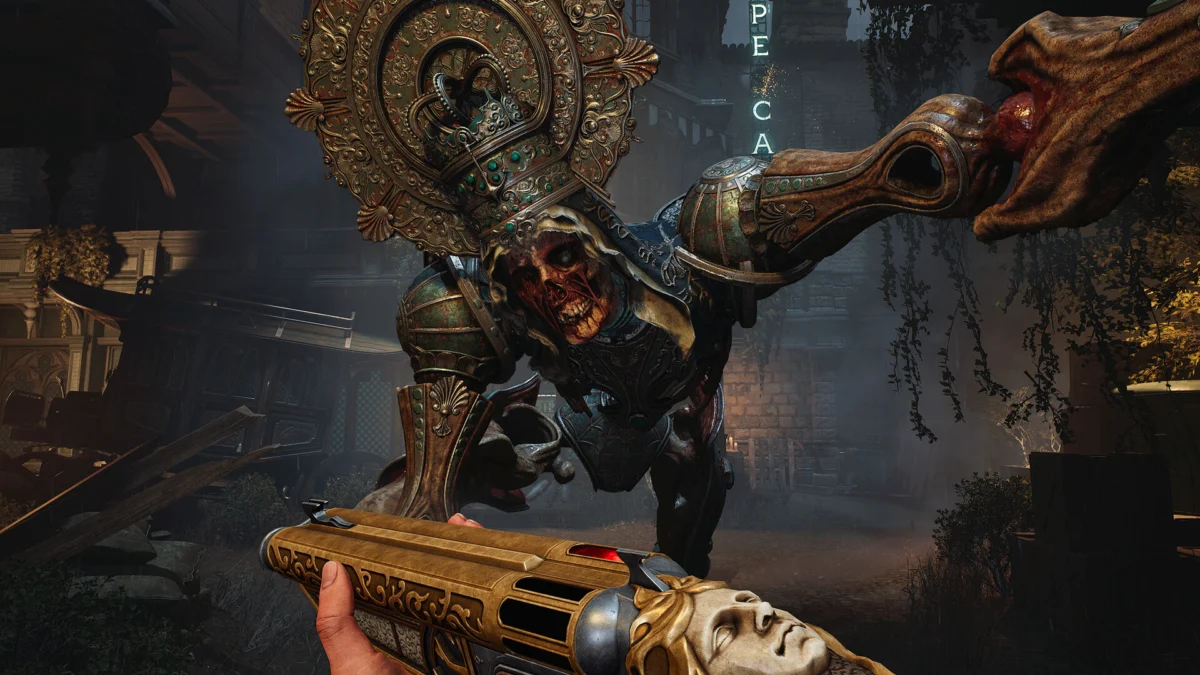
Spanish independent game developer Vermila Studios, the creative force behind the recently launched horror title Crisol: Theater of Idols, has initiated significant layoffs, dismissing 19 staff members, and now faces the grave prospect of permanent closure. This drastic development comes a mere five months after the release of their flagship project, published by Blumhouse Games, casting a shadow of uncertainty over the studio’s future and highlighting the volatile landscape of the modern video game industry.
The Unraveling: A Chronology of Events
The trajectory of Vermila Studios, from its ambitious founding to its current precarious state, reflects many of the triumphs and tribulations inherent in independent game development, often amplified by broader industry trends.
Studio’s Inception and Early Promise
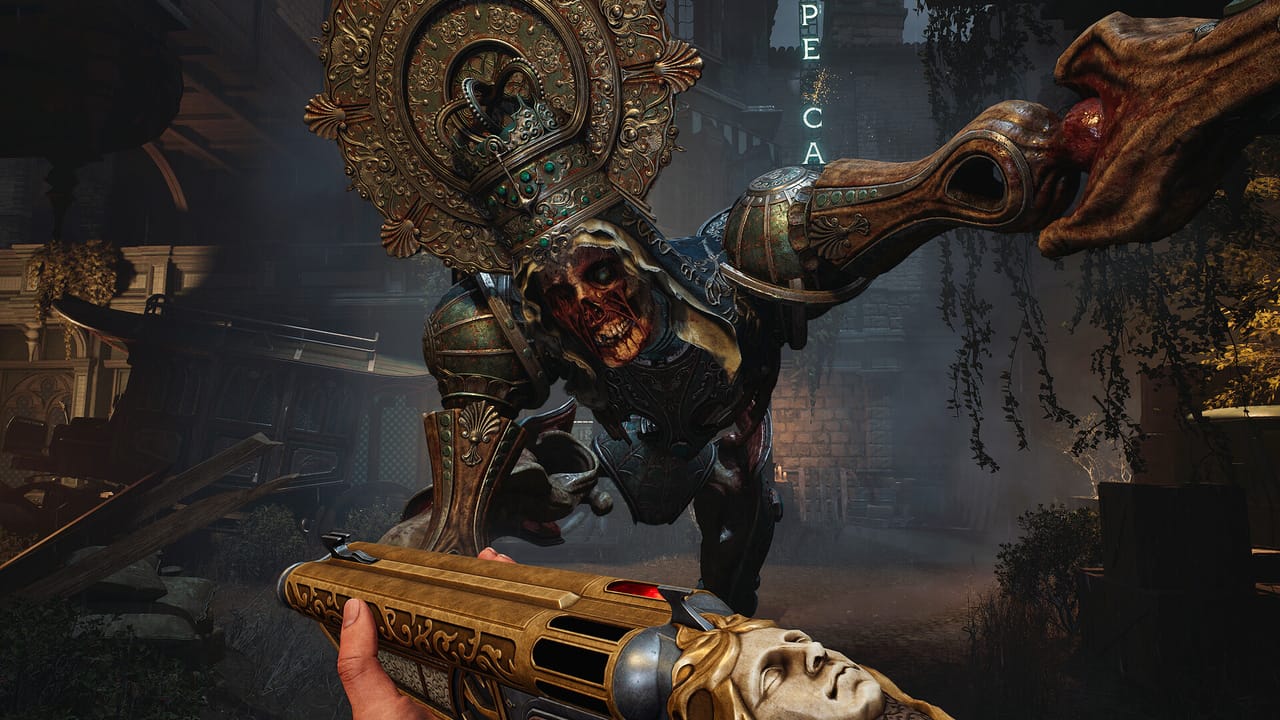
Vermila Studios emerged onto the scene in 2020, a year marked by unprecedented global shifts and a burgeoning interest in digital entertainment. Founded with a vision to contribute unique narratives and experiences to the gaming world, particularly with a Spanish cultural lens, the studio quickly garnered attention. Their primary project, Crisol: Theater of Idols, was conceived as a first-person horror game steeped in Spanish folklore and tradition, aiming to offer a distinct flavor in a genre often dominated by Western or East Asian influences. The ambition was clear: to create a title that resonated both locally and internationally, showcasing the rich narrative potential of Spanish heritage.
The Embracer Group Era: Rapid Expansion and Acquisition
In the same year of its founding, 2020, Vermila Studios became part of a larger corporate narrative when it was acquired by the Embracer Group. This acquisition, valued at approximately €0.9 million ($1.06 million at the time), placed Vermila within one of the most aggressive and rapidly expanding conglomerates in the video game industry. Embracer Group, known for its extensive portfolio of studios and intellectual properties, embarked on an acquisition spree that saw it purchase numerous developers and publishers across the globe. For smaller studios like Vermila, such an acquisition often promised financial stability, access to resources, and a broader platform for their games, allowing them to focus on creative development rather than the constant struggle for funding. The integration into Embracer’s ecosystem was, at the time, seen as a positive step, offering a protective umbrella under which Crisol could be nurtured.
A Shift in Strategy and Departure from Embracer
However, the landscape began to shift dramatically in 2023. Embracer Group, which had previously operated in a "heavy-investment-mode," announced a significant restructuring program. This strategic pivot aimed to transform the company into a "highly cash-flow generative business," a move that inevitably led to widespread repercussions across its vast network of subsidiaries. The restructuring resulted in numerous layoffs, project cancellations, and divestments of various studios and assets. It was during this period of significant corporate upheaval that Vermila Studios and Embracer Group parted ways. While the specific terms and timing of their separation are not fully detailed, it is understood that Vermila regained its independence, albeit in a market that was becoming increasingly challenging for standalone studios. This separation meant Vermila was once again solely responsible for its financial well-being and the successful launch of Crisol.
The Pursuit of Identity and Partnership with Blumhouse Games
Following its departure from Embracer, Vermila Studios faced the daunting task of securing a new publishing partner for Crisol: Theater of Idols. CEO David Carrasco openly articulated the difficulties encountered during this period. As he recounted to Game Developer during the Tokyo Game Show last year, pitching a "Spanish-facing project" presented unique challenges. Many potential funders and publishers, while recognizing the game’s artistic merit, often pushed for modifications that would dilute its distinct cultural identity in favor of broader market appeal. Carrasco highlighted the inherent dilemma faced by independent developers: accepting funding that might compromise artistic goals versus risking financial instability. This delicate balance between creative integrity and commercial viability is a recurring theme in the indie game sector. Ultimately, Vermila found a partner in Blumhouse Games, the newly established video game division of the renowned film production company Blumhouse Productions, known for its successful horror films. This partnership, announced in 2024, seemed a natural fit given Crisol‘s horror genre, offering Vermila a publisher deeply ingrained in the horror entertainment space.
Launch of Crisol: Theater of Idols
Crisol: Theater of Idols officially launched on February 10, 2024. The game, a first-person horror experience, drew players into a macabre world inspired by Spanish folklore, challenging them with unsettling encounters and a unique atmosphere. For Vermila Studios, this launch represented the culmination of years of dedicated work, artistic vision, and perseverance through various corporate transitions. It was their moment to present their carefully crafted horror experience to the global gaming community, under the banner of a publisher well-versed in the horror niche.
The Sudden Reversal: Layoffs and ERE Initiation
Despite the successful launch of Crisol and the promising partnership with Blumhouse Games, the studio’s financial stability remained precarious. Just five months after the game’s release, in July 2024, Vermila Studios initiated an Expediente de Regulación de Empleo (ERE), a formal legal process in Spain used by companies to manage collective redundancies or temporary suspensions of employment contracts due to economic, technical, organizational, or production reasons. This ERE culminated in the layoff of 19 staff members, effectively the entire development team. The swiftness and scale of these layoffs, so soon after a major game launch, underscore the profound financial difficulties the studio has been grappling with.
Behind the Crisis: Financial Pressures and Industry Trends
The current crisis at Vermila Studios is a stark reminder of the intense pressures facing game developers today, particularly those operating independently.
CEO David Carrasco’s Statement
In a candid statement provided to Game Developer, Vermila Studios CEO David Carrasco confirmed the grim situation: "Unfortunately, due to financial reasons, we’ve had to dispense with the staff at Vermila Studios. We’re going to try to pull through for the time being without shutting down, but the circumstances are quite difficult and it is a feasible possibility in the upcoming months." Carrasco’s words paint a clear picture of a studio fighting for its very existence, attributing the layoffs directly to insurmountable financial hurdles despite the recent game release. This suggests that sales figures for Crisol: Theater of Idols, or the revenue generated, were insufficient to sustain the studio’s operational costs and development team.
Understanding Spain’s ERE Process
The Expediente de Regulación de Empleo (ERE) is a critical component of Spanish labor law, designed to provide a structured legal framework for companies needing to adjust their workforce. An ERE can involve collective dismissals, temporary suspensions of contracts, or reductions in working hours. For a company to initiate an ERE, it must demonstrate valid economic, technical, organizational, or production reasons. The process typically involves consultation with workers’ representatives, negotiation periods, and approval from labor authorities. While it provides a legal mechanism for businesses to adapt to adverse circumstances, for the employees involved, it signifies job loss, often with severance packages determined by law, but always with significant personal impact. The fact that Vermila Studios resorted to an ERE indicates that the financial situation had reached a critical point, necessitating a complete restructuring of its workforce to avoid immediate bankruptcy.
The Broader Landscape of Game Industry Layoffs
Vermila Studios’ predicament is not an isolated incident but rather mirrors a troubling trend that has swept across the global video game industry. The years 2023 and 2024 have been particularly brutal, witnessing an unprecedented wave of layoffs affecting thousands of employees across companies of all sizes, from indie studios to major publishers. Industry analysts estimate that over 10,000 game developers lost their jobs in 2023 alone, with the trend continuing unabated into 2024.
Several factors contribute to this widespread instability:
- Post-Pandemic Correction: The COVID-19 pandemic spurred a surge in gaming activity and investment, leading many companies to expand rapidly. However, as pandemic-era booms subsided and economic conditions tightened, many studios found themselves overstaffed for the new market reality.
- Economic Headwinds: Global inflation, rising interest rates, and a general economic slowdown have impacted consumer spending on non-essential goods, including video games.
- Increased Development Costs: The cost of developing AAA and even AA titles has skyrocketed, making it harder for games to achieve profitability, especially amidst fierce competition.
- Investment Retreat: After a period of aggressive investment, venture capitalists and larger corporations have become more cautious, leading to a tighter funding environment for new projects and independent studios.
- Market Saturation: The sheer volume of games released annually makes it incredibly difficult for any single title, particularly from an independent developer, to cut through the noise, gain visibility, and achieve sustainable sales.
Vermila’s situation, coming after its separation from a larger group (Embracer) and its struggle to secure funding, perfectly encapsulates these broader industry challenges.
Challenges for Independent Studios
Independent studios face an uphill battle even in the best of times. Beyond the financial constraints, they contend with limited marketing budgets, making it difficult to compete with the promotional might of larger publishers. The need to innovate and stand out artistically often clashes with commercial pressures. Carrasco’s earlier comments about preserving Crisol‘s "Spanish-facing project" identity while seeking funding illustrate this tension perfectly. Many publishers, seeking to maximize returns, may push for design decisions that appeal to the broadest possible audience, potentially diluting a game’s unique selling proposition. For a studio with a distinct artistic vision, this can be a soul-crushing compromise, yet one often necessitated by financial exigency.
Voices from the Front Line: Employee Reactions
The human cost of these industry dynamics is profound, affecting the careers and livelihoods of dedicated professionals.
Raúl Pernía Alejandro’s Farewell
Game designer Raúl Pernía Alejandro, one of the now-laid-off staff members, shared his poignant reflections on social media. His post, translated by Game Developer, conveyed both the sadness of the situation and a profound sense of pride in his work: "For us who have dedicated so much effort and care to this project, this is very tough news. Yet, I don’t want for this to be the memory that remains. Working [on] Crisol has been the first stage of my professional career, and an experience of which I feel very, very proud of. I’ve learned so much and I’ve had the luck to share these two years with amazing people." Alejandro’s words resonate with many developers who pour their passion into projects, only to see studios fold due to market forces beyond their control. His sentiment reflects the camaraderie and dedication often found within development teams, making the separation even more difficult.
The Human Cost of Industry Volatility
The emotional and professional impact on individuals like Alejandro is significant. Layoffs not only mean immediate job loss but also potential relocation, disruption to personal lives, and the psychological burden of uncertainty. For the Spanish game development scene, the loss of 19 experienced professionals from a single studio represents a significant drain on its talent pool. These developers, many of whom started their careers at Vermila, now face the challenge of finding new opportunities in an already saturated and competitive job market. The repeated cycles of boom, bust, and restructuring within the industry take a heavy toll on its most valuable asset: its people.
Implications for Crisol: Theater of Idols and the Future
The future of Crisol: Theater of Idols and Vermila Studios itself hangs precariously in the balance.
Uncertainty for the Game
With the entire development team laid off, the immediate future of Crisol: Theater of Idols is highly uncertain. Post-launch support, which is crucial for addressing bugs, releasing patches, and potentially developing additional content (DLC), is now severely jeopardized. Players who purchased the game might wonder about ongoing support, impacting the game’s long-term reputation and sales potential. While Blumhouse Games remains the publisher, without a development team, the capacity for further development or maintenance of the game is effectively nil. This situation often leads to games being left in their launch state, or even being delisted from digital storefronts in extreme cases, especially if no entity steps in to maintain them.
The Future of Vermila Studios
CEO David Carrasco’s statement explicitly acknowledges the "feasible possibility" of the studio shutting down permanently in the coming months. If Vermila Studios ultimately closes, it would mean the dissolution of the company, the potential sale of its assets, and the effective end of the Crisol intellectual property under its original creators. Such closures are tragic for the individuals involved and represent a loss of creative potential for the industry. Even if the studio manages to "pull through" in some reduced capacity, it would likely involve a significant pivot, potentially towards smaller, more manageable projects or contract work, far from its initial ambitions.
Impact on the Spanish Game Development Scene
The potential closure of Vermila Studios would be a significant blow to the burgeoning Spanish game development community. Spain has seen a rise in talented independent studios and a growing recognition of its creative output in recent years. The loss of a studio that aimed to champion Spanish cultural narratives, as Vermila did with Crisol, represents a setback for this regional ecosystem. It sends a chilling message about the financial fragility even for studios that secure publishing deals with notable partners. Observers within the Spanish game development community will likely view this event as a stark reminder of the need for robust support mechanisms, sustainable business models, and continued investment to foster and protect local talent and cultural expression in gaming.
Lessons and Looking Forward
The saga of Vermila Studios offers valuable lessons for developers, publishers, and the industry at large.
The Publishing Dilemma
Carrasco’s insights into the challenges of finding funding without compromising artistic vision are particularly salient. His observation that "Accepting certain fundings is dependent on the current situation of a studio and the state of a project… In many cases, they can turn your game into something much more generic or simplified that is drowned in a sea of projects with a similar style or genre. But perhaps that publisher makes the most sense and, well, if you have the financial need and don’t have the money to stay afloat, then you have to start making decisions that oppose your artistic goals," encapsulates a fundamental dilemma. This tension between creative integrity and financial survival is a constant struggle for indie studios, often forcing them to choose between their vision and their viability.
Sustainability in Indie Development
The situation at Vermila Studios underscores the urgent need for more sustainable business models within independent game development. Relying solely on a single game’s launch sales, especially in a crowded market, often proves insufficient to sustain a studio long-term. Developers and publishers might need to explore alternative funding models, longer-term support strategies, and more transparent revenue-sharing agreements to ensure the longevity of creative teams. The industry, still grappling with rapid growth and technological shifts, must prioritize mechanisms that protect its creators and foster a more stable environment for innovation.
The fate of Vermila Studios remains uncertain, a poignant example of the harsh realities faced by many independent developers in an increasingly competitive and volatile global market. While the team poured immense effort and passion into Crisol: Theater of Idols, external financial pressures and broader industry trends have brought the studio to the brink, leaving a promising project and a dedicated team in limbo.
About the Author