The marketing industry is undergoing a profound transformation, with artificial intelligence (AI) emerging as a cornerstone strategy for enhancing efficiency and delivering hyper-personalized customer experiences. A significant 61% of marketers now identify AI software as the most critical component of their data strategy, underscoring its escalating importance. For those yet to fully embrace this technological wave, the integration of AI into marketing efforts is more accessible than ever. This comprehensive overview explores eleven indispensable AI marketing tools that professionals should consider adopting today to stay ahead in an increasingly competitive landscape.
The Dawn of AI in Marketing: A Paradigm Shift
The rapid advancement of artificial intelligence has moved beyond theoretical discussions into tangible applications that are reshaping how businesses connect with their audiences. Historically, marketing campaigns relied on broad segmentation and manual analysis, often leading to generic messaging and missed opportunities for individual engagement. The advent of AI, however, has enabled a granular understanding of consumer behavior, preferences, and real-time needs. This shift is not merely about automation; it’s about augmenting human creativity and strategic thinking with the processing power and predictive capabilities of machines.
Data from various industry reports indicates a substantial increase in AI adoption within marketing departments. For instance, a study by Statista projected the global marketing artificial intelligence market to reach over $100 billion by 2028, reflecting a compound annual growth rate (CAGR) that signals robust investment and innovation. This growth is driven by the demonstrable ROI AI tools offer, including improved campaign performance, enhanced customer retention, and significant cost savings. Marketers are increasingly leveraging AI to automate repetitive tasks, optimize ad spend, personalize content at scale, and gain deeper insights into market trends and consumer sentiment. The initial hesitations about AI’s complexity are rapidly dissipating as user-friendly platforms and intuitive interfaces become the norm.
AI-Powered Content Creation and Optimization
At the forefront of AI’s impact on marketing is its capacity to revolutionize content creation and optimization. The ability to generate compelling copy, refine messaging, and ensure brand consistency across all platforms is a significant challenge for many organizations. AI tools are stepping in to address these needs with remarkable efficacy.
1. Jasper AI: The Intelligent Content Co-Pilot
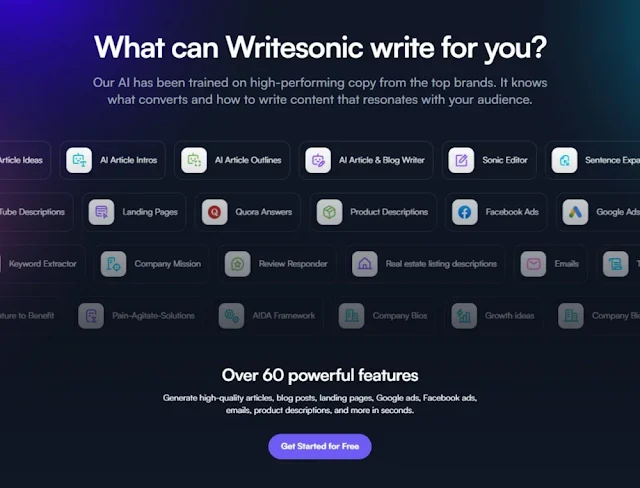
Jasper AI, formerly known as Jarvis, stands out as a premier content writing and generation tool. Leveraging sophisticated artificial intelligence, Jasper identifies optimal word choices and sentence structures tailored to a user’s specific writing style and chosen medium. Its core strength lies in its ability to produce high-quality content rapidly and efficiently, making it an invaluable asset for content marketers, copywriters, and SEO specialists.
Key Features of Jasper AI:
- Versatile Content Generation: Capable of producing a wide range of content, from blog posts and social media updates to ad copy and website content.
- Brand Voice Adaptation: Learns and mimics a brand’s unique tone and style, ensuring consistency across all communications.
- Plagiarism Checker: Integrates tools to ensure originality and prevent content duplication.
- SEO Optimization: Assists in crafting content that is optimized for search engines, improving visibility and organic traffic.
- Templates and Workflows: Offers pre-built templates for various marketing needs, streamlining the content creation process.
Promotional Offer: New users can avail themselves of a special offer, receiving 10,000 free credits upon signing up through a designated affiliate link, providing a substantial opportunity to explore Jasper’s capabilities.
2. Phrasee: Crafting Engaging Subject Lines with AI
The effectiveness of an email campaign often hinges on the subject line’s ability to capture attention and encourage opens. Phrasee addresses this critical challenge by employing AI to generate more effective subject lines. Its AI-driven Natural Language Generation (NLG) system analyzes vast datasets to produce millions of natural-sounding copy variations that align with a brand’s voice. The platform’s end-to-end model continuously learns from campaign results, refining its predictions and improving future performance.
Key Features of Phrasee:
- AI-Powered Subject Line Generation: Creates compelling subject lines optimized for engagement.
- Brand Voice Alignment: Ensures that generated copy reflects the established brand persona.
- Continuous Learning: The AI model adapts and improves based on performance data.
- Performance Prediction: Offers insights into potential subject line performance before deployment.
3. Acrolinx: Ensuring Content Quality and Consistency at Scale
For large enterprises, maintaining content quality and consistency across numerous documents and platforms can be a monumental task. Acrolinx is a content alignment platform designed to address this by enabling brands to scale their writing efforts while significantly improving content quality. Its clients, which include industry giants like Google, Adobe, and Amazon, utilize Acrolinx to standardize style, grammar, tone of voice, and company-specific terminology.
Key Features of Acrolinx:
- Real-time Writing Guidance: Provides instant suggestions for improvement directly within the writing environment.
- Content Scoring: Assesses existing content against predefined brand guidelines and benchmarks.
- Style and Tone Management: Enforces brand voice, grammar, and stylistic consistency.
- Scalability for Enterprises: Designed to manage large volumes of content and multiple contributors.
4. MarketMuse: Strategic Content Planning and Optimization
MarketMuse employs a sophisticated algorithm to assist marketers in building robust content strategies. The tool identifies strategic keyword targeting opportunities within specific topic categories and recommends keywords that can help a business dominate particular subject areas. It also highlights content gaps and potential opportunities, prioritizing them based on their likely impact on search engine rankings. By comparing a brand’s content against thousands of related articles, MarketMuse uncovers missing elements and suggests areas for improvement.
Key Features of MarketMuse:
- Topic Authority Building: Identifies keywords and topics to establish domain authority.
- Content Gap Analysis: Uncovers missing topics and opportunities for new content creation.
- Competitive Analysis: Compares content against competitors to identify areas for differentiation.
- Prioritization of Content Opportunities: Ranks potential content initiatives based on their expected impact.
Enhancing Customer Engagement and Personalization
Beyond content creation, AI is proving instrumental in forging deeper connections with customers through personalized interactions and tailored experiences. Understanding individual preferences and behaviors is key to driving engagement and loyalty.
5. Personalize: Real-Time Interest-Based Marketing
Personalize is an AI-powered technology that excels at identifying and executing highly targeted sales and marketing campaigns. It achieves this by continuously tracking the products and services that contacts show the most interest in at any given moment. The platform’s algorithm identifies each contact’s top three interests, which are dynamically updated in real-time based on their recent website activity. This allows for hyper-relevant messaging and product recommendations.
Key Features of Personalize:
- Real-time Interest Tracking: Monitors customer engagement with products and services.
- Dynamic Interest Identification: Identifies and updates customer interests based on site behavior.
- Targeted Campaign Execution: Facilitates the creation of highly personalized marketing efforts.
- Predictive Recommendations: Suggests relevant products and content based on identified interests.
6. Seventh Sense: Optimizing Email Send Times with Behavioral Analytics
The challenge of determining the optimal time to send an email to maximize opens and engagement is a perennial one. Seventh Sense tackles this by providing behavioral analytics that helps messages stand out in crowded inboxes. Its AI-based platform analyzes individual contact behavior to pinpoint the best timing and frequency for email delivery, moving beyond general industry best practices to individualize communication schedules. This tool is particularly beneficial for users of HubSpot and Marketo.
Key Features of Seventh Sense:
- Individualized Send-Time Optimization: Determines the best time for each contact to receive emails.
- Behavioral Analytics Integration: Leverages user activity to inform send-time decisions.
- Email Frequency Management: Helps prevent inbox fatigue by optimizing message cadence.
- Platform Compatibility: Designed to integrate seamlessly with HubSpot and Marketo.
7. Copilot: Real-Time eCommerce Communication
Copilot offers a suite of tools designed to facilitate continuous, real-time communication between eCommerce businesses and their customers throughout the entire sales funnel. It enables businesses to promote products, recover abandoned shopping carts, and send timely updates or reminders directly via messaging platforms like Messenger. This ensures customers remain engaged and informed at every touchpoint.
Key Features of Copilot:
- 24/7 Customer Communication: Maintains an always-on dialogue with customers.
- Funnel Stage Engagement: Supports communication across all stages of the customer journey.
- Abandoned Cart Recovery: Helps re-engage customers who have left items in their cart.
- Direct Messaging Integration: Facilitates communication through popular messaging apps.
8. Yotpo: Leveraging Deep Learning for Review Analysis
Yotpo employs deep learning technology to analyze customer product reviews, providing businesses with actionable insights for better decision-making. The AI engine identifies key topics and customer sentiments expressed in reviews, allowing businesses to understand what customers like and dislike about their products. It also extracts relevant reviews for display on product pages, helping to convert new shoppers. Furthermore, Yotpo automates review moderation, assigning scores and flagging negative sentiment to streamline quality control.
Key Features of Yotpo:
- AI-Powered Review Analysis: Extracts sentiment and key themes from customer feedback.
- Smart Review Display: Showcases relevant reviews to enhance conversion rates.
- Automated Moderation: Simplifies the review management process by flagging negative feedback.
- Actionable Business Insights: Provides data-driven recommendations based on review analysis.
Driving Campaign Performance and Efficiency
AI’s ability to analyze data, identify patterns, and automate processes is revolutionizing the efficiency and effectiveness of marketing campaigns. From optimizing website experiences to automating campaign execution, AI tools are empowering marketers to achieve more with less.
9. HubSpot SEO: Machine Learning for Search Engine Dominance
HubSpot’s Search Engine Optimization (SEO) tool is an integral part of its marketing platform, utilizing machine learning to understand how search engines categorize content. This empowers marketers to improve their search engine rankings and outperform competitors. The tool emphasizes the importance of topic clusters, helping businesses organize content around core subjects to signal expertise to search engines.
Key Features of HubSpot SEO:
- Search Engine Understanding: Analyzes how search engines interpret content.
- Ranking Improvement: Provides tools and insights to enhance search engine visibility.
- Topic Cluster Strategy: Facilitates content organization around key themes.
- Competitor Analysis: Helps identify strategies to outrank competitors.
10. Evolv AI: Accelerated A/B Testing and Optimization
Traditional A/B testing, often limited to comparing two variables at a time, can be a lengthy process. Evolv AI accelerates this by allowing for the simultaneous testing of multiple variables. Its advanced algorithms identify top-performing concepts, combine them, and iterate the process to achieve optimal website experiences. This rapid iteration leads to quicker insights and more significant improvements in user engagement and conversion rates.
Key Features of Evolv AI:
- Multi-Variable Testing: Enables simultaneous testing of numerous elements on a webpage.
- Algorithmic Optimization: Uses AI to identify and combine winning concepts.
- Accelerated Learning: Provides faster insights into user behavior and preferences.
- Continuous Website Improvement: Drives ongoing optimization of the user experience.
11. Albert AI: Autonomous Marketing Campaign Management
Albert is a self-learning software that automates the creation and management of marketing campaigns. It analyzes vast datasets to run optimized campaigns autonomously, allowing marketers to provide creative assets and target markets. Albert then uses its internal database to identify key characteristics of serious buyers, locates potential customers matching these traits, and runs trial campaigns on small customer groups before scaling up. Albert integrates with existing marketing technology stacks, providing full access to ad accounts, search, social media, and more, while mapping tracking and attribution to a single source of truth.
Key Features of Albert AI:
- Autonomous Campaign Execution: Manages and optimizes marketing campaigns without constant human intervention.
- Data-Driven Optimization: Leverages extensive data analysis for campaign improvements.
- Customer Identification: Identifies and targets high-potential buyers.
- Scalable Campaign Rollout: Tests and refines campaigns before large-scale deployment.
- Integration with Existing Stacks: Works seamlessly with current marketing tools and platforms.
The Broader Impact and Future Outlook
The integration of these AI marketing tools signifies a fundamental shift in the marketing landscape. Businesses that strategically adopt and implement these technologies are poised to gain a significant competitive advantage. The ability to personalize at scale, optimize campaigns with unprecedented efficiency, and gain deeper customer insights is no longer a futuristic aspiration but a present-day reality.
The implications are far-reaching. For consumers, this means more relevant and engaging experiences, with marketing messages that resonate with their individual needs and preferences. For businesses, it translates to improved ROI, enhanced customer loyalty, and a more agile and responsive marketing operation. As AI continues to evolve, we can anticipate even more sophisticated tools and applications emerging, further blurring the lines between human intuition and machine intelligence in the pursuit of marketing excellence. The current landscape offers a robust starting point for any marketer looking to harness the power of AI and redefine their strategic approach.
Note: This article contains affiliate links. Commissions may be earned if premium plans are purchased through these links, supporting the continued provision of such informative content.
About the Author