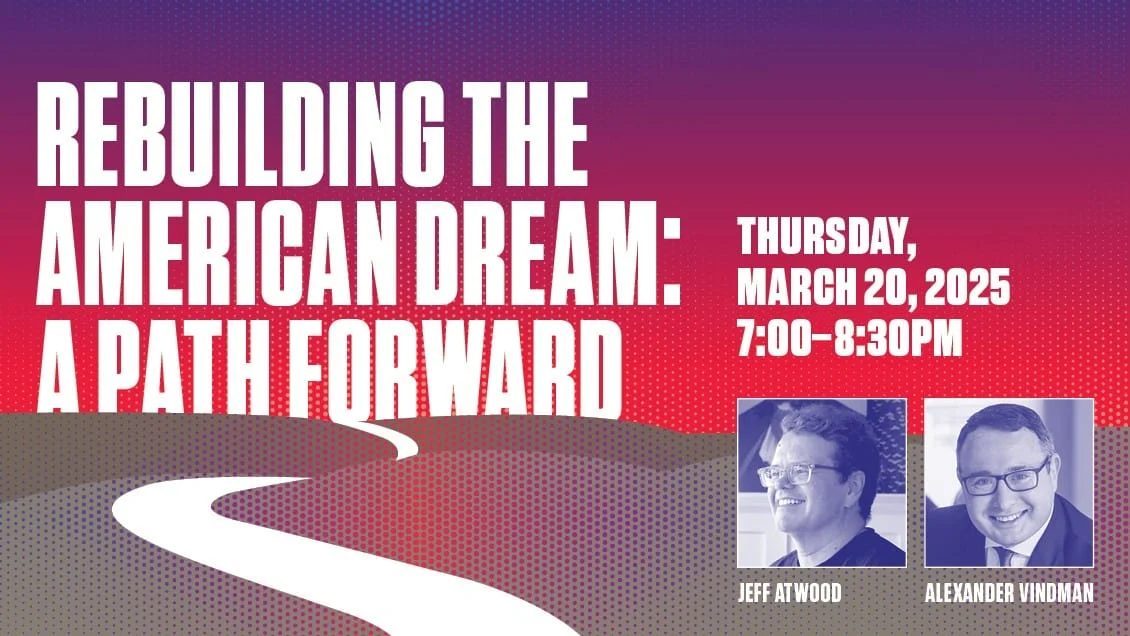
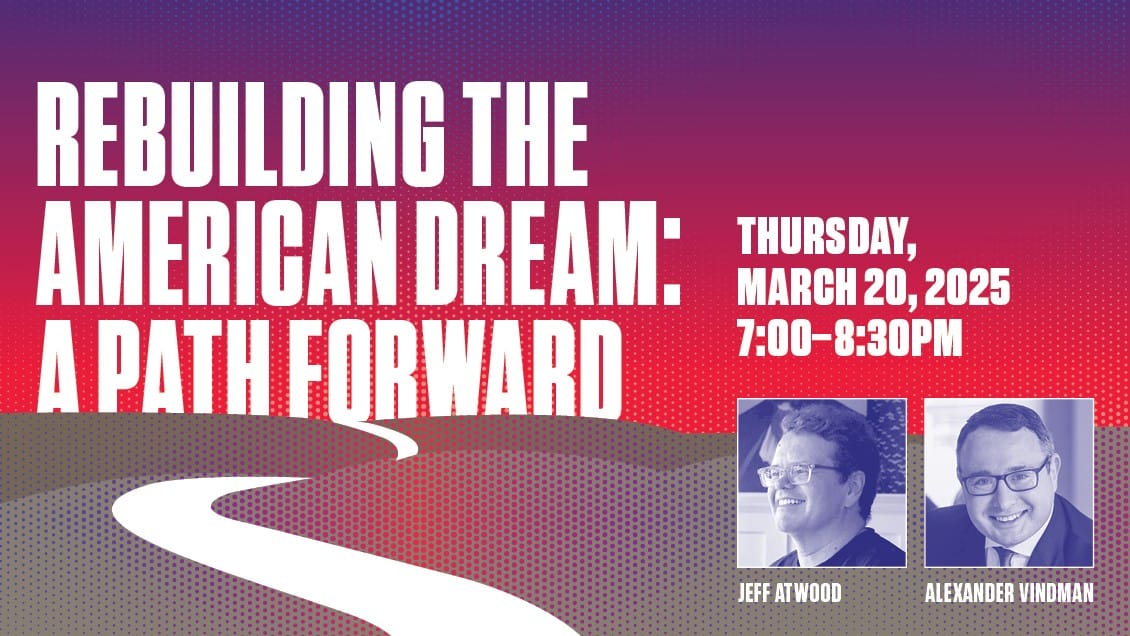
New York, NY – In a compelling and deeply resonant dialogue that captivated audiences both in person and online, internet entrepreneur Jeff Atwood, known for founding Stack Overflow and Discourse, joined forces with decorated military veteran and former National Security Council official Lt. Col. Alexander Vindman (Ret.) at the venerable Cooper Union Great Hall. The highly anticipated event, titled "Rebuilding The American Dream: A Path Forward," convened to confront the evolving challenges facing American society, exploring themes of democracy, community, and economic mobility through the lens of active civic engagement and systemic reform. The discussion underscored the urgent need to move beyond individual acts of generosity towards structural changes that foster security, dignity, and possibility for all citizens.
A Confluence of Minds at a Historic Venue
The selection of the Cooper Union Great Hall for this pivotal discussion was deeply symbolic, echoing centuries of American civic discourse. Nestled in Manhattan’s East Village, the Great Hall has served as a crucible for transformative ideas since its opening in 1859. It famously hosted Abraham Lincoln’s "Might Makes Right" speech in 1860, a discourse widely credited with bolstering his presidential campaign and shaping the national conversation on slavery. Over the decades, the hall has been a platform for suffragettes like Susan B. Anthony, civil rights leaders such as Frederick Douglass and Martin Luther King Jr., and numerous presidents and social reformers. Its walls have borne witness to the forging of national identity and the persistent struggle for a more perfect union, making it an ideal setting for a contemporary re-examination of the American Dream.
The event, which was announced weeks prior and generated significant public interest, brought together two individuals from vastly different professional realms but united by a shared commitment to American ideals. Atwood, a prominent figure in the technology world, has dedicated his career to building digital platforms that facilitate knowledge sharing and foster constructive online communities. Vindman, a distinguished military officer and decorated combat veteran, gained national prominence for upholding his oath to the Constitution during a critical period in American history, embodying a profound sense of civic duty and personal integrity. Their collaboration promised a multifaceted perspective on the complex issues at hand, blending insights from digital governance with the rigorous demands of national security and public service.
The Voices Behind the Vision: Lt. Col. Alexander Vindman
Lt. Col. Alexander Vindman’s journey is a powerful testament to the opportunities and responsibilities inherent in the American Dream. Born in the Soviet Union, he immigrated to the United States as a child with his family, settling in Brooklyn. His early life was characterized by the pursuit of new beginnings in a land of promise. He chose a path of dedicated public service, enlisting in the U.S. Army. Over 21 years of distinguished service, Vindman rose through the ranks, earning a Purple Heart for injuries sustained in Iraq and ultimately serving as the Director for European Affairs on the National Security Council.
Vindman’s career culminated in a moment of profound moral courage when he chose to report concerns regarding a presidential phone call, believing it undermined national security and democratic principles. This decision, though professionally costly, cemented his reputation as a staunch defender of the Constitution and the rule of law. His actions underscored the active, rather than passive, nature of "staying gold" – a concept Atwood had previously articulated as holding onto the best parts of ourselves and our ideals. Vindman’s narrative provided a living embodiment of the sacrifices often required to safeguard the American experiment, offering a unique perspective on the intersection of personal integrity, national security, and democratic resilience. His presence at the Cooper Union event lent significant weight to the discussion, grounding abstract concepts of civic duty in concrete experiences of courage and conviction.
The Architect of Digital Communities: Jeff Atwood
Jeff Atwood, in contrast, approaches the concept of the American Dream through the lens of digital architecture and community design. As the co-founder of Stack Overflow, a widely utilized platform for programmers to ask and answer technical questions, and Discourse, an open-source discussion platform, Atwood has spent decades analyzing how individuals interact, collaborate, and govern themselves in online spaces. His work has profoundly influenced how digital communities are built and sustained, emphasizing the importance of clear expectations, fair systems, strong boundaries, and a shared sense of purpose.
Atwood’s philosophy, often articulated on his popular blog "Coding Horror," posits that the principles governing effective online communities bear striking resemblance to those essential for a functioning democracy and a thriving society. He argues that whether one is "running a country or running a forum," the need for equitable participation, transparent rules, and mechanisms for constructive discourse remains paramount. His contribution to the Cooper Union discussion highlighted how lessons learned from building scalable, self-governing digital ecosystems could inform strategies for strengthening civic engagement and democratic processes in the physical world. He focused on the potential for technology, when thoughtfully applied, to foster the very fairness, participation, and shared purpose that are foundational to a renewed American Dream. Atwood’s long-standing exploration of "staying gold" informed his belief that true progress requires active, conscious effort to design systems that facilitate opportunity rather than relying solely on individual goodwill.
Dissecting the American Dream: Core Tenets and Contemporary Challenges
The joint talk delved deeply into the fundamental question: "How can we build on our dream so that it works for everyone?" The speakers acknowledged that the traditional promise of the American Dream – that hard work, fairness, and opportunity lead to a better future – feels increasingly like a question rather than an assertion in 2025.
Democracy in Peril: The discussion first tackled the state of democracy. Recent years have seen a significant erosion of public trust in institutions, rising political polarization, and challenges to democratic norms. Data from organizations like the Pew Research Center consistently show declining faith in government and media. The speakers implicitly, and at times explicitly, referenced the imperative of robust civic engagement and the defense of democratic processes against internal and external pressures. Vindman’s firsthand experience offered a stark reminder of the fragility of these systems and the constant vigilance required to maintain them. Atwood’s perspective introduced the idea that just as online communities need governance and moderation to prevent chaos and ensure productive interaction, so too do democratic societies require well-defined systems and shared principles to thrive.
The Erosion of Community: The second pillar of their discussion centered on community. The decline of traditional communal ties, often highlighted by sociologists like Robert Putnam in his work "Bowling Alone," has left many feeling isolated. While digital platforms have offered new avenues for connection, they also present challenges related to echo chambers, misinformation, and the atomization of public discourse. Atwood emphasized that healthy communities, whether physical or digital, are built on shared values and a common purpose, creating "artifacts for the common good, like local parks, where everyone can enjoy them together." The speakers explored how to bridge divides and rebuild social capital, suggesting that fostering genuine connection is crucial for collective action.
Economic Mobility and the Promise of Opportunity: Perhaps the most tangible aspect of the American Dream, economic mobility, was critically examined. The speakers addressed the growing disparities in wealth and income, and the increasing difficulty for many Americans to achieve upward mobility. Data from the Federal Reserve and the Brookings Institution consistently illustrate stagnating wages for many, rising costs of living, and an widening wealth gap. The promise that hard work alone guarantees a better future is increasingly questioned amidst systemic barriers such as educational inequality, healthcare costs, and job market shifts driven by automation and globalization. The conversation sought to identify pathways to unlock opportunity for all, moving beyond individual philanthropy to systemic solutions that ensure fair access to resources and a dignified quality of life.
Beyond Generosity: A Call for Systemic Change
A central theme articulated by Atwood was the necessity of moving "beyond individual generosity and toward systems that create security, dignity, and possibility for all." This point represented a culmination of his "Stay Gold" philosophy, shifting from merely preserving ideals to actively building structures that embody them. He argued that while individual acts of kindness are valuable, they are insufficient to address the deep-seated, structural inequalities and challenges facing the nation.
The speakers proposed that achieving long-term, widespread opportunity requires a concerted effort to reform existing systems and establish new ones. This could encompass a range of initiatives:
- Educational Reforms: Ensuring equitable access to quality education and vocational training from early childhood through higher learning, equipping individuals with the skills needed for a rapidly changing economy.
- Economic Policies: Implementing fair labor practices, strengthening social safety nets, and exploring innovative approaches to wealth distribution and entrepreneurship support.
- Civic Infrastructure: Investing in programs that promote civic literacy, encourage political participation, and rebuild trust in democratic institutions.
- Digital Governance: Applying lessons from robust online community management to broader societal discourse, fostering environments that prioritize factual information, respectful debate, and collaborative problem-solving.
Vindman’s perspective reinforced this by highlighting how a failure of systems – whether political, ethical, or legal – can undermine the very foundation of the American Dream, regardless of individual intentions. His experience underscored that the strength of a nation lies not just in its people, but in the integrity and resilience of its governing frameworks.
The Event’s Reach and Broader Implications
The "Rebuilding The American Dream: A Path Forward" event was not limited to those physically present in the Cooper Union Great Hall. Recognizing the importance of broad accessibility, the entire discussion was live-streamed via the Cooper Union Great Hall YouTube channel, ensuring that the insights and calls to action reached a global audience. This digital dissemination amplified the impact of the conversation, allowing individuals from diverse backgrounds to engage with the complex issues presented.
The unique pairing of Atwood and Vindman sparked considerable interest in media and academic circles. Commentators noted the refreshing interdisciplinarity of the dialogue, highlighting how seemingly disparate fields – technology and national security – could offer complementary solutions to societal challenges. Dr. Eleanor Vance, a political science professor at New York University who attended the event, remarked, "This isn’t just a discussion; it’s a blueprint. Combining the micro-level understanding of human interaction from the tech world with the macro-level imperatives of national defense provides a robust framework for addressing our current anxieties about the American Dream."
The event’s implications extend beyond a single evening. It served as a powerful reminder that the American Dream is not a static concept but a dynamic aspiration that requires continuous effort, adaptation, and collective commitment. By fostering an "honest, unfiltered conversation" with "specifics" for moving forward, Atwood and Vindman initiated a dialogue that is crucial for a nation grappling with its identity and future. Their call for collective action – "Imagine what we could do if we all worked together" – resonated as a potent challenge to cynicism and a powerful affirmation of shared purpose. The Cooper Union event thus stands as a significant moment in the ongoing national conversation about how to secure a more equitable, dignified, and prosperous future for all Americans.
About the Author