A prominent figure in the independent game development scene, Keith Burgun, has announced a significant recalibration of his creative endeavors, culminating in the unpublishing of his Patreon page. This decision marks a pivotal moment for the developer, signaling a strategic shift away from primary engagement in indie game creation as a passion project and towards a renewed focus on music and the cultivation of physical, in-person communities. The move, communicated to his long-standing supporters, reflects a broader re-evaluation of personal priorities, creative fulfillment, and the evolving landscape of the digital creator economy.
The Departure from Patreon: A Creator’s Conundrum
The unpublishing of Burgun’s Patreon page, a platform that had served as a vital source of direct financial support from his audience for an extended period, was articulated as a response to growing internal pressures. Burgun expressed discomfort with the perceived inability to consistently deliver a volume of "new cool stuff" that he felt justified the financial contributions of his patrons. This sentiment highlights a common challenge faced by creators in the subscription-based model: the persistent demand for fresh, engaging content can lead to significant anxiety and burnout, even when supporters are understanding and generous.
Patreon, founded in 2013, revolutionized direct-to-creator funding, enabling artists, musicians, writers, and developers to receive recurring income from their most dedicated fans. While it has empowered countless individuals to pursue creative careers, the platform also inadvertently established a new set of expectations. Creators often feel immense pressure to maintain a steady stream of output, not only to attract new patrons but also to retain existing ones. This constant cycle can be mentally taxing, transforming creative work into a production pipeline driven by metrics rather than intrinsic motivation. Data from various creator economy reports indicates that while a small percentage of creators on platforms like Patreon achieve substantial income, the vast majority struggle to earn a living wage, often juggling their passion projects with other forms of employment. The emotional toll of this precarious existence, coupled with the pressure to perform for a paying audience, can lead to the very anxiety Burgun described. His decision to unpublish, while potentially disappointing to some, underscores a growing trend among creators prioritizing mental well-being and authenticity over the demands of continuous content generation.
Burgun acknowledged the profound loyalty of his supporters, many of whom have followed his work for as long as 15 years. This enduring relationship speaks to the deep connections forged within the indie development community and the personal investment fans make in a creator’s journey. However, even with such a dedicated base, the internal obligation to deliver perceived value proved unsustainable. The option to restart the Patreon at a later date, should circumstances change, leaves a door open for future engagement but emphasizes the immediate need for a break from the platform’s specific demands.
A Career Re-evaluation: The Indie Game Development Journey
The decision to step back from indie game development as a primary creative focus is rooted in a comprehensive re-evaluation that has spanned the past six months to two years. Burgun articulated a sense of having largely "done what I wanted to do in indie game design," particularly within the constraints of self-funding. This reflection resonates with the experiences of many independent developers who pour years into projects without external financial backing, often reaching a point where personal ambition collides with economic reality.
The indie game landscape has undergone dramatic transformations over the last two decades. Early pioneers often found relative success with unique concepts and smaller teams, benefiting from less market saturation. However, the proliferation of digital distribution platforms and accessible development tools has led to an explosion of new titles, making discoverability an immense challenge. Steam, for instance, releases thousands of games annually, making it difficult for even critically acclaimed independent titles to stand out without significant marketing budgets or viral success. This environment often means that even highly praised games struggle to generate sufficient revenue to fund subsequent, more ambitious projects.
Burgun’s unfulfilled ambition to create "Through Broken Land," an RPG, serves as a poignant example of this challenge. Developing an RPG typically requires substantial resources—time, money, and often a larger team—which are difficult to secure without initial commercial success or external investment. His observation that better financial performance or healthier player bases "might be encouraged to stick around" highlights the symbiotic relationship between creative drive and financial viability in the arts. Without the tangible rewards of broader recognition or financial stability, maintaining the intense dedication required for large-scale projects can become daunting.
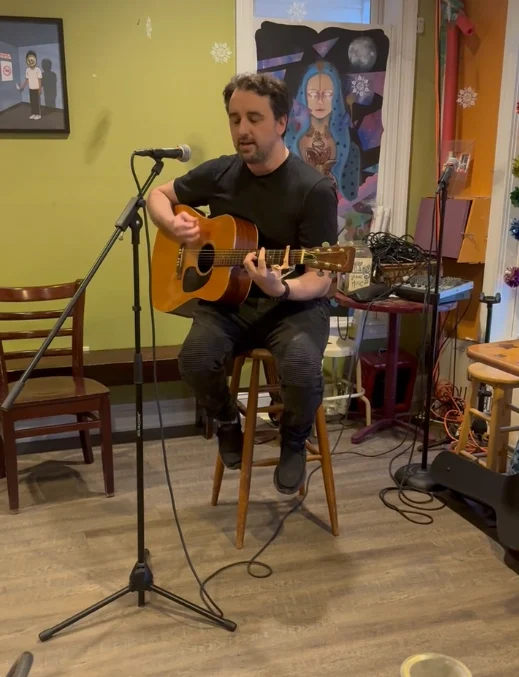
Interestingly, Burgun harbors "absolutely NO illusions" that a pivot to music will offer a more financially lucrative path. He recounted spending his youth and twenties playing music, often to empty venues. This candid admission underscores a deep understanding of the realities across creative industries: passion often precedes profit, and commercial success is rarely guaranteed. It suggests that the shift is not a pragmatic move for financial gain, but rather a pursuit of a different form of creative fulfillment and community engagement.
The Quest for Authentic Community: From Digital to Physical
A central theme underpinning Burgun’s life changes is a profound critique of purely online communities and a fervent desire for physical, in-person interaction. Informed by his studies in politics and sociology, he notes that while platforms like Discord have their merits – and he expresses continued affection for his existing kbgames Discord community – they "just not the same" as physical gatherings. This perspective touches upon a growing societal conversation about the nature of community in an increasingly digital world.
For years, the promise of the internet was to connect individuals across geographical divides, fostering communities based on shared interests rather than proximity. Platforms like Discord, Twitter, and Facebook have indeed facilitated these connections, allowing niche groups to thrive and offering a sense of belonging to those who might feel isolated in their immediate physical environments. However, as digital interaction has become ubiquitous, many are beginning to recognize its limitations. Online communities, while valuable for information exchange and maintaining loose ties, often lack the depth, spontaneity, and sensory richness of face-to-face interactions. Studies in sociology and psychology consistently demonstrate the importance of physical presence for building strong social bonds, fostering empathy, and developing a robust sense of belonging. Non-verbal cues, shared physical spaces, and the simple act of being in the same room contribute significantly to the quality of human connection.
Burgun’s personal experience of being "physically isolated in a very woodsy Westchester location, far from any community events or other like-minded creative types," further solidified this realization. This geographical isolation, common for many, can exacerbate the longing for genuine social capital and collaborative environments. The absence of "third places"—spaces outside of home and work where people can gather informally, like coffee shops, parks, or community centers—can have a significant impact on an individual’s well-being and creative output.
Consequently, a major part of Burgun’s transition involves a physical relocation back to Brooklyn. This move is strategic, aimed at immersing himself in an environment rich with "bars that play music, thrift stores, coffee shops, open mics, events and all these sorts of things." His "game plan" is to "dive head first into all of that," not with ambitions of financial gain or widespread fame, but with the explicit goal of "being a part of a community, a real, physical community." This aspiration speaks to a deeper human need for connection and shared experience, suggesting a redefinition of success away from metrics of online engagement or commercial triumph, and towards the qualitative richness of social participation.
Navigating the Transition: Music as a New Creative Horizon
The pivot to music represents a return to an earlier passion for Burgun, who spent a significant portion of his teenage years and twenties engaged in musical pursuits. This return is not driven by naive optimism regarding the music industry’s financial prospects, which are notoriously challenging for independent artists. The digital age has democratized music production and distribution, leading to an overwhelming volume of new releases daily. While this offers unprecedented access for artists, it also means immense competition for listeners’ attention and revenue streams heavily skewed towards established acts or those with significant marketing backing.
Independent musicians often rely on a patchwork of income sources, including streaming royalties (which are typically very low per stream), merchandise sales, sync licensing, and, crucially, live performances. The emphasis on live performance for independent artists aligns perfectly with Burgun’s desire for physical community. Open mics, local gigs, and collaborative projects within a vibrant music scene offer direct interaction with audiences and fellow musicians, fostering the very "real, physical community" he seeks. The goal, as stated, is not to "make money (expect actually to lose a lot)" or "have fans," but rather to participate and contribute to a local artistic ecosystem. This reorientation towards intrinsic rewards—the joy of creation, the shared experience of performance, and the camaraderie of a creative community—marks a profound shift in priorities.
Continuing Engagement: Professional Roles and Future Ventures
Despite the significant creative pivot, Burgun’s connection to game design will not be entirely severed. He clarifies that his "dayjob will continue to be doing game design professionally." This distinction between passion projects and professional work is a common strategy for many creatives, allowing them to pursue artistic endeavors without the immediate pressure of financial dependence on them. It provides a stable foundation while freeing up personal creative energy for explorations that might not be commercially viable.
Furthermore, Burgun hints at ongoing, smaller-scale game design projects. He mentions "a couple of little card game prototypes" and the possibility of releasing one with a "TTS module" (Tabletop Simulator module) once he is more settled. This indicates that his interest in game mechanics and design remains, albeit now channeled into more manageable, potentially collaborative, and less commercially burdened formats.
His Discord community will also remain active, serving as a hub for "game design book clubs, game jams, and occasionally streaming games." This demonstrates a commitment to maintaining relationships with his existing audience and continuing to engage with the game design community in a less demanding capacity. These activities offer a way to share knowledge, collaborate, and enjoy games without the pressure of constant new game development or content creation for a subscription service. The continuity of these community activities underscores the enduring value Burgun places on connection, even as the nature of his creative output evolves.
Broader Implications for the Creator Economy
Keith Burgun’s decision offers a microcosmic illustration of broader challenges and evolving perspectives within the "creator economy." His narrative reflects a growing disillusionment among some creators with the relentless demands of digital content production and the often-elusive promise of sustainable income from passion projects. It highlights the psychological toll of balancing creative integrity with platform algorithms and audience expectations.
The shift also points to a re-evaluation of what constitutes "success" for artists in the 21st century. For many, the initial allure of viral fame and substantial digital income has given way to a desire for more grounded, authentic experiences. This involves prioritizing mental health, finding joy in the creative process itself, and cultivating meaningful human connections over follower counts or monthly revenue reports. As the digital landscape continues to mature, more creators may opt for hybrid models, leveraging platforms like Patreon for specific, finite projects or for maintaining a base-level connection, rather than relying on them as a primary engine for continuous output.
Ultimately, Burgun’s journey from self-funded indie game developer to aspiring community-embedded musician is a testament to the dynamic nature of creative life. It underscores the importance of personal well-being, the search for genuine connection, and the courage to redefine one’s path in pursuit of a more fulfilling artistic existence. His transparent communication serves as a valuable case study for other creators grappling with similar pressures, offering a reminder that the most significant innovations sometimes lie not in new technologies or business models, but in the human pursuit of meaning and belonging.
For those wishing to continue following Keith Burgun’s work and artistic endeavors, updates will be shared on his BlueSky profile (bsky.app/profile/keithburgun.bsky.social), Twitter account (x.com/keithburgun), and his music can be found on his BandCamp page (keithburgun.bandcamp.com/music).
About the Author